↑ Back to the start
11 months 2 weeks ago

Gentleness, as opposed to an irascible temper, greatly contributes to the tranquility and happiness of life, by preserving the mind from perturbation, and arming it against the assaults of calumny and malice.

0
⚖0
11 months 2 weeks ago

Continence is a branch of temperance, which prevents the diseases, infamy, remorse, and punishment, to which those are exposed, who indulge themselves in unlawful amours.

0
⚖0
11 months 2 weeks ago

Sobriety, as opposed to inebriety and gluttony, is of admirable use in teaching men that nature is satisfied with a little, and enabling them to content themselves with simple and frugal fare.

0
⚖0
11 months 2 weeks ago

Since, of desires some are natural and necessary; others natural, but not necessary; and others neither natural nor necessary, but the offspring of false judgment; it must be the office of temperance to gratify the first class, as far as nature requires: to restrain the second within the bounds of moderation; and, as to the third, resolutely to oppose, and, if possible, entirely repress them.

0
⚖0
11 months 2 weeks ago

Temperance is that discreet regulation of the desires and passions, by which we are enabled to enjoy pleasures without suffering any consequent inconvenience. They who maintain such a constant self-command, as never to be enticed by the prospect of present indulgence, to do that which will be productive of evil, obtain the truest pleasure by declining pleasure.

0
⚖0
11 months 2 weeks ago

A prudent man, in order to secure his tranquility, will consult his natural disposition in the choice of his plan of life. If, for example, he be persuaded that he should be happier in a state of marriage than in celibacy, he ought to marry; but if he be convinced that matrimony would be an impediment to his happiness, he ought to remain single.

0
⚖0
11 months 2 weeks ago

Against the diseases of the mind, philosophy provides sufficient antidotes. The instruments which it employs for this purpose are the virtues; the root of which, whence all the rest proceed, is prudence. This virtue comprehends the whole art of living discreetly, justly, and honorably, and is, in fact, the same thing with wisdom. It instructs men to free their understandings from the clouds of prejudice; to exercise temperance and fortitude in the government of themselves: and to practice justice towards others. Although pleasure, or happiness, which is the end of living, be superior to virtue, which is only the means, it is every one's interest to practice all the virtues; for in a happy life, pleasure can never be separated from virtue.

0
⚖0
11 months 2 weeks ago

This happy state can only be obtained by a prudent care of the body, and a steady government of the mind. The diseases of the body are to be prevented by temperance, or cured by medicine, or rendered tolerable by patience.

0
⚖0
11 months 2 weeks ago

There are two kinds of pleasure: one consisting in a state of rest, in which both body and mind are undisturbed by any kind of pain; the other arising from an agreeable agitation of the senses, producing a correspondent emotion in the soul. It is upon the former of these that the enjoyment of life chiefly depends. Happiness may therefore be said to consist in bodily ease, and mental tranquility.

0
⚖0
11 months 2 weeks ago

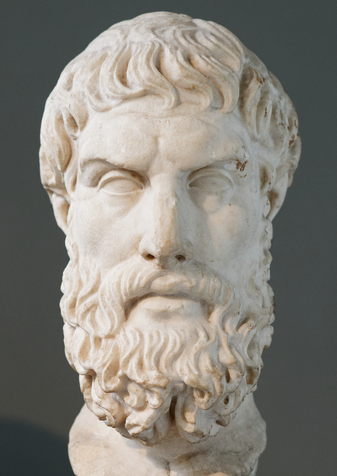
Pleasure, or pain, is not only good, or evil, in itself, but the measure of what is good or evil, in every object of desire or aversion; for the ultimate reason why we pursue one thing, and avoid another, is because we expect pleasure from the former, and apprehend pain from the latter. If we sometimes decline a present pleasure, it is not because we are averse to pleasure itself, but because we conceive, that in the present instance, it will be necessarily connected with a greater pain. In like manner, if we sometimes voluntarily submit to a present pain, it is because we judge that it is necessarily connected with a greater pleasure.

0
⚖0

CivilSimian.com created by AxiomaticPanic, CivilSimian, Kalokagathia