↑ Back to the start
5 months 3 weeks ago

This makes me think that the French Revolution is a great epoch and that its consequences, in all kinds of ways, will be felt far beyond the time of its explosion and the limits of its birthplace.

0
⚖0
▼ Source
source
Chapter II, p. 21
5 months 3 weeks ago

Providence has given the French nation precisely two instruments, two arms, so to speak, with which it stirs up the world - the French language and the spirit of proselytism that forms the essence of the nation's character.

0
⚖0
▼ Source
source
Chapter II, p. 20
5 months 3 weeks ago

If Providence erases, it is no doubt in order to write.

0
⚖0
▼ Source
source
Chapter II, p. 20
5 months 3 weeks ago

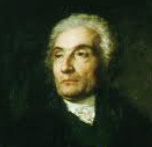
Too many French scholars were the principal authors of the Revolution, too many approved and gave their support so long as the Revolution, like Tarquinius' sceptre, struck down only the tallest heads. Like so many others, they said, It is impossible to make a great revolution without incurring misfortunes. But when a philosopher justifies evil by the end in view, when he says in his heart, Let there be a hundred thousand murders, provided we are free, and Providence replies, I accept your offer, but you must be included in the number, where is the injustice?

0
⚖0
▼ Source
source
Chapter II, pp. 9-10
5 months 3 weeks ago

Men do not lead the revolution; it is the Revolution that uses men. They are right when they say it goes all alone. This phrase means that never has the Divinity shown itself so clearly in any human event. If the vilest instruments are employed, punishment is for the sake of regeneration.

0
⚖0
▼ Source
source
Chapter I, p. 8
5 months 3 weeks ago

We are all attached to the throne of the Supreme Being by a supple chain that restrains us without enslaving us. Nothing is more admirable in the universal order of things than the action of free beings under the divine hand. Freely slaves, they act voluntarily and necessarily at the same time; they really do what they will, but without being able to disturb the general plans. Each of these beings occupies the centre of a sphere of activity whose diameter varies according to the will of the Eternal Geometer, who can extend, restrict, check, or direct the will without altering its nature.

0
⚖0
5 months 3 weeks ago

The most beautiful monuments of Athens belong to the century of Pericles. In Rome, what writers were produced under the Republic? Only Plautus and Terence. Lucretius, Sallust, and Cicero saw the Republic die. Then came the century of Augustus when the nation was all that it could be by way of talents. The arts, in general, need a king; they only flourish under the influence of sceptres. Even in Greece, the only country where they flourished in the milieu of a republic, Lysippos and Apelles worked for Alexander. Aristotle owed to Alexander's generosity the means to compose his history of animals; and, after the death of this monarch, the poets, scholars, and artists went to look for protection and rewards in the courts of his successors.

0
⚖0
▼ Source
source
p. 179
5 months 3 weeks ago

The sentiment that dominates all Rousseau's works is a certain plebeian anger that excites him against every kind of superiority. The energetic submission of the wise man bends nobly under the indispensable empire of social distinctions, and never does be appear greater than when he bows; but Rousseau has nothing at all of this loftiness. Weak and surly, he spent his life spouting insults to the great, as he would have offered the same to the people if he had been born a great lord.

0
⚖0
5 months 3 weeks ago

The mixture of children and men is precisely one of the most beautiful features of aristocratic government. All roles are distributed wisely in the world: that of the young is to do good, and that of old age is to prevent evil. The impetuosity of young men, who demand only action and creation, is very useful to the State; but they are too likely to innovate and destroy, and they would do much evil without the elderly, who are there to stop them. The latter in their turn oppose even useful reforms; they are too inflexible, they do not know how to accommodate themselves to circumstances, and sometimes a twenty-year old senator can very well be placed beside another of eighty.

0
⚖0
▼ Source
source
p. 137
5 months 3 weeks ago

How many mistakes power has committed! And how often has it ignored the means to conserve itself! Man is insatiable for power; he is infinite in his desires, and, always discontented with what he has, he loves only what he has not. People complain about the despotism of princes; they should complain about that of man. We are all born despots, from the most absolute monarch of Asia to the child who smothers a bird with his hand for the pleasure of seeing something in the world weaker than himself. There is no man who does not abuse power, and experience proves that the most abominable despots, if they come to seize the sceptre, will be precisely those who rant against despotism.

0
⚖0

CivilSimian.com created by AxiomaticPanic, CivilSimian, Kalokagathia