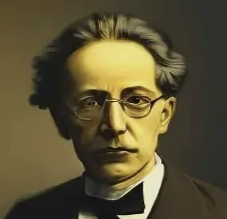
The State's behavior is violence, and it calls its violence "law"; that of the individual, "crime." The state calls its own violence law, but that of the individual, crime.
0
⚖0
▼Source
source
As quoted in The Great Quotations (1960) by George Seldes, p. 664
It would be foolish to assert that there is no power above mine. Only the attitude that I take toward it will be quite another than that of the religious age: I shall be the enemy of every higher power, while religion teaches us to make it our friend and be humble toward it.
For the state it is indispensable that nobody have an own will; if one had, the state would have to exclude (lock up, banish, etc.) this one; if all had, they would do away with the state. (...) The own will of me is the state's destroyer; it is therefore denounced by the state as 'self-will'. Own will and the state are powers in deadly hostility, between which no 'perpetual peace' is possible. As long as the state asserts itself, it represents own will, its ever-hostile opponent, as unreasonable, evil; and the latter lets itself be talked into believing this.
Whether nature gives me a right, or whether God, the people's choice, etc., does so, all of that is the same foreign right, a right that I do not give or take to myself. Thus the Communists say, equal labour entitles man to equal enjoyment. [...] No, equal labour does not entitle you to it, but equal enjoyment alone entitles you to equal enjoyment. Enjoy, then you are entitled to enjoyment. But, if you have laboured and let the enjoyment be taken from you, then - 'it serves you right.' If you take the enjoyment, it is your right; if, on the contrary, you only pine for it without laying hands on it, it remains as before, a, 'well-earned right' of those who are privileged for enjoyment. It is their right, as by laying hands on it would become your right.
The habit of the religious way of thinking has biased our mind so grievously that we are - terrified at ourselves in our nakedness and naturalness; it has degraded us so that we deem ourselves depraved by nature, born devils.
Might is a fine thing, and useful for many purposes; for 'one goes further with a handful of might than with a bagful of right'. You long for freedom? You fools! If you took might, freedom would come of itself. See, he who has might 'stands above the law'. How does this prospect taste to you, you 'law-abiding' people? But you have no taste!
The workers have the most enormous power in their hands, and if one day they became truly aware of it and used it, then nothing could resist them; they would only have to stop work and look upon the products of work as their own and enjoy them. This is the meaning of the labor unrest that is looming here and there. The state is founded on the-slavery of labor. If labor becomes free, the state is lost.