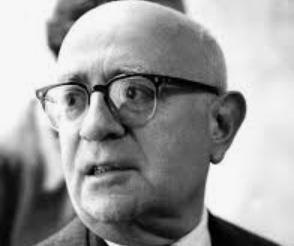
We are really no longer ourselves a part of nature at the moment when we notice, when we recognize, that we are a part of nature.
0
0
Source
source
Probleme der Moralphilosophie (Frankfurt: Suhrkamp, 1996), p. 154; as quoted in Andrew Bowie, Adorno and the Ends of Philosophy (Cambridge: Polity, 2013), p. 94
Marriage as a community of interests unfailingly means the degradation of the interested parties, and it is the perfidy of the world's arrangements that no one, even if aware of it, can escape such degradation. The idea might therefore be entertained that marriage without ignominy is a possibility reserved for those spared the pursuit of interests, for the rich. But the possibility is purely formal, for the privileged are precisely those in whom the pursuit of interests has become second-nature—they would not otherwise uphold privilege.
0
0
Source
source
E. Jephcott, trans. (1974), § 10
Es gibt kein richtiges Leben im falschen.
0
0
Source
source
Wrong life cannot be lived rightly. | E. Jephcott, trans. (1974), § 18
Zartheit zwischen Menschen ist nichts anderes als das Bewußtsein von der Möglichkeit zweckfreier Beziehungen.
0
0
Source
source
Tenderness between people is nothing other than awareness of the possibility of relations without purpose. | E. Jephcott, trans. (1974), § 20
Nun gilt für die kürzeste Verbindung zwischen zwei Personen die Gerade, so als ob sie Punkte wären.
0
0
Source
source
The straight line is regarded as the shortest distance between two people, as if they were points. | E. Jephcott, trans. (1974), § 20
Die fast unlösbare Aufgabe besteht darin, weder von der Macht der anderen, noch von der eigenen Ohnmacht sich dumm machen zu lassen.
0
0
Source
source
The almost insoluble task is to let neither the power of others, nor our own powerlessness, stupefy us. | E. Jephcott, trans. (1974), § 34
Der vage Ausdruck erlaubt dem, der ihn vernimmt, das ungefähr sich vorzustellen, was ihm genehm ist und was er ohnehin meint. Der strenge erzwingt Eindeutigkeit der Auffassung, die Anstrengung des Begriffs, deren die Menschen bewußt entwöhnt werden, und mutet ihnen vor allem Inhalt Suspension der gängigen Urteile, damit ein sich Absondern zu, dem sie heftig widerstreben. Nur, was sie nicht erst zu verstehen brauchen, gilt ihnen für verständlich; nur das in Wahrheit Entfremdete, das vom Kommerz geprägte Wort berührt sie als vertraut.
0
0
Source
source
Vague expression permits the hearer to imagine whatever suits him and what he already thinks in any case. Rigorous formulation demands unequivocal comprehension, conceptual effort, to which people are deliberately disencouraged, and imposes on them in adv
All the world's not a stage.
0
0
Source
source
E. Jephcott, trans. (1974), § 94
Wer will es schließlich selbst den allerfreiesten Geistern verübeln, wenn sie nicht mehr für eine imaginäre Nachwelt schreiben, deren Zutraulichkeit die der Zeitgenossen womöglich noch überbietet, sondern einzig für den toten Gott?
0
0
Source
source
Who, in the end, is to take it amiss if even the freest of the free spirits no longer write for an imaginary posterity, ... but only for the dead God? | E. Jephcott, trans. (1974), § 133
Kunst ist Magie, befreit von der Lüge, Wahrheit zu sein.
0
0
Source
source
Art is magic delivered from the lie of being truth. | E. Jephcott, trans. (1974), § 143
The importance of the culture industry in the spiritual constitution of the masses is no dispensation for reflection on its objective legitimation, its essential being, least of all by a science which thinks itself pragmatic.
0
0
The phrase, the world wants to be deceived, has become truer than had ever been intended. People are not only, as the saying goes, falling for the swindle; if it guarantees them even the most fleeting gratification they desire a deception which is nonetheless transparent to them. They force their eyes shut and voice approval, in a kind of self-loathing, for what is meted out to them, knowing fully the purpose for which it is manufactured. Without admitting it they sense that their lives would be completely intolerable as soon as they no longer clung to satisfactions which are none at all.
0
0
Source
source
Section 10
Anpassung tritt kraft der Ideologie der Kulturindustrie anstelle von Bewußtsein: nie wird die Ordnung, die aus ihr herausspringt, dem konfrontiert, was sie zu sein beansprucht, oder den realen Interessen der Menschen. Ordnung aber ist nicht an sich ein Gutes. Sie wäre es einzig als richtige. Daß die Kulturindustrie darum nicht sich kümmert; daß sie Ordnung in abstracto anpreist, bezeugt nur die Ohnmacht und Unwahrheit der Botschaften, die sie übermittelt. Während sie beansprucht, Führer der Ratlosen zu sein, und ihnen Konflikte vorgaukelt, die sie mit ihren eigenen verwechseln sollen, löst sie die Konflikte nur zum Schein, so wie sie in ihrem eigenen Leben kaum gelöst werden könnten.
0
0
Source
source
The power of the culture industry's ideology is such that conformity has replaced consciousness. The order that springs from it is never confronted with what it claims to be or with the real interests of human beings. Order, however, is not good in itself
In the products of the culture industry human beings get into trouble only so that they can be rescued unharmed, usually by representatives of a benevolent collective; and then, in illusory harmony, they are reconciled with the general interest whose demands they had initially experienced as irreconcilable with their own.
0
0
Source
source
Section 14
Das Zentrum der geistigen Selbstdisziplin als solcher ist in Zersetzung begriffen. Die Tabus, die den geistigen Rang eines Menschen ausmachen, oftmals sedimentierte Erfahrungen und unartikulierte Erkenntnisse, richten sich stets gegen eigene Regungen, die er verdammen lernte, die aber so stark sind, daß nur eine fraglose und unbefragte Instanz ihnen Einhalt gebieten kann. Was fürs Triebleben gilt, gilt fürs geistige nicht minder: der Maler und Komponist, der diese und jene Farbenzusammenstellung oder Akkordverbindung als kitschig sich untersagt, der Schriftsteller, dem sprachliche Konfigurationen als banal oder pedantisch auf die Nerven gehen, reagiert so heftig gegen sie, weil in ihm selber Schichten sind, die es dorthin lockt. Die Absage ans herrschende Unwesen der Kultur setzt voraus, daß man an diesem selber genug teilhat, um es gleichsam in den eigenen Fingern zucken zu fühlen, daß man aber zugleich aus dieser Teilhabe Kräfte zog, sie zu kündigen. Diese Kräfte, die als solche des individuellen Widerstands in Erscheinung treten, sind darum doch keineswegs selber bloß individueller Art. Das intellektuelle Gewissen, in dem sie sich zusammenfassen, hat ein gesellschaftliches Moment so gut wie das moralische Überich. Es bildet sich an einer Vorstellung von der richtigen Gesellschaft und deren Bürgern. Läßt einmal diese Vorstellung nach—und wer könnte noch blind vertrauend ihr sich überlassen—, so verliert der intellektuelle Drang nach unten seine Hemmung, und aller Unrat, den die barbarische Kultur im Individuum zurückgelassen hat, Halbbildung, sich Gehenlassen, plumpe Vertraulichkeit, Ungeschliffenheit, kommt zum Vorschein. Meist rationalisiert es sich auch noch als Humanität, als den Willen, anderen Menschen sich verständlich zu machen, als welterfahrene Verantwortlichkeit. Aber das Opfer der intellektuellen Selbstdisziplin fällt dem, der es auf sich nimmt, viel zu leicht, als daß man ihm glauben dürfte, daß es eines ist.
0
0
Source
source
The center of intellectual self-discipline as such is in the process of decomposition. The taboos that constitute a man's intellectual stature, often sedimented experiences and unarticulated insights, always operate against inner impulses that he has lear
Der Bürger aber ist tolerant. Seine Liebe zu den Leuten, wie sie sind, entspringt dem Haß gegen den richtigen Menschen.
0
0
Source
source
The bourgeois ... is tolerant. His love for people as they are stems from his hatred of what they might be. | E. Jephcott, trans. (1974), § 4
Für Marcel Proust.—Der Sohn wohlhabender Eltern, der, gleichgültig ob aus Talent oder Schwäche, einen sogenannten intellektuellen Beruf, als Künstler oder Gelehrter, ergreift, hat es unter denen, die den degoutanten Namen des Kollegen tragen, besonders schwer. Nicht bloß, daß ihm die Unabhängigkeit geneidet wird, daß man dem Ernst seiner Absicht mißtraut und in ihm einen heimlichen Abgesandten der etablierten Mächte vermutet. Solches Mißtrauen zeugt zwar von Ressentiment, würde aber meist seine Bestätigung finden. Jedoch die eigentlichen Widerstände liegen anderswo. Die Beschäftigung mit geistigen Dingen ist mittlerweile selber »praktisch«, zu einem Geschäft mit strenger Arbeitsteilung, mit Branchen und numerus clausus geworden. Der materiell Unabhängige, der sie aus Widerwillen gegen die Schmach des Geldverdienens wählt, wird nicht geneigt sein, das anzuerkennen. Dafür wird er bestraft. Er ist kein »professional«, rangiert in der Hierarchie der Konkurrenten als Dilettant, gleichgültig wieviel er sachlich versteht, und muß, wenn er Karriere machen will, den stursten Fachmann an entschlossener Borniertheit womöglich noch übertrumpfen. Die Suspension der Arbeitsteilung, zu der es ihn treibt, und die in einigen Grenzen seine ökonomische Lage zu verwirklichen ihn befähigt, gilt als besonders anrüchig: sie verrät die Abneigung, den von der Gesellschaft anbefohlenen Betrieb zu sanktionieren, und die auftrumpfende Kompetenz läßt solche Idiosynkrasien nicht zu. Die Departementalisierung des Geistes ist ein Mittel, diesen dort abzuschaffen, wo er nicht ex officio, im Auftrag betrieben wird. Es tut seine Dienste um so zuverlässiger, als stets derjenige, der die Arbeitsteilung kündigt—wäre es auch nur, indem seine Arbeit ihm Lust bereitet —, nach deren eigenem Maß Blößen sich gibt, die von den Momenten seiner Überlegenheit untrennbar sind. So ist für die Ordnung gesorgt: die einen müssen mitmachen, weil sie sonst nicht leben können, und die sonst leben könnten, werden draußen gehalten, weil sie nicht mitmachen wollen. Es ist, als rächte sich die Klasse, von der die unabhängigen Intellektuellen desertiert sind, indem zwangshaft ihre Forderungen dort sich durchsetzen, wo der Deserteur Zuflucht sucht.
0
0
Source
source
The son of well-to-do parents who ... engages in a so-called intellectual profession, as an artist or a scholar, will have a particularly difficult time with those bearing the distasteful title of colleagues. It is not merely that his independence is envi
Music for entertainment ... seems to complement the reduction of people to silence, the dying out of speech as expression, the inability to communicate at all. It inhabits the pockets of silence that develop between people molded by anxiety, work and undemanding docility.
0
0
Source
source
p. 271
Impulse, subjectivity and profanation, the old adversaries of materialistic alienation, now succumb to it. ... The representatives of the opposition to the authoritarian schema become witnesses to the authority of commercial success. ... In the service of success they renounce that insubordinate character which was theirs.
0
0
Source
source
p. 273
To be sure, exchange-value exerts its power in a special way in the realm of cultural goods. For in the world of commodities this realm appears to be exempted from the power of exchange, to be in an immediate relationship with the goods, and it is this appearance in turn which alone gives cultural goods their exchange-value. But they nevertheless simultaneously fall completely into the world of commodities, are produced for the market, and are aimed at the market.
0
0
Source
source
p. 279
The dressing up and puffing up of the individual erases the lineaments of protest.
0
0
Source
source
p. 283
It suffices to remember how many sorrows he is spared who no longer thinks too many thoughts, how much more "in accordance with reality" a person behaves when he affirms that the real is the right, how much more capacity to use the machinery falls to the person who integrates himself with it uncomplainingly.
0
0
Source
source
p. 286
Even the most insensitive hit song enthusiast cannot always escape the feeling that the child with a sweet tooth comes to know in the candy store.
0
0
Source
source
p. 290
Regressive listeners behave like children. Again and again and with stubborn malice, they demand the one dish they have once been served.
0
0
Source
source
p. 290
Bourgeois sport [wants] to differentiate itself strictly from play. Its bestial seriousness consists in the fact that instead of remaining faithful to the dream of freedom by getting away from purposiveness, the treatment of play as a duty puts it among useful purposes and thereby wipes out the trace of freedom in it. This is particularly valid for contemporary mass music. It is only play as a repetition of prescribed models, and the playful release from responsibility which is thereby achieved does not reduce at all the time devoted to duty except by transferring the responsibility to the models, the following of which one makes into a duty for himself.
0
0
Source
source
p. 296
Bourgeois society is ruled by equivalence. It makes the dissimilar comparable by reducing it to abstract quantities. To the enlightenment, that which does not reduce to numbers, and ultimately to the one, becomes illusion.
0
0
Source
source
John Cumming trans., p. 7
The blessing that the market does not ask about birth is paid for in the exchange society by the fact that the possibilities conferred by birth are molded to fit the production of goods that can be bought on the market.
0
0
Source
source
E. Jephcott, trans., p. 9
The metaphysical apologia at least betrayed the injustice of the established order through the incongruence of concept and reality. The impartiality of scientific language deprived what was powerless of the strength to make itself heard and merely provided the existing order with a neutral sign for itself. Such neutrality is more metaphysical than metaphysics.
0
0
Source
source
E. Jephcott, trans., p. 17
Furchtbares hat die Menschheit sich antun müssen, bis das Selbst, der identische, zweckgerichtete, männliche Charakter des Menschen geschaffen war, und etwas davon wird noch in jeder Kindheit wiederholt.
0
0
Source
source
Humanity had to inflict terrible injuries on itself before the self, the identical, purpose-directed, masculine character of human beings was created, and something of this process is repeated in every childhood. | E. Jephcott, trans., p. 26
Die traurige Wissenschaft, aus der ich meinem Freunde einiges darbiete, bezieht sich auf einen Bereich, der für undenkliche Zeiten als der eigentliche der Philosophie galt, seit deren Verwandlung in Methode aber der intellektuellen Nichtachtung, der sententiösen Willkür und am Ende der Vergessenheit verfiel: die Lehre vom richtigen Leben. Was einmal den Philosophen Leben hieß, ist zur Sphäre des Privaten und dann bloß noch des Konsums geworden, die als Anhang des materiellen Produktionsprozesses, ohne Autonomie und ohne eigene Substanz, mit geschleift wird.
0
0
Source
source
The melancholy science from which I make this offering to my friend relates to a region that from time immemorial was regarded as the true field of philosophy, but which, since the latter's conversion into method, has lapsed into intellectual neglect, sen
In the general tendency toward specialization, philosophy too has established itself as a specialized discipline, one purified of all specific content. In so doing, philosophy has denied its own constitutive concept: the intellectual freedom that does not obey the dictates of specialized knowledge.
0
0
Source
source
p. 6
By abstaining from all definite content, whether as formal logic and theory of science or as the legend of Being beyond all beings, philosophy declared its bankruptcy regarding concrete social goals.
0
0
Source
source
p. 6
Philosophy ... should not imagine that specialized work in epistemological theory, or whatever else prides itself on being research, is actually philosophy. Yet a philosophy forswearing all of that must in the end be irreconcilably at odds with the dominant consciousness. Nothing else raises it above the suspicion of apologetics. Philosophy that satisfies its own intention, and does not childishly skip behind its own history and the real one, has its lifeblood in the resistance against the common practices of today and what they serve, against the justification of what happens to be the case.
0
0
Source
source
p. 6
Words of the jargon sound as if they said something higher than what they mean.
0
0
Source
source
p. 9
Negative Dialektik ... handelt sich um den Entwurf einer Philosophie, die nicht den Begriff der Identität von Sein und Denken voraussetzt und auch nicht in ihm terminiert, sondern die gerade das Gegenteil, also das Auseinanderweisen von Begriff und Sache, von Subjekt und Objekt, und ihre Unversöhntheit, artikulieren will.
0
0
Source
source
Negative dialectics ... does not presuppose the identity of being and thought, nor does it culminate in that identity. Instead it will attempt to articulate the very opposite, namely the divergence of concept and thing, subject and object. | p. 6
Hegel ... destroyed the illusion of the subject's being-in-itself and showed that the subject is itself an aspect of social objectivity. ... However, ... we must ask this question: is this objectivity which we have shown to be a necessary condition and which subsumes abstract subjectivity in fact the higher factor? Does it not rather remain precisely what Hegel reproached it with being in his youth, namely pure externality, the coercive collective? Does not the retreat to this supposedly higher authority signify the regression of the subject, which had earlier won its freedom only with the greatest efforts, with infinite pains?

0
0
Source
source
p. 16
Underlying the concept of positivity is the conviction that the positive is intrinsically positive in itself, without anyone pausing to ask what is to be regarded as positive. ... It is significant and really quite interesting that the term 'positive' actually contains this ambivalence. On the one hand, 'positive' means what is given, is postulated, is there—as when we speak of positivism as the philosophy that sticks to the facts. But, equally, 'positive' also refers to the good, the approvable, in a certain sense, the ideal. And I imagine that this semantic constellation expresses with precision what countless people actually feel to be the case.
0
0
Source
source
p. 18
When I speak of 'negative dialectics' not the least important reason for doing so is my desire to dissociate myself from this fetishization of the positive.
0
0
Source
source
p. 18
What appears as the positive is essentially the negative, i.e. the thing that is to be criticized.
0
0
Source
source
p. 18
I remember well a junior seminar I gave with Paul Tillich shortly before the outbreak of the Third Reich. A participant spoke out against the idea of the meaning of existence. She said life did not seem very meaningful to her and she didn't know whether it had a meaning. The very voluble Nazi contingent became very excited by this and scraped the floor noisily with their feet. Now, I do not wish to maintain that this Nazi foot-shuffling proves or refutes anything in particular, but I do find it highly significant. I would say it is a touchstone for the relation of thinking to freedom. It raises the question whether thought can bear the idea that a given reality is meaningless and that mind is unable to orientate itself; or whether the intellect has become so enfeebled that it finds itself paralysed by the idea that all is not well with the world.
0
0
Source
source
pp. 19-20
The thesis of the identity of concept and thing is in general the vital nerve of idealist thought, and indeed traditional thought in general. ... Negative dialectics as critique means above all criticism of precisely this claim to identity.
0
0
Source
source
p. 20
The concept of positivity in itself, in abstracto, has become part and parcel of the ideology today. ... Critique has started to become suspect, regardless of its content.
0
0
Source
source
p. 23
We cannot think any true thought unless we want the true. Thinking is itself an aspect of practice.
0
0
Source
source
p. 45
The conflicts that tear society apart resemble the distinction between the concept and the particular facts subordinated to it. ... Whatever refuses to abide by the unity imposed by the principle of dominion manifests itself not as something indifferent to that principle, but as an infringement of logic: as a contradiction.
0
0
Source
source
p. 169
Anyone surprised by the characterization of Adorno as a Marxist has not read much of his admittedly difficult writing. ... Most available secondary discussions tend to leave the Marxism out, as though it were some curious set of period mannerisms which a postcontemporary discussion no longer needs to take into consideration.
0
0
Source
source
Fredric Jameson, Late Marxism: Adorno, or, The Persistence of the Dialectic (1990), p. 6
Adorno, Marcuse, and other members of the Frankfurt School were explicit about the link between “antifascism,” which was the banner they sported, and sympathy for Communist governments. Like Sartre and his collaborators at Les Temps Modernes, the Critical Theorists considered anti-Communist attitudes proof positive of fascist residues in those who expressed them. After the publication of The Authoritarian Personality in 1950, Adorno was shocked by a suggestion from one of his coworkers, Seymour Martin Lipset, that the psychic grid they had applied to right-wingers might work for left-wing extremists equally well.
0
0
Source
source
Paul Gottfried (2018), The Strange Death of Marxism: the European Left in the New Millennium, University of Missouri Press, p. 71
Der des Jargons Kundige braucht nicht zu sagen, was er denkt, nicht einmal recht es zu denken: das nimmt der Jargon ihm ab und entwertet den Gedanken.
0
0
Source
source
Whoever is versed in the jargon does not have to say what he thinks, does not even have to think it properly. The jargon takes over this task. | p. 9
The jargon makes it seem that ... the pure attention of the expression to the subject matter would be a fall into sin.
0
0
Source
source
p. 9
Elements of empirical language are manipulated in their rigidity, as if they were elements of a true and revealed language. The empirical usability of the sacred ceremonial words makes both the speaker and listener believe in their corporeal presence.
0
0
Source
source
p. 7
Traditional philosophy's claim to totality, culminating in the thesis that the real is rational, is indistinguishable from apologetics.
0
0
Source
source
p. 7

CivilSimian.com created by AxiomaticPanic, CivilSimian, Kalokagathia