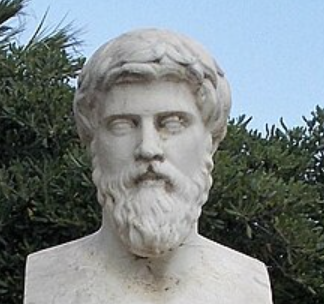
A physician, after he had felt the pulse of Pausanias, and considered his constitution, saying, "He ails nothing," "It is because, sir," he replied, "I use none of your physic."
Lysander, when Dionysius sent him two gowns, and bade him choose which he would carry to his daughter, said, "She can choose best," and so took both away with him.
Agesilaus was very fond of his children; and it is reported that once toying with them he got astride upon a reed as upon a horse, and rode about the room; and being seen by one of his friends, he desired him not to speak of it till he had children of his own.
To one commending an orator for his skill in amplifying petty matters, Agesilaus said, "I do not think that shoemaker a good workman that makes a great shoe for a little foot."
There are two sentences inscribed upon the Delphic oracle, hugely accommodated to the usages of man's life: "Know thyself," and "Nothing too much;" and upon these all other precepts depend.
For many, as Cranton tells us, and those very wise men, not now but long ago, have deplored the condition of human nature, esteeming life a punishment, and to be born a man the highest pitch of calamity; this, Aristotle tells us, Silenus declared when he was brought captive to Midas.