
3 months 3 weeks ago
Let none turn over books, or roam the stars in quest of God, who sees him not in man.
▼
Source
No. 408

3 months 3 weeks ago
When you arise in the morning, think of what a precious privilege it is to be alive – to breathe, to think, to enjoy, to love.
▼
Source
Actual source is New Thought author Elbert Hubbard in his magazine The Fra, volume 12, issue no. 6, on page 171: [https://digital.library.villanova.edu/Item/vudl:83166#?c=&m=&s=&cv=36&xywh=33%2C856%2C3761%2C1452]. See this Reddit post for more discussion:
3 months 3 weeks ago
Judge a man by his questions rather than by his answers.
▼
Source
Il est encore plus facile de juger de l'esprit d'un homme par ses questions que par ses réponses. (It is easier to judge the mind of a man by his questions rather than his answers) — Pierre-Marc-Gaston, duc de Lévis (1764-1830), Maximes et réflexions sur

3 months 3 weeks ago
The desire to die was my one and only concern; to it I have sacrificed everything, even death.

3 months 3 weeks ago
A naturall foole that could never learn by heart the order of numerall words, as one, two, and three, may observe every stroak of the Clock, and nod to it, or say one, one, one; but can never know what houre it strikes.
▼
Source
The First Part, Chapter 4, p. 14

3 months 3 weeks ago
The suffering man ought really 'to consume his own smoke'; there is no good in emitting smoke till you have made it into fire, — which, in the metaphorical sense too, all smoke is capable of becoming!
3 months 3 weeks ago
There is a fundamental question which Camus never seems to have put to himself: by what right am I qualified to pass this sort of verdict on the world [the verdict that the world is absurd]? Of two things, one: either I myself do not belong to the world under discussion, but in that case have I not every reason to suppose that it is impenetrable to me and that I am not qualified to judge its value- or, on the other hand, I really am part of the world, and if the world is absurd, so am I absurd too. Camus, perhaps, might concede this. It is, however, a destructive concession. Again, of two things, one: either I am myself absurd in my ultimate nature- in which case so are my judgements absurd, they negate themselves, it cannot be conceded that they have any sort of validity- or, on the other hand, we have to admit that I have a double nature, that is there is a part of me which is not absurd and which can make valid judgements about absurdity: but how did this aspect of me which is not absurd get there? I cannot even admit the possibility of its existence without beginning to formulate a kind of dualism which, in some sense, splits my original assertion of the total absurdity of the universe apart.
▼
Source
Gabriel Marcel, Man Against Mass Society (1952), p. 118

3 months 3 weeks ago
And yet it will be obvious that it is difficult to really know of what sort each thing is.

3 months 3 weeks ago
Empirical laws ... have only slight or even no value beyond the limits within which they have been observed to be true.
▼
Source
p. 291.
3 months 3 weeks ago
Every day that we allow ourselves to take things for granted, every day that we allow some little physical infirmity or worldly worry to come between us and our obstinate, indignant, defiant exultation, we are weakening our genius for life.
▼
Source
pp. 134
3 months 3 weeks ago
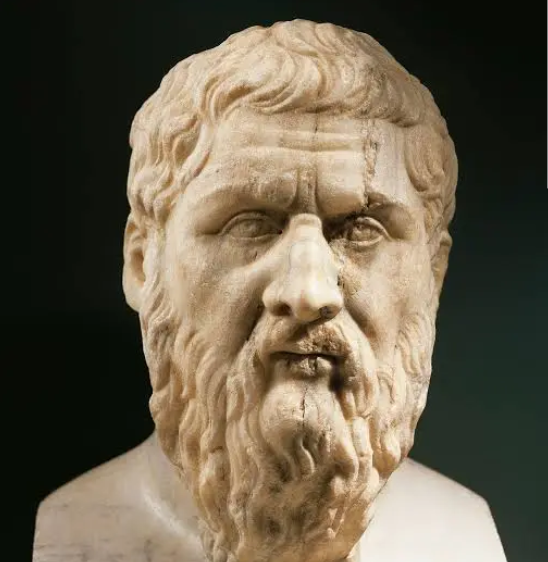
The greatest and noblest conceptions have no image wrought plainly for human vision, which he who wishes to satisfy the mind of the inquirer can apply to some one of his senses and by mere exhibition satisfy the mind. We must therefore endeavor by practice to acquire the power of giving and understanding a rational definition of each one of them; for immaterial things, which are the noblest and greatest, can be exhibited by reason only, and it is for their sake that all we are saying is said. But it is always easier to practice in small matters than in greater ones.
▼
Source
285e-286b
3 months 3 weeks ago
However intimate we may be with the operations of the mind, we cannot think more than two or three minutes a day; — unless, by taste or by profession, we practice, for hours on end, brutalizing words in order to extract ideas from them. The intellectual represents the major disgrace, the culminating failure of Homo sapiens.
3 months 3 weeks ago
The RIGHT OF NATURE, which Writers commonly call Jus Naturale, is the Liberty each man hath, to use his own power, as he will himself, for the preservation of his own Nature; that is to say, of his own Life; and consequently, of doing any thing, which in his own Judgement, and Reason, he shall conceive to be the aptest means thereunto.
▼
Source
The First Part, Chapter 14, p. 64
3 months 3 weeks ago
He has now a second far greater success to gain: to seek out his real superiors, whom not the Tailor but the Almighty God has made superior to him, and see a little what he will do with these! Rebel against these also? Pass by with minatory eagle-glance, with calm-sniffing mockery, or even without any mockery or sniff, when these present themselves? The lion-hearted will never dream of such a thing. Forever far be it from him! His minatory eagle-glance will veil itself in softness of the dove: his lion- heart will become a lamb's; all is just indignation changed into just reverence, dissolved in blessed floods of noble humble love, how much heavenlier than any pride, nay, if you will, how much prouder!
3 months 3 weeks ago
For a man petticoat government is the limit of insolence.

3 months 3 weeks ago
A Klee painting named ‘Angelus Novus’ shows an angel looking as though he is about to move away from something he is fixedly contemplating. His eyes are staring, his mouth is open, his wings are spread. This is how one pictures the angel of history. His face is turned toward the past. Where we perceive a chain of events, he sees one single catastrophe which keeps piling wreckage upon wreckage and hurls it in front of his feet. The angel would like to stay, awaken the dead, and make whole what has been smashed. But a storm is blowing in from Paradise; it has got caught in his wings with such violence that the angel can no longer close them. This storm irresistibly propels him into the future to which his back is turned, while the pile of debris before him grows skyward. This storm is what we call progress.
▼
Source
IX
3 months 3 weeks ago
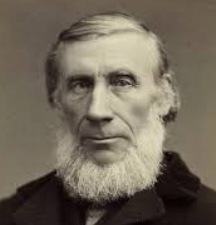
Life is a wave, which in no two consecutive moments of its existence is composed of the same particles.
▼
Source
Vitality.
3 months 3 weeks ago
Socrates: But suppose the words used are ‘just’ and ‘good’. Don’t we then go each his own way, and find ourselves in disagreement with ourselves as well as with each other? Phaedrus: Undoubtedly.
▼
Source
263a
3 months 3 weeks ago
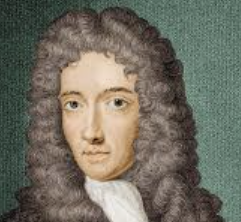
Being Gentlemen and very far from the litigious humour of loving to wrangle about words or terms or notions as empty; they had before his coming in, readily agreed promiscuously to use when they pleased Elements and Principles as terms equivalent: and to understand both by the one and the other, those primitive and simple bodies of which the mixt ones are said to be composed, and into which they are ultimately resolved.
3 months 3 weeks ago
Freedom can be manifested only in the void of beliefs, in the absence of axioms, and only where the laws have no more authority than a hypothesis.
3 months 3 weeks ago
Christian Kings may erre in deducing a Consequence, but who shall Judge?
▼
Source
The Third Part, Chapter 43, p. 330
3 months 3 weeks ago
Behold therefore, this England of the Year 1200 was no chimerical vacuity or dreamland, peopled with mere vaporous Fantasms, Rymer's Foedera, and Doctrines of the Constitution, but a green solid place, that grew corn and several other things. The Sun shone on it; the vicissitude of seasons and human fortunes. Cloth was woven and worn; ditches were dug, furrowfields ploughed, and houses built. Day by day all men and cattle rose to labour, and night by night returned home weary to their several lairs. In wondrous Dualism, then as now, lived nations of breathing men; alternating, in all ways, between Light and Dark; between joy and sorrow, between rest and toil, between hope, hope reaching high as Heaven, and fear deep as very Hell. Not vapour Fantasms, Rymer's Foedera at all!
3 months 3 weeks ago
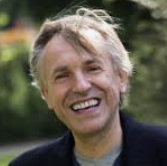
Many city-dwellers have a romanticized conception of the living world. From another perspective, some "conservation biologists" favour e.g. "". By contrast, I think any truly compassionate person should be horrified at the terrible suffering of Nature "red in tooth and claw". Why not aim for a cruelty-free world instead?
▼
Source
"[https://www.hedweb.com/hedethic/interviewoct2009.html Interview with Pensata Animal]", Pensata Animal, 25 Oct. 2009

3 months 3 weeks ago
Logic is the most useful tool of all the arts. Without it no science can be fully known. It is not worn out by repeated use, after the manner of material tools, but rather admits of continual growth through the diligent exercise of any other science. For just as a mechanic who lacks a complete knowledge of his tool gains a fuller [knowledge] by using it, so one who is educated in the firm principles of logic, while he painstakingly devotes his labor to the other sciences, acquires at the same time a greater skill at this art.
▼
Source
Summa Logicae (c. 1323), [http://www.pvspade.com/Logic/docs/ockham.pdf Prefatory Letter, as translated by Paul Vincent Spade (1995)]
3 months 3 weeks ago
History is the record of a vast experimental investigation—of a search by man after the best conditions of existence.
3 months 3 weeks ago
Ignorance, the root and stem of all evil.
▼
Source
Attributed to Plato on quotes sites but never sourced.
3 months 3 weeks ago
It appeared to him that to prepare a "History of Trades" in which the observations and practices of different trades might be united... would draw the attention of philosophers to the interests of industry, and of artizans to the benefits promised by philosophy. ...Such a work was not written; and until a more recent period the store of facts gained in the pursuit of industrial occupations was confined to the acquaintance of those who were occupied therein
▼
Source
Introductory Remarks
3 months 3 weeks ago
Skepticism is the sadism of embittered souls.
3 months 3 weeks ago
These are the two vices that beset Government Offices; both of them originating in insufficient Intellect,—that sad insufficiency from which, directly or indirectly, all evil whatsoever springs!
3 months 3 weeks ago
I think there's an asymmetry. There's this fable of Ursula Le Guin, short story, Ones Who Walk Away From Omelas. We're invited to imagine this city of delights, vast city of incredible wonderful pleasures but the existence of Omelas, this city of delights depends on the torment and abuse of a single child. The question is would you walk away from Omelas and what does walking away from Omelas entail. Now, personally I am someone who would walk away from Omelas. The world does not have an off switch, an off button and I think if one is whether a Buddhist of a negative utilitarian, or someone who believes in suffering-focused ethics, rather than to consider these theoretical apocalyptic scenarios it is more fruitful to work with secular and religious life lovers to phase out the biology of suffering in favor of gradients of intelligent wellbeing because one of the advantages of hedonic recalibration, i.e. ratcheting up hedonic set points is that it doesn't ask people to give up their existing values and preferences with complications.
▼
Source
"[https://futureoflife.org/2018/08/16/ai-alignment-podcast-metaethics-of-joy-suffering-with-brian-tomasik-and-david-pearce/ AI Alignment Podcast: The Metaethics of Joy, Suffering, and Artificial Intelligence with Brian Tomasik and David Pearce]", Future o

3 months 3 weeks ago
The average person appreciates a value only “in the course of, and through comparison” with the possessions, condition, plight or quality of other persons. … The awareness that the acquisition and enjoyment of that value is beyond the person’s capacity … triggers two mutually opposite, but equally vigorous reactions: an overwhelming desire (all the more tormenting because of the suspicion that it might be impossible to fulfill); and ressentiment—a rancor caused by a desperate urge to ward off self-deprecation and self-contempt by demeaning, deriding and degrading the value in question, together with its possessors.
▼
Source
pp. 24-25 [Quote is from Max Scheler, “Das Ressentiment im Aufbau der Moralen”]
3 months 3 weeks ago
No less incommensurable with the working-world than the philosophical question is the sound of true poetry. The lover, too, stands outside the tight chain of efficiency of this working world, and so does whoever else approaches the margin of existence through some deep existential disturbance (which always brings a "shattering" of one's environment), or through, say, the proximity of death.
▼
Source
pp. 67–68
3 months 3 weeks ago
I boldly make the claim that the Platonic doctrines are not easily understood without reference to the Indian teaching. And, in reference to the quest of Socrates, his character and his faith, I will be content to let the resemblance to the quest and character and faith of the ancient Indian sages speak for itself […] I affirm very confidently that if anyone will make himself familiar with the old Indian wisdom-religion of the Vedas and Upanishads: will shake himself free, from the moment, from the academic attitude and the limiting Western conception of philosophy, and will then read Plato’s dialogues, he will hardly fail to realise that both are occupied with the selfsame search, inspired by the same faith, drawn upwards by the same vision.
▼
Source
Urwick, Edward. J. The Message of Plato: A re-interpretation of the ‘Republic’. London: Metheun and Co. Ltd., 1920. quoted in : Bhaskar Kamble, The Imperishable Seed: How Hindu Mathematics Changed the World and why this History was Erased, Garuda Prakasha
3 months 3 weeks ago
To make more plans than an explorer or a crook, yet to be infected at the will's very root.
3 months 3 weeks ago
The Age that admires talk so much can have little discernment for inarticulate work, or for anything that is deep and genuine. Nobody, or hardly anybody, having in himself an earnest sense for truth, how can anybody recognize an inarticulate Veracity, or Nature-fact of any kind; a Human Doer especially, who is the most complex, profound, and inarticulate of all Nature's Facts? Nobody can recognize him: till once he is patented, get some public stamp of authenticity, and has been articulately proclaimed, and asserted to be a Doer. To the worshipper of talk, such a one is a sealed book. An excellent human soul, direct from Heaven,—how shall any excellence of man become recognizable to this unfortunate? Not except by announcing and placarding itself as excellent,—which, I reckon, it above other things will probably be in no great haste to do.
3 months 3 weeks ago
Language steps in where the angels of experience fear to tread.
▼
Source
Chapter 1, The Faces of Silence, p. 5
3 months 3 weeks ago
A scheme is unjust when the higher expectations, one or more of them, are excessive. If these expectations were decreased, the situation of the less favored would be improved.
▼
Source
Chapter II, Section 13, pg. 79
3 months 3 weeks ago
The interposition of the air very much modifies the effects of the heat upon the surface of the globe. The solar rays traversing the atmospheric strata, which are condensed by their own weight [at decreasing altitudes], heat them very unequally; those which are rarest are likewise coldest, because they... absorb a smaller part of the rays. The heat of the sun... in the form of light, possesses the property of penetrating transparent solids or liquids, and loses this property... when by... terrestrial bodies, it is turned into heat radiating without light.
3 months 3 weeks ago
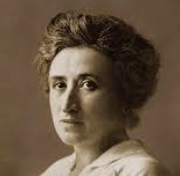
Public control is indispensably necessary. Otherwise the exchange of experiences remains only with the closed circle of the officials of the new regime. Corruption becomes inevitable. (Lenin’s words, Bulletin No.29) Socialism in life demands a complete spiritual transformation in the masses degraded by centuries of bourgeois rule. Social instincts in place of egotistical ones, mass initiative in place of inertia, idealism which conquers all suffering, etc., etc. No one knows this better, describes it more penetratingly; repeats it more stubbornly than Lenin. But he is completely mistaken in the means he employs. Decree, dictatorial force of the factory overseer, draconian penalties, rule by terror – all these things are but palliatives. The only way to a rebirth is the school of public life itself, the most unlimited, the broadest democracy and public opinion. It is rule by terror which demoralizes.
▼
Source
[http://www.marxists.org/archive/luxemburg/1918/russian-revolution/ch06.htm "The Problem with Dictatorship" in The Russian Revolution] as translated by Bertram Wolfe (1918)

3 months 3 weeks ago
The New Testament … must be in some way traceable to an Indian source: its ethical system, its ascetic view of morality, its pessimism, and its Avatar, are all thoroughly Indian. It is its morality which places it in a position of such emphatic and essential antagonism to the Old Testament, so that the story of the Fall is the only possible point of connection between the two.
▼
Source
quoted in The Circle of Memory_ An Autobiography - Subhash Kak
3 months 3 weeks ago
I react like everyone else, even like those I most despise; but I make up for it by deploring every action I commit, good or bad.
3 months 3 weeks ago
This worthy man, whose nephew is still minister of Eskdalemuir (and author of a book on the Jews), proved the greatest blessing to that household. My father would, in any case, have saved himself. Of the other brothers, it may be doubted whether William Brown was not the primary preserver. They all learned to he masons from him, or from one another; instead of miscellaneous laborers and hunters, became regular tradesmen, the best in all their district, the skilfullest and faithfullest, and the best-rewarded every way. Except my father, none of them attained a decisive religiousness. But they all had prudence and earnestness, love of truth, industry, and the blessings it brings.
3 months 3 weeks ago
There is a divergence between private and social accounting that the market fails to register. One essential task of law and government is to institute the necessary conditions.
▼
Source
Chapter V, Section 42, p. 268
3 months 3 weeks ago
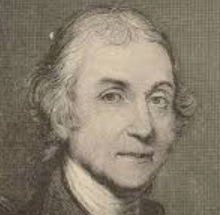
In his Opus Majus he demonstrates, that if a transparent body, interposed between the eye and an object, be convex towards the eye, the object will appear magnified. This observation our author certainly had from Alhazen... this writer [Bacon] gives us figures, representing the progress of rays of light through his spherical segment, as well as endeavours to give reasons why objects are magnified... From the writings of Alhazen and these observations and experiments of Bacon together, it is not improbable that some monks gradually hit upon the construction of spectacles, to which Bacon's lesser segment, not withstanding his mistake concerning it, was a nearer approach than Alhazen's... Whoever they were that pursued the discoveries of Bacon, they probably observed, that a very small convex glass, when held at a greater distance from a book, would magnify the letters more than when it was placed close to them, in which position only Bacon seemed to have used it. In the next place, they might try whether two of these small segments of a sphere placed together, or a glass convex on both sides, would not magnify more than one of them. They would then find, that two of these glasses, one for each eye, would answer the purpose of reading better than one; and lastly they might find, that different degrees of convexity, suited different persons. It is certain that spectacles were well known in the 13th century, and not long before. ...It would certainly have been a great satisfaction to us to have been able to trace the actual steps in the progress of this most useful invention, without which most persons who have a taste for reading must have had the melancholy prospect of passing a very dull and joyless old age; and must have been deprived of the pleasure of entertaining themselves by conversing with the absent and the dead, when they were no longer capable of acting their part among the living. Telescopes and microscopes are to be numbered among the superfluities of life when compared to spectacles, which may now be ranked almost among the necessities of it; since the arts of reading and writing are almost universal.
▼
Source
Period I To the Revival of Letters in Erope
3 months 3 weeks ago
Lenin's thesis is that the party Central Committee should have the privilege of naming all the local committees of the party. It should have the right to appoint the effective organs of all local bodies from Geneva to Liege, from Tomsk to Irkutsk. It should also have the right to impose on all of them its own ready-made rules of party conduct. It should have the right to rule without appeal on such questions as the dissolution and reconstitution of local organizations. This way, the Central Committee could determine, to suit itself, the composition of the highest party organs. The Central Committee would be the only thinking element in the party. All other groupings would be its executive limbs.
3 months 3 weeks ago
All religions promise a reward for excellences of the will or heart, but none for excellences of the head or understanding.
▼
Source
E. Payne, trans., vol. 2, p. 230
3 months 3 weeks ago
We make choices, decisions, as long as we keep to the surface of things; once we reach the depths, we can neither choose nor decide, we can do nothing but regret the surface...
3 months 3 weeks ago
I found him as usual sitting at his table, but evidently in a condition of great suppressed irritability; with Mill's treatise On Liberty lying before him... [H]e rose angrily from the table with the book in his hand, and gave vent to such a torrent of anathema (glancing at Christianity itself, as if Christianity had been the inspiration of it), as filled me with pain and amazement. He addressed himself directly to me, almost as if I had written the book, or had sent it to him, or was in some way mixed up with it in his mind. I felt terribly hurt; but what could I say in protest against such a wide-rushing torrent of invective? ... I know the book well enough now, and the ghastly issues to which it inevitably points, with its accurate balancing of enlightened self-interests, and its deification of every man's own heart; and I will only say that, putting myself honestly in Carlyle's place, I do not wonder that his indignation was beyond endurance. It must have been to him, in the incisiveness of its attack and the taking popularity of its style, like a vision of the great red dragon standing triumphant before him, ready to devour the fruit of his soul's travail as soon as it was born. Since that day, I have never heard him express more utter abhorrence of anything than I have, more than once in late years, heard him express of the crowing, God denying, death-stricken spirit, now making such ‘great signs’ with our fashionable sciences and life-philosophies,—and all the world wondering after it!
▼
Source
Henry Larkin, ‘Carlyle and Mrs. Carlyle: A Ten-Years' Reminiscence’, British Quarterly Review, Vol. LXXIV (1881), pp. 73–74
3 months 3 weeks ago
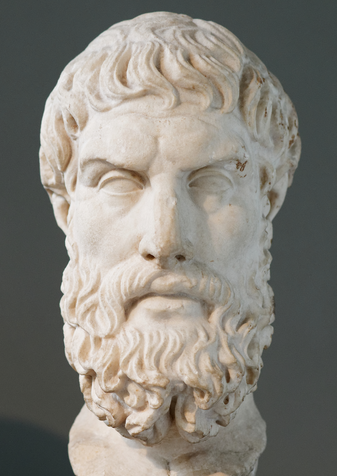
Those animals which are incapable of making binding agreements with one another not to inflict nor suffer harm are without either justice or injustice; and likewise for those peoples who either could not or would not form binding agreements not to inflict nor suffer harm.
3 months 3 weeks ago
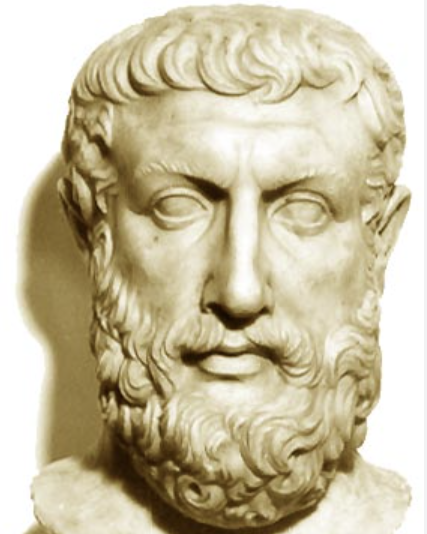
The philosophy of Parmenides is a strange blend of mysticism and logic. It is mysticism, for its goal is not the gradual and cumulative correction of empirical knowledge, but deliverance from it through the instantaneous and absolute grasp of "immovable" truth. This is not the way of techne, but the way of revelation: it lies "beyond the path of men" (B. 1.27). Yet this revelation is itself addressed to man's reason and must be judged by reason. Its core is pure logic: a rigorous venture in deductive thinking, the first of its kind in European thought. This kind of thinking could be used against the world of the senses … This projection of the logic of Being upon the alien world of Becoming was Parmenides' most important single contribution to the history of thought, though it is seldom recognized as such. Without it, his doctrine of Being could have remained a speculative curiosity. With it, he laid the foundations for the greatest achievement of the scientific imagination of Greece, the atomic hypothesis.
▼
Source
Gregory Vlastos, in Studies in Greek Philosophy (1993), Vol. I, p. 16
CivilSimian.com created by AxiomaticPanic, CivilSimian, Kalokagathia