

3 months 3 weeks ago
If I have exhausted the justifications, I have reached bedrock and my spade is turned. Then I am inclined to say: "This is simply what I do."
▼
Source
§ 217

3 months 3 weeks ago
Kicking leaves you momentarily on one foot, and for that moment you are in a very weak position. If you were to be swept off your feet, you would be finished. This is why lifting your feet off the ground is crazy.
▼
Source
As quoted in Aikido Shugyo (1991) by Gōzō Shioda, p. 79

3 months 3 weeks ago
In order to learn the important lessons in life, one must each day surmount to fear.
▼
Source
There are ongoing disputes on who should receive credit for this quote. The earliest match that could be found was in an article published by Los Angeles Times in 1936, which attributed the quote to Elbert Hubbard, but the evidence was weak as he died in
3 months 3 weeks ago
The problem of systems improvement is the problem of the 'ethics of the whole system'.
▼
Source
p. 4
3 months 3 weeks ago
There is no cure for birth and death save to enjoy the interval.
▼
Source
"War Shrines"
3 months 3 weeks ago
In vain, therefore, should we pretend to determine any single event, or infer any cause or effect, without the assistance of observation and experience.
▼
Source
§ 4.11
3 months 3 weeks ago
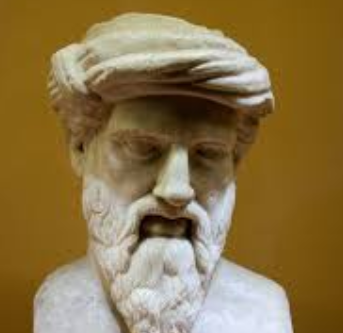
Scholastic skeptics, as well as ignorant materialists, have greatly amused themselves for the last two centuries over the absurdities attributed to Pythagoras by his biographer, Iamblichus. The Samian philosopher is said to have persuaded a she-bear to give up eating human flesh; to have forced a white eagle to descend to him from the clouds, and to have subdued him by stroking him gently with the hand, and by talking to him. On another occasion, Pythagoras actually persuaded an ox to renounce eating beans, by merely whispering in the animal's ear! (Iamblichus: "De Vita Pythag.") Oh, ignorance and superstition of our forefathers, how ridiculous they appear in the eyes of our enlightened generations! Let us, however, analyze this absurdity. Every day we see unlettered men, proprietors of strolling menageries, taming and completely subduing the most ferocious animals, merely by the power of their irresistible will... Every one has either witnessed or heard of the seemingly magical power of some mesmerizers and psychologists. They are able to subjugate their patients for any length of time. Regazzoni, the mesmerist who excited such wonder in France and London, has achieved far more extraordinary feats than what is above attributed to Pythagoras. Why, then, accuse the ancient biographers of such men as Pythagoras and Apollonius of Tyana of either wilful misrepresentation or absurd superstition?
▼
Source
p.284.
3 months 3 weeks ago
Reading the Socratic dialogues one has the feeling: what a frightful waste of time! What's the point of these arguments that prove nothing and clarify nothing?
▼
Source
p. 14e
3 months 3 weeks ago
When an opponent comes forward, move in and greet him; if he wants to pull back, send him on his way.
3 months 3 weeks ago
Emerson's prose is full of poetry, and his poems are light and air. ... His modes of expression, like his epithets, are imaginative.
▼
Source
Edmund Clarence Stedman, Poets of America (1885), pp. 134 & 164
3 months 3 weeks ago
I am often inclined to put the implementation questions first, ie, "Can anything be changed?" Should the implementation question not accompany the whole process from its very beginning to its very end?
▼
Source
C. West Churchman (1979, p. 21) as cited in: Interfaces (1982) Vol 12, p. 12
3 months 3 weeks ago
I leave you but the sound of many a wordIn mocking echoes haply overheard,I sang to heaven. My exile made me free,from world to world, from all worlds carried me.
▼
Source
[http://www.poemhunter.com/poem/the-poet-s-testament/ The Poet's Testament]
3 months 3 weeks ago
It is, therefore, a just political maxim, that every man must be supposed a knave: Though at the same time, it appears somewhat strange, that a maxim should be true in politics, which is false in fact. But to satisfy us on this head, we may consider, that men are generally more honest in their private than in their public capacity, and will go greater lengths to serve a party, than when their own private interest is alone concerned. Honour is a great check upon mankind: But where a considerable body of men act together, this check is, in a great measure, removed; since a man is sure to be approved of by his own party, for what promotes the common interest; and he soon learns to despise the clamours of adversaries.
▼
Source
Part I, Essay 6: Of The Independency of Parliament; first line often paraphrased as "It is a just political maxim, that every man must be supposed a knave."
3 months 3 weeks ago
Religion is, as it were, the calm bottom of the sea at its deepest point, which remains calm however high the waves on the surface may be.
▼
Source
p. 53e
3 months 3 weeks ago
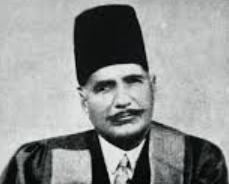
Why must I forever lose, forever forgo profit that is my due,Sunk in the gloom of evenings past, no plans for the morrow pursue.Why must I all attentive be to the nightingale's lament?Friend, am I as dumb as a flower? Must I remain silent?My theme makes me bold, makes my tongue more eloquent.Dust be in my mouth, against Allah I make complaint.
▼
Source
[https://archive.org/details/ShikwaJawabIShikwaIqbalsDialogueWithAllahTrKhushwantSinghIqbal Shikwa and Jawab-i-Shikwa (Complaint and Answer): Iqbal's Dialogue with Allah], translated by Khushwant Singh, p. 28. | Variant:"Why would I become a loss-causer,
3 months 3 weeks ago
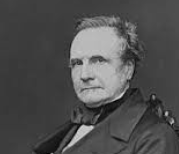
The Church has been reproached with endeavouring to appropriate to itself all those professorships in our Universities which are connected with science: it is however certain that the larger portion of these ill-remunerated offices have been filled by clergymen.
▼
Source
p. 225

3 months 3 weeks ago
Too many French scholars were the principal authors of the Revolution, too many approved and gave their support so long as the Revolution, like Tarquinius' sceptre, struck down only the tallest heads. Like so many others, they said, It is impossible to make a great revolution without incurring misfortunes. But when a philosopher justifies evil by the end in view, when he says in his heart, Let there be a hundred thousand murders, provided we are free, and Providence replies, I accept your offer, but you must be included in the number, where is the injustice?
▼
Source
Chapter II, pp. 9–10
3 months 3 weeks ago
In a word, CLEANTHES, a man who follows your hypothesis is able perhaps to assert, or conjecture, that the universe, sometime, arose from something like design: but beyond that position he cannot ascertain one single circumstance; and is left afterwards to fix every point of his theology by the utmost license of fancy and hypothesis. This world, for aught he knows, is very faulty and imperfect, compared to a superior standard; and was only the first rude essay of some infant deity, who afterwards abandoned it, ashamed of his lame performance: it is the work only of some dependent, inferior deity; and is the object of derision to his superiors: it is the production of old age and dotage in some superannuated deity; and ever since his death, has run on at adventures, from the first impulse and active force which it received from him. You justly give signs of horror, DEMEA, at these strange suppositions; but these, and a thousand more of the same kind, are CLEANTHES's suppositions, not mine. From the moment the attributes of the Deity are supposed finite, all these have place. And I cannot, for my part, think that so wild and unsettled a system of theology is, in any respect, preferable to none at all.
▼
Source
Philo to Demea, Part V
3 months 3 weeks ago
He was like an atomic bomb, a tornado — people don't appreciate that.
▼
Source
W. A. Hijab, a student of Wittgenstein, as quoted in Autism and Creativity : Is there a link between autism in men and exceptional ability? (2004) by Michael Fitzgerald, p. 93

3 months 3 weeks ago
The history of human thought recalls the swinging of a pendulum which takes centuries to swing. After a long period of slumber comes a moment of awakening. Then thought frees herself from the chains with which those interested — rulers, lawyers, clerics — have carefully enwound her. She shatters the chains. She subjects to severe criticism all that has been taught her, and lays bare the emptiness of the religious political, legal, and social prejudices amid which she has vegetated. She starts research in new paths, enriches our knowledge with new discoveries, creates new sciences. But the inveterate enemies of thought — the government, the lawgiver, and the priest — soon recover from their defeat. By degrees they gather together their scattered forces, and remodel their faith and their code of laws to adapt them to the new needs.
▼
Source
[http://dwardmac.pitzer.edu/anarchist_Archives/kropotkin/AM/anarchist_moralitytc.html Anarchist Morality] (1890)

3 months 3 weeks ago
Jesus will take me safe trough... I shall see Jesus, who created all things, Jesus, who made the worlds; I shall see Him as He is;... Yes; I have had the Light for many years, and Oh! how bright it is! I feel SO SAFE, SO SATISFIED.
▼
Source
His last words, as quoted in The Home Life of Sir David Brewster (2010), by his daughter, Margaret Maria Gordon. Cambridge University Press. Chapter XXI.
3 months 3 weeks ago
Wherever an altar is found, there civilization exists.
▼
Source
Original text:Partout où vous verrez un autel, là se trouve la civilisation. | "Second Dialogue," p. 44
3 months 3 weeks ago
As man does not live in a solitary state, habits and feeling develop within him which are useful for the preservation of society and the propagation of the race. Without social feelings and usages life in common would have been absolutely impossible. It is not law which has established them; they are anterior to all law. Neither is it religion which has ordained them; they are anterior to all religions. They are found amongst all animals living in society. They are spontaneously developed by the new nature of things, like those habits in animals which men call instinct. They spring from a process of evolution, which is useful, and, indeed, necessary, to keep society together in the struggle it is forced to maintain for existence.
▼
Source
II

3 months 3 weeks ago
Thales said there was no difference between life and death. "Why, then," said some one to him, "do not you die?" "Because," said he, "it does make no difference."
▼
Source
Thales, 9.
3 months 3 weeks ago
Maistre attached the highest importance to the ‘philosophy of style,’ and averred that he who knew not how to write was incapable of metaphysics. The violence that pervades his thought and rhetoric is a response to the primal experience of the ‘terrible truth of evil,’ while his style incarnates his sense of the mystery of history. By conveying his thought in what Baudelaire called ‘rockets,’ Maistre provoked his readers into a state of fascination and shock.
▼
Source
Carolina Armenteros, "Epilogue: the forced inhabitant of history" in The New Enfant du Siècle: Joseph de Maistre as a Writer (2010), p. 101–102

3 months 3 weeks ago
The love of God consists in an ardent desire to procure the general welfare, and reason teaches me that there is nothing which contributes more to the general welfare of mankind than the perfection of reason.
▼
Source
Closing sentence of the Preface to the general science (1677) (in P. Wiener (ed.), Leibniz Selections, Macmilland Press Ltd, 1951).

3 months 3 weeks ago
Whilst in speaking of human things, we say that it is necessary to know them before we can love them...the saints on the contrary say in speaking of divine things that it is necessary to love them in order to know them, and that we only enter truth through charity.
3 months 3 weeks ago
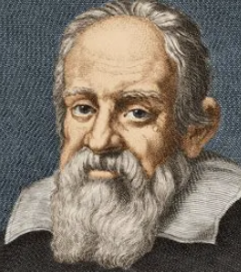
To apply oneself to great inventions, starting from the smallest beginnings, is no task for ordinary minds; to divine that wonderful arts lie hid behind trivial and childish things is a conception for superhuman talents.
3 months 3 weeks ago
Not only has a coercive system contributed and powerfully aided to create all the present economical, political and social evils, but it has given proof of its absolute impotence to raise the moral level of societies; it has not been even able to maintain it at the level it had already reached. If a benevolent fairy could only reveal to our eyes all the crimes that are committed every day, every minute, in a civilized society under cover of the unknown, or the protection of law itself, — society would shudder at that terrible state of affairs.
3 months 3 weeks ago
Once Diogenes, who was washing vegetables, ridiculed him as he passed by, and said, "If you had learnt to eat these vegetables, you would not have been a slave in the palace of a tyrant." But Aristippus replied, "And you, if you had known how to behave among men, would not have been washing vegetables."
▼
Source
Aristippus, 4.
3 months 3 weeks ago
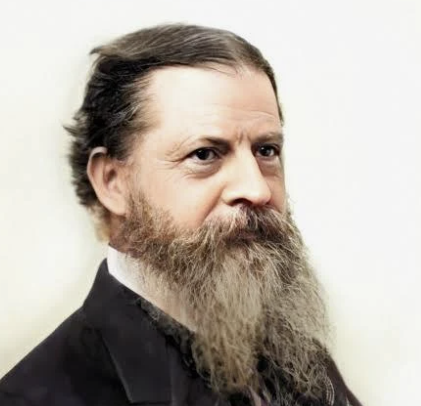
By an object, I mean anything that we can think, i.e. anything we can talk about.
▼
Source
"Reflections on Real and Unreal Objects", Undated, MS 966
3 months 3 weeks ago
It is not among extraordinary and fantastic things that excellence is to be found, of whatever kind it may be. We rise to attain it and become removed from it: it is oftenest necessary to stoop for it.
3 months 3 weeks ago
All truths are easy to understand once they are discovered; the point is to discover them.
▼
Source
As quoted in Angels in the workplace: stories and inspirations for creating a new world of work (1999) by Melissa Giovagnoli
3 months 3 weeks ago
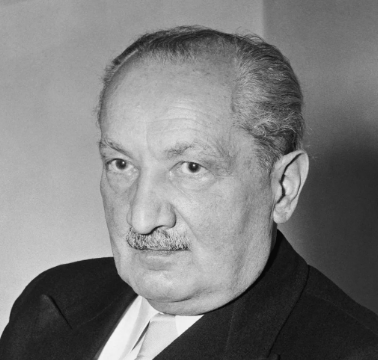
Kant's philosophy shifts for the first time the whole of modern thought and being (Desein) into the clarity and transparency of the foundation (Begrundung). This determines every attitude toward knowledge since then, as well as the bounds (Abgrenzungen) and appraisals of the sciences in the nineteenth century up to the present time. Therein Kant towers so far above all who precede and follow that even those who reject him or go beyond him still remain entirely dependent upon him. p. 55-56
3 months 3 weeks ago
It is absolutely incomprehensible to us that intelligent men — and such are not wanting in the collectivist party — can remain partisans of national or municipal parliaments after all the lessons history has given them — in France, in England, in Germany, or in the United States.
▼
Source
Ch. 13 : The Collectivist Wages System
3 months 3 weeks ago
"Bury me on my face," said Diogenes; and when he was asked why, he replied, "Because in a little while everything will be turned upside down."
▼
Source
Diogenes, 6.

3 months 3 weeks ago
It is not enough for a wise man to study nature and truth; he should dare state truth for the benefit of the few who are willing and able to think.
3 months 3 weeks ago
Now, let there be an indefinite succession of these inferential acts of comparative perception; and it is plain that the last moment will contain objectively the whole series. Let there be, not merely an indefinite succession, but a continuous flow of inference through a finite time; and the result will be a mediate objective consciousness of the whole time in the last moment. In this last moment, the whole series will be recognized, or known as known before.
3 months 3 weeks ago
One can forgive many Germans, but there are some Germans it is difficult to forgive. It is difficult to forgive Heidegger.
▼
Source
Emmanuel Lévinas, Heidegger's pre-WWII colleague at University of Freiburg, Nine Talmudic Readings, trans. Annette Aronowicz. Bloomington: Indiana University Press, 1994. p. 25
3 months 3 weeks ago
Mutual aid, even though it may represent one of the factors of evolution, covers nevertheless one aspect only of human relations; that by the side of this current, powerful though it may be, there is, and always has been, the other current — the self-assertion of the individual, not only in its efforts to attain personal or caste superiority, economical, political, and spiritual, but also in its much more important although less evident function of breaking through the bonds, always prone to become crystallized, which the tribe, the village community, the city, and the State impose upon the individual. In other words, there is the self-assertion of the individual taken as a progressive element. It is evident that no review of evolution can be complete, unless these two dominant currents are analyzed. However, the self-assertion of the individual or of groups of individuals, their struggles for superiority, and the conflicts which resulted therefrom, have already been analyzed, described, and glorified from time immemorial. In fact, up to the present time, this current alone has received attention from the epical poet, the annalist, the historian, and the sociologist. History, such as it has hitherto been written, is almost entirely a description of the ways and means by which theocracy, military power, autocracy, and, later on, the richer classes' rule have been promoted, established, and maintained.
3 months 3 weeks ago
If appearances are deceitful, then they do not deserve any confidence when they assert what appears to them to be true.
▼
Source
Pyrrho, 11.
3 months 3 weeks ago
The guiding question of Marx’s analysis was, How does capitalist society supply its members with the necessary use-values? And the answer disclosed a process of blind necessity, chance, anarchy and frustration. The introduction of the category of use-value was the introduction of a forgotten factor, forgotten, that is, by the classical political economy which was occupied only with the phenomenon of exchange value. In the Marxian theory, this factor becomes an instrument that cuts through the mystifying reification of the commodity world. P. 304
3 months 3 weeks ago
As a friend, he may have been obliging and self-sacrificing; as an enemy, he was, as in particular had to experience, malicious and low in the choice of his means.
3 months 3 weeks ago
The quality of feeling is the true psychical representative of the first category of the immediate as it is in its immediacy, of the present in its direct positive presentness. Qualities of feeling show myriad-fold variety, far beyond what the psychologists admit. This variety however is in them only insofar as they are compared and gathered into collections. But as they are in their presentness, each is sole and unique; and all the others are absolute nothingness to it — or rather much less than nothingness, for not even a recognition as absent things or as fictions is accorded to them. The first category, then, is Quality of Feeling, or whatever is such as it is positively and regardless of aught else.
▼
Source
Lecture II : The Universal Categories, § 1 : Presentness, CP 5.44
3 months 3 weeks ago
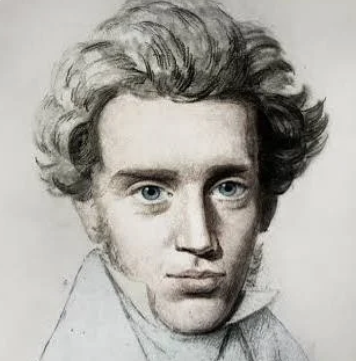
In order to learn true humility (I use this expression to describe the state of mind under discussion), it is good for a person to withdraw from the turmoil of the world (we see that Christ withdrew when the people wanted to proclaim him king as well as when he had to walk the thorny path), for in life either the depressing or the elevating impression is too dominant for a true balance to come about. Here, of course, individuality is very decisive, for just as almost every philosopher believes he has found the truth, just as almost every poet believes he has reached Mount Parnassus, just so we find on the other hand many who link their lives entirely to another, like a parasite to a plant, live in him, die in him (for example, the Frenchman in relation to Napoleon). But in the heart of nature, where a person, free from life's often nauseating air, breathes more freely, here the soul opens willingly to every noble impression. Here one comes out as nature's master, but he also feels that something higher is manifested in nature, something he must bow down before; he feels a need to surrender to this power that rules it all. (I, of course, would rather not speak of those who see nothing higher in nature than substance — people who really regard heaven as a cheese-dish cover and men as maggots who live inside it.) Here he feels himself great and small at one and the same time, and feels it without going so far as the Fichtean remark (in his Die Bestimmung des Menschen) about a grain of sand constituting the world, a statement not far removed from madness.
▼
Source
Journals 1A 68 (29 July 1835)

3 months 3 weeks ago
May we not say that, in the fortuitous combination of the productions of Nature, since only those creatures could survive in whose organizations a certain degree of adaptation was present, there is nothing extraordinary in the fact that such adaptation is actually found in all these species which now exist? Chance, one might say, turned out a vast number of individuals; a small proportion of these were organized in such a manner that the animals' organs could satisfy their needs. A much greater number showed neither adaptation nor order; these last have all perished.... Thus the species which we see today are but a small part of all those that a blind destiny has produced.
▼
Source
Essai de cosmologie (1750), qtd, in
3 months 3 weeks ago
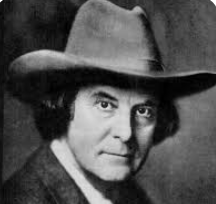
Piety is the tinfoil of pretense.
▼
Source
[http://books.google.com/books?id=Y4lHAAAAYAAJ&q="Piety+is+the+tin-foil+of+pretense"&pg=RA1-PA115#v=onepage The Philistine] (September 1908)
3 months 3 weeks ago
In the most advanced areas of this civilization, the social controls have been introjected to the point where even individual protest is affected at its roots. The intellectual and emotional refusal “to go along” appears neurotic and impotent. This is the socio-psychological aspect of the political event that marks the contemporary period: the passing of the historical forces which, at the preceding stage of industrial society, seemed to represent the possibility of new forms of existence. But the term “introjection” perhaps no longer describes the way in which the individual by himself reproduces and perpetuates the external controls exercised by his society. Introjection suggests a variety of relatively spontaneous processes by which a Self (Ego) transposes the “outer” into the “inner.” Thus introjection implies the existence of an inner dimension distinguished from and even antagonistic to the external exigencies—an individual consciousness and an individual unconscious apart from public opinion and behavior. The idea of “inner freedom” here has its reality: it designates the private space in which man may become and remain “himself.” Today this private space has been invaded and whittled down by technological reality. Mass production and mass distribution claim the entire individual, and industrial psychology has long since ceased to be confined to the factory. The manifold processes of introjection seem to be ossified in almost mechanical reactions. The result is, not adjustment but mimesis: an immediate identification of the individual with his society and, through it, with the society as a whole. This immediate, automatic identification (which may have been characteristic of primitive forms of association) reappears in high industrial civilization; its new “immediacy,” however, is the product of a sophisticated, scientific management and organization. In this process, the “inner” dimension of the mind in which opposition to the status quo can take root is whittled down. The loss of this dimension, in which the power of negative thinking—the critical power of Reason—is at home, is the ideological counterpart to the very material process in which advanced industrial society silences and reconciles the opposition. The impact of progress turns Reason into submission to the facts of life, and to the dynamic capability of producing more and bigger facts of the same sort of life. The efficiency of the system blunts the individuals' recognition that it contains no facts which do not communicate the repressive power of the whole. If the individuals find themselves in the things which shape their life, they do so, not by giving, but by accepting the law of things—not the law of physics but the law of their society.
▼
Source
pp. 9-11
3 months 3 weeks ago
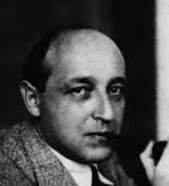
The particular conception of ideology operates primarily with a psychology of interests, while the total conception uses a more formal functional analysis, without any reference to motivations, confining itself to an objective description of the structural differences in minds operating in different social settings. The former assumes that this or that interest is the cause of a given lie or deception. The latter presupposes simply that there is a correspondence between a given social situation and a given perspective, point of view, or apperception mass. In this case, while an analysis of constellations of interests may often be necessary it is not to establish causal connections but to characterize the total situation. Thus interest psychology tends to be displaced by an analysis of the correspondence between the situation to be known and the forms of knowledge.
3 months 3 weeks ago
Pierce wrote as a logician and James as a humanist.
▼
Source
John Dewey, distinguishing the styles and focus of Peirce and William James, in The Development of American Pragmatism" in Studies in the History of Ideas (1925), Vol. II, p. 361
CivilSimian.com created by AxiomaticPanic, CivilSimian, Kalokagathia