
3 months 3 weeks ago
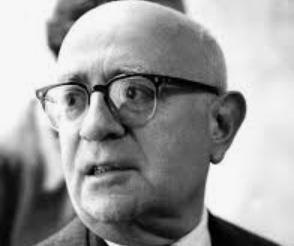
I remember well a junior seminar I gave with Paul Tillich shortly before the outbreak of the Third Reich. A participant spoke out against the idea of the meaning of existence. She said life did not seem very meaningful to her and she didn't know whether it had a meaning. The very voluble Nazi contingent became very excited by this and scraped the floor noisily with their feet. Now, I do not wish to maintain that this Nazi foot-shuffling proves or refutes anything in particular, but I do find it highly significant. I would say it is a touchstone for the relation of thinking to freedom. It raises the question whether thought can bear the idea that a given reality is meaningless and that mind is unable to orientate itself; or whether the intellect has become so enfeebled that it finds itself paralysed by the idea that all is not well with the world.
▼
Source
pp. 19-20

3 months 3 weeks ago
The soul that does not consider the question of the body’s self-sufficiency cannot make itself self-sufficient.
▼
Source
to Euphrates, Epp. Apoll. 82
3 months 3 weeks ago
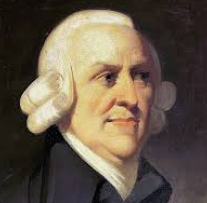
One dominant view in the eighteenth century, which was particularly persuasive among French economists, was that the government should actively promote trade and industry. Advocates of this view were called mercantilists. It was partly in response to the mercantilists that Adam Smith (who is often viewed as the founder of modern economics) wrote The Wealth of Nations (1776), in which he argued for a limited role for government. Smith attempted to show how competition and the profit motive would lead individuals—in pursuing their own private interests—to serve the public interest. The profit motive would lead individuals, competing against one another, to supply the goods other individuals wanted. Only firms that produced what was wanted and at as low a price as possible would survive. Smith argued that the economy was led, as if by an invisible hand, to produce what was desired—and in the best possible way. Adam Smith’s ideas had a powerful influence both on governments and on economists.
▼
Source
Joseph E. Stiglitz and Jay K. Rosengard, Economics of the Public Sector (4th ed., 2014)

3 months 3 weeks ago
The relation of word to thought, and the creation of new concepts is a complex, delicate and enigmatic process unfolding in our soul.
▼
Source
Pegagogicheskie Statli (Pedagogical Writings), pg. 143.

3 months 3 weeks ago
A man shall not be full of laughter and mockery, nor sad and mournful, but joyful. ... His desire shall not be so great that he rushes for wealth, nor shall he be lazy and refrain from working. But he shall live in contentment, have a modest occupation, and be occupied mainly with the Torah.
▼
Source
Chapter 2, Section 7, p. 33

3 months 3 weeks ago
Wealth begins in a tight roof that keeps the rain and wind out; in a good pump that yields you plenty of sweet water; in two suits of clothes, so to change your dress when you are wet; in dry sticks to burn; in a good double-wick lamp; and three meals; in a horse, or a locomotive, to cross the land; in a boat to cross the sea; in tools to work with; in books to read; and so, in giving, on all sides, by tolls and auxiliaries, the greatest possible extension to our powers, as if it added feet, and hands, and eyes, and blood, length to the day, and knowledge, and good-will.Wealth begins with these articles of necessity.
▼
Source
Wealth

3 months 3 weeks ago
There is no longer any religion when there is no longer any privileged religion. Take from religion its exclusive power and it will no longer exist.
▼
Source
As quoted in Karl Marx's "The Jewish Question" by ; as translated in Karl Marx, Frederick Engels : Collected Works (1975) edited by International Publishers
3 months 3 weeks ago
The study of Ethics would, no doubt, be far more simple, and its results far more "systematic," if, for instance, pain were an evil of exactly the same magnitude as pleasure is a good; but we have no reason whatever to assume that the Universe is such that ethical truths must display this kind of symmetry ... .
▼
Source
Principia Ethica (1903), ch. VI.
3 months 3 weeks ago
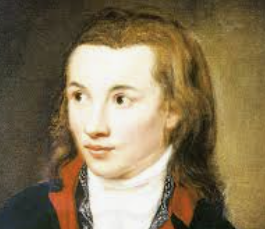
Tools arm the man. One can well say that man is capable of bringing forth a world; he lacks only the necessary apparatus, the corresponding armature of his sensory tools. The beginning is there. Thus the principle of a warship lies in the idea of the shipbuilder, who is able to incorporate this thought by making himself into a gigantic machine, as it were, through a mass of men and appropriate tools and materials. Thus the idea of a moment often required monstrous organs, monstrous masses of materials, and man is therefore a potential, if not an actual creator.
▼
Source
Fragment No. 88

3 months 3 weeks ago
A person who is shallow aspires to depth; one who is ugly aspires to beauty; one who is narrow aspires to breadth; one who is poor aspires to wealth; one who is humble aspires to esteem. Whatever one lacks in oneself he must seek outside.
▼
Source
Sources of Chinese Tradition (1999), vol. 1, p. 181
3 months 3 weeks ago
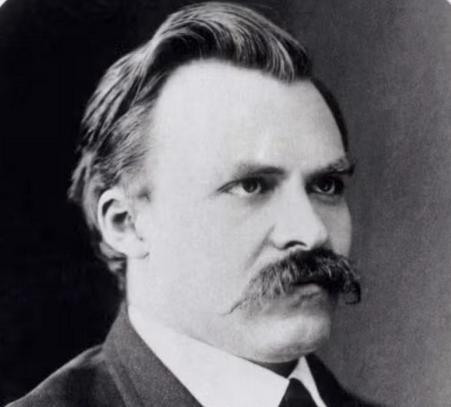
Never, however, was the struggle between truth and beauty greater than with the invasion of the Dionysian ritual; in this ritual, nature disclosed itself and spoke of its secret with terrible clarity, with that tone against which seductive seeming [...] A great revolution began in all forms of life
▼
Source
page 40
3 months 3 weeks ago
No one has yet added up all the heavy, stress-filled workdays as well as the hundreds, perhaps thousands, of lives that are wasted to produce the world's amusements. It is for this reason that "amusements" are not so amusing.
▼
Source
p. 81
3 months 3 weeks ago
Know that for the human mind there are certain objects of perception which are within the scope of its nature and capacity; on the other hand, there are, amongst things which actually exist, certain objects which the mind can in no way and by no means grasp: the gates of perception are closed against it. Further, there are things of which the mind understands one part, but remains ignorant of the other; and when man is able to comprehend certain things, it does not follow that he must be able to comprehend everything.
3 months 3 weeks ago
Fine manners need the support of fine manners in others, and this is a gift interred only by the self.
▼
Source
Behavior
3 months 3 weeks ago
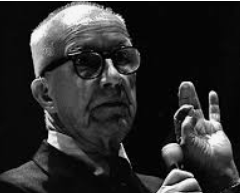
I have been a visitor at 320 universities and colleges around the world and always have asked those university audiences “How many of you are familiar with the word ‘synergy’?” I can say authoritatively that less than 10 percent of university audiences and less than 1 percent of non-university audiences are familiar with the word and meaning of synergy. Synergy is not a popular word. The word synergy is a companion to the word “energy.” Energy and synergy. The prefix “syn” of synthesis meaning “with, to integrate” and the “en” of energy means “separating out ”. Man is very familiar with energy, he has learned to separate out, or isolate certain behaviors of total nature and thus has become familiar with many of the separate natural behaviors such as optics.
3 months 3 weeks ago
True poetry is a function of awakening. It awakens us, but it must retain the memory of previous dreams.
▼
Source
Introduction
3 months 3 weeks ago
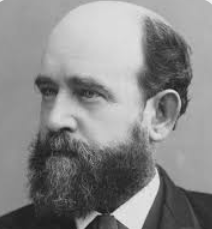
The intelligence required for the solving of social problems is not a thing of the mere intellect. It must be animated with the religious sentiment and warm with sympathy for human suffering. It must stretch out beyond self-interest, whether it be the self-interest of the few or of the many. It must seek justice. For at the bottom of every social problem we will find a social wrong.
▼
Source
Ch. 1 : The Increasing Importance of Social Questions
3 months 3 weeks ago
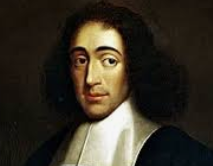
Man can, indeed, act contrarily to the decrees of God, as far as they have been written like laws in the minds of ourselves or the prophets, but against that eternal decree of God, which is written in universal nature, and has regard to the course of nature as a whole, he can do nothing.
▼
Source
Ch. 2, Of Natural Right
3 months 3 weeks ago
What is Nature? An encyclopedical, systematic Index or Plan of our Spirit. Why will we content us with the mere catalogue of our Treasures? Let us contemplate them ourselves, and in all ways elaborate and use them.
3 months 3 weeks ago
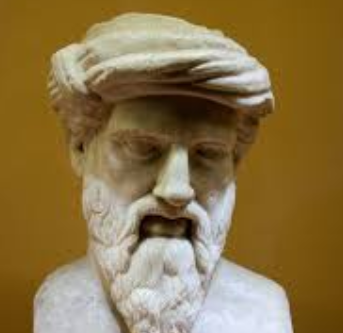
Write in the sand the flaws of your friend.
▼
Source
As quoted in Geary's Guide to the World's Great Aphorists (2007) by James Geary
3 months 3 weeks ago
The very reason the Greeks got so far is that they knew how to pick up the spear and throw it onward from the point where others had left it. Their skill in the art of fruitful learning was admirable. We ought to be learning from our neighbors precisely as the Greeks learned from theirs, not for the sake of learned pedantry but rather using everything we learn as a foothold which will take us up as high, and higher, than our neighbor.
▼
Source
p. 30
3 months 3 weeks ago
Tolstoy, himself a nobleman and the owner of a thousand serfs, conceived of dramas on a scale commensurate with his lands and estates.
▼
Source
Lewis H. Lapham, Money and Class in America, Chapter 3, The Golden Horde, p. 61
3 months 3 weeks ago
An ignorant man believes that the whole universe only exists for him: as if nothing else required any consideration. If, therefore, anything happens to him contrary to his expectation, he at once concludes that the whole universe is evil. If, however, he would take into consideration the whole universe, form an idea of it, and comprehend what a small portion he is of the Universe, he will find the truth. There are many... passages in the books of the prophets expressing the same idea.
▼
Source
Maimonides provides examples here from (Ps. cxliv. 4), (Job xxv. 6 & iv. 19) and (Isa. xl. 15). | Ch.12
3 months 3 weeks ago
Ever from one who comes to-morrow Men wait their good and truth to borrow.
▼
Source
Merlin's Song, II
3 months 3 weeks ago
Gravity is the inwardly cohering force acting integratively on all systems. Radiation is the outwardly disintegrating force acting divisively upon all systems.
▼
Source
[http://www.rwgrayprojects.com/synergetics/s00/p0000.html 000.113]
3 months 3 weeks ago
We cannot think with precision unless in our own minds we use words with precision.
▼
Source
General Introduction
3 months 3 weeks ago
When the wise man opens his mouth, the beauties of his soul present themselves to the view, like the statues in a temple
▼
Source
"Pythagorean Ethical Sentences From Stobæus" (1904)
3 months 3 weeks ago
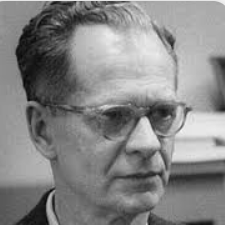
Society attacks early, when the individual is helpless.
▼
Source
Walden Two (1948), p. 95
3 months 3 weeks ago
The portion of the materia prima which is... is endowed with the intellectual faculty, possesses a special property by which each individual, according to the degree of his perfection, is enabled to manage, to calculate, and to discover what is conducive both to the temporary existence of the individual and to the preservation of the species. All other movements... by the individual members of the species are due to accident; they are not, according to Aristotle, the result of rule and management... Aristotle sees no difference between the falling of a leaf or a stone and the death of the good and noble people in the ship; nor does he distinguish between the destruction of a multitude of ants by an ox depositing on them his excrement and the death of worshippers killed by the fall of the house when its foundations give way.
▼
Source
Ch.17
3 months 3 weeks ago
Nothing can be preserved that is not good.
▼
Source
Books
3 months 3 weeks ago
War is obsolete. It could never have been done before. Only ten years ago... technology reached the point where it could be done. Since then the invisible technological-capability revolution has made it ever easier so to do.

3 months 3 weeks ago
Have and at all justified the hope that they would facilitate the means of procuring the comforts and conveniences of life? I have not the time... to attempt to follow the many changes in the metallurgy of the metals of the alkalis of the past century. Let me... show how the matter stands at the end of a hundred years.
3 months 3 weeks ago
Without Justice, no realm may prosper.

3 months 3 weeks ago
A tautology's truth is certain, a proposition's possible, a contradiction's impossible. (Certain, possible, impossible: here we have the first indication of the scale that we need in the theory of probability.) (4.464)
▼
Source
Original German: Die Wahrheit der Tautologie ist gewiss, des Satzes möglich, der Kontradiktion unmöglich
3 months 3 weeks ago
Actions are divided as regards their object into four classes; they are either purposeless, unimportant, or vain, or good.
▼
Source
Ch.25
3 months 3 weeks ago
Language is a city to the building of which every human being brought a stone; yet he is no more to be credited with the grand result than the acaleph which adds a cell to the coral reef which is the basis of the continent.
▼
Source
Quotation and Originality
3 months 3 weeks ago
I do not look upon human beings as good or bad. I don't think of my feet as a right foot and a wrong foot. ... I am a student of the effectiveness of the technological evolution in its all unexpected alterations of the preoccupations of humanity and in its all unexpected alterings of human behaviors and prospects.
3 months 3 weeks ago
If the potential of every number is in the monad, then the monad would be intelligible number in the strict sense, since it is not yet manifesting anything actual, but everything conceptually together in it.
▼
Source
On the Monad
3 months 3 weeks ago
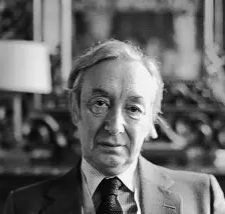
He was the antithesis of the philosopher of mystery and intimation, and he was not tempted to technicality. He lived assertively and was vain and cocksure — at some cost to his philosophical reputation, since other philosophers were as human in their judgements on him. He was also honest, humane, and more or less on the Left in politics. He liked society, was a man of many women, came to be self-judging, and after some sadness died bravely, on 27 June 1989.
▼
Source
Ted Honderich, in [http://www.ucl.ac.uk/~uctytho/AyerbyTH.html "A. J. Ayer's Philosophy and its Greatness"], his introduction to A. J. Ayer : Writings on Philosophy (2004).
3 months 3 weeks ago
Materials are indifferent, but the use which we make of them is not a matter of indifference.
▼
Source
Book II, ch. 5, § 1
3 months 3 weeks ago
I have often admired the mystical way of Pythagoras, and the secret Magic of numbers.
▼
Source
Thomas Browne, in Religio Medici (1642), Section 12
3 months 3 weeks ago
The seeds of heavenly bodies are deposited and cared for in the Milky Way, from which they emanate in swarms of comets that travel a ;long time and ordinarily gravitate towards various suns before becoming fixed in orbit.
▼
Source
L'attraction passioneé
3 months 3 weeks ago
Frazer is much more savage than most of his savages, for they are not as far removed from the understanding of spiritual matter as a twentieth-century Englishman. His explanations of primitive practices are much cruder than the meaning of these practices themselves.
▼
Source
Ch. 7 : Remarks on Frazer's Golden Bough, p. 131

3 months 3 weeks ago
Almighty God the Father is the one who can be prayed to, and prayed to for help, both for eternal life and – above all – for the needs and desires of this earthly life. It is therefore not surprising that religions continue to thrive, particularly in those parts of the world and among those sections of the population that feel the harshness of existence most acutely. In this sense, Karl Marx's old definition of religion as the opium of the people and the groaning of the oppressed creature is still valid, and is necessarily expressed precisely through the image of Almighty God the Father. The picture is completely different among the educated classes. Since the Enlightenment, since the days of Reimarus and Lessing, historical criticism and philological analysis have destroyed that image, as they have dismantled the supernatural claim of the Bible, the foundation of that image throughout our world, through Judaism, Christianity, and Islam. From this perspective, God is truly dead, as in Nietzsche's famous passage, and the fact that businesspeople have not noticed this does not detract from the fact itself: the biblical God died the moment people realized that they themselves had constructed his image.
3 months 3 weeks ago
Heroism feels and never reasons and therefore is always right.
▼
Source
Heroism
3 months 3 weeks ago
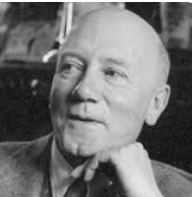
Those who, like the present writer, never had the privilege of meeting Sidgwick can infer from his writings, and still more from the characteristic philosophic merits of such pupils of his as McTaggart and Moore, how acute and painstaking a thinker and how inspiring a teacher he must have been. Yet he has grave defects as a writer which have certainly detracted from his fame. His style is heavy and involved, and he seldom allowed that strong sense of humour, which is said to have made him a delightful conversationalist, to relieve the uniform dull dignity of his writing. He incessantly refines, qualifies, raises objections, answers them, and then finds further objections to the answers. Each of these objections, rebuttals, rejoinders, and surrejoinders is in itself admirable, and does infinite credit to the acuteness and candour of the author. But the reader is apt to become impatient; to lose the thread of the argument: and to rise from his desk finding that he has read a great deal with constant admiration and now remembers little or nothing. The result is that Sidgwick probably has far less influence at present than he ought to have, and less than many writers, such as Bradley, who were as superior to him in literary style as he was to them in ethical and philosophical acumen. Even a thoroughly second-rate thinker like T. H. Green, by diffusing a grateful and comforting aroma of ethical "uplift", has probably made far more undergraduates into prigs than Sidgwick will ever make into philosophers.
▼
Source
From Five Types of Ethical Theory (1930)
3 months 3 weeks ago
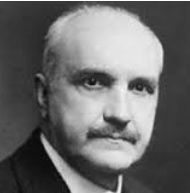
Most men's conscience, habits, and opinions are borrowed from convention and gather continual comforting assurances from the same social consensus that originally suggested them.
▼
Source
Ch. VIII: Ideal Society
3 months 3 weeks ago
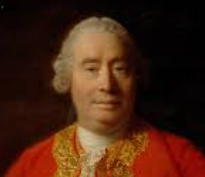
Next to the ridicule of denying an evident truth, is that of taking much pains to defend it; and no truth appears to me more evident, than that beasts are endow'd with thought and reason as well as men. The arguments are in this case so obvious, that they never escape the most stupid and ignorant.
▼
Source
Part 3, Section 16
3 months 3 weeks ago
It is the act of an ill-instructed man to blame others for his own bad condition; it is the act of one who has begun to be instructed, to lay the blame on himself; and of one whose instruction is completed, neither to blame another, nor himself. (5) [tr. George Long (1888)].
3 months 3 weeks ago
According to the account of Proclus (Book II. c. 4 ), Pythagoras was the first who gave to Geometry the form of a deductive science, by shewing the connexion of the geometrical truths then known, and their dependence on certain first principles. ...The traditionary account, that Pythagoras was the founder of scientific mathematics, is in some degree, supported by the statement of Diogenes Laertius, that he was chiefly occupied with the consideration of the properties of number, weight, and extension, besides music and astronomy. The passage of Cicero (De Nat. Deor. III. 36) may be referred to as evidence that later writers were unable to give any precise account of the mathematical discoveries of Pythagoras. To Pythagoras, however, is attributed the discovery of some of the most important elementary properties contained in the first book of Euclid's Elements. The very important truth contained in Prop. 47, Book I. is also ascribed to Pythagoras. ...Proclus attributes to him the discovery of that right-angled triangle, the three sides of which are respectively 3, 4, and 5 units. To Pythagoras also belongs the discovery, that there are only three kinds of regular polygons which can be placed so as to fill up the space round a point; namely, six equilateral triangles, four squares, and three regular hexagons. Proclus attributes to him the doctrine of incommensurables, and the discovery of the five regular solids, which, if not due to Pythagoras, originated in his school. In Astronomy he is reputed to have held, that the Sun is the centre of the system, and that the planets revolve round it. This has been called, from his name, the Pythagorean System, which was revived by Copernicus, A.D.1541, and proved by Newton.
▼
Source
Robert Potts, [https://books.google.com/books?id=GLZjAAAAcAAJ&pg=PR3 Euclid's Elements of Geometry] (1845) Introduction pp. iii-iv
CivilSimian.com created by AxiomaticPanic, CivilSimian, Kalokagathia