

5 months 1 week ago
After wars peace, after peace, another war. Every day men are born and others die.

5 months 1 week ago
Somebody ought to make a historical study of the relations between theology and corporal punishment in childhood. I have a theory that, wherever little boys and girls are systematically flagellated, the victims grow up to think of God as - 'Wholly Other'... A people's theology reflects the state of its children's bottoms. Look at the Hebrews - enthusiastic child-beaters. And so were all good Christians in the Age of Faith. Hence Jehovah, hence Original Sin and the infinitely offended Father of Roman and Protestant orthodoxy. Whereas among Buddhists and Hindus education has always been nonviolent. No laceration of little buttocks - therefore Tat tvam asi, thou art That, mind from Mind is not divided.... Major premise: God is Wholly Other. Minor premise: man is totally depraved. Conclusion: Do to your children's bottoms what was done to yours, what your Heavenly Father has been doing to the collective bottom of humanity ever since the Fall: whip, whip, whip!
5 months 1 week ago
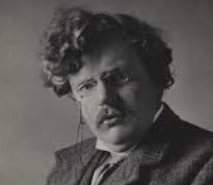
'You have no business to be an unbeliever. You ought to stand for all the things these stupid people call superstitions. Come now, don't you think there's a lot in those old wives' tales about luck and charms and so on, silver bullets included? What do you say about them as a Catholic?' 'I say I'm an agnostic,' replied Father Brown, smiling. 'Nonsense,' said Aylmer impatiently. 'It's your business to believe things.' 'Well, I do believe some things, of course,' conceded Father Brown; 'and therefore, of course, I don't believe other things.' .

5 months 1 week ago
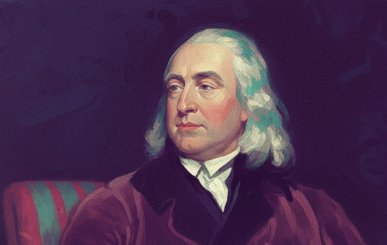
There are but few points in which the English, as a people, are entitled to the moral pre-eminence with which they are accustomed to compliment themselves at the expense of other nations: but, of these points, perhaps the one of greatest importance is, that the higher classes do not lie, and the lower, though mostly habitual liars, are ashamed of lying. To run any risk of weakening this feeling, a difficult one to create, or, when once gone, to restore, would be a permanent evil too great to be incurred for so very temporary a benefit as the ballot would confer, even on the most exaggerated estimate necessity.
▼
Source
[https://en.wikisource.org/wiki/Thoughts_on_Parliamentary_Reform Thoughts on Parliamentary Reform] (1859), pp. 48–49
5 months 1 week ago
Create all the happiness you are able to create: remove all the misery you are able to remove. Every day will allow you to add something to the pleasure of others, or to diminish something of their pains. And for every grain of enjoyment you sow in the bosom of another, you shall find a harvest in your own bosom; while every sorrow which you pluck out from the thoughts and feelings of a fellow creature shall be replaced by beautiful peace and joy in the sanctuary of your soul.
▼
Source
Advice to a young girl (22 June 1830)
5 months 1 week ago
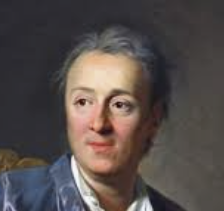
If ever anybody dedicated his whole life to the "enthusiasm for truth and justice" — using this phrase in the good sense — it was Diderot.
▼
Source
Friedrich Engels in Diderot: Interpreter of Nature (London: 1937)

5 months 1 week ago
Above the punitive city hangs this iron spider; and the criminal who is to be thus crucified by the new law is parricide.
▼
Source
Chapter Three, The Gentle Way in Punishment
5 months 1 week ago
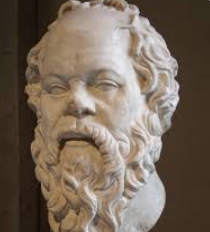
I only wish that wisdom were the kind of thing that flowed ... from the vessel that was full to the one that was empty.
▼
Source
Plato, Symposium, 175d
5 months 1 week ago
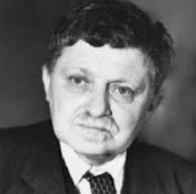
When the pessimist Besme says in La Ville that nothing is, he means precisely this, that there is no experience that withstands the analytical test.
5 months 1 week ago
For my own part, not believing in universal selfishness, I have no difficulty in admitting that Communism would even now be practicable among the elite of mankind, and may become so among the rest.
5 months 1 week ago
My intention was not to deal with the problem of truth, but with the problem of the truth-teller, or of truth telling... Who is able to tell the truth, about what, with what consequences, and with what relations to power. ...With the question of the importance of telling the truth, knowing who is able to tell the truth, and knowing why we should tell the truth, we have the roots of what we could call the 'critical' tradition in the West.
5 months 1 week ago
We admitted that everything living is born of the dead. For if the soul existed before birth, and in coming to life and being born can be born only from death and dying, must she not after death continue to exist, since she has to be born again?

5 months 1 week ago
Puerto Ricans...castrate their children. As a reality check. Because they know the colonial systems will not allow their children to achieve all the things that they want in life. I saw that in my childhood. I saw this impotence that was imposed on me since my childhood. But I said, “I’m going to build an empire of uselessness. I’m going to take from the Americans the ingenuity, and I’m going to take from the Spaniards the wisdom.” And that’s what I do. I mix wisdom and ingenuity.
▼
Source
On decolonization of the self. [https://www.academia.edu/36916781/A_Graphic_Revolution_Talking_Poetry_and_Politics_with_Giannina_Braschi] (Chiricú Journal, 2018)
5 months 1 week ago
There is room in the world, no doubt, and even in old countries, for a great increase of population, supposing the arts of life to go on improving, and capital to increase. But even if innocuous, I confess I see very little reason for desiring it. The density of population necessary to enable mankind to obtain, in the greatest degree, all the advantages both of co-operation and of social intercourse, has, in all the most populous countries, been attained. If the earth must lose that great portion of its pleasantness which it owes to things that the unlimited increase of wealth and population would extirpate from it, for the mere purpose of enabling it to support a larger but not a better or a happier population, I sincerely hope, for the sake of posterity, that they will be content to be stationary, long before necessity compels them to it..
▼
Source
Book IV, Chapter VI, §3, p. 516
5 months 1 week ago
Foucault has a very good discussion of what the theory of crime—modern economic theory of crime and punishment—has to say. I didn't have much to disagree with him. I think he was accurate on what it has to say. He goes also into a theory of formation of laws, which I had a lot of sympathy with as well.
▼
Source
Gary Becker, in “Becker on Ewald on Foucault on Becker” (May 9, 2012)
5 months 1 week ago
If death had only been the end of all, the wicked would have had a good bargain in dying, for they would have been happily quit not only of their body, but of their own evil together with their souls. But now, as the soul plainly appears to be immortal, there is no release or salvation from evil except the attainment of the highest virtue and wisdom. For the soul when on her progress to the world below takes nothing with her but nurture and education...
5 months 1 week ago
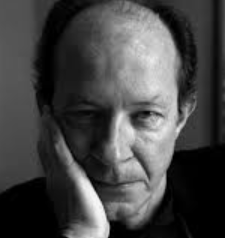
Kuhn acknowledges having used the term "paradigm" in two different meanings. In the first one, "paradigm" designates what the members of a certain scientific community have in common, that is to say, the whole of techniques, patents and values shared by the members of the community. In the second sense, the paradigm is a single element of a whole, say for instance Newton’s Principia, which, acting as a common model or an example... stands for the explicit rules and thus defines a coherent tradition of investigation. Thus the question is for Kuhn to investigate by means of the paradigm what makes possible the constitution of what he calls "normal science". That is to say, the science which can decide if a certain problem will be considered scientific or not. Normal science does not mean at all a science guided by a coherent system of rules, on the contrary, the rules can be derived from the paradigms, but the paradigms can guide the investigation also in the absence of rules. This is precisely the second meaning of the term "paradigm", which Kuhn considered the most new and profound, though it is in truth the oldest.
5 months 1 week ago
My father's moral inculcations were at all times mainly those of the "Socratici viri;" justice, temperance (to which he gave a very extended application), veracity, perseverance, readiness to encounter pain and especially labour; regard for the public good; estimation of persons according to their merits, and of things according to their intrinsic usefulness; a life of exertion in contradiction to one of self-indulgent sloth. These and other moralities he conveyed in brief sentences, uttered as occasion arose, of grave exhortation, or stern reprobation and contempt.But though direct moral teaching does much, indirect does more; and the effect my father produced on my character, did not depend solely on what he said or did with that direct object, but also, and still more, on what manner of man he was.
▼
Source
([https://archive.org/details/autobiography01mill/page/47/mode/1up p. 47])
5 months 1 week ago
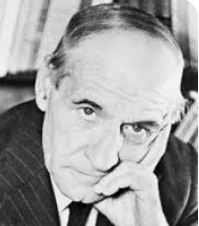
Is it not altogether absurd that, under actual circumstances, the average man does not feel spontaneously, and without being preached at, an ardent enthusiasm for those sciences and the related ones of biology?… Every day furnishes a new invention which this average man utilises. Every day produces a new anesthetic or vaccine from which this average man benefits. … How is it, nevertheless, that there is no sign of the masses imposing on themselves any sacrifice of money or attention in order to endow science more worthily? Far from this being the case, the post-war period has converted the man of science into a new social pariah.
▼
Source
Chap.IX: The Primitive and the Technical

5 months 1 week ago
For we carry our fate with us — and it carries us. (Hays translation)
▼
Source
III, 4
5 months 1 week ago
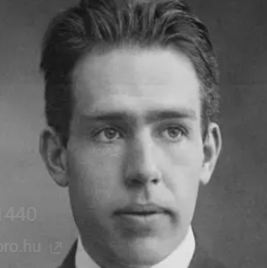
Anyone who is not shocked by quantum theory has not understood it.
▼
Source
Werner Heisenberg recounts a personal conversation he had with Pauli and Bohr in 1952 in which Bohr says, "Those who are not shocked when they first come across quantum theory cannot possibly have understood it." Heisenberg, Werner, Physics and Beyond. (N
5 months 1 week ago
The state will only ever be a half of itself.
▼
Source
Socrates in Plato's Republic talking about women lacking rights. As quoted by Bettany Hughes: [http://www.telegraph.co.uk/women/womens-life/11785181/Feminism-started-with-the-Buddha-and-Confucius-25-centuries-ago.html "Feminism started with the Buddha and
5 months 1 week ago
In order for music to free itself, it will have to pass over to the other side — there where territories tremble, where the structures collapse, where the ethoses get mixed up, where a powerful song of the earth is unleashed, the great ritornelles that transmutes all the airs it carries away and makes return.
▼
Source
from Essays Critical and Clinical, p. 104.
5 months 1 week ago
It was in America, while I was fighting for the cause of industrial liberty, that I first felt the desire to see this plant from another world flower in my own country. This desire has since dominated all my thinking. Without respite I studied the course of advancement and further assured myself that the progress of civilisation could have no other end. And I invoked this aim of true liberty, true public happiness, with my most fervent hopes. For me every event that seemed to point in that direction was a new joy, a new hope. The French Revolution broke out, and at first it seemed to be thoroughly industrial. But it soon lost that character, and the many noble efforts which ought to have produced liberty resulted only in the tyranny of the Jacobins and military despotism. A happier age has now started to dawn for us: at last a government has been established which declares its own power to be based on the power of opinion. Ever since then France has yielded to common sense, that is, to the free discussion of its common interests.
5 months 1 week ago
I never turned recreant to intellectual culture, or ceased to consider the power and practice of analysis as an essential condition both of individual and of social improvement. But I thought that it had consequences which required to be corrected, by joining other kinds of cultivation with it. The maintenance of a due balance among the faculties, now seemed to me of primary importance. The cultivation of the feelings became one of the cardinal points in my ethical and philosophical creed.
▼
Source
([https://archive.org/details/autobiography01mill/page/143/mode/1up pp. 143-144])
5 months 1 week ago
Be it well understood, I am free by compulsion, whether I wish to be or not. Freedom is not an activity pursued by an entity that, apart from and previous to such pursuit, is already possessed of a fixed being. To be free means to be lacking in constitutive identity, not to have subscribed to a determined being, to be able to be other than what one was, to be unable to install oneself once and for all in any given being. The only attribute of the fixed, stable being in the free being is this constitutive instability.
▼
Source
“Man has no nature”
5 months 1 week ago
Death hangs over thee: whilst yet thou livest, whilst thou mayest, be good.
▼
Source
IV, 14 (trans. Meric Casaubon) | Variant: Death hangs over thee. While thou livest, while it is in thy power, be good. | τὸ χρεὼν ἐπήρτηται· ἕως ζῇς, ἕως ἔξεστιν, ἀγαθὸς γενοῦ. | IV, 17 (trans. George Long)

5 months 1 week ago
I am a utilitarian. I am also a vegetarian. I am a vegetarian because I am a utilitarian.
▼
Source
Utilitarianism and Vegetarianism, Philosophy & Public Affairs, 9(4): 325 (1980).

5 months 1 week ago
Victory is reserved for those who are willing to pay its price.
▼
Source
Attributed to Sun Tzu in multiple books and internet sites, but this text does not appear in The Art of War and seems to be a more recent creation.
5 months 1 week ago
My privilege is to be spectator of my life drama, to be fully conscious of the tragi-comedy of my own destiny, and, more than that, to be in the secret of the tragi-comic itself, that is to say, to be unable to take my illusions seriously, to see myself, so to speak, from the theater on the stage, or to be like a man looking from beyond the tomb into existence. I feel myself forced to feign a particular interest in my individual part, while all the time I am living in the confidence of the poet who is playing with all these agents which seem so important, and knows all that they are ignorant of. It is a strange position, and one which becomes painful as soon as grief obliges me to betake myself once more to my own little rôle, binding me closely to it, and warning me that I am going too far in imagining myself, because of my conversations with the poet, dispensed from taking up again my modest part of valet in the piece. Shakespeare must have experienced this feeling often, and Hamlet, I think, must express it somewhere. It is a Doppelgängerei, quite German in character, and which explains the disgust with reality and the repugnance to public life, so common among the thinkers of Germany. There is, as it were, a degradation a gnostic fall, in thus folding one's wings and going back again into the vulgar shell of one's own individuality. Without grief, which is the string of this venturesome kite, man would soar too quickly and too high, and the chosen souls would be lost for the race, like balloons which, save for gravitation, would never return from the empyrean.
▼
Source
8 November 1852
5 months 1 week ago
A society that will trade a little liberty for a little order will lose both, and deserve neither.
▼
Source
Also attributed to Thomas Jefferson, this is a modern paraphrase of a statement of Benjamin Franklin: "Those who would give up Essential Liberty to purchase a little Temporary Safety, deserve neither Liberty nor Safety."
5 months 1 week ago
You don't love yourself enough. Or you'd love your nature too, and what it demands of you. People who love what they do wear themselves down doing it, they even forget to wash or eat. Do you have less respect for your own nature than the engraver does for engraving, the dancer for the dance, the miser for money or the social climber for status? When they're really possessed by what they do, they'd rather stop eating and sleeping than give up practicing their arts. Is helping others less valuable to you? Not worth your effort?
▼
Source
V, 1(Hays translation)
5 months 1 week ago
Ethics seems a morass which we have to cross, but get hopelessly bogged in when we make the attempt.
▼
Source
Chapter 6, A New Understanding Of Ethics, p. 167

5 months 1 week ago
You ask whether it is possible to understand the indication regarding the appearance of Christ in lesser images and in reality. Certainly. Medievalism made an inaccessible idol of Christ and deprived him of any humanity, therefore also of divinity. Thus, all the Teachings of the East proclaim that there is no god (or gods) who was not at one time a man. Such a forced separation of Christ from human essence threatened and still threatens a complete break in the communion of humanity with the Higher World. One can trace how in the Middle Ages there appeared every now and then great saints who tried to re-establish this almost lost communion, and all of them insisted precisely on the human essence of Christ. Especially strong affirmations of this can be found in the pages of the autobiography of St. Theresa, the Spanish saint of the sixteenth century, and still earlier, in the visions and writings of St. Catherine of Siena and St. Gertrude. Thus, the form and the quality of the visions and communications received through such communion always correspond with the level of the consciousness of those who see and receive them, and also with the needs of the time. As it was said, "In is precisely by following the character of the visions that the best history of the intellect may be written."
▼
Source
Helena Roerich, Letters of Helena Roerich II, (2 April 1936)

5 months 1 week ago
The manners of our fore-fathers were, I believe, in many respects better: they had more probity perhaps, they had certainly more show of honour, and greater industry.
▼
Source
p. 18
5 months 1 week ago
In the life of the mass-order, the culture of the generality tends to conform to the demands of the average human being. Spirituality decays through being diffused among the masses when knowledge is impoverished in every possible way by rationalisation until it becomes accessible to the crude understanding of all.
5 months 1 week ago
How many together with whom I came into the world are already gone out of it.
▼
Source
VI, 56

5 months 1 week ago
If we rejoice with the world, there is reason to fear that with the world we shall grieve too. But when the world rejoices, let us grieve; and when the world afterward grieves, we shall rejoice.
▼
Source
Chapter XIII, Of the Observance of Days Connected with Idolatry
5 months 1 week ago
He engaged young, and distinguished himself in business; and his penetration was almost intuition. I am old enough to have heard him speak in parliament. And I remember that, though prejudiced against him by party, I felt all the force and charms of his eloquence. Like Belial in Milton, “he made the worse appear the better cause.” All the internal and external advantages and talents of an orator are undoubtedly his. Figure, voice, elocution, knowledge, and, above all, the purest and most florid diction, with the justest metaphors and happiest images, had raised him to the post of Secretary at War, at four-and-twenty years old, an age at which others are hardly thought fit for the smallest employments.
▼
Source
Earl of Chesterfield to his son (12 December 1749) quoted in Letters Written By The Late Right Honourable Philip Dormer Stanhope, Earl Of Chesterfield, To His Son, Philip Stanhope, Esq. Late Envoy-Extraordinary At The Court Of Dresden: Together with Sever
5 months 1 week ago
Where any work can be done conformably to the reason which is common to gods and men, there we have nothing to fear; for where we are able to get profit by means of the activity which is successful and proceeds according to our constitution, there no harm is to be suspected.
▼
Source
VII, 53

5 months 1 week ago
What is all Knowledge too but recorded Experience, and a product of History; of which, therefore, Reasoning and Belief, no less than Action and Passion, are essential materials?
▼
Source
Carlyle, Essays, On History. Quote reported in Hoyt's New Cyclopedia Of Practical Quotations (1922), p. 419-23.
5 months 1 week ago
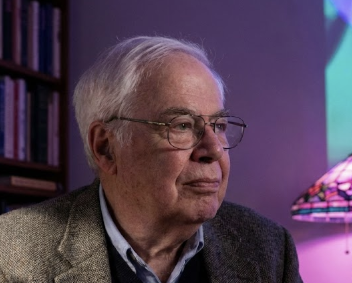
Galileo claimed to have discovered, by astronomical observation through a telescope, that Copernicus was right that the earth revolved around the sun. [Cardinal] Bellarmine claimed that he could not be right because his view ran counter to the Bible. Rorty says, astoundingly, that Bellarmine's argument was just as good as Galileo's. It is just that the rhetoric of "science" had not at that time been formed as part of the culture of Europe. We have now accepted the rhetoric of "science," he writes, but it is not more objective or rational than Cardinal Bellarmine's explicitly dogmatic Catholic views. According to Rorty, there is no fact of the matter about who was right because there are no absolute facts about what justifies what. Bellarmine and Galileo, in his view, just had different epistemic systems.
▼
Source
John Searle, "Why Should You Believe It?", The New York Review of Books, 24 September 2009

5 months 1 week ago
I die the king's faithful servant, and God's first.
▼
Source
Words on the scaffold, attributed in The Essentials of Freedom : The Idea and Practice of Ordered Liberty in the Twentieth Century as explored at Kenyon College (1960) by Paul Gray Hoffman, p. 43 | First reported in indirect speech in the Paris Newsletter
5 months 1 week ago
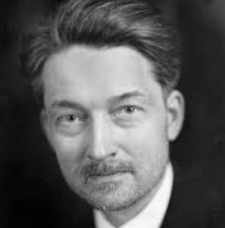
Western humanism has religious and transcendent sources without which it is incomprehensible to itself.
▼
Source
p. 154.
5 months 1 week ago
The things... which are proper to the understanding no other man is used to impede, for neither fire, nor iron, nor tyrant, nor abuse, touches it in any way. When it has been made a sphere, it continues a sphere.
▼
Source
VIII, 41
5 months 1 week ago
Instruction, that mysterious communing of Wisdom with Ignorance, is no longer an indefinable tentative process, requiring a study of individual aptitudes, and a perpetual variation of means and methods, to attain the same end; but a secure, universal, straightforward business, to be conducted in the gross, by proper mechanism.
5 months 1 week ago
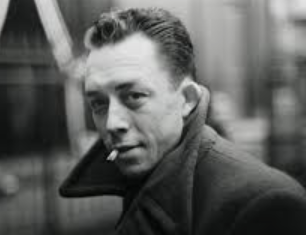
Nous nous trompons toujours deux fois sur ceux que nous aimons: d'abord à leur avantage, puis à leur désavantage.
▼
Source
We always deceive ourselves twice about the people we love — first to their advantage, then to their disadvantage. | A Happy Death (written 1938), first published as La mort heureuse (1971), as translated by Richard Howard (1972)

5 months 1 week ago
They are things beyond reasoning sensible, practical truths, not mere vagaries and rambles of the brain.
5 months 1 week ago
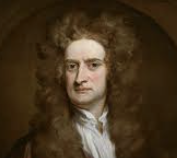
And so, supposing that light impinging on a refracting or reflecting ethereal superficies puts it into a vibrating motion, that physical superficies being by the perpetual applause of rays always kept in a vibrating motion, and the ether therein continually expanded and compressed by turns, if a ray of light impinge on it when it is much compressed, I suppose it is then too dense and stiff to let the ray through, and so reflects it; but the rays that impinge on it at other times, when it is either expanded by the interval between two vibrations or not too much compressed and condensed, go through and are refracted.
5 months 1 week ago
They must at the same time be so expressed as to be capable of appealing to the sentiments of the masses. An ideology embodying the interests of a given ruling class would not be of the slightest use as social cement if it openly expressed its function of keeping the ruling class in power over the rest of society. The ideology must ostensibly speak in the name of 'humanity', 'the people', the race', 'the future', 'God', 'destiny', and so on.
▼
Source
186; as cited in: Thomas Diefenbach (2009) Management and the Dominance of Managers. p. 128
CivilSimian.com created by AxiomaticPanic, CivilSimian, Kalokagathia