
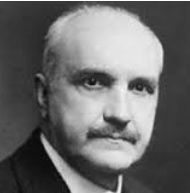
3 months 3 weeks ago
I was still “at the church door”. Yet in belief, in the clarification of my philosophy, I had taken an important step. I no longer wavered between alternative views of the world, to be put on or taken off like alternative plays at the theatre. I now saw that there was only one possible play, the actual history of nature and of mankind, although there might well be ghosts among the characters and soliloquies among the speeches. Religions, all religions, and idealistic philosophies, all idealistic philosophies, were the soliloquies and the ghosts. They might be eloquent and profound. Like Hamlet's soliloquy they might be excellent reflective criticisms of the play as a whole. Nevertheless they were only parts of it, and their value as criticisms lay entirely in their fidelity to the facts, and to the sentiments which those facts aroused in the critic.
▼
Source
p. 169
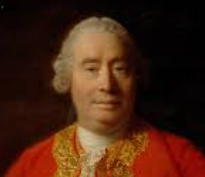
3 months 3 weeks ago
The universal propensity to believe in invisible, intelligent power, if not an original instinct, being at least a general attendant of human nature, may be considered as a kind of mark or stamp, which the divine workman has set upon his work; and nothing surely can more dignify mankind, than to be thus selected from all other parts of the creation, and to bear the image or impression of the universal Creator. But consult this image, as it appears in the popular religions of the world. How is the deity disfigured in our representations of him! What caprice, absurdity, and immorality are attributed to him! How much is he degraded even below the character, which we should naturally, in common life, ascribe to a man of sense and virtue!
▼
Source
Part XV - General corollary
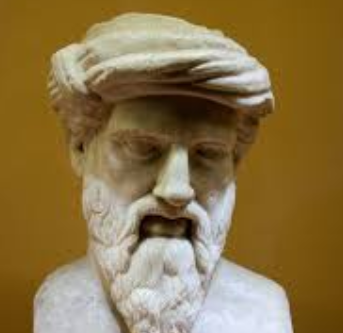
3 months 3 weeks ago
[T]he most striking result of the Greeks' faith that the world could be understood in terms of rational principles was the invention of abstract mathematics. The most grandiose ambition they conceived was to explain all the properties of Nature in arithmetical terms alone. This was the aim of the Pythagoreans... [T]hey... knew that the phenomena of the Heavens recurred in a cyclical manner; and... discovered ...that the sound of a vibrating string ...is simply related to the length ...and its 'harmonics' always go with simple fractional lengths. ...[S]ince the Pythagoreans were a religious brotherhood... they thought that this search would lead to more than explanations alone. If one discovered the mathematical harmonies in things, one should... discover how to put oneself in harmony with Nature. ...[T]hey had ...positive grounds for thinking that both astronomy and acoustics were at the bottom arithmetical; and the study of simple fractions was called 'music' right down until the late Middle Ages.
▼
Source
, , The Fabric of the Heavens: The Development of Astronomy and Dynamics (1962) Ch. 2 The Invention of Theory.

3 months 3 weeks ago
The way you use the word "God" does not show whom you mean — but, rather, what you mean.
▼
Source
p. 50e
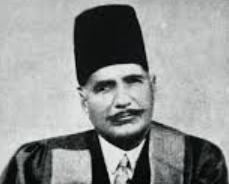
3 months 3 weeks ago
Heart – “It is absolutely certain that God does exist.”Head – “But, my dear boy! Existence is one of my categories, and you have no right to use it.”Heart – “So much the better, my Aristotle!”
▼
Source
[http://www.allamaiqbal.com/poet/prose/english/stray.pdf Stray Reflections]
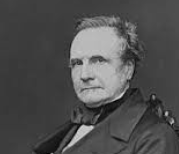
3 months 3 weeks ago
The triumph of the industrial arts will advance the cause of civilization more rapidly than its warmest advocates could have hoped, and contribute to the permanent prosperity and strength of the country far more than the most splendid victories of successful war.
▼
Source
p. xii-xiii; Cited in: Samuel Smiles [http://books.google.com/books?id=5trBcaXuazgC&pg=PA104 Industrial biography; iron-workers and tool-makers], (1864) p. 104
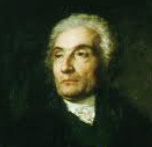
3 months 3 weeks ago
As long as the aristocracy is healthy, the name of the sovereign sacred to it, and it loves the monarchy passionately, the State is unshakeable, whatever be the qualities of the king. But once it loses its greatness, its pride, its energy, its faith, the spirit withdraws, the monarchy is dead, and its cadaver is left to the worms.
▼
Source
p. 127
3 months 3 weeks ago
Any question of philosophy ... which is so obscure and uncertain, that human reason can reach no fixed determination with regard to it; if it should be treated at all; seems to lead us naturally into the style of dialogue and conversation.
▼
Source
Pamphilus to Hermippus, Prologue
3 months 3 weeks ago
It seems to me that, in every culture, I come across a chapter headed Wisdom. And then I know exactly what is going to follow: Vanity of vanities, all is vanity.
▼
Source
Conversation of 1934

3 months 3 weeks ago
The fiction of an ideal language composed of pure atomic statements is as metaphysical as the fiction of Laplace's 'spirit'. Scientific language, with its ever growing equipment of systematic symbol formations, can by no means be regarded as an approximation to such an ideal language.
▼
Source
p. 91
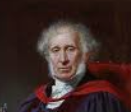
3 months 3 weeks ago
It is not easy to devise a cure for such a state of things (the declining taste for science). The most obvious remedy is to provide the educated classes with a series of works on popular and practical science, freed from mathematical symbols and technical terms, written in simple and perspicuous language, and illustrated by facts and experiments which are level to the capacity of ordinary minds.
▼
Source
in a review of William Herschel's A Treatise on Sound, Quarterly Review, Vol. 44, No. 88 (January-February 1831), [https://archive.org/details/sim_quarterly-review-1809_january-february-1831_44/page/476/mode/2up,M1 p. 476]. | also quoted by Brewster himse
3 months 3 weeks ago
Never have nations been civilized, except by religion.
▼
Source
XXXIII, p. 99
3 months 3 weeks ago
Hume, from whose fascinating narrative the great mass of the reading public are still contented to take their opinions, hated religion so much that he hated liberty for having been allied with religion, and has pleaded the cause of tyranny with the dexterity of an advocate, while affecting the impartiality of a judge.
▼
Source
Thomas Babington Macaulay, 'Milton', The Edinburgh Review (August 1825), quoted in Thomas Babington Macaulay, Critical and Historical Essays, Contributed to The Edinburgh Review, Vol. I (1843), p. 31

3 months 3 weeks ago
In existing States a fresh law is looked upon as a remedy for evil. Instead of themselves altering what is bad, people begin by demanding a law to alter it. … In short, a law everywhere and for everything! A law about fashions, a law about mad dogs, a law about virtue, a law to put a stop to all the vices and all the evils which result from human indolence and cowardice. We are so perverted by an education which from infancy seeks to kill in us the spirit of revolt, and to develop that of submission to authority; we are so perverted by this existence under the ferrule of a law, which regulates every event in life — our birth, our education, our development, our love, our friendship — that, if this state of things continues, we shall lose all initiative, all habit of thinking for ourselves. Our society seems no longer able to understand that it is possible to exist otherwise than under the reign of law, elaborated by a representative government and administered by a handful of rulers. And even when it has gone so far as to emancipate itself from the thralldom, its first care has been to reconstitute it immediately. "The Year I of Liberty" has never lasted more than a day, for after proclaiming it men put themselves the very next morning under the yoke of law and authority.
▼
Source
I
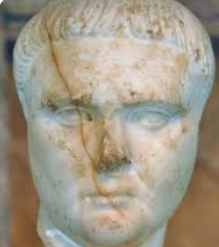
3 months 3 weeks ago
If in the guise of philosophers, they [declaim speeches] with a view to their own profit and reputation, and not to improve you, that indeed is shocking. For it is as if a physician when visiting patients should disregard their treatment and their restoration to health, and should bring them flowers and courtesans and perfume.
▼
Source
Discourse 32, J. Cohoon and H. Crosby, trans. (1940), p. 181
3 months 3 weeks ago
Christianity is the religion of Europe, it is mingled with all our institutions, it is the hand of this religion that fashioned these new nations of Europe. The cross is on all the crowns, all the codes begin with its symbol. The kings are anointed, the priests are magistrates, the priesthood is an order, the empire is sacred, the religion is civil. The two powers are merged; each lends the other part of its strength, and, despite the quarrels that have divided these two sisters, they cannot live separated.
▼
Source
"Reflections on Protestantism in its Relations with Sovereignty," 1798, Œuvre critique, 8:64–5.
3 months 3 weeks ago
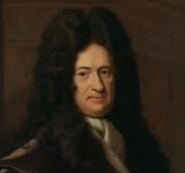
As regards the objection that possibles are independent of the decrees of God I grant it of actual decrees (although the Cartesians do not at all agree to this), but I maintain that the possible individual concepts involve certain possible free decrees; for example, if this world was only possible, the individual concept of a particular body in this world would involve certain movements as possible, it would also involve the laws of motion, which are the free decrees of God; but these, also, only as possibilities. Because, as there are an infinity of possible worlds, there are also an infinity of laws, certain ones appropriate to one; others, to another, and each possible individual of any world involves in its concept the laws of its world.
▼
Source
(May, 1686) as quoted in George R. Montgomery, Tr., "Correspondence between Leibniz and Arnauld," [https://books.google.com/books?id=5-IeAQAAMAAJ Leibniz: Discourse on metaphysics; correspondence with Arnauld, and Monadology] (1916) VIII, p. 108

3 months 3 weeks ago
The source of the errors of these two sects, is in not having known that the state of man at the present time differs from that of his creation; so that the one, remarking some traces of his first greatness and being ignorant of his corruption, has treated nature as sound and without need of redemption, which leads him to the height of pride; whilst the other, feeling the present wretchedness and being ignorant of the original dignity, treats nature as necessarily infirm and irreparable, which precipitates it into despair of arriving at real good, and thence into extreme laxity.
3 months 3 weeks ago
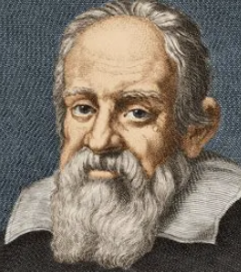
Nature … is inexorable and immutable; she never transgresses the laws imposed upon her, or cares a whit whether her abstruse reasons and methods of operation are understandable to men. For that reason it appears that nothing physical which sense-experience sets before our eyes, or which necessary demonstrations prove to us, ought to be called in question (much less condemned) upon the testimony of biblical passages which may have some different meaning beneath their words. For the Bible is not chained in every expression to conditions as strict as those which govern all physical effects; nor is God any less excellently revealed in Nature's actions than in the sacred statements of the Bible.
3 months 3 weeks ago
Have not prisons — which kill all will and force of character in man, which enclose within their walls more vices than are met with on any other spot of the globe — always been universities of crime? Is not the court of a tribunal a school of ferocity?
3 months 3 weeks ago
The market is a place set apart where men may deceive each other.
▼
Source
Anacharsis, 5.
3 months 3 weeks ago
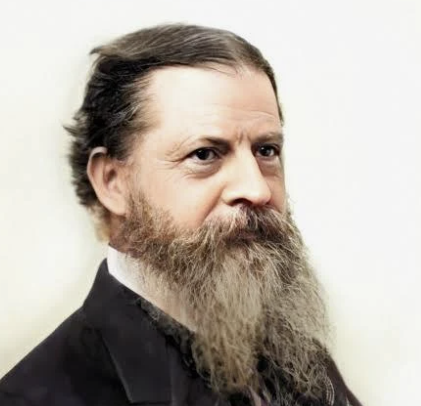
The consciousness of a general idea has a certain "unity of the ego" in it, which is identical when it passes from one mind to another. It is, therefore, quite analogous to a person, and indeed, a person is only a particular kind of general idea.
▼
Source
"Man's Glassy Essence" in The Monist, Vol. III, No. 1 (October 1892)
3 months 3 weeks ago
If they have entered into the spirit if these rules, and if the rules have made sufficient impression on them to become rooted and established in their minds, they will feel how much difference there is between what is said here and what a few logicians may perhaps have written by chance approximating to it in a few passages of their works.
3 months 3 weeks ago
What has philosophy got to do with measuring anything? It's the mathematicians you have to trust, and they measure the skies like we measure a field.
▼
Source
"Matteo" in Concerning the New Star (1606)
3 months 3 weeks ago
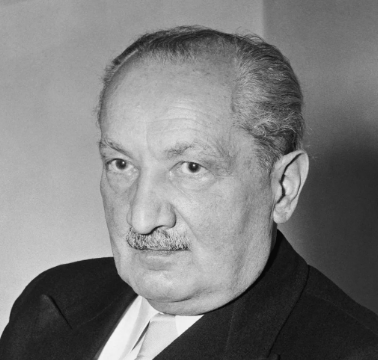
Existential analytics [the object of the book] decides nothing about the existence of God, about human freedom and the immortality of the soul.
▼
Source
Emanuele Severino. As quoted in [https://www.raicultura.it/filosofia/articoli/2019/01/Emanuele-Severino-Nietzsche-Leopardi-Gentile-e-il-sottosuolo-filosofico-del-nostro-tempo-0176ac13-3d61-4929-8385-bab Emanuele Severino: il sottosuolo filosofico del nost
3 months 3 weeks ago
The landlord owes his riches to the poverty of the peasants, and the wealth of the capitalist comes from the same source.
▼
Source
Ch. 4 : Expropriation
3 months 3 weeks ago
The chief good he has defined to be the exercise of virtue in a perfect life.
▼
Source
Aristotle, 13.
3 months 3 weeks ago
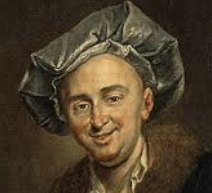
Descartes, a genius made to blaze new paths and to go astray in them, supposed with some other philosophers that God is the only efficient cause of motion, and that every instant He communicates motion to all bodies. But this opinion is but an hypothesis which he tried to adjust to the light of faith; and in so doing he was no longer attempting to speak as a philosopher or to philosophers. Above all he was not addressing those who can be convinced only by the force of evidence.
▼
Source
Ch. V Concerning the Moving Force of Matter
3 months 3 weeks ago
We have here a question of difficulty, analogous to the question of nominalism and realism.
3 months 3 weeks ago
Everything functions. That is exactly what is uncanny. Everything functions and the functioning drives us further and further to more functioning, and technology tears people away and uproots them from the Earth more and more. I don't know if you are scared; I was certainly scared when I recently saw the photographs of the Earth taken from the Moon. We don't need an atom bomb at all; the uprooting of human beings is already taking place. We only have purely technological conditions left. It is no longer an earth on which human beings live today.
3 months 3 weeks ago
Science, down to the present day, remains permeated with Malthus's teachings. Political economy continues to base its reasoning upon a tacit admission of the impossibility of rapidly increasing the productive powers of a nation, and of thus giving satisfaction to all wants. This postulate stands, undiscussed, in the background of whatever political economy, classical or socialist, has to say about exchange-value, wages, sale of labour force, rent, exchange and consumption. Political economy never rises above the hypothesis of a limited and insufficient supply of the necessities of life; it takes it for granted. And all theories connected with political economy retain the same erroneous principle. Nearly all socialists too, admit the postulate. Nay, even in biology (so deeply interwoven now with sociology) we have recently seen the theory of variability of species borrowing a quite unexpected support from its having been connected by Darwin and Wallace with Malthus's fundamental idea, that the natural resources must inevitably fail to supply the means of existence for the rapidly multiplying animals and plants.
3 months 3 weeks ago
It takes a wise man to discover a wise man.
▼
Source
Xenophanes, 3.
3 months 3 weeks ago
The free will, the actual motor of reason in society, necessarily creates wrong. The individual must clash with the social order that claims to represent his own will in its objective form. But the wrong and the ‘avenging justice’ that remedies it not only expresses a ‘higher logical necessity,’ but also prepare the transition to a higher social form of freedom, the transition from abstract right to morality. For, in committing a wrong, and in accepting punishment for his deed, the individual becomes conscious of the ‘infinite subjectivity’ of his freedom. He learns that he is free only as a private person. P. 198
3 months 3 weeks ago
Whatever the virtue may be, from whatever source it may come, it is worthy of esteem... Mind, beauty, wealth, nobility, although the children of chance, all have their own value, as skill, learning and virtue have theirs.
3 months 3 weeks ago
The recognition by one person of another's personality takes place by means to some extent identical to the means by which he is conscious of his own personality. The idea of the second personality, which is as much as to say that second personality itself, enters within the direct consciousness of the first person, and is immediately perceived as his ego, though less strongly. At the same time, the opposition between the two persons is perceived, so that the externality of the second is perceived.

3 months 3 weeks ago
There you have, then, a theoretical physics which is neither the theory of a believer nor that of a nonbeliever, but merely and simply a theory of a physicist; admirably suited to classify the laws studied by the experimenter, it is incapable of opposing any assertion whatever of metaphysics or of religious dogma, and is equally incapable of lending effective support to any such assertion.
3 months 3 weeks ago
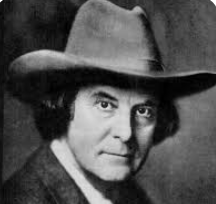
Do nothing, say nothing, and be nothing, and you'll never be criticized.
▼
Source
"John North Willys", in Elbert Hubbard's Selected Writings, Part 2 (1922), p. 335
3 months 3 weeks ago
In which the technical apparatus of production and distribution (with an increasing sector of automation) functions, not as the sum-total of mere instruments which can be isolated from their social and political effects, but rather as a system which determines a priori the product of the apparatus as well as the operations of servicing and extending it. In this society, the productive apparatus tends to become totalitarian to the extent to which it determines not only the socially needed occupations, skills, and attitudes, but also individual needs and aspirations. It thus obliterates the Opposition between the private and public existence, between individual and social needs.
▼
Source
p. xlvii
3 months 3 weeks ago
To say, therefore, that thought cannot happen in an instant, but requires a time, is but another way of saying that every thought must be interpreted in another, or that all thought is in signs.
▼
Source
Vol. V, par. 254
3 months 3 weeks ago
But these labels can only be finite in number. On that score, psychologic time should be discontinuous.
3 months 3 weeks ago
Once in his early youth a man allowed himself to be so far carried away in an overwrought irresponsible state as to visit a prostitute. It is all forgotten. Now he wants to get married. Then anxiety stirs. He is tortured day and night with the thought that he might possibly be a father, that somewhere in the world there could be a created being who owed his life to him. He cannot share his secret with anyone; he does not even have any reliable knowledge of the fact. –For this reason the incident must have involved a prostitute and taken place in the wantonness of youth; had it been a little infatuated or an actual seduction, it would be hard to imagine that he could know nothing about it, but now this this very ignorance is the basis of his agitated torment. On the other hand, precisely because of the rashness of the whole affair, his misgivings do not really start until he actually falls in love.
▼
Source
Journal and Papers 5622 (Papers IV A 65) n.d. 1843
3 months 3 weeks ago
I am far from denying the destructive and disintegrating forces of passion. I will go so far as to agree that apart from the reproductive function, men have hitherto used love, on the whole, as an instrument of self-corruption and intoxication. But what do these excesses prove? Because fire consumes and electricity can kill are we to stop using them? The feminine is the most formidable of the forces of matter. True enough. "Very well, then," say the moralists, "we must avoid it." "Not at all," I reply, "we take hold of it." In every domain of the real (physical, affective, intellectual) "danger" is a sign of power. Only a mountain can create a terrifying drop. The customary education of the Christian conscience tends to make us confuse tutiorism with prudence, safety with truth. Avoiding the risk of transgression has become more important to us than carrying a difficult position for God. And it is this that is killing us. "The more dangerous a thing, the more is its conquest ordained by life": it is from that conviction that the modern world has emerged; and from that our religion, too, must be reborn.
▼
Source
"The Evolution of Chastity" (1934), as translated by René Hague in Toward the Future (1975)
3 months 3 weeks ago
It is the weak man who urges compromise—never the strong man.
▼
Source
p. 52
3 months 3 weeks ago
Entertainment and learning are not opposites; entertainment may be the most effective mode of learning.
▼
Source
pp. 66-67
3 months 3 weeks ago
[Religion should be] .... successively freed from all statutes based on history, and one purely moral religion rule over all, in order that God might be all in all. The veil must fall. The leading-string of sacred tradition with all its appendices becomes by degrees useless, and at last a fetter … The humiliating difference between laymen and clergymen must disappear, and equality spring from true liberty. All this, however, must not be expected from an exterior revolution, which acts violently, and depends upon fortune In the principle of pure moral religion, which is a sort of divine revelation constantly taking place in the soul of man, must be sought the ground for a passage to the new order of things, which will be accomplished by slow and successive reforms.
▼
Source
As quoted in German Thought, From The Seven Years' War To Goethe's Death : Six Lectures (1880) by Karl Hillebrand, p. 208
3 months 3 weeks ago
If one prefers to have little with blessing, to have truth with concern, to suffer instead of exulting over imagined victories, then one presumably will not be disposed to praise the knowledge, as if what it bestows were at all proportionate to the trouble it causes, although one would not therefore deny that through its pain it educates a person, if he is honest enough to want to be educated rather than to be deceived, out of the multiplicity to seek the one, out of abundance to seek the one thing needful, as this is plainly and simply offered precisely according to the need for it.
▼
Source
Søren Kierkegaard, Eighteen Upbuilding Discourses, Hong p. 128-129
3 months 3 weeks ago
A text is not a text unless it hides from the first comer, from the first glance, the law of its composition and the rules of its game. A text remains, moreover, forever imperceptible. Its law and its rules are not, however, harbored in the inaccessibility of a secret; it is simply that they can never be booked, in the present, into anything that could rigorously be called a perception.
▼
Source
Plato's Pharmacy, intro
3 months 3 weeks ago
Actuality, irreversibility. ...Omega ...is discovered ...at the end ...[I]n it the movement culminates. Yet... under this evolutive facet Omega still only reveals half of itself. While being the last term of its series, it is also outside all series. ...If by its very nature it did not escape from time and space which it gathers together, it would not be Omega.
3 months 3 weeks ago
There is no such thing as success in a bad business.
3 months 3 weeks ago
The subversive character of truth inflicts upon thought an imperative quality. Logic centers on judgments which are, as demonstrative propositions, imperatives, — the predicative “is” implies an “ought.” … Verification of the proposition involves a process in fact as well as in thought: (S) must become that which it is. The categorical statement thus turns into a categorical imperative; it does not state a fact but the necessity to bring about a fact. For example, it could be read as follows: man is not (in fact) free, endowed with inalienable rights, etc., but he ought to be.
▼
Source
pp. 132-133
CivilSimian.com created by AxiomaticPanic, CivilSimian, Kalokagathia