

3 months 3 weeks ago
Retire into thyself. The rational principle which rules has this nature, that it is content with itself when it does what is just, and so secures tranquility.
▼
Source
VII, 28

3 months 3 weeks ago
Not the external and physical alone is now managed by machinery, but the internal and spiritual also. Here too nothing follows its spontaneous course, nothing is left to be accomplished by old natural methods. Everything has its cunningly devised implements, its preestablished apparatus; it is not done by hand, but by machinery.
3 months 3 weeks ago
Don't let them tell us stories. Don't let them say of the man sentenced to death "He is going to pay his debt to society," but: "They are going to cut off his head." It looks like nothing. But it does make a little difference. And then there are people who prefer to look their fate in the eye.
▼
Source
"Entre oui et non" in L'Envers et l'endroit (1937), translated as "Between Yes and No", in World Review magazine (March 1950), also quoted in The Artist and Political Vision (1982) by Benjamin R. Barber and Michael J. Gargas McGrath

3 months 3 weeks ago
Both (are) brethren, both fellow servants, no difference of spirit or of flesh; nay, (they are) truly “two in one flesh.” Where the flesh is one, one is the spirit too. Together they pray, together prostrate themselves, together perform their fasts; mutually teaching, mutually exhorting, mutually sustaining. Equally (are they) both (found) in the Church of God; equally at the banquet of God; equally in straits, in persecutions, in refreshments. Neither hides (ought) from the other; neither shuns the other; neither is troublesome to the other. The sick is visited, the indigent relieved, with freedom. Alms (are given) without (danger of ensuing) torment; sacrifices (attended) without scruple; daily diligence (discharged) without impediment: (there is) no stealthy signing, no trembling greeting, no mute benediction. Between the two echo psalms and hymns; and they mutually challenge each other which shall better chant to their Lord. Such things when Christ sees and hears, He joys. To these He sends His own peace. Where two (are), there withal (is) He Himself. Where He (is), there the Evil One is not.
▼
Source
To His Wife - Book 2, Chapter VIII.—Arguments Drawn Even from Heathenish Laws to Discountenance Marriage with Unbelievers. The Happiness of Union Between Partners in the Faith Enlarged on in Conclusion.

3 months 3 weeks ago
Were I to assume an hypothesis, it should be this, if propounded more generally, so as not to assume what light is further than that it is something or other capable of exciting vibrations of the ether. First, it is to be assumed that there is an ethereal medium, much of the same constitution as air, but far rarer, subtiller, and more strongly elastic. ...In the second place, it is to be supposed that the ether is a vibrating medium, like air, only the vibrations much more swift and minute; those of air made by a man's ordinary voice succeeding at more than half a foot or a foot distance, but those of ether at a less distance than the hundredth-thousandth part of an inch. And as in air the vibrations are some larger than others, but yet all equally swift... so I suppose the ethereal vibrations differ in bigness but not in swiftness. ...In the fourth place, therefore, I suppose that light is neither ether nor its vibrating motion, but something of a different kind propagated from lucid bodies. They that will may suppose it an aggregate of various peripatetic qualities. Others may suppose it multitudes of unimaginable small and swift corpuscles of various sizes springing from shining bodies at great distances one after the other, but yet without any sensible interval of time. ...To avoid dispute and make this hypothesis general, let every man here take his fancy; only whatever light be, I would suppose it consists of successive rays differing from one another in contingent circumstances, as bigness, force, or vigour, like as the sands on the shore... and, further, I would suppose it diverse from the vibrations of the ether. ...Fifthly, it is to be supposed that light and ether mutually act upon one another. ...æthereal vibrations are therefore the best means by which such a subtile agent as light can shake the gross particles of solid bodies to heat them.
3 months 3 weeks ago
The pioneering practitioners of the new science knew that they were producing a new kind of knowledge and so they declared this newness in the titles of their books and articles. Thus we have Galileo's Two New Sciences, Boyle's New Experiments, Kepler's New Astronomy, and Tartaglia's New Science. When Ben Jonson presented a masque entitled "News from the New World," his new world was not the newly found continent of North America, but the new world of science, the world revealed by the telescope of Galileo.
3 months 3 weeks ago
To change your mind and to follow him who sets you right is to be nonetheless the free agent that you were before.
▼
Source
Remember that to change thy opinion and to follow him who corrects thy error is as consistent with freedom as it is to persist in thy error. (Long translation) | VIII, 16

3 months 3 weeks ago
There are questions which, once approached, either isolate you or kill you outright.
3 months 3 weeks ago
The Book had in a high degree excited us to self-activity, which is the best effect of any book.
▼
Source
Bk. I, ch. 4.
3 months 3 weeks ago
But in the end one needs more courage to live than to kill himself.

3 months 3 weeks ago
As for rosemarie, I lett it run alle over my garden walls,not onlie because my bees love it,but because 'tis the herb sacred to remembrance and therefore to friendship,whence a sprig of it hath a dumb language that maketh ye chosen emblem at our funeral wakes and in our buriall grounds.
▼
Source
Actually written in 1852 by Anne Manning in her fictional novel The Household of St Thomas More, as if a diary entry was made by his daughter Margaret; and so, although written as said by the character Thomas More in the novel by Anne Manning, it was not
3 months 3 weeks ago
For to love is to give what one is, his very being, in the most absolute, the most brazenly metaphysical, the least phenomenalizable sense of this word.
▼
Source
p 9.
3 months 3 weeks ago
Think not disdainfully of death, but look on it with favor; for even death is one of the things that Nature wills.
▼
Source
IX, 3
3 months 3 weeks ago
I have no ideas, only obsessions. Anybody can have ideas. Ideas have never caused anybody’s downfall.
▼
Source
[https://ibb.co/1z2zxFS]
3 months 3 weeks ago
Do nothing, only keep agitating, debating; and things will destroy themselves.
▼
Source
Pt. I, Bk. VI, ch. 3.
3 months 3 weeks ago
"My field," said Goethe, "is time." That is indeed the absurd speech. What, in fact, is the Absurd Man? He who, without negating it, does nothing for the eternal. Not that nostalgia is foreign to him. But he prefers his courage and his reasoning. The first teaches him to live without appeal and to get along with what he has; the second informs him of his limits. Assured of his temporally limited freedom, of his revolt devoid of future, and of his mortal consciousness, he lives out his adventure within the span of his lifetime.

3 months 3 weeks ago
I would have thee know that every day is a year contracted, that every year is a day extended. Anticipate the year in the day and lose not a day in the year. Make use of indeterminate agents till thou canst find a determinate one. The many may wish well but one only loves. Circumferences spread but centres contract: so superiors dissolve and inferiors coagulate. Stand not long in the sun nor long in the shade. Where extremes meet, there look for complexions.
3 months 3 weeks ago
Human character is never found "to enter into its glory," except through the ordeal of affliction. Its force cannot come forth without the offer of resistance, nor can the grandeur of its free will declare itself, except in the battle of fierce temptation.
▼
Source
Vol. II, p. 126.
3 months 3 weeks ago
The inversion of external compulsion into the compulsion of conscience … produces the machine-like assiduity and pliable allegiance required by the new rationality.
▼
Source
p. 34.
3 months 3 weeks ago
Remember that the term Rational was intended to signify a discriminating attention to every several thing and freedom from negligence; and that Equanimity is the voluntary acceptance of things which are assigned to thee by the common nature; and the Magnanimity is the elevation of the intelligent part above the pleasurable or painful sensations of the flesh, and above that poor thing called fame, and death, and all such things. If then, thou maintainest thyself in the possession of these names, without desiring to be called by these names by others, thou wilt be another person and wilt enter into another life.
▼
Source
X, 8
3 months 3 weeks ago
Let us cultivate our garden.
3 months 3 weeks ago
Religion comforts us for the defeat of our will to power. It adds new worlds to ours, and thus brings us hope of new conquests and new victories. We are converted to religion out of fear of suffocating within the narrow confines of this world.

3 months 3 weeks ago
The primary property of matter was indeed distinctly announced by Descartes in what he calls the "First Law of Nature": "That every individual thing, so far as in it lies, perseveres in the same state, whether of motion or of rest."
▼
Source
James Clerk Maxwell, Matter and Motion (1876)
3 months 3 weeks ago
Cannot we understand how these men worshipped Canopus; became what we call Sabeans, worshipping the stars? Such is to me the secret of all forms of Paganism. Worship is transcendent wonder; wonder for which there is now no limit or measure; that is worship.
3 months 3 weeks ago
I leave Sisyphus at the foot of the mountain! One always finds one's burden again. But Sisyphus teaches the higher fidelity that negates the gods and raises rocks. He too concludes that all is well. This universe henceforth without a master seems to him neither sterile nor futile. Each atom of that stone, each mineral flake of that night filled mountain, in itself forms a world. The struggle itself toward the heights is enough to fill a man's heart. One must imagine Sisyphus happy.
▼
Source
Original French: La lutte elle-même vers les sommets suffit à remplir un cœur d'homme; il faut imaginer Sisyphe heureux. | Variant translation: The fight itself towards the summits suffices to fill a heart of man; it is necessary to imagine Sisyphus happy

3 months 3 weeks ago
War is a matter not so much of arms as of money,"
▼
Source
Book I, 1.83-[2]
3 months 3 weeks ago
The principal function of anti-Americanism has always been, and still is, to discredit liberalism by discrediting its supreme incarnation. To travesty the United States as a repressive, unjust, racist—almost fascist—society was a way of proclaiming: look what happens when liberalism is implemented!
▼
Source
[http://www.encounterbooks.com/books/anam/anam_intro.html "Introduction"]
3 months 3 weeks ago
The French symbolists had a special term to express their love for things that had lost their objective significance, namely, ‘spleen.’ The conscious, challenging arbitrariness in the choice of objects, its ‘absurdity’ and ‘perverseness,’ as if by a silent gesture discloses the irrationality of utilitarian logic, which it then slaps in the face in order to demonstrate its inadequacy with regard to human experience. And while making it conscious, by this shock, of the fact that it forgets the subject, the gesture simultaneously expresses the subject’s sorrow over his inability to achieve an objective order. Twentieth-century society is not troubled by such inconsistencies. For it, meaning can be achieved in only one way—service for a purpose.
▼
Source
p. 38.
3 months 3 weeks ago
A straightforward, honest person should be like someone who stinks: when you're in the same room with him, you know it. (Hays translation)
▼
Source
XI, 15
3 months 3 weeks ago
I do not know in the whole history of the world a hero, a worthy man, a prophet, a true Christian, who has not been the victim of the jealous, of a scamp, or of a sinister spirit.
▼
Source
p. 52
3 months 3 weeks ago
Society: an inferno of saviors!
3 months 3 weeks ago
To fall into mere unreasoning deliquium of love and admiration, was not good; but such unreasoning, nay irrational supercilious no-love at all is perhaps still worse!—It is a thing forever changing, this of Hero-worship: different in each age, difficult to do well in any age. Indeed, the heart of the whole business of the age, one may say, is to do it well.
3 months 3 weeks ago
Every rebellion implies some kind of unity.
3 months 3 weeks ago
And their judgment was based more upon blind wishing than upon any sound prediction; for it is a habit of mankind to entrust to careless hope what they long for, and to use sovereign reason to thrust aside what they do not desire.
▼
Source
Book IV, 4.108-[4]
3 months 3 weeks ago
The problem posed by indirect speech acts is the problem of how it is possible for the speaker to say one thing and mean that but also to mean something else.
▼
Source
Expression and Meaning, p. 31, Cambridge University Press (1979).
3 months 3 weeks ago
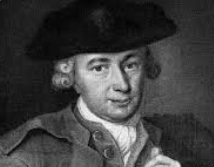
A thirsty ambition for truth and virtue, and a frenzy to conquer all lies and vices which are not recognized as such nor desire to be; herein consists the heroic spirit of the philosopher.
▼
Source
Socratic Memorabilia, J. Flaherty, trans. (Baltimore: 1967), p. 147.
3 months 3 weeks ago
Do not act as if thou wert going to live ten thousand years. Death hangs over thee. While thou livest, while it is in thy power, be good.
▼
Source
IV. 17, trans. George Long
3 months 3 weeks ago
History is only a record of crimes and misfortunes.
▼
Source
p. 170
3 months 3 weeks ago
Life is possible only by the deficiencies of our imagination and memory.
3 months 3 weeks ago
It is truly a lordly spectacle how this great soul takes in all kinds of men and objects, a Falstaff, an Othello, a Juliet, a Coriolanus; sets them all forth to us in their round completeness; loving, just, the equal brother of all. Novum Organum, and all the intellect you will find in Bacon, is of a quite secondary order; earthy, material, poor in comparison with this. Among modern men, one finds, in strictness, almost nothing of the same rank. Goethe alone, since the days of Shakspeare, reminds me of it. Of him too you say that he saw the object; you may say what he himself says of Shakspeare: 'His characters are like watches with dial-plates of transparent crystal; they show you the hour like others, and the inward mechanism also is all visible.'.
3 months 3 weeks ago
Let's not beat around the bush; I love life — that's my real weakness. I love it so much that I am incapable of imagining what is not life.
3 months 3 weeks ago
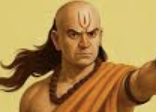
It is better to live under a tree in a jungle inhabited by tigers and elephants, to maintain oneself in such a place with ripe fruits and spring water, to lie down on grass and to wear the ragged barks of trees than to live amongst one's relations when reduced to poverty.

3 months 3 weeks ago
Immortal gods, I crave no pelf; I pray for no man but myself: Grant I may never prove so fond,To trust man on his oath or bond.
▼
Source
Apemantus, scene ii
3 months 3 weeks ago
There are clear cases in which "understanding" literally applies and clear cases in which it does not apply; and these two sorts of cases are all I need for this argument.
3 months 3 weeks ago
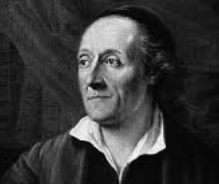
Where there is much pretension, much has been borrowed — nature never pretends.
▼
Source
No. 556
3 months 3 weeks ago
Hannibal Lecter: I've read the case files. Have you? Everything you need to find him is right there in those pages.Clarice Starling: Then tell me how.Hannibal Lecter: First principles, Clarice: simplicity. Read Marcus Aurelius, "Of each particular thing, ask: What is it in itself? What is its nature?" What does he do, this man you seek?Clarice Starling: He kills women.Hannibal Lecter: No, that is incidental. What is the first and principal thing he does, what needs does he serve by killing?Clarice Starling: Anger, social acceptance, and, uh, sexual frustration ...Hannibal Lecter: No, he covets. That's his nature. And how do we begin to covet, Clarice? Do we seek out things to covet? Make an effort to answer, now.Clarice Starling: No. We just ...Hannibal Lecter: No. We begin by coveting what we see every day.
▼
Source
Ted Tally (1991), Silence of the Lambs screenplay, adapted from the novel by Thomas Harris; Lecter is paraphrasing or quoting an alternate translation of Meditations Book VIII, 11: "This thing, what is it in itself, in its own constitution? What is its su
3 months 3 weeks ago
France is a nation with one religion and many sauces; England is a nation with many religions and only one sauce.
▼
Source
Actual source is Louis Eustache Ude (1829) The French Cook; A System of Fashionable and Economical Cookery, Adapted to the use of English Families (10th edition) [https://books.google.com/books?id=FXXKK6i7mCQC&pg=PR41 p. xli] (London : John Ebers) | It is
3 months 3 weeks ago
There is an innate anxiety which supplants in us both knowledge and intuition.

3 months 3 weeks ago
Science is the knowledge of Consequences, and dependence of one fact upon another: by which, out of that we can presently do, we know how to do something else when we will, or the like, another time:
▼
Source
The First Part, Chapter 5, p. 21
3 months 3 weeks ago
Find in any country the Ablest Man that exists there; raise him to the supreme place, and loyally reverence him: you have a perfect government for that country; no ballot-box, parliamentary eloquence, voting, constitution-building, or other machinery whatsoever can improve it a whit.
CivilSimian.com created by AxiomaticPanic, CivilSimian, Kalokagathia