
3 months 3 weeks ago
Our school systems are all nonsynergetic. We take the whole child and fractionate the scope of his or her comprehending coordination by putting the children in elementary schools—to become preoccupied with elements or isolated facts only. Thereafter we force them to choose some specialization, forcing them to forget the whole. ... We may well ask how it happened that the entire scheme of advanced education is devoted exclusively to ever narrower specialization. We find that the historical beginnings of schools and tutoring were established, and economically supported by illiterate and vastly ambitious warlords who required a wide variety of brain slaves with which to logistically and ballistically overwhelm those who opposed their expansion of physical conquest. They also simultaneously DIVIDED and CONQUERED any and all "bright ones" who might otherwise rise within their realms to threaten their supremacy. The warlord vitiated their threat by making them all specialists and reserving to himself exclusively the right to think about and act comprehensively. The warlord made all those about him differentiators and reserved the function of integration to himself. p. 15
3 months 3 weeks ago
Poetry is one of the destinies of speech.... One would say that the poetic image, in its newness, opens a future to language.
▼
Source
Introduction, sect. 2
3 months 3 weeks ago
More is given to us than to any people at any time before; and, therefore, more is required of us. We have made, and still are making, enormous advances on material lines. It is necessary that we commensurately advance on moral lines. Civilization, as it progresses, requires a higher conscience, a keener sense of justice, a warmer brotherhood, a wider, loftier, truer public spirit. Falling these, civilization must pass into destruction. It cannot be maintained on the ethics of savagery. For civilization knits men more and more closely together, and constantly tends to subordinate the individual to the whole, and to make more and more important social conditions.
▼
Source
[http://www.wealthandwant.com/HG/SP/SP22_Conclusion.htm Ch. 21 : Conclusion]
3 months 3 weeks ago
All laws which can be broken without any injury to another, are counted but a laughing-stock, and are so far from bridling the desires and lusts of men, that on the contrary they stimulate them.
▼
Source
Ch. 10, Of Aristocracy, Conclusion | Variant translation : Laws which can be broken without any wrong to one's neighbor are but a laughing-stoke ; and, so far from such laws restraining the appetites and lusts of mankind, they rather heighten them. | Vari
3 months 3 weeks ago
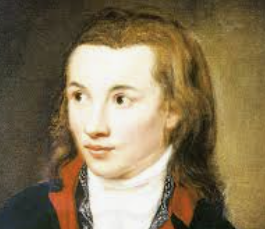
Man has ever expressed some symbolical Philosophy of his Being in his Works and Conduct; he announces himself and his Gospel of Nature; he is the Messiah of Nature.
3 months 3 weeks ago
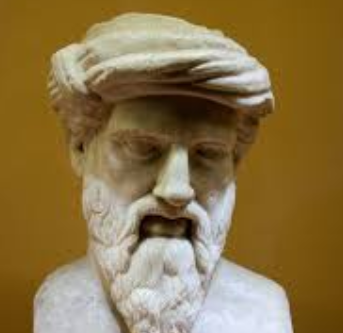
Declining from the public ways, walk in unfrequented paths.
▼
Source
Symbol 5
3 months 3 weeks ago
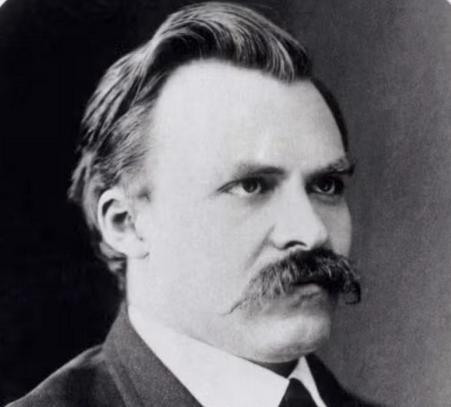
The concept of greatness is changeable, in the realm of morality as well as in that of esthetics. And so philosophy starts by legislating greatness.
▼
Source
p. 43

3 months 3 weeks ago
"Both of them are heresiarchs," Akhmatova used to say about Dostoyevski and Tolstoi. She compared the two greatest Russian writers to twin towers of the same building. Both of them sought salvation from imminent catastrophe, the nature of which was understood by Dostoyevski, though not by Tolstoi. In their actual proposals for salvation both of them exhibited license in the highest degree. In fact, however, not even the best of proposals would have been able to halt a process of decomposition already so far advanced.
▼
Source
Nadezhda Mandelstam Hope Abandoned (1974) Translated from the Russian by Max Hayward

3 months 3 weeks ago
He who thinks he can have flesh and bones without being subject to any external influence, or any accidents of matter, unconsciously wishes to reconcile two opposites, viz., to be at the same time subject and not subject to change. If man were never subject to change there could be no generation; there would be one single being, but no individuals forming a species.
▼
Source
Compare Galileo, "...for my part I consider the earth very noble and admirable precisely because of the diverse alterations, changes, generations, etc. that occur in it incessantly. If, not being subject to any changes... I should deem it a useless lump i

3 months 3 weeks ago
And striving to be man, the worm Mounts through all the spires of form.
▼
Source
May-Day
3 months 3 weeks ago
Critical proximity occurs where there is angular transition from "falling back in" at 180-degree to 90-degree orbiting—which is precession. (Gravity may be described as "falling back in" at 180 degrees.) The quantity of energy that ceased to "fall in" is the system's entropy. Critical proximity is when it starts either "falling in" or going into orbit, which is the point where either entropy or antientropy begins. An aggregate of "falling ins" is a body. What we call an object or an entity is always an aggregate of interattracted entities; it is never a solid. And the critical proximity transition from being an aggregate entity to being a plurality of separate entities is precession, which is a "peeling off" into orbit rather than falling back in to the original entity aggregate. This explains entropy intimately.
▼
Source
[http://www.rwgrayprojects.com/synergetics/s01/p3000.html 130.01]
3 months 3 weeks ago
Each generation repeats its leaders. Each sees men endowed with superior inventiveness, energy, and genius for business, inspired by love of power and possession, launch selfish schemes-Carnegies, Rockefellers, Goulds. Each generation has had its Henry George, its Bellamy, its Bryan, intent on persuading mankind that he had found the way, could lead men to the good life. In each generation employer and employee have faced the decision-war or cooperation.
▼
Source
Ida Tarbell, All in the Day's Work (1939)
3 months 3 weeks ago
None can be free who is a slave to, and ruled by, his passions.
▼
Source
As quoted in Florilegium, XVIII, 23, as translated in Dictionary of Quotations (1906) by Thomas Benfield Harbottle, p. 368 | No one is free who has not obtained the empire of himself. | As translated by Nicholas Rowe(1732) | No man is free who cannot comm
3 months 3 weeks ago
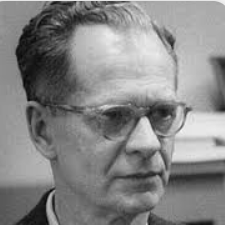
We shouldn't teach great books; we should teach a love of reading. Knowing the contents of a few works of literature is a trivial achievement. Being inclined to go on reading is a great achievement.
▼
Source
As quoted in B. F. Skinner : The Man and His Ideas (1968) by Richard Isadore Evans, p. 73

3 months 3 weeks ago
One often makes a remark and only later sees how true it is.
▼
Source
Journal entry (11 October 1914), p. 10e
3 months 3 weeks ago
Fifth Theory.—This is our theory, or that of our Law. ...The theory of man's perfectly free will is one of the fundamental principles of the Law of our teacher Moses, and of those who follow the Law. According to this principle man does what is in his power to do, by his nature, his choice, and his will; and his action is not due to any faculty created for the purpose. All species of irrational animals likewise move by their own free will. This is the Will of God; that is to say, it is due to the eternal divine will that all living beings should move freely, and that man should have the power to act according to his will or choice within the limits of his capacity.
▼
Source
Ch.17
3 months 3 weeks ago
Alcohol, hashish, prussic acid, strychnine are weak dilutions. The surest poison is time.
▼
Source
Poetry and Imagination
3 months 3 weeks ago
I am convinced that human continuance depends entirely upon: the intuitive wisdom of each and every individual . . . the individual's integrity of speaking and acting only on the individual's own within-self-intuited and reasoned initiative . . . the individual's never joining action with others as motivated only by crowd-engendered-emotionalism, or a sense of the crowd's power to overwhelm, or in fear of holding to the course indicated by one's own intellectual convictions.

3 months 3 weeks ago
Behind me was the magnificent power-house... furnishing not only the electrical energy which transformed the soda into sodium, but diffusing this energy for a multitude of other purposes over an entire district—a noble temple to the genius and prescience of Faraday. Surely one might here say, if you desire to see the monuments of these men, look around!

3 months 3 weeks ago
"But to be hanged—is that not unendurable?" Even so, when a man feels that it is reasonable, he goes off and hangs himself.
▼
Source
Book I, ch. 2, § 3.
3 months 3 weeks ago
None but a Craftsman can judge of a craft.
3 months 3 weeks ago
This remark provides the key to the problem, how much truth there is in solipsism. For what the solipsist means is quite correct; only it cannot be said, but makes itself manifest. The world is my world: this is manifest in the fact that the limits of language (of that language which alone I understand) mean the limits of my world. (5.62)
3 months 3 weeks ago
It is not unreasonable to assume that the works of God, their existence and preceding non-existence, are the result of His wisdom, but we are unable to understand many of the ways of His Wisdom in His works. On this principle the whole Law of Moses is based; it begins with this principle: "And God saw all that He had made, and behold, it was very good" (Gen. i. 31); and it ends with this principle: "The Rock, perfect is His work" (Deut. xxxii. 4). Note it.
▼
Source
Ch.25
3 months 3 weeks ago
Respect the child. Be not too much his parent. Trespass not on his solitude.
▼
Source
Education
3 months 3 weeks ago
Corporations are neither physical nor metaphysical phenomena. They are socioeconomic ploys — legally enacted game-playing — agreed upon only between overwhelmingly powerful socioeconomic individuals and by them imposed upon human society and its all unwitting members.
3 months 3 weeks ago
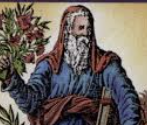
They also gave it the title of "opinion," because truth and falsity lie in opinion. And they called it "movement," "generation," "change," "division," "length," "multiplication," "addition," "kinship," "relativity," "the ratio in proportionality." For the relation of two numbers is of every conceivable form.
▼
Source
On the Dyad
3 months 3 weeks ago
Why, then, do we wonder any longer that, although in material things we are thoroughly experienced, nevertheless in our actions we are dejected, unseemly, worthless, cowardly, unwilling to stand the strain, utter failures one and all?
▼
Source
Book II, ch. 16, § 18.
3 months 3 weeks ago
Pythagoras could not have been the discoverer of the relation, because... this property was known and used by scholars and artisans of Oriental lands thousands of years before Pythagoras... While deductive geometry is barely more than twenty-five hundred years old, empirical geometry is probably as old as civilization itself.
▼
Source
Tobias Dantzig, The Bequest of the Greeks (1955)
3 months 3 weeks ago
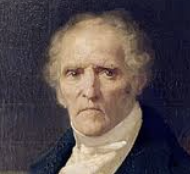
There is a class of writers who are ever boasting of the progress of civilization and of the human mind in modern times. If we were to credit their pretensions, we should be led to believe that the science of society had reached its highest degree of perfection, because old metaphysical and economic theories have been somewhat refined upon.In answer to their boasts of social progress, it is not sufficient to refer to the deeply-rooted social evils which exist, and which prey upon our boasted civilized social order. We will mention but a single one, the frightful increase of national debts and of taxation.
▼
Source
The Theory of Social Organization. Harmonian Man: Selected Writings of Charles Fourier
3 months 3 weeks ago
Philosophical problems can be compared to locks on safes, which can be opened by dialing a certain word or number, so that no force can open the door until just this word has been hit upon, and once it is hit upon any child can open it.
▼
Source
Ch. 9 : Philosophy, p. 175 | Variant: Philosophy is like trying to open a safe with a combination lock: each little adjustment of the dials seems to achieve nothing, only when everything is in place does the door open. | Conversation of 1930, in Personal

3 months 3 weeks ago
It must be understood that the silence referred to by the adjective ‘mystical’ is not external, esoteric silence, intended to conceal secret truths from the ‘uninitiated’, but rather inner silence, which consists in silencing one’s thoughts, however profound they may be, and therefore in detachment, especially from all our supposed knowledge. Detachment is the work of intelligence, which incessantly recognizes the finiteness of its own contents and, at the same time, of the will, which incessantly recognizes in those same contents the presence of egoism, of that amor sui that is truly the root of all evil.
3 months 3 weeks ago
Self-trust is the first secret of success.
▼
Source
Success
3 months 3 weeks ago
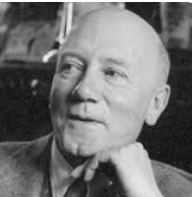
Broad was a wonderfully idiosyncratic lecturer. He always appeared with a carefully prepared script, and he read every sentence twice, except for the jokes, which he read three times. Although he spoke drearily, his content was compelling, jargon-free and spiked with witty references to Charles Dickens, Conan Doyle, Oscar Wilde and other literary figures.
▼
Source
Graham Farmelo: (2009). [https://books.google.com/books?id=qsodmIGD0fMC&pg=PA39The strangest man: the hidden life of Paul Dirac, quantum genius.] Faber & Faber. (p. 39)
3 months 3 weeks ago
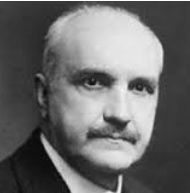
To know how just a cause we have for grieving is already a consolation.
▼
Source
Ch. IV.: Music
3 months 3 weeks ago
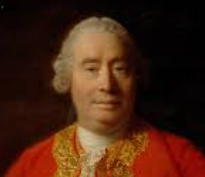
For my part, when I enter most intimately into what I call myself, I always stumble on some particular perception or other, of heat or cold, light or shade, love or hatred, pain or pleasure. I never can catch myself at any time without a perception, and never can observe any thing but the perception. When my perceptions are remov'd for any time, as by sound sleep; so long am I insensible of myself, and may truly be said not to exist. And were all my perceptions remov'd by death, and cou'd I neither think, nor feel, nor see, nor love, nor hate after the dissolution of my body, I shou'd be entirely annihilated, nor do I conceive what is farther requisite to make me a perfect non-entity. If any one upon serious and unprejudic'd reflexion, thinks he has a different notion of himself, I must confess I can reason no longer with him. All I can allow him is, that he may be in the right as well as I, and that we are essentially different in this particular. He may, perhaps, perceive something simple and continu'd, which he calls himself; tho' I am certain there is no such principle in me... But setting aside some metaphysicians of this kind, I may venture to affirm of the rest of mankind, that they are nothing but a bundle or collection of different perceptions, which succeed each other with an inconceivable rapidity, and are in a perpetual flux and movement.
▼
Source
Part 4, Section 6
3 months 3 weeks ago
If a man has reported to you, that a certain person speaks ill of you, do not make any defense (answer) to what has been told you: but reply, The man did not know the rest of my faults, for he would not have mentioned these only.
▼
Source
(33) [tr. George Long (1888)].
3 months 3 weeks ago
Inasmuch as I have begun to explain to you how much greater was my impulse to approach philosophy in my youth than to continue it in my old age, I shall not be ashamed to tell you what ardent zeal Pythagoras inspired in me. Sotion used to tell me why Pythagoras abstained from animal food, and why, in later times, Sextius did also. In each case, the reason was different, but it was in each case a noble reason. … Pythagoras … held that all beings were inter-related, and that there was a system of exchange between souls which transmigrated from one bodily shape into another. If one may believe him, no soul perishes or ceases from its functions at all, except for a tiny interval – when it is being poured from one body into another.
▼
Source
Seneca, Moral letters to Lucilius, CVIII, 17-19

3 months 3 weeks ago
He whom God has touched will always be a being apart: he is, whatever he may do, a stranger among men; he is marked by a sign.
▼
Source
Oeuvres Complètes, vol. 3. L’Avenir de la Science (1890).
3 months 3 weeks ago
Does man think because he has found that thinking pays? Does he bring his children up because he has found it pays?
▼
Source
§ 467

3 months 3 weeks ago
The Way of the Warrior has been misunderstood. It is not a means to kill and destroy others. Those who seek to compete and better one another are making a terrible mistake. To smash, injure, or destroy is the worst thing a human being can do. The real Way of a Warrior is to prevent such slaughter — it is the Art of Peace, the power of love.
▼
Source
Speaking of a vision of the "Great Spirit of Peace" in 1942, during World War II, as quoted in Adjusting Though Reflex : Romancing Zen (2010) by Rodger Hyodo, p. 76
3 months 3 weeks ago
Build a better mousetrap, and the world will beat a path to your door.
3 months 3 weeks ago
The management of a system has to deal with the generation of the plans for the system, i.e., consideration of all of the things we have discussed, the overall goals, the environment, the utilization of resources and the components. The management sets the component goals, allocates the resources, and controls the system performance.
▼
Source
p. 44
3 months 3 weeks ago
Liberalism has merely cleared a field in which every soul and every corporate interest may fight with every other for domination. Whoever is victorious in this struggle will make an end of liberalism; and the new order, which will deem itself saved, will have to defend itself in the following age against a new crop of rebels.
▼
Source
"The Irony of Liberalism"
3 months 3 weeks ago
Though experience be our only guide in reasoning concerning matters of fact; it must be acknowledged, that this guide is not altogether infallible, but in some cases is apt to lead us into errors.
▼
Source
Section 10 : Of Miracles Pt. 1
3 months 3 weeks ago
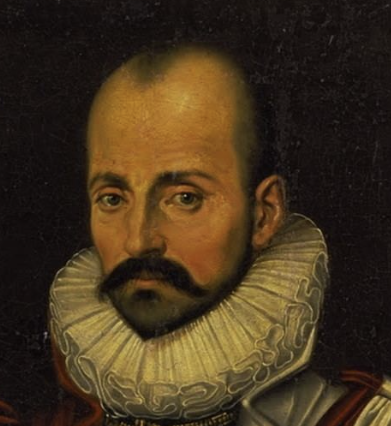
The concept of a harmonious universe ordered according to "the Great Chain of Being" — a chain that connects the continuum of matter, body, mind, soul and spirit — stands as one of the most fundamental ideas of western thought. … It continues to be a profound influence upon the deepest strata of our thought. And yet a major rift has appeared in the consciousness of our time because the theme of harmonia has not been translated into the realm of human conduct. The challenge of our time may be to revive it, and make divine harmony "the great theme" of the next millennium. Any success we have in accomplishing this will be based, in large part, on the achievements of Pythagoras.
3 months 3 weeks ago
There is in our souls some native seed of reason, which, if nourished by good counsel and training, flowers into virtue, but which, on the other hand, if unable to resist the vices surrounding it, is stifled and blighted.
▼
Source
Part 2
3 months 3 weeks ago
If you use a trick in logic, whom can you be tricking other than yourself?
▼
Source
p. 24e

3 months 3 weeks ago
The 'physical' does not mean any particular kind of reality, but a particular kind of denoting reality, namely a system of concepts in the natural sciences which is necessary for the cognition of reality. 'The physical' should not be interpreted wrongly as an attribute of one part of reality, but not of the other ; it is rather a word denoting a kind of conceptual construction, as, e.g., the markers 'geographical' or 'mathematical', which denote not any distinct properties of real things, but always merely a manner of presenting them by means of ideas.
▼
Source
p. 27 i. ; as cited in: Adam Schaff (1962). Introduction to semantics, p. 83
3 months 3 weeks ago
I was an Editor-in-Chief of Philosophy of Science during its early years. Now, over a half century later, I have to admit that I was not very clear what the journal was about, except that it tried to reflect on the meaning of science and its relation to other human activities. At this time I am even less sure of its purposes.
▼
Source
C. West Churchman "Guest editorial: what is philosophy of science" In: Philosophy of Science Vol. 61, No. 1 (Mar., 1994), p. 132-141
3 months 3 weeks ago
The working of great administrations is mainly the result of a vast mass of routine, petty malice, self-interest, carelessness and sheer mistake. Only a residual fraction is thought.
▼
Source
Giorgio de Santillana (1902-1974) [http://books.google.com/books?id=34uQ6tlYHRgC&q=%22The+working+of+great+administrations+is+mainly+the+result+of+a+vast+mass+of+routine+petty+malice+self-interest+carelessness+and+sheer+mistake+Only+a+residual+fraction+is
CivilSimian.com created by AxiomaticPanic, CivilSimian, Kalokagathia