

3 months 3 weeks ago
Tragic paradox of freedom: the mediocre men who alone make its exercise possible cannot guarantee its duration.

3 months 3 weeks ago
Between our Black West Indies and our White Ireland, between these two extremes of lazy refusal to work, and of famishing inability to find any work, what a world have we made of it, with our fierce Mammon-worships, and our benevolent philanderings, and idle godless nonsenses of one kind and another! Supply-and-demand, Leave-it-alone, Voluntary Principle, Time will mend it:—till British industrial existence seems fast becoming one huge poison-swamp of reeking pestilence physical and moral; a hideous living Golgotha of souls and bodies buried alive; such a Curtius' gulf, communicating with the Nether Deeps, as the Sun never saw till now. These scenes, which the Morning Chronicle is bringing home to all minds of men,—thanks to it for a service such as Newspapers have seldom done,—ought to excite unspeakable reflections in every mind. Thirty thousand outcast Needlewomen working themselves swiftly to death; three million Paupers rotting in forced idleness, helping said Needlewomen to die: these are but items in the sad ledger of despair.

3 months 3 weeks ago
... our descendants may recognize that we are the sociopathic emotional primitives in the grip of an affective psychosis. Jealousy, envy, resentment, ridicule, hate, anger, disgust, spite, contempt, schadenfreude and a whole gamut of nameless but mean-spirited states we undergo each day are a toxic legacy of our Darwinian past. More commonly, perhaps, our genetic make-up ensures we simply feel indifference to the plight of all but a handful of significant others in our lives. Right now, for instance, one knows dimly at some level that there is frightful and preventable suffering in the world. Yet most of us feel no overpowering moral urgency to do anything about it.
▼
Source
"[https://www.hedweb.com/ecstasy/index.html Utopian Pharmacology: Mental Health in the Third Millennium MDMA and Beyond]", BLTC Research, last updated 2020

3 months 3 weeks ago
In fact, we almost lost our lives because of his honesty. In 1939, we were running away from Posnan as the Germans were invading - the town was almost on the German border. We took the last train east, but we were stopped at a station which was being bombed by the Germans. We should have run away from the station because that was the object of the bombing, but he wanted to find a ticket inspector to pay for our tickets.
▼
Source
From an interview, as cited in [https://www.theguardian.com/books/2003/apr/05/society "Passion and pessimism"], The Guardian (5 April 2003)
3 months 3 weeks ago
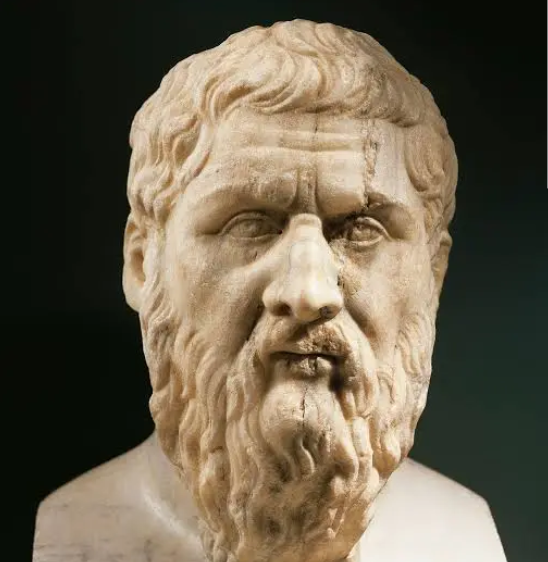
It is no idle question to wonder whether Plato, if he had stayed free of the Socratic spell, might not have found an even higher type of the philosophical man, now lost to us forever.
▼
Source
Friedrich Nietzsche, Human, All Too Human: A Book for Free Spirits (1878)
3 months 3 weeks ago
Within the world of total work, the "festival" is either "a break from work" (and thus only there for the sake of work), or it is a more intensive celebration of the principles of work itself (as in the "Labor Days," and thus belongs, again, to the working world). There will naturally be "games" — like the Roman circences — but who would dignify the amusements for the masses with the name of "festival"?
▼
Source
p. 53
3 months 3 weeks ago
Facing a landscape annihilated by the light, to remain serene supposes a temper I do not have. The sun is my purveyor of black thoughts; and summer the season when I have always reconsidered my relations with this world and with myself, to the greatest prejudice of both.
3 months 3 weeks ago
Let us honor all honest human power of contrivance in its degree. The beaver intellect, so long as it steadfastly refuses to be vulpine, and answers the tempter pointing out short routes to it with an honest "No, no," is truly respectable to me; and many a highflying speaker and singer whom I have known, has appeared to me much less of a developed man than certain of my mill-owning, agricultural, commercial, mechanical, or otherwise industrial friends, who have held their peace all their days and gone on in the silent state. If a man can keep his intellect silent, and make it even into honest beaverism, several very manful moralities, in danger of wreck on other courses, may comport well with that, and give it a genuine and partly human character; and I will tell him, in these days he may do far worse with himself and his intellect than change it into beaverism, and make honest money with it.
3 months 3 weeks ago
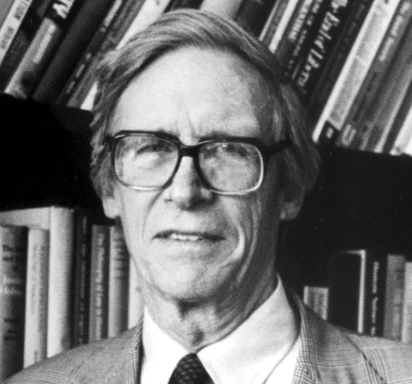
Indeed, it is tempting to suppose that it is self evident that things should be so arranged so as to lead to the most good.
▼
Source
Chapter I, Section 5, pg. 25
3 months 3 weeks ago
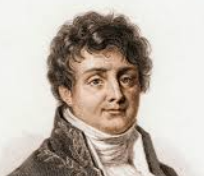
Primary causes are unknown to us; but are subject to simple and constant laws, which may be discovered by observation, the study of them being the object of natural philosophy. Heat, like gravity, penetrates every substance of the universe, its rays occupy all parts of space. The object of our work is to set forth the mathematical laws which this element obeys. The theory of heat will hereafter form one of the most important branches of general physics.
▼
Source
Ch. 1, p. 1
3 months 3 weeks ago
When people come to me saying they want to kill themselves, I tell them, "What's your rush? You can kill yourself any time you like. So calm down. Suicide is a positive act." And they do calm down.
3 months 3 weeks ago
My father's education was altogether of the worst and most limited. I believe he was never more than three months at any school. What he learned there showed what he might have learned. A solid knowledge of arithmetic, a fine antique handwriting — these, with other limited practical etceteras, were all the things he ever heard mentioned as excellent. He had no room to strive for more.
3 months 3 weeks ago
The suppression of liberty is always likely to be irrational.
▼
Source
Chapter IV, Section 33, p. 210
3 months 3 weeks ago
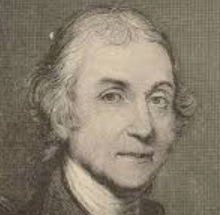
Were it possible to trace the succession of ideas in the mind of Sir Isaac Newton, during the time that he made his greatest discoveries, I make no doubt but our amazement at the extent of his genius would a little subside. But if, when a man publishes discoveries, he, either through design, or through habit, omit the intermediate steps by which he himself arrived at them; it is no wonder that his speculations confound others... Where we see him most in the character of an experimental philosopher, as in his optical inquiries... we may easily conceive that many persons, of equal patience and industry... might have done what he did. And were it possible to see in what manner he was first led to those speculations, the very steps by which he pursued them, the time that he spent in making experiments, and all the unsuccessful and insignificant ones that he made in the course of them; as our pleasure of one kind would be increased, our admiration would probably decrease. Indeed he himself used candidly to acknowledge, that if he had done more than other men, it was owing rather to a habit of patient thinking, than to any thing else. ...The interests of science have suffered by the excessive admiration and wonder, with which several first rate philosophers are considered; and... an opinion of the greater equality of mankind, in point of genius, and powers of understanding, would be of real service in the present age.
▼
Source
Vol. 2, pp. 167-169.
3 months 3 weeks ago
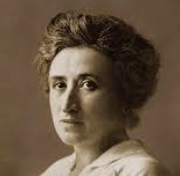
One is immediately struck with the obstinacy and rigid consistency with which Lenin and his comrades stuck to this slogan, a slogan which is in sharp contradiction to their otherwise outspoken centralism in politics as well as to the attitude they have assumed towards other democratic principles. Wile they showed a quite cool contempt for the Constituent Assembly, universal suffrage, freedom of press and assemblage, in short for the whole apparatus of basic democratic liberties of the people which, taken all together, constituted the "right of self-determination" inside Russia, they treated the right of self-determination of peoples as a jewel of democratic policy for the sake of which all practical considerations of real criticism had to be stilled.
▼
Source
Chapter Three, "Nationalities Question"

3 months 3 weeks ago
Talent hits a target no one else can hit; genius hits a target no one else can see.
▼
Source
Das Talent gleicht dem Schützen, der ein Ziel trifft, welches die Uebrigen nicht erreichen können; das Genie dem, der eines trifft, bis zu welchem sie nicht ein Mal zu sehn vermögen... | Vol. II, Ch. III, para. 31 (On Genius), 1844 | As cited in The Littl
3 months 3 weeks ago
Though we may prefer ourselves to the universe, we nonetheless loathe ourselves much more than we suspect. If the wise man is so rare a phenomenon, it is because he seems unshaken by the aversion which, like all beings, he must feel for himself.
3 months 3 weeks ago
This is the condition of England, according to Carlyle. An idle landowning aristocracy which "have not yet learned even to sit still and do no mischief", a working aristocracy submerged in Mammonism, who, when they ought to be collectively the leaders of labour, "captains of industry", are just a gang of industrial buccaneers and pirates. A Parliament elected by bribery, a philosophy of simply looking on, of doing nothing, of laissez-faire, a worn-out, crumbling religion, a total disappearance of all general human interests, a universal despair of truth and humanity, and in consequence a universal isolation of men in their own "brute individuality", a chaotic, savage confusion of all aspects of life, a war of all against all, a general death of the spirit, a dearth of "soul", that is, of truly human consciousness: a disproportionately strong working class, in intolerable oppression and wretchedness, in furious discontent and rebellion against the old social order, and hence a threatening, irresistibly advancing democracy — everywhere chaos, disorder, anarchy, dissolution of the old ties of society, everywhere intellectual insipidity, frivolity, and debility. — That is the condition of England. Thus far, if we discount a few expressions that have derived from Carlyle's particular standpoint, we must allow the truth of all he says. He, alone of the "respectable" class, has kept his eyes open at least towards the facts, he has at least correctly apprehended the immediate present, and that is indeed a very great deal for an "educated" Englishman.
▼
Source
Friedrich Engels, [https://www.marxists.org/archive/marx/works/1844/df-jahrbucher/carlyle.htm review of Past and Present], Deutsch-Französische Jahrbücher (1844)
3 months 3 weeks ago
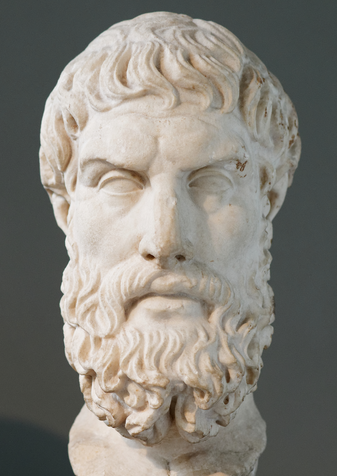
The wealth required by nature is limited and is easy to procure; but the wealth required by vain ideals extends to infinity.
3 months 3 weeks ago
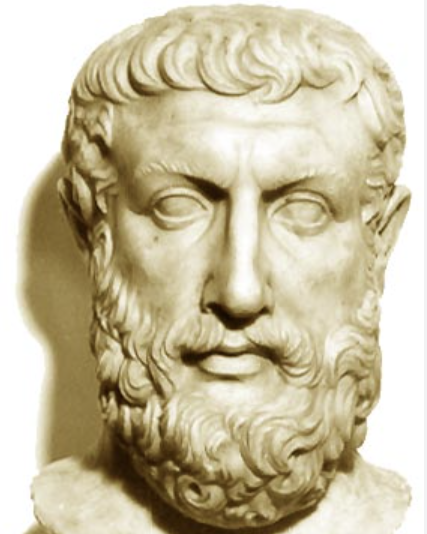
Parmenides made it clear for the first time that the Immortal Principle, the One, Truth, God, is separate from appearance and from opinion, and the importance of this separation and its effect upon subsequent history cannot be overstated. It's here that the classic mind, for the first time, took leave of its romantic origins and said, "The Good and the True are not necessarily the same," and goes its separate way. Anaxagoras and Parmenides had a listener named Socrates who carried their ideas into full fruition.
▼
Source
Robert M. Pirsig, in Zen and the Art of Motorcycle Maintenance (1974), Ch. 29
3 months 3 weeks ago
Yours is one of the few lives precious to mankind, and for the continuance of which every thinking man is solicitous. Bigots may be an exception. What an effort, my dear sir, of bigotry in politics and religion have we gone through! The barbarians really flattered themselves they should be able to bring back the times of Vandalism, when ignorance put everything into the hands of power and priestcraft. All advances in science were proscribed as innovations. They pretended to praise and encourage education, but it was to be the education of our ancestors. We were to look backwards, not forwards, for improvement … This was the real ground of all the attacks on you. Those who live by mystery and charlntanerie, fearing you would render them useless by simplifying the Christian philosophy — the most sublime and benevolent, but most perverted system that ever shone on man — endeavored to crush your well-earned and well-deserved fame. But it was the Lilliputians upon Gulliver. Our countrymen have recovered from the alarm into which art & industry had thrown them; science & honesty are replaced on their high ground; and you, my dear Sir, as their great apostle, are on it's pinnacle.
▼
Source
Thomas Jefferson, in a [http://eText.Lib.Virginia.edu/etcbin/toccer-new2?id=JefLett.sgm&images=images/modeng&data=/texts/english/modeng/parsed&tag=public&part=136&division=div1 letter to Priestly (21 March 1801)]; published in The Life of Thomas Jefferson

3 months 3 weeks ago
Whenever I reflect, my reflecting upon what I suffer only rouses me to blame him that begot me. And I gave peace to my children, for they are in the bliss of non-existence which surpasses all the pleasures of this world. Had they come to life, they would have endured a misery casting them to destruction in trackless wildernesses.
▼
Source
As quoted in Studies in Islamic Poetry (1921) by Reynold A. Nicholson
3 months 3 weeks ago
To be a philosopher, that is to say, a lover of wisdom (for wisdom is nothing but truth), it is not enough for a man to love truth, in so far as it is compatible with his own interest, with the will of his superiors, with the dogmas of the church, or with the prejudices and tastes of his contemporaries; so long as he rests content with this position, he is only a philautos, not a philosophos [a lover of self, not a lover of wisdom]. For this title of honor is well and wisely conceived precisely by its stating that one should love the truth earnestly and with one’s whole heart, and thus unconditionally and unreservedly, above all else, and, if need be, in defiance of all else. Now the reason for this is the one previously stated that the intellect has become free, and in this state it does not even know or understand any other interest than that of truth.
▼
Source
E. Payne, trans. (1974) Vol. 1, pp. 21–22
3 months 3 weeks ago
We dread the future only when we are not sure we can kill ourselves when we want to.

3 months 3 weeks ago
… necessitating the unilateral choice of one of three orientation, I would summarize the disjointed temporal multiple which organizes our site in the following manner:
3 months 3 weeks ago
The brain may be regarded as a kind of parasite of the organism, a pensioner, as it were, who dwells with the body.
3 months 3 weeks ago
The mind that puts everything in question, reaches, after a thousand interrogations, an almost total inertia, a situation which the inert, in fact, knows from the start, by instinct. For what is inertia but a congenital perplexity?
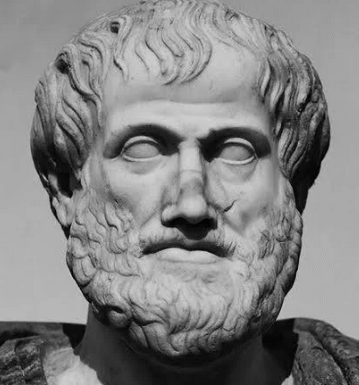
3 months 3 weeks ago
It's gravity is the cause; and that which is heavy abides in the middle, and the earth is in the middle: in like manner also, the infinite will abide in itself, through some other cause... and will itself support itself. ...The places of the whole and the part are of the same species; as of the whole earth and a clod, the place is downward; and of the whole of fire, and a spark, the place is upward. So that if the place of the infinite is in itself, there will be the same place also of a part of the infinite.
▼
Source
Book III, Ch. VII, p. 162.
3 months 3 weeks ago
I know that when the world surrenders, pallid, to repose, the murmur of a tranquil stream through the deep silence flows.
▼
Source
I (Yo soy un hombre sincero) as translated by Esther Allen in José Martí : Selected Writings (2002), p. 275

3 months 3 weeks ago
Much of the time, the question goes unasked in prosperous liberal democracies like Britain or the United States, because most of us see political equality as exhausted by “one person, one vote” and dig no deeper; we know that one person, one vote coexists with the better-off and better-organized buying influence through lobbying, campaign contributions, and use of the mass media, but we find ourselves puzzled to balance a belief that everyone has the right to use his or her resources to influence government—which is certainly one form of political equality—with our sense that excessive inequality of political resources undermines democracy.
▼
Source
Introduction: Thinking about Politics.
3 months 3 weeks ago
Obstinacy is the result of the will forcing itself into the place of the intellect.
▼
Source
Vol. 2, Ch. 26, § 321
3 months 3 weeks ago
Philosophers write for professors; thinkers for writers.
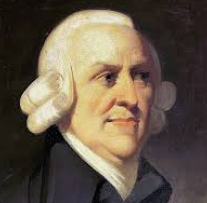
3 months 3 weeks ago
The wise and virtuous man is at all times willing that his own private interests should be sacrificed to the public interest of his own particular society--that the interests of this order of society be sacrificed to the greater interest of the state. He should therefore he equally willing that all those inferior interests should be sacrificed to the greater society of all sensible and intelligent beings.
▼
Source
Section II, Chap. III; cited by Reinhold Niebuhr, The Children of Light and the Children of Darkness, New York: Charles Scribner's Sons, 1941, 24-25.
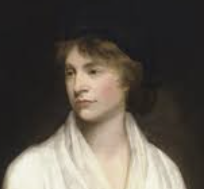
3 months 3 weeks ago
Women becoming, consequently weaker, in mind and body, than they ought to be...have not sufficient strength to discharge the first duty of a mother; and sacrificing to lasciviousness the parental affection...either destroy the embryo in the womb, or cast if off when born. Nature in every thing demands respect, and those who violate her laws seldom violate them with impunity.
▼
Source
Ch. 8
3 months 3 weeks ago
Scientific revolutions are inaugurated by a growing sense... that an existing paradigm has ceased to function adequately in the exploration of an aspect of nature to which that paradigm itself had previously led the way.
▼
Source
p. 91 (2012 ed.)

3 months 3 weeks ago
The British state has defaulted on its core functions while attempting to remake society.
▼
Source
New Statesman, [https://www.newstatesman.com/comment/2024/10/the-tories-have-a-chance-but-only-if-they-elect-a-leader-willing-to-disrupt 9 October 2024]
3 months 3 weeks ago
Now the mass of mankind are plainly... choosing a life like that of brute animals...
▼
Source
(Bk. 1, Chapter III)

3 months 3 weeks ago
You can choose whatever name you like for the two types of government. I personally call the type of government which can be removed without violence "democracy", and the other "tyranny".
▼
Source
As quoted in Freedom: A New Analysis (1954) by Maurice William Cranston, p. 112

3 months 3 weeks ago
Government is violence, Christianity is meekness, non-resistance, love. And, therefore, government cannot be Christian, and a man who wishes to be a Christian must not serve government.
▼
Source
[https://en.wikisource.org/wiki/Letter_to_Dr._Eugen_Heinrich_Schmitt Letter to Dr. Eugen Heinrich Schmitt] (October 12, 1896), translated by [https://en.wikisource.org/wiki/Author:Nathan_Haskell_Dole Nathan Haskell Dole]
3 months 3 weeks ago
It is the duty of man to raise up man. One is guilty of all abjection that one does not help to relieve. Only those who spread treachery, fire, and death out of hatred for the prosperity of others are undeserving of pity.
3 months 3 weeks ago
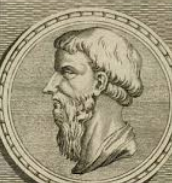
A view of the unseemly actions of drunken men is the most effectual dissuasive from wine.
▼
Source
As quoted in Diogenes Laertius, The Lives and Opinions of Eminent Philosophers, Chapter "Life of Anacharsis", 1702 edition, John Nicholson, p. 55
3 months 3 weeks ago
Because people have no thoughts to deal in, they deal cards, and try and win one another’s money. Idiots!
3 months 3 weeks ago
Everyone is mistaken, everyone lives in illusion. At best, we can admit a scale of fictions, a hierarchy of unrealities, giving preference to one rather than to another; but to choose, no, definitely not that...
3 months 3 weeks ago
The liberal reward of labour, therefore, as it is the affect of increasing wealth, so it is the cause of increasing population. To complain of it, is to lament over the necessary effect and cause of the greatest public prosperity.
▼
Source
Chapter VIII, p. 97.
3 months 3 weeks ago
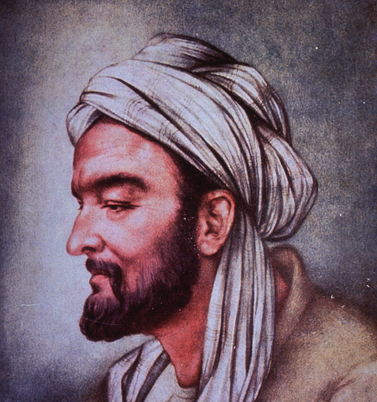
Those who deny the first principle should be flogged or burned until they admit that it is not the same thing to be burned and not burned, or whipped and not whipped.
▼
Source
Metaphysics, Book I
3 months 3 weeks ago
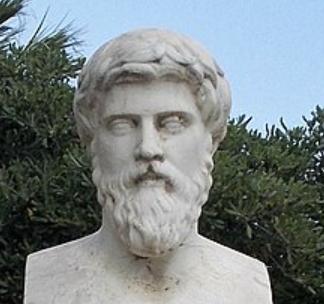
Lamachus chid a captain for a fault; and when he had said he would do so no more, "Sir," said he, "in war there is no room for a second miscarriage." Said one to Iphicrates, "What are ye afraid of?" "Of all speeches," said he, "none is so dishonourable for a general as ‘I should not have thought of it.'"
▼
Source
52 Iphicrates
3 months 3 weeks ago
Contrary to the cartoon history of ideas that prevails today, Darwinism’s threat to religion did not come principally from challenging the biblical account of creation. Until a few centuries ago the Genesis story was known to be a myth – a poetic way of rendering truths that would otherwise be inaccessible. At the beginning of the Christian religion, Augustine warned against the dangers of literalism. The Jewish scholars who preceded him always viewed the Genesis story as a metaphor for truths that could not be accessed in any other way. It was only with the rise of modern science that the Genesis myth came to be misunderstood as an explanatory theory. Yet Darwinism was still a major threat to religion, for it confronted Victorians with the prospect of their final mortality. Darwin forced them to ask why their lives should not end like those of other animals, in nothingness. If this was so, how could human existence have meaning? How could human values be maintained if human personality was destroyed at death?
▼
Source
Cross-correspondences (pp. 21-22)
3 months 3 weeks ago
For well-being and health, again, the homestead should be airy in summer, and sunny in winter. A homestead possessing these qualities would be longer than it is deep; and its main front would face the south.
▼
Source
[http://artflx.uchicago.edu/perseus-cgi/citequery3.pl?dbname=PerseusGreekTexts&getid=1&query=Arist.%20Oec.%201345a.20 1345a.20], Economics (Oeconomica), Greek Texts and Translations, Perseus under PhiloLogic.
3 months 3 weeks ago
In speaking of sociological laws or natural laws of social life I have in mind such laws as are formulated by modern economic theories, for instance, the theory of international trade, or the theory of the trade cycle. These and other important sociological laws are connected with the functioning of social institutions. These laws play a role in our social life corresponding to the role played in mechanical engineering by, say, the principle of the lever. For institutions, like levers, are needed if we want to achieve anything which goes beyond the power of our muscles. Like machines, institutions multiply our power for good or evil. Like machines, they need intelligent supervision by someone who understands their way of functioning and, most of all, their purpose, since we cannot build them so that they work entirely automatically.
▼
Source
Karl Popper, The Open Society and its Enemies, Vol I Plato Chapter 5: Nature and Convention. P. 67
3 months 3 weeks ago
You will die — and it will all be over. You will die and find out everything — or cease asking.
▼
Source
Bk. V, Ch. 1
CivilSimian.com created by AxiomaticPanic, CivilSimian, Kalokagathia