
3 months 3 weeks ago
Appearances to the mind are of four kinds. Things either are what they appear to be; or they neither are, nor appear to be; or they are, and do not appear to be; or they are not, and yet appear to be. Rightly to aim in all these cases is the wise man's task.
▼
Source
Book I, ch. 27, § 1.
3 months 3 weeks ago
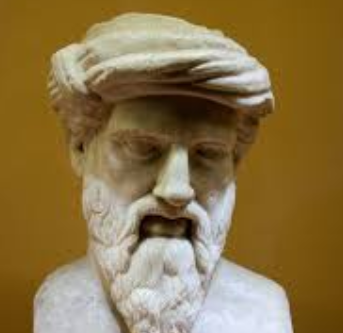
Whenever he heard a person who was making use of his symbols, he immediately took him into his circle, and made him a friend.
▼
Source
Aristoxenus, as quoted in Birth of the Symbol: Ancient Readers at the Limits of Their Texts (2004) by Peter Struck
3 months 3 weeks ago
IF the passions and characters of man were not subject, like the material kingdoms, to distribution in series of groups, man would be out of unity with the universe; there would be duplicity of system in creation, and incoherence between the material and the passional worlds. If man would attain to social uniy, he should seek for the means in the serial order, to which God has subject all nature.
▼
Source
Le nouveau monde amoureux

3 months 3 weeks ago
To convince someone of the truth, it is not enough to state it, but rather one must find the path from error to truth.
▼
Source
Ch. 7 : Remarks on Frazer's Golden Bough, p. 119

3 months 3 weeks ago
Teach your tongue to say "I do not know" and you will progress.
▼
Source
This is actually from the Talmud (Tractate Berachot 4a)

3 months 3 weeks ago
By the rude bridge that arched the flood, Their flag to April's breeze unfurled, Here once the embattled farmers stood, And fired the shot heard round the world.
▼
Source
Hymn sung at the Completion of the Battle Monument
3 months 3 weeks ago
This book is his bible... the distilled wisdom of a lifetime spent contemplating the universe from angles and directions never before suspected.
▼
Source
Arthur C. Clarke, on Synergetics, as quoted in [http://books.google.com/books?id=yySY9lDdGqcC&pg=PA14 New Scientist, Vol. 66, No. 945 (17 April 1975), p. 146]
3 months 3 weeks ago
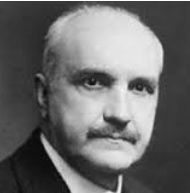
The human race, in its intellectual life, is organized like the bees: the masculine soul is a worker, sexually atrophied, and essentially dedicated to impersonal and universal arts; the feminine is a queen, infinitely fertile, omnipresent in its brooding industry, but passive and abounding in intuitions without method and passions without justice.
3 months 3 weeks ago
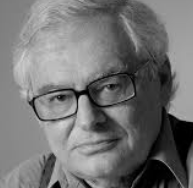
I hate relativism. I hate relativism more than I hate anything else, excepting, maybe, fiberglass powerboats... surely, surely, no one but a relativist would drive a fiberglass powerboat.
▼
Source
Précis of The Modularity of Mind, 1985.
3 months 3 weeks ago
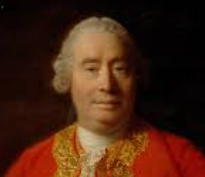
With regard to politics and the character of princes and great men, I think I am very moderate. My views of things are more conformable to Whig principles; my representation of persons to Tory prejudices. Nothing can so much prove that men commonly regard more persons than things, as to find that I am commonly numbered among the Tories.
▼
Source
E. C. Mossner, Life of David Hume (Clarendon Press, 2001), p. 311.
3 months 3 weeks ago
For this too is a very pleasant strand woven into the Cynic's pattern of life; he must needs be flogged like an ass, and while he is being flogged he must love the men who flog him, as though he were the father or brother of them all.
▼
Source
Book III, ch. 22, § 54
3 months 3 weeks ago
It may perhaps help us to realize the human side of our Masters if we remember that many of Them in comparatively recent times have been known as historical characters. The Master K.H. for example, appeared in Europe as the philosopher Pythagoras. Before that He was the Egyptian priest Sarthon, and on yet another occasion chief-priest of a temple at Agade, in Asia Minor, where He was killed in a general massacre of the inhabitants by a host of invading barbarians who swooped down upon them from the hills
▼
Source
C.W. Leadbeater, The Inner Life (1917)
3 months 3 weeks ago
Like everything metaphysical the harmony between thought and reality is to be found in the grammar of the language.
▼
Source
§ 112

3 months 3 weeks ago
According to liberal political theory, as first formulated by John Locke, any individual citizen, oppressed by the rulers of the state, has a right to disobey their commands, break their laws, even rebel and seek to replace the rulers and change the laws.
▼
Source
"The Obligation to Disobey," Ethics, Vol. 77, No. 3 (April 1967), p. 163
3 months 3 weeks ago
His imperial muse tosses the creation like a bauble from hand to hand to embody any capricious thought that is uppermost in her mind. The remotest spaces of nature are visited, and the farthest sundered things are brought together by a subtle spiritual connection.
▼
Source
p. 237
3 months 3 weeks ago
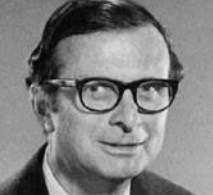
We have overwhelming evidence that available information plus analysis does not lead to knowledge. The management science team can properly analyse a situation and present recommendations to the manager, but no change occurs. The situation is so familiar to those of us who try to practice management science that I hardly need to describe the cases.
▼
Source
C. West Churchman, "Managerial acceptance of scientific recommendations" in California Management Review, Vol 7 (1964), p. 33; cited in Management Systems (1971), by Peter P. Schoderbek, p. 199
3 months 3 weeks ago
Whenever a nation is converted to Christianity, its Christianity, in practice, must be largely converted to paganism.
▼
Source
p. 35
3 months 3 weeks ago
The sense of justice and injustice is not deriv'd from nature, but arises artificially... from education, and human conventions.
▼
Source
Part 2, 1.17
3 months 3 weeks ago
The close of the life of Pythagoras was, according to every statement, in the midst of misfortune and violence. Some particulars are related by Iamblichus, which, though he is not an authority beyond all exception, are so characteristic as seem to entitle them to the being transcribed. … Cylon, the richest man, or, as he is in one place styled, the prince, of Crotona, had manifested the greatest partiality to Pythagoras. He was at the same time a man of rude, impatient and boisterous character. He, together with Perialus of Thurium, submitted to all the severities of the Pythagorean school. They passed the three years of probation, and the five years of silence. They were received into the familiarity of the master. They were then initiated, and delivered all their wealth into the common stock. They were however ultimately pronounced deficient in intellectual power, or for some other reason were not judged worthy to continue among the confidential pupils of Pythagoras. They were expelled. The double of the property they had contributed was paid back to them. A monument was set up in memory of what they had been; and they were pronounced dead to the school. It will easily be conceived in what temper Cylon sustained this degradation. Of Perialus we hear nothing further. But--> … Cylon, from feelings of the deepest reverence and awe for Pythagoras, which he had cherished for years, was filled even to bursting with inextinguishable hatred and revenge. The unparalleled merits, the venerable age of the master whom he had so long followed, had no power to control his violence. His paramount influence in the city insured him the command of a great body of followers. He excited them to a frame of turbulence and riot. He represented to them how intolerable was the despotism of this pretended philosopher. They surrounded the school in which the pupils were accustomed to assemble, and set it on fire. Forty persons perished in the flames. According to some accounts Pythagoras was absent at the time. According to others he and two of his pupils escaped. He retired from Crotona to Metapontum. But the hostility which had broken out in the former city, followed him there. He took refuge in the Temple of the Muses. But he was held so closely besieged that no provisions could be conveyed to him; and he finally perished with hunger, after, according to Laertius, forty days' abstinence.

3 months 3 weeks ago
There has always been an element of the magical in the style of M. Ernest Renan—an art of saying things in a way to make them beautiful.
▼
Source
Henry James, Atlantic Monthly (August 1883)
3 months 3 weeks ago
378. Knowledge is in the end based on acknowledgement.

3 months 3 weeks ago
One should be prepared to receive ninety-nine percent of an enemy's attack and stare death right in the face in order to illumine the Path.
3 months 3 weeks ago
What, then, is his secret? Is it not that he out-Yankees us all? that his range includes us all? that he is equally at home with the potato disease and original sin, with pegging shoes and the Over-soul? that, as we try all trades, so has he tried all cultures? and above all, that his mysticism gives us a counterpoise to our super-practicality?
▼
Source
James Russell Lowell, My Study Windows (1871), "Emerson, the Lecturer"
3 months 3 weeks ago
Common to all these enemies is that none of them accepts the reality of the "whole system": we do not exist in such a system. Furthermore, in the case of morality, religion, and aesthetics, at least a part of our reality reality as human is not "in" any system, and yet it plays a central role in our lives. To me these enemies provide a powerful way of learning about the systems approach, precisely because they enable the rational mind to step outside itself and to observe itself (from the vantage point of the enemies).
▼
Source
p. 24; Partly as cited in: Reynolds, Martin (2003). "Social and Ecological Responsibility: A Critical Systemic Perspective." In: Critical Management Studies Conference 'Critique and Inclusively: Opening the Agenda'; in the stream OR/Systems Thinking for S
3 months 3 weeks ago
In solitude it is possible to love mankind; in the world, for one who knows the world, there can be nothing but secret or open war.
3 months 3 weeks ago
The more exquisite any good is, of which a small specimen is afforded us, the sharper is the evil, allied to it; and few exceptions are found to this uniform law of nature. The most sprightly wit borders on madness; the highest effusions of joy produce the deepest melancholy; the most ravishing pleasures are attended with the most cruel lassitude and disgust; the most flattering hopes make way for the severest disappointments. And, in general, no course of life has such safety (for happiness is not to be dreamed of) as the temperate and moderate, which maintains, as far as possible, a mediocrity, and a kind of insensibility, in every thing. As the good, the great, the sublime, the ravishing are found eminently in the genuine principles of theism; it may be expected, from the analogy of nature, that the base, the absurd, the mean, the terrifying will be equally discovered in religious fictions and chimeras.
▼
Source
Part XV - General corollary
3 months 3 weeks ago
The Pythagoreans knew some properties of s... how a plane can be filled by... regular triangles, squares, or regular hexagons, and space by cubes... [They] may also have known the regular oktahedron and dodekahedron—the latter figure because pyrite, found in Italy, crystallizes in dodekahedra, and models... date to Etruscan times.
▼
Source
, A Concise History of Mathematics (1948)
3 months 3 weeks ago
The purely corporeal can be uncanny. Compare the way angels and devils are portrayed. So-called "miracles" must be connected with this. A miracle must be, as it were, a sacred gesture.
▼
Source
p. 50e
3 months 3 weeks ago
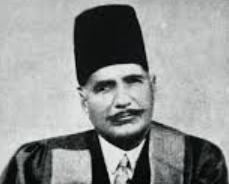
Every land which belongs to God is our land.
▼
Source
As quoted in Islam and Nationalism, Dr. Ali Mohammed Naqvi. | Variant: "All land belongs to Muslims, because it belongs to their God." in : JPRS Report: Near East & South Asia, 93067 Foreign Broadcast Information Service, 1993 [https://books.google.com/bo
3 months 3 weeks ago
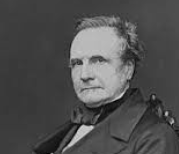
ENGLAND has invited the civilized world to meet in its great commercial centre; asking it, in friendly rivalry, to display for the common advantage of all, those objects which each country derives from the gifts of nature, and on which it confers additional utility by processes of industrial art.This invitation, universally accepted, will bring from every quarter a multitude of people greater than has yet assembled in any western city: these welcome visitors will enjoy more time and opportunity for observation than has ever been afforded on any previous occasion. The statesman and the philosopher, the manufacturer and the merchant, and all enlightened observers of human nature, may avail themselves of the opportunity afforded by their visit to this Diorama of the Peaceful Arts, for taking a more correct view of the industry, the science, the institutions, and the government of this country. One object of these pages is, to suggest to such inquirers the agency of those deeper seated and less obvious causes which can be detected only by lengthened observation, and to supply them with a key to explain many of the otherwise incomprehensible characteristics of England.
▼
Source
p. v-vi: Preface
3 months 3 weeks ago
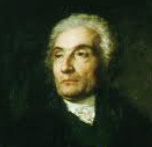
It is always necessary to call men back to history, which is the first master in politics, or more exactly the only master.
▼
Source
p. 120
3 months 3 weeks ago
The same good sense, that directs men in the ordinary occurrences of life, is not hearkened to in religious matters, which are supposed to be placed altogether above the cognizance of human reason.
3 months 3 weeks ago
For a truly religious man nothing is tragic.
▼
Source
Conversation of 1930

3 months 3 weeks ago
In the interest of scientific work, more and more formulations in the unified language of unified science are becoming increasingly precise. No term of unified science, however, is free from imprecision, since all terms are based on terms that are essential for protocol statements, whose imprecision must be immediately obvious to everyone.
▼
Source
p. 91
3 months 3 weeks ago
Truth has no greater enemy than its unwise defenders, and no warmer friends than those who, receiving it in a meek and tolerant spirit, respect the conscientious convictions of others, and seek, in study and in prayer, for the best solution of mysterious and incomprehensible revelations.
▼
Source
In his Memoirs of the Life, Writings, and Discoveries of Sir Isaac Newton, vol. 2 (Edinburgh: 1855)
3 months 3 weeks ago
Nothing great has great beginnings.
▼
Source
XXIII, p. 73
3 months 3 weeks ago
I freely admit that the remembrance of David Hume was the very thing that many years ago first interrupted my dogmatic slumber and gave a completely different direction to my researches in the field of speculative philosophy.
▼
Source
Immanuel Kant, Prolegomena to Any Future Metaphysics (1783), Preface

3 months 3 weeks ago
If on the morrow of the revolution, the masses of the people have only phrases at their service, if they do not recognize, by clear and blinding facts, that the situation has been transformed to their advantage, if the overthrow ends only in a change of persons and forumlae, nothing will have been achieved. … In order that the revolution should be something more than a word, in order that the reaction should not lead us back tomorrow to the situation of yesterday, the conquest of today must be worth the trouble of defending; the poor of yesterday must not be the poor today.
▼
Source
As quoted in Anarchism : A History Of Libertarian Ideas And Movements (2004) by George Woodcock | Variant: The poor of yesterday must not be poor tomorrow.
3 months 3 weeks ago
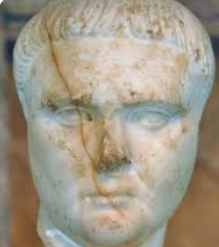
You are devoted to interests from which it is impossible to gain intelligence or prudence or a proper disposition of reverence toward the gods, but only stupid contention, unbridled ambition, vain grief, senseless joy, and raillery and extravagance.
▼
Source
Discourse 32, J. Cohoon and H. Crosby, trans. (1940), p. 177
3 months 3 weeks ago
Bacon's philosophy resembles this religion, which protests continually: it is entirely negative and thinks only to contradict. In indulging himself without measure in this natural inclination, he ends by contradicting himself without perceiving it, and by insulting in others his own most characteristic traits. Thus he blames abstractions without respite, and he makes only abstractions, in always coming back to his middle, general, and most general axioms, and in maintaining that individual instances do not merit the philosopher's attention. He never ceases to shower abuse on the science of words, and he only makes words. He upsets all the received nomenclature to substitute for them new terms, baroque or poetic, or both. With Bacon, neologism is a real disease, and always he believes he has acquired an idea when he has invented a word. He looks with pity at the alchemy that was fully operative in his time, and all his physics is only another alchemy quite babbling and wholly similar to children who talk a lot and produce nothing, as he said very well and very badly with respect to the ancient Greeks.
▼
Source
p. 317
3 months 3 weeks ago
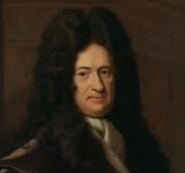
To love is to be delighted by the happiness of someone, or to experience pleasure upon the happiness of another. I define this as true love.
▼
Source
The Elements of True Piety (c. 1677), [http://books.google.com/books?id=oFoCY3xJ8nkC&dq The Shorter Leibniz Texts (2006)] edited by Lloyd H. Strickland, p. 189

3 months 3 weeks ago
If it is pleasing to observe in nature her desire to paint God in all his works, in which we see some traces of him because they are his images, how much more just is it to consider in the productions of minds the efforts which they make to imitate the essential truth, even in shunning it, and to remark wherein they attain it and wherein they wander from it, as I have endeavored to do in this study.
3 months 3 weeks ago
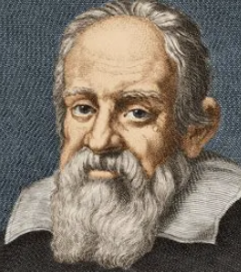
Copernicus never discusses matters of religion or faith, nor does he use argument that depend in any way upon the authority of sacred writings which he might have interpreted erroneously. ... He did not ignore the Bible, but he knew very well that if his doctrine were proved, then it could not contradict the Scriptures when they were rightly understood.
3 months 3 weeks ago
Has not experience demonstrated quite recently that Jack the Ripper performed his exploits under the eye of the London police — a most active force — and that he only left off killing when the population of Whitechapel itself began to give chase to him?And in our every-day relations with our fellow-citizens, do you think that it is really judges, gaolers, and police that hinder anti-social acts from multiplying? The judge, ever ferocious, because he is a maniac of law, the accuser, the informer, the police spy, all those interlopers that live from hand to mouth around the Law Courts, do they not scatter demoralization far and wide into society? Read the trials, glance behind the scenes, push your analysis further than the exterior facade of law courts, and you will come out sickened.
3 months 3 weeks ago
He used to say that it was better to have one friend of great value than many friends who were good for nothing.
▼
Source
Anarcharsis, 5.

3 months 3 weeks ago
It is terrible to see how a single unclear idea, a single formula without meaning, lurking in a young man’s head, will sometimes act like an obstruction … in an artery, hindering the nutrition of the brain, and condemning its victim to pine away in the fullness of his intellectual vigor and in the midst of intellectual plenty.
▼
Source
"How to make our ideas clear,” Popular Science Monthly, Vol. 12 (January 1878)
3 months 3 weeks ago
As to the objection that these rules are common in the world, that it is necessary to define every thing and to prove every thing, and that logicians themselves have placed them among their art, I would that the thing were true and that it were so well known... But so little is this the case, that, geometricians alone excepted, who are so few in number that they are a single in a whole nation and long periods of time, we see no others that know it.
3 months 3 weeks ago
I esteem myself happy to have as great an ally as you in my search for truth. I will read your work … all the more willingly because I have for many years been a partisan of the Copernican view because it reveals to me the causes of many natural phenomena that are entirely incomprehensible in the light of the generally accepted hypothesis. To refute the latter I have collected many proofs, but I do not publish them, because I am deterred by the fate of our teacher Copernicus who, although he had won immortal fame with a few, was ridiculed and condemned by countless people (for very great is the number of the stupid).
▼
Source
Letter to Johannes Kepler (1596), as quoted in The Story of Civilization : The Age of Reason Begins, 1558-1648 (1935) by Will Durant, p. 603
3 months 3 weeks ago
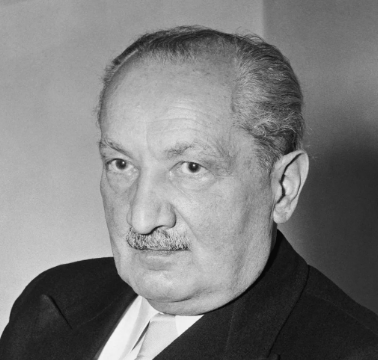
Der Tod ist die Möglichkeit der schlechthinnigen Daseinsunmöglichkeit.
▼
Source
Death is the possibility of the absolute impossibility of Dasein. | Macquarrie & Robinson translation
3 months 3 weeks ago
We are beginning to see that government by majorities means abandoning all the affairs of the country to the tide-waiters who make up the majorities in the House and in election committees; to those, in a word, who have no pinion of their own.
▼
Source
Ch. 3 : Anarchist Communism, p. 81
CivilSimian.com created by AxiomaticPanic, CivilSimian, Kalokagathia