

3 months 3 weeks ago
If democracy has become superfluous or annoying to the bourgeoisie, it is on the contrary necessary and indispensable to the working class. It is necessary to the working class because it creates the political forms (autonomous administration, electoral rights, etc.) which will serve the proletariat as fulcrums in its task of transforming bourgeois society. Democracy is indispensable to the working class because only through the exercise of its democratic rights, in the struggle for democracy, can the proletariat become aware of its class interests and its historic task.
▼
Source
Ch.8

3 months 3 weeks ago
And O! how the mind is here washed clean of all its early ingrafted Jewish superstition ! It is the most profitable and elevating reading which is possible in the world. It has been the solace of my life, and will be the solace of my death.
▼
Source
About the Upanishads. | Arthur Schopenhauer, quoted in [https://archive.org/details/in.ernet.dli.2015.221820/mode/2up Europe Looks At India by Mukherhi, D.P. ]

3 months 3 weeks ago
Not one moment when I have not been conscious of being outside Paradise.

3 months 3 weeks ago
After fifty years we are still dependent on him for Cromwell, and in Past and Present he gave what was the most remarkable piece of historical thinking in the language. But the mystery of investigation had not been revealed to him when he began his most famous book [The French Revolution] ... [T]he vivid gleam, the mixture of the sublime with the grotesque, make other opponents forget the impatient verdicts and the poverty of settled fact in the volumes that delivered our fathers from thraldom to Burke. They remain one of those disappointing storm-clouds that give out more thunder than lightning.
▼
Source
Lord Acton, ‘Appendix: The Literature of the Revolution’ (c. 1895–99), quoted in Lord Acton, Lectures on the French Revolution, eds. J. N. Figgis and R. V. Laurence (1910), pp. 358–359
3 months 3 weeks ago
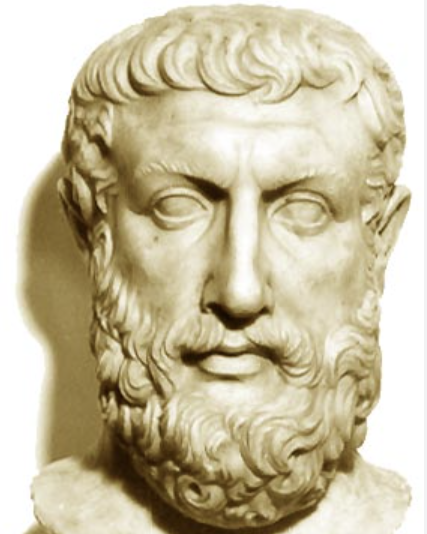
There is one story left, one road: that it is. And on this road there are very many signs that, being, is uncreated and imperishable, whole, unique, unwavering, and complete.
▼
Source
Frag. B 8.1-4, quoted by Simplicius, Commentary on the Physics, 144
3 months 3 weeks ago
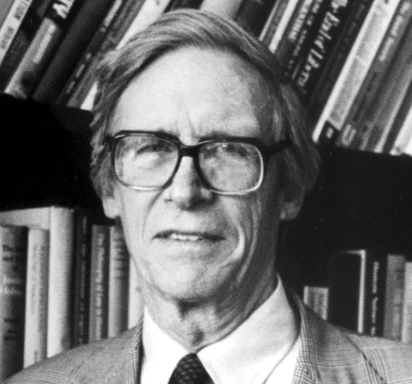
I have tried to set forth a theory that enables us to understand and to assess these feelings about the primacy of justice. Justice as fairness is the outcome: it articulates these opinions and supports their general tendency.
▼
Source
Chapter IX, Section 87, p. 586
3 months 3 weeks ago
Most of the early Christian writers thought the text "I and my Father are one," was to be understood of an unity or harmony of disposition only. Thus Tertullian observes, that the expression is unum, one thing, not one person; and he explains it to mean unity, likeness, conjunction, and of the love that the Father bore to the Son. Origen says, "let him consider that text, 'all that believed were of one heart and of one soul,' and then he will understand this, 'I and my Father are one.'"
▼
Source
Part I : The History of Opinions Relating to Jesus Christ, § III : The Supremacy was always ascribed to the Father before the Council Of Nice
3 months 3 weeks ago
The Eastern-European born revolutionaries Rosa Luxemburg and Emma Goldman, the most famous examples, marched onto the pages of radical history and represented a new kind of Jewish woman, at odds with the balebuste of old.
▼
Source
Carole B. Balin, To Reveal Our Hearts: Jewish Women Writers in Tsarist Russia (2000)
3 months 3 weeks ago
Europeans are awakening more and more to a sense that beasts have rights, in proportion as the strange notion is being gradually overcome and outgrown, that the animal kingdom came into existence solely for the benefit and pleasure of man. This view, with the corollary that non-human living creatures are to be regarded merely as things, is at the root of the rough and altogether reckless treatment of them, which obtains in the West.
▼
Source
Part III, Ch. VIII, 7, [https://archive.org/stream/basisofmorality00schoiala#page/225/mode/2up p. 225]
3 months 3 weeks ago
All my life, I have lived with the feeling that I have been kept from my true place. If the expression "metaphysical exile" had no meaning, my existence alone would afford it one.
3 months 3 weeks ago
If you want one great name in English literature that sums up all that England does not stand for, a bitter spirit, sour, an extravagant, a worshipper of force and of the führerprinzip, it can be said in one name: Carlyle.
▼
Source
A. L. Rowse, 'The English Spirit', The English Spirit: Essays in History and Literature (1944), p. 37
3 months 3 weeks ago
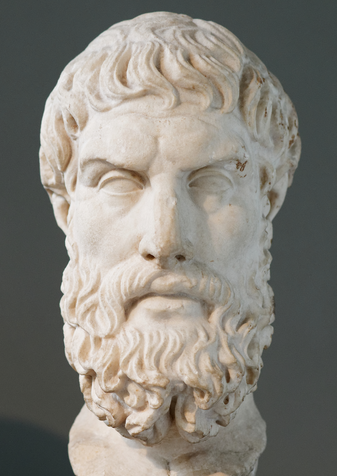
This happy state can only be obtained by a prudent care of the body, and a steady government of the mind. The diseases of the body are to be prevented by temperance, or cured by medicine, or rendered tolerable by patience.
3 months 3 weeks ago
[E]mpty space is nothing, nothing cannot be thought, and therefore cannot exist. What is, never came into being, nor is anything going to come into being in the future. "Is it or is it not?" If it is, then it is now, all at once.
3 months 3 weeks ago
Many houses were still full of light when, at the close of March 22, the people of the Círculo returned to their homes, which were gladdened with a fleeting gladness by an hour of justice — for there are still many slaves, black and white, in Puerto Rico!
▼
Source
"The Abolition of Slavery in Puerto Rico" (1893)
3 months 3 weeks ago
Nature does not do anything in vain.

3 months 3 weeks ago
Since its Parmenidean organization, ontology has built the portico of its ruined temple out of the following experience: what presents itself is essentially multiple; what presents itself is essentially one. The reciprocity of the one and being is certainly the inaugural axiom of philosophy - Leibniz formulation is excellent; 'What is not a being is not a being - yet it is also its impasse; an impasse in which the revolving doors of Plato's Parmenides introduce us to the singular joy of never seeing the moment of conclusion arrive. For if being is one, then one must posit that what is not one, the multiple, is not . But this is unacceptable for thought because what is presented is multiple and one cannot see how there could be an access to being outside all presentation. If presentation is not, does it still make sense to designate what presents (itself) as being? On the other hand, if presentation is, then the multiple necessarily is.
▼
Source
Meditation One: The One and the Multiple: a priori conditions of any possible ontology
3 months 3 weeks ago
Epicurus, the great teacher of happiness, has correctly and finely divided human needs into three classes. First there are the natural and necessary needs which, if they are not satisfied, cause pain. Consequently, they are only victus et amictus [food and clothing] and are easy to satisfy. Then we have those that are natural yet not necessary, that is, the needs for sexual satisfaction. … These needs are more difficult to satisfy. Finally, there are those that are neither natural nor necessary, the needs for luxury, extravagance, pomp, and splendour, which are without end and very difficult to satisfy.
▼
Source
E. Payne, trans. (1974) Vol. 1, p. 346
3 months 3 weeks ago
I do nothing, granted. But I see the hours pass — which is better than trying to fill them.
3 months 3 weeks ago
The Union was a measure from which infinite Good has been derived to this country.
▼
Source
Letter to William Strahan (4 April 1760), quoted in Adam Smith, The Correspondence of Adam Smith, eds. E. C. Mossner and I. S. Ross (1987), p. 68
3 months 3 weeks ago
Virtue can only flourish amongst equals.
▼
Source
A Vindication of the Rights of Men (1790)
3 months 3 weeks ago
"Racist" is a confusing word, and it should be clarified. Men have no special rights simply because they belong to one race or another. When you say "men," you have already imbued them with all their rights.
▼
Source
Variant translation: Men have no special right because they belong to one race or another: the word man defines all rights.
3 months 3 weeks ago
That body is heavier than another which, in an equal bulk, moves downward quicker.
▼
Source
IV. 1. as quoted by Florian Cajori (1899)

3 months 3 weeks ago
Cicero’s style is a key to the success of De officiis, and not just the literary style, but the political and intellectual style. Regulus aside, the demands of duty generally stretch only as far as the well-educated, well-to-do man is likely to follow. Thus, he insists, in a famous metaphor that Machiavelli later stood on its head, that courage is necessary but the courage of a human being is not the ferocity of the lion, just as wisdom is necessary but the intelligence of the human being is not the cunning of the fox.
3 months 3 weeks ago
Two Chinamen visiting Europe went to the theatre for the first time. One of them occupied himself with trying to understand the theatrical machinery, which he succeeded in doing. The other, despite his ignorance of the language, sought to unravel the meaning of the play. The former is like the astronomer, the latter the philosopher.
▼
Source
Vol. 2 "On Various Subjects" as translated in Essays and Aphorisms (1970), as translated by R. J. Hollingdale
3 months 3 weeks ago
To be is to be cornered.
3 months 3 weeks ago
The greatest improvement in the productive powers of labour, and the greatest part of skill, dexterity, and judgment with which it is any where directed, or applied, seem to have been the effects of the division of labour.
▼
Source
Chapter I, p. 7
3 months 3 weeks ago
To be a good mother — a woman must have sense, and that independence of mind which few women possess who are taught to depend entirely on their husbands. Meek wives are, in general, foolish mothers; wanting their children to love them best, and take their part, in secret, against the father, who is held up as a scarecrow.
▼
Source
Ch. 10
3 months 3 weeks ago
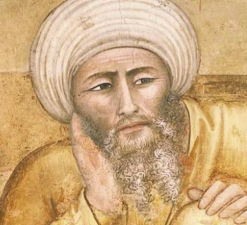
The necessary connexion of movement and time is real and time is something the soul (dhihn) constructs in movement.
▼
Source
As cited in "Being and Language in Averroes' “Tahafut At-Tahafut” (2003) by Massimo Campanini
3 months 3 weeks ago
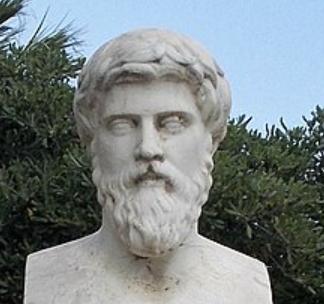
Valour, however unfortunate, commands great respect even from enemies: but the Romans despise cowardice, even though it be prosperous.
▼
Source
Aemilius Paulus 26 (Tr. Stewart and Long)

3 months 3 weeks ago
Hobbes’s understanding of the dangers of anarchy resonates powerfully today. Liberal thinkers still see the unchecked power of the state as the chief danger to human freedom. Hobbes knew better: freedom’s worst enemy is anarchy, which is at its most destructive when it is a battleground of rival faiths. The sectarian death squads roaming Baghdad show that fundamentalism is itself a type of anarchy in which each prophet claims divine authority to rule. In well-governed societies, the power of faith is curbed. The state and the churches temper the claims of revelation and enforce peace. Where this kind is impossible, tyranny is better than being ruled by warring prophets. Hobbes is a more reliable guide to the present than the liberal thinkers who followed. Yet his view of human beings was too simple, and overly rationalistic. Assuming that humans dread violent death more than anything, he left out the most intractable sources of conflict. It is not always because human beings act irrationally that they fail to achieve peace. Sometimes it is because they do not want peace. They may want the victory of the One True Faith – whether a traditional religion or a secular successor such as communism, democracy or universal human rights. Or – like the young people who joined far-Left terrorist groups in the 1970s, another generation of which is now joining Islamist networks – they may find in war a purpose that is lacking in peace. Nothing is more human than the readiness to kill and die in order to secure a meaning in life.
▼
Source
Post-Apocalypse: After Secularism (pp. 262-3)

3 months 3 weeks ago
Before we as individuals are even conscious of our existence we have been profoundly influenced for a considerable time (since before birth) by our relationship to other individuals who have complicated histories, and are members of a society which has an infinitely more complicated and longer history than they do (and are members of it at a particular time and place in that history); and by the time we are able to make conscious choices we are already making use of categories in a language which has reached a particular degree of development through the lives of countless generations of human beings before us. . . . We are social creatures to the inmost centre of our being. The notion that one can begin anything at all from scratch, free from the past, or unindebted to others, could not conceivably be more wrong.
▼
Source
As quoted in Popper (1973) by Bryan Magee

3 months 3 weeks ago
The Anarchists are right in everything; in the negation of the existing order, and in the assertion that, without authority, there could not be worse violence than that of authority under existing conditions. They are mistaken only in thinking that Anarchy can be instituted by a revolution. "To establish Anarchy." "Anarchy will be instituted." But it will be instituted only by there being more and more people who do not require protection from governmental power, and by there being more and more people who will be ashamed of applying this power.
▼
Source
"On Anarchy", in Pamphlets : Translated from the Russian (1900) as translated by Aylmer Maude, p. 22
3 months 3 weeks ago
Men of action, above all those whose actions are guided by love, live forever. Other famous men, those of much talk and few deeds, soon evaporate. Action is the dignity of greatness.
3 months 3 weeks ago
A person might fairly doubt also what in the world they mean by the ‘absolute’ this that or the other, since, as they would themselves allow, the account of the humanity is one and the same in the absolute man, and in any individual man: for so far as the individual and the absolute man are both man, they will not differ at all: and if so, then the essential good and any particular good will not differ, in so far as both are good. Nor will it do to say that the eternity of the absolute good makes it to be more good; for a white thing which has lasted white ever so long, is no whiter than that which only lasts for a day.
▼
Source
(Bk. 1, Chapter III)

3 months 3 weeks ago
Capitalism is an exploitative system, as Marx has argued so cogently, and as anyone who studies the inequalities within and between the countries of the world today must see. It is therefore a priori likely that its ideology conceals realities that if known would make the exploited militant.
▼
Source
p. 85
3 months 3 weeks ago
To free a man from error is to give, not to take away. Knowledge that a thing is false is a truth. Error always does harm; sooner or later it will bring mischief to the man who harbors it. Then give up deceiving people; confess ignorance of what you don't know, and leave everyone to form his own articles of faith for himself. Perhaps they won't turn out so bad, especially as they'll rub one another's corners down, and mutually rectify mistakes. The existence of many views will at any rate lay a foundation of tolerance. Those who possess knowledge and capacity may betake themselves to the study of philosophy, or even in their own persons carry the history of philosophy a step further.
▼
Source
"Religion: A Dialogue." | Variant translation: To free a man from error does not mean to take something from him, but to give him something.
3 months 3 weeks ago
If I were to go blind, what would bother me the most would be no longer to be able to stare idiotically at the passing clouds.
3 months 3 weeks ago
The real and effectual discipline which is exercised over a workman is that of his customers. It is the fear of losing their employment which restrains his frauds and corrects his negligence.
▼
Source
Chapter X, Part II.
3 months 3 weeks ago
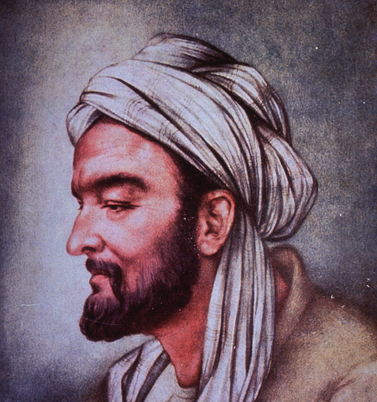
The world is divided into men who have wit and no religion and men who have religion and no wit.
▼
Source
This was declared without citation to have been attributed to Avicenna in A Rationalist Encyclopaedia : A Book of Reference on Religion, Philosophy, Ethics, and Science (1950), by Joseph McCabe, p. 43; it was also later wrongly attributed to Averroes in T
3 months 3 weeks ago
Lysander said, "Where the lion's skin will not reach, it must be pieced with the fox's."
▼
Source
60 Lysander
3 months 3 weeks ago
If our universe is one of many, unlike others in containing observers like ourselves, there is no need to posit a designer. Most universes will be too chaotic to allow the emergence of life or mind. In that case, the fact that humans exist in this universe needs no special explanation
▼
Source
Sweet Morality (p. 222)
3 months 3 weeks ago
I do not overlook the fact that there are irrationalists who love mankind, and that not all forms of irrationalism engender criminality. But I hold that he who teaches that not reason but love should rule opens up the way for those who rule by hate. (Socrates, I believe, saw something of this when he suggested that mistrust or hatred of argument is related to mistrust or hatred of man).
▼
Source
Vol. 2, Ch. 24 "Oracular Philosophy and the Revolt against Reason"
3 months 3 weeks ago
In historical events great men — so-called — are but labels serving to give a name to the event, and like labels they have the least possible connection with the event itself. Every action of theirs, that seems to them an act of their own free will, is in an historical sense not free at all, but in bondage to the whole course of previous history, and predestined from all eternity.
▼
Source
Bk. IX, ch. 1

3 months 3 weeks ago
All political action aims at either preservation or change. When desiring to preserve, we wish to prevent a change for the worse; when desiring to change, we wish to bring about something better. All political action is then guided by some thought of better or worse.
▼
Source
"What Is Political Philosophy" in The Journal of Politics, 19(3) (Aug. 1957) by the Southern Political Science Association, p. 343
3 months 3 weeks ago
Wit is cultured insolence.
▼
Source
Book II, 1389b.11

3 months 3 weeks ago
A man contains all that is needful to his government within himself. He is made a law unto himself. All real good or evil that can befal [sic] him must be from himself. He only can do himself any good or any harm. Nothing can be given to him or can taken from him but always there is a compensation.. There is a correspondence between the human soul and everything that exists in the world; more properly, everything that is known to man. Instead of studying things without the principles of them, all may be penetrated unto with him. Every act puts the agent in a new position. The purpose of life seems to be to acquaint a man with himself. He is not to live the future as described to him but to live the real future to the real present. The highest revelation is that God is in every man.
▼
Source
September 8, 1833

3 months 3 weeks ago
As a rule, white abolitionists either defended the industrial capitalists or expressed no conscious class loyalty at all. This unquestioning acceptance of the capitalist economic system was evident in the program of the women’s rights movement as well. If most abolitionists viewed slavery as a nasty blemish which needed to be eliminated, most women’s righters viewed male supremacy in a similar manner—as an immoral flaw in their otherwise acceptable society. The leaders of the women’s rights movement did not suspect that the enslavement of Black people in the South, the economic exploitation of Northern workers and the social oppression of women might be systematically related.
3 months 3 weeks ago
Of all that makes us suffer, nothing — so much as disappointment — gives us the sensation of at last touching Truth.
3 months 3 weeks ago
It is not for its own sake that men desire money, but for the sake of what they can purchase with it.
▼
Source
Chapter I, p. 471.
3 months 3 weeks ago
We exhort the compromisers to open their hearts to truth, to free themselves of their wretched and blind circumspection, of their intellectual arrogance, and of the servile fear which dries up their souls and paralyzes their movements. Let us therefore trust the eternal Spirit which destroys and annihilates only because it is the unfathomable and eternal source of all life. The passion for destruction is a creative passion, too!
▼
Source
"The Reaction in Germany" (1842) | Often paraphrased as, "The urge to destroy is also a creative urge"
CivilSimian.com created by AxiomaticPanic, CivilSimian, Kalokagathia