
3 months 3 weeks ago
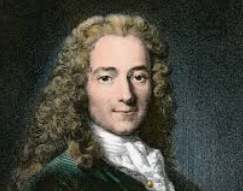
We can not always oblige, but we can always speak obligingly.
▼
Source
p. 69

3 months 3 weeks ago
By capitulating to life, this world has betrayed nothingness. . . . I resign from movement, and from my dreams. Absence! You shall be my sole glory. . . . Let "desire" be forever stricken from the dictionary, and from the soul! I retreat before the dizzying farce of tomorrows. And if I still cling to a few hopes, I have lost forever the faculty of hoping.

3 months 3 weeks ago
Curious, if we will reflect on it, this of having no books. Except by what he could see for himself, or hear of by uncertain rumor of speech in the obscure Arabian Desert, he could know nothing. The wisdom that had been before him or at a distance from him in the world, was in a manner as good as not there for him. Of the great brother souls, flame-beacons through so many lands and times, no one directly communicates with this great soul. He is alone there, deep down in the bosom of the Wilderness; has to grow up so,—alone with Nature and his own Thoughts. But, from an early age, he had been remarked as a thoughtful man.
3 months 3 weeks ago
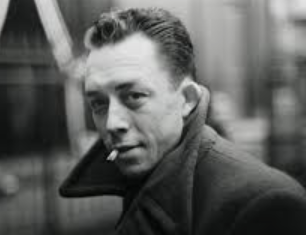
"Then we understand that rebellion cannot exist without a strange form of love. Those who find no rest in God or in history are condemned to live for those who, like themselves, cannot live; in fact, for the humiliated."

3 months 3 weeks ago
Here we bless your simplicity but do not envy your folly.
▼
Source
Book V, 5.105-[3]
3 months 3 weeks ago
Dualism makes the problem insoluble; materialism denies the existence of any phenomenon to study, and hence of any problem.
▼
Source
Consciousness and Language (2002) p. 47.
3 months 3 weeks ago
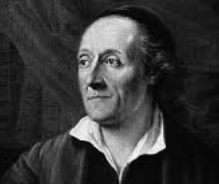
All affectation is the vain and ridiculous attempt of poverty to appear rich.
▼
Source
No. 53

3 months 3 weeks ago
Keep this thought handy when you feel a bit of rage coming on – it isn't manly to be enraged. Rather, gentleness and civility are more human, and therefore manlier. A real person doesn't give way to anger and discontent, and such a person has strength, courage, and endurance – unlike the angry and complaining. The nearer a man comes to a calm mind, the closer he is to strength.
▼
Source
XI 11.18.5b
3 months 3 weeks ago
"Well! sage Evhemere, what have you seen in all your travels?" "Follies!"
▼
Source
p. 197
3 months 3 weeks ago
Nothing proves that we are more than nothing.
3 months 3 weeks ago
The rudest heathen that worshipped Canopus, or the Caabah Black-Stone, he, as we saw, was superior to the horse that worshipped nothing at all! Nay there was a kind of lasting merit in that poor act of his; analogous to what is still meritorious in Poets: recognition of a certain endless divine beauty and significance in stars and all natural objects whatsoever.
3 months 3 weeks ago
Capital punishment is the most premeditated of murders, to which no criminal's deed, however calculated, can be compared. For there to be an equivalency, the death penalty would have to punish a criminal who had warned his victim of the date on which he would inflict a horrible death on him and who, from that moment onward, had confined him at his mercy for months. Such a monster is not to be encountered in private life.

3 months 3 weeks ago
Good breeding in cattle depends on physical health, but in men on a well-formed character.
▼
Source
Freeman (1948), p. 151 | Variant: Strength of body is nobility only in beasts of burden, strength of character is nobility in man. | Durant (1939), Ch. XVI, §II, p. 354; citing C. Bakewell, Sourcebook in Ancient Philosophy, New York, 1909, "Fragment 57" |

3 months 3 weeks ago
Timon will to the woods; where he shall find The unkindest beast more kinder than mankind. The gods confound — hear me, you good gods all — The Athenians both within and out that wall! And grant, as Timon grows, his hate may grow To the whole race of mankind, high and low! Amen.
▼
Source
Timon, scene i
3 months 3 weeks ago
Actions, looks, words, steps, form the alphabet by which you may spell characters.
▼
Source
No. 637
3 months 3 weeks ago
He is by his opinions, and also by his middle-class origin, the natural leader of an implacable opposition.
▼
Source
H. N. Brailsford, Voltaire, H. Holt and company, 1935
3 months 3 weeks ago
Not content with real sufferings, the anxious man imposes imaginary ones on himself; he is a being for whom unreality exists, must exist; otherwise where would he obtain the ration of torment his nature demands?

3 months 3 weeks ago
Sudden Glory, is the passion which maketh those Grimaces called LAUGHTER.
▼
Source
The First Part, Chapter 6, p. 27 (italics and spelling as per text)
3 months 3 weeks ago
Truly it is a sad thing for a people, as for a man, to fall into Scepticism, into dilettantism, insincerity; not to know Sincerity when they see it. For this world, and for all worlds, what curse is so fatal?
3 months 3 weeks ago
Repentance for one's evil deeds is the safeguard of life.

3 months 3 weeks ago
The destructive character knows only one watchword: make room. And only one activity: clearing away. His need for fresh air and open space is stronger than any hatred.
▼
Source
"The Destructive Character" Frankfurter Zeitung (20 November 1931)
3 months 3 weeks ago
Man does not dwell at the centre of things, but is the denizen of an obscure and tiny speck of cosmical matter quite invisible amid the innumerable throng of flaming suns that make up our galaxy.
▼
Source
Ch. 1, p. 15
3 months 3 weeks ago
Parnenides: When there is a number of things which seem to you to be great, you may think, as you look at them all, that there is one and the same idea in them, and hence you think the great is one. But if with your mind's eye you regard the absolute great and these many great things in the same way, will not another great appear beyond, by which all these must appear to be great?
▼
Source
132a
3 months 3 weeks ago
I believe in the salvation of humanity, in the future of cyanide . . .
3 months 3 weeks ago
From whence it follows, that were the publique and private interest are most closely united, there is the publique most advanced.
▼
Source
The Second Part, Chapter 19, p. 97
3 months 3 weeks ago
And yet I will venture to believe that in no time, since the beginnings of Society, was the lot of those same dumb millions of toilers so entirely unbearable as it is even in the days now passing over us. It is not to die, or even to die of hunger, that makes a man wretched; many men have died; all men must die,—the last exit of us all is in a Fire-Chariot of Pain. But it is to live miserable we know not why; to work sore and yet gain nothing; to be heart-worn, weary, yet isolated, unrelated, girt in with a cold universal Laissez-faire: it is to die slowly all our life long, imprisoned in a deaf, dead, Infinite Injustice, as in the accursed iron belly of a Phalaris' Bull! This is and remains forever intolerable to all men whom God has made. Do we wonder at French Revolutions, Chartisms, Revolts of Three Days? The times, if we will consider them, are really unexampled.
3 months 3 weeks ago
Throw moderation to the winds, and the greatest pleasures bring the greatest pains.
3 months 3 weeks ago
When Bernard Marx tells the Savage he will try to secure permission for him and his mother to visit the Other Place, John is initially pleased and excited. Echoing Miranda in The Tempest, he exclaims: "O brave new world that has such people in it." Heavy irony. Like innocent Miranda, he is eager to embrace a way of life he neither knows nor understands. And of course he comes unstuck. Yet if we swallow such fancy literary conceits, then ultimately the joke is on us. It is only funny in the sense there are "jokes" about Auschwitz. For it is Huxley who neither knows nor understands the glory of what lies ahead. A utopian society in which we are sublimely happy will be far better than we can presently imagine, not worse. And it is we, trapped in the emotional squalor of late-Darwinian antiquity, who neither know nor understand the lives of the god-like super-beings we are destined to become.
▼
Source
"[https://www.huxley.net/ Brave New World? A Defence of Paradise-Engineering]", BLTC Research, 1998

3 months 3 weeks ago
The decline of religion in modern times means simply that religion is no longer the uncontested center and ruler of man's life, and that the Church is no longer the final and unquestioned home and asylum of his being.
▼
Source
Chapter Two, The Encounter With Nothingness, p. 20
3 months 3 weeks ago
The strength of faith is... no proof of the objective truth of faith.
3 months 3 weeks ago
Since those who rule in the city do so because they own a lot, I suppose they're unwilling to enact laws to prevent young people who've had no discipline from spending and wasting their wealth, so that by making loans to them, secured by the young people's property, and then calling those loans in, they themselves become even richer and more honored.
▼
Source
555c, G. Grube and C. Reeve, trans., Plato: Complete Works (1997), p. 1166
3 months 3 weeks ago
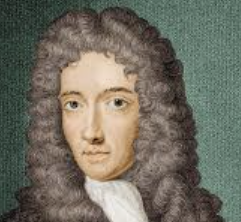
But though much may be said to Excuse the Chymists when they write Darkly, and Ænigmatically, about the Preparation of their Elixir, and Some few other grand Arcana, the divulging of which they may upon Grounds Plausible enough esteem unfit; yet when they pretend to teach the General Principles of Natural Philosophers, this Equivocall Way of Writing is not to be endur'd. For in such Speculative Enquiries, where the naked Knowledge of the Truth is the thing Principally aim'd at, what does he teach me worth thanks that does not, if he can, make his Notion intelligible to me, but by Mystical Termes, and Ambiguous Phrases darkens what he should clear up; and makes me add the Trouble of guessing at the sence of what he Equivocally expresses, to that of examining the Truth of what he seems to deliver.
3 months 3 weeks ago
I foresee the day when we shall read nothing but telegrams and prayers.
3 months 3 weeks ago
It is a remarkable fact that, in a history extending over nearly twenty-five hundred years, a considerable part of the most significant writing on political philosophy was done in two periods of only about fifty years each and in two places of quite restricted area. … The Second place was England, and the period was the half century between 1640 and 1690, which produced the works of Hobbes and Locke, together with the works of a host of lesser figures.
▼
Source
George Sabine, "What is a Political Theory?" (1939)
3 months 3 weeks ago
Nature admits no lie.
▼
Source
Latter Day Pamphlet, No. 5.
3 months 3 weeks ago
One might naively suppose that a negative utilitarian would welcome human extinction. But only (trans)humans - or our potential superintelligent successors - are technically capable of phasing out the cruelties of the rest of the living world on Earth. And only (trans)humans - or rather our potential superintelligent successors - are technically capable of assuming stewardship of our entire Hubble volume.
▼
Source
"[https://www.hedweb.com/social-media/pre2014.html Unsorted Postings]", Facebook, pre-2014

3 months 3 weeks ago
Suffice it to say that the God of Israel loves those who disobey for the sake of what is right, and is capable of being pleased when a man has used his freedom to wrestle with him and to prevail, so long as the path on behalf of which he struggles ultimately proves to be the right one in God’s eyes.
3 months 3 weeks ago
"We work in order to be at leisure." […] Doesn't this statement appear almost immoral to the man or woman of the world of "total work"? Is it not an attack on the basic principles of human society?Now I have not merely constructed a sentence to prove a point. The statement was actually made — by Aristotle [Nichomachean Ethics X, 7 (1177b4–6)]. Yes, Aristotle: the sober, industrious realist, and the fact that he said it, gives the statement special significance. What he says in a more literal translation would be: "We are not-at-leisure in order to be-at-leisure." For the Greeks, "not-leisure" was the word for the world of everyday work; and not only to indicate its "hustle and bustle," but the work itself. The Greek language had only this negative term for it (ά-σχολία), as did Latin (neg-otium).The context not only of this sentence but also of another one from Aristotle's Politics (stating that the "pivot" around which everything turns is leisure [Politics VII, 3 (1337b33)]) shows that these notions were not considered extraordinary, but only self-evident. […] Could this also imply that people in our day no longer have direct access to the original meaning of leisure?
▼
Source
pp. 4–5
3 months 3 weeks ago
Here, first of all men for pure justice famed,And moral virtue, Aristocles lies;And if there e'er has lived one truly wise,This man was wiser still; too great for envy.
▼
Source
The epigram on his tomb, with what Laërtius reported to be his original name, in: {{cite web
3 months 3 weeks ago
Boyle was the first to formulate our present conception of an element in contradistinction to that of the Greeks and the schoolmen who influenced the theories of the iatro-chemists. In the sense understood by him, the Aristotelian elements were not true elements, nor were the salt, sulphur, and mercury of the school of Paracelsus.
3 months 3 weeks ago
Creation is in fact a fault, man's famous sin thereby appearing as a minor version of a much graver one. What are we guilty of, except of having followed, more or less slavishly, the Creator's example? Easy to recognize in ourselves the fatality which was His: not for nothing have we issued from the hands of a wicked and woebegone god, a god accursed.
3 months 3 weeks ago
If Governments neglect to invite what noble intellect there is, then too surely all intellect, not omnipotent to resist bad influences, will tend to become beaverish ignoble intellect; and quitting high aims, which seem shut up from it, will help itself forward in the way of making money and such like; or will even sink to be sham intellect, helping itself by methods which are not only beaverish but vulpine, and so "ignoble" as not to have common honesty.
3 months 3 weeks ago
No amount of happiness enjoyed by some organisms can notionally justify the indescribable horrors of Auschwitz. Nor can the fun and games outweigh the sporadic frightfulness of pain and despair that occurs every second of every day. For there's nothing inherently wrong with non-sentience or non-existence; whereas there is something frightfully and self-intimatingly wrong with suffering.
▼
Source
2.7 [https://www.hedweb.com/hedethic/hedon2.htm#negative Why Be Negative?]

3 months 3 weeks ago
It is not true that on an exchange of commodities we give value for value. On the contrary, each of the two contracting parties in every case, gives a less for a greater value. … If we really exchanged equal values, neither party could make a profit. And yet, they both gain, or ought to gain. Why? The value of a thing consists solely in its relation to our wants. What is more to the one is less to the other, and vice versa. … It is not to be assumed that we offer for sale articles required for our own consumption. … We wish to part with a useless thing, in order to get one that we need; we want to give less for more. … It was natural to think that, in an exchange, value was given for value, whenever each of the articles exchanged was of equal value with the same quantity of gold. … But there is another point to be considered in our calculation. The question is, whether we both exchange something superfluous for something necessary.
▼
Source
Le Commerce et le Gouvernement (1776), as quoted in Marx's Capital, Vol. I, Ch. 5.
3 months 3 weeks ago
Now one may ask, How could a Christian philosophy have something over a non-Christian philosophy, if it does not reach to a higher level of solutions, if it cannot get handy answers, if the problems and questions are still there? Well, perhaps a greater truth could be present in its ability to see the world in its truly mysterious character, in its inexhaustablity. It could even be the case that here, in the very experience of being as a mystery, that it is not to be grasped in the hand as a "well-rounded truth" — herein is reality more deeply and truly grasped than in any transparent system that may charm the mind of the student with its clarity and simplicity. And this is the claim of Christian philosophy: to be truer, precisely because of its recognition of the mysterious character of the world.In no way, then, does philosophy become easier. Plato appears to have discovered and felt that too — if a certain interpretation of Plato is correct, maintaining that Plato understood philosophy to be something tragic for this reason, that it must constantly have recourse to mythos, since the teaching of philosophy can never close itself into a system.
▼
Source
pp. 127–128 | The "interpretation of Plato" referred to is that of Gerhard Krüger, Einsicht und Leidenschaft (Frankfurt, 1939), p. 301.
3 months 3 weeks ago
Skepticism is an exercise in defascination.
3 months 3 weeks ago
The most remarkable piece of reading that you may be recommended to take and try if you can study is a book by Goethe—one of his last books, which he wrote when he was an old man, about seventy years of age—I think one of the most beautiful he ever wrote, full of mild wisdom, and which is found to be very touching by those who have eyes to discern and hearts to feel it. It is one of the pieces in "Wilhelm Meister's Travels." I read it through many years ago; and, of course, I had to read into it very hard when I was translating it (applause), and it has always dwelt in my mind as about the most remarkable bit of writing that I have known to be executed in these late centuries. I have often said, there are ten pages of that which, if ambition had been my only rule, I would rather have written than have written all the books that have appeared since I came into the world.
3 months 3 weeks ago
What I would like to show is that there is a vital dimension of their writing, which I call performative reflexivity, which if ignored or misunderstood will impede an adequate response to it.
▼
Source
Chapter 8, Performative Reflexivity, p. 134
3 months 3 weeks ago
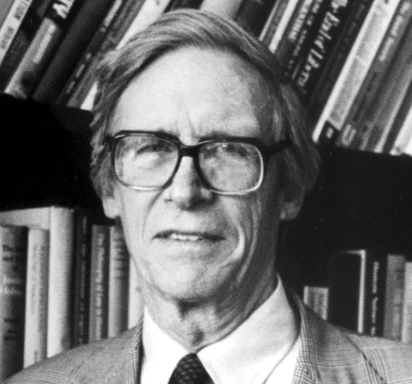
First of all, principles should be general. That is, it must be possible to formulate them without use of what would be intuitively recognized as proper names, or rigged definite descriptions.
▼
Source
Chapter III, Section 23, pg. 131
3 months 3 weeks ago
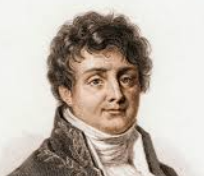
We shall now consider that peculiar heat which our globe had at the time of the formation of the planets, and which continues to be dissipated at the surface under the influence of the low temperature of the planetary space.
CivilSimian.com created by AxiomaticPanic, CivilSimian, Kalokagathia