
3 months 3 weeks ago
If beings are grasped as will to power, the “should” which is supposed to hang suspended over them, against which they might be measured, becomes superfluous. If life itself is will to power, it is itself the ground, principium, of valuation. Then a “should” does not determine being. Being determines a “should.” “When we talk of values we are speaking under the inspiration or optics of life: life itself compels us to set up values; life itself values through us whenever we posit values.” (VIII, 89)
▼
Source
p. 32

3 months 3 weeks ago
The above results are obtained with the help of warm frames, thousands of glass bells, and so on. But even without such costly things, with only 36 yards of frames for seedlings, vegetables are grown in the open air to the value of £200 per acre. ...In such cases the high selling prices of crops are not due to the high prices fetched by early vegetables in winter; they are entirely due to the high crops of the plainest ones.
3 months 3 weeks ago
Diogenes said once to a person who was showing him a dial, "It is a very useful thing to save a man from being too late for supper."
▼
Source
Menedemus, 3.

3 months 3 weeks ago
German idealism rescued philosophy from the attack of British empiricism, and the struggle between the two became not merely a clash of different philosophical school, but a struggle for philosophy as such. P. 16

3 months 3 weeks ago
The, diverse states of the soul are always correlative with those of the body.
3 months 3 weeks ago
Second, in the presence of this continuity of feeling, nominalistic maxims appear futile. There is no doubt about one idea affecting another, when we can directly perceive the one generally modified and shaping itself into the other. Nor can there any longer be any difficulty about one idea resembling another, when we can pass along the continuous field of quality from one to the other and back again to the point which we had marked.

3 months 3 weeks ago
The certain way to be cheated is to fancy one's self more cunning than others.
▼
Source
p. 86 (Conceit)
3 months 3 weeks ago
I thought... that the fact that in characterizing truth for a language it is necessary to put words into relations with objects was enough to give some grip for the idea of correspondence; but this now seems to me a mistake. The mistake is in a way only a misnomer, but terminological infelicities have a way of breeding conceptual confusion, and so it is here. Correspondence theories have always been conceived as providing an explanation or analysis of truth, and this, a Tarski-style theory of truth, certainly does not do.
▼
Source
Donald Davidson (1990, p. 135), as cited in: Simon Evnine (1991) Donald Davidson. p. 137
3 months 3 weeks ago
Gentile himself call his doctrine ‘absolute formalism’: there is no; ’matter’ apart from the pure ‘form’ of acting. ‘The only matter there is in the spiritual act is the form itself, as activity.’ P. 407
3 months 3 weeks ago
Of the three Universes of Experience familiar to us all, the first comprises all mere Ideas, those airy nothings to which the mind of poet, pure mathematician, or another might give local habitation and a name within that mind. Their very airy-nothingness, the fact that their Being consists in mere capability of getting thought, not in anybody's Actually thinking them, saves their Reality. The second Universe is that of the Brute Actuality of things and facts. I am confident that their Being consists in reactions against Brute forces, notwithstanding objections redoubtable until they are closely and fairly examined. The third Universe comprises everything whose being consists in active power to establish connections between different objects, especially between objects in different Universes. Such is everything which is essentially a Sign — not the mere body of the Sign, which is not essentially such, but, so to speak, the Sign's Soul, which has its Being in its power of serving as intermediary between its Object and a Mind.
3 months 3 weeks ago
The very possibility of the science of mathematics seems an insoluble contradiction. If this science is deductive only in appearance, whence does it derive that perfect rigor no one dreams of doubting? If, on the contrary, all the propositions it enunciates can be deduced one from another by the rules of formal logic, why is not mathematics reduced to an immense tautology? The syllogism can teach us nothing essentially new, and, if everything is to spring from the principle of identity, everything should be capable of being reduced to it. Shall we then admit that the enunciations of all those theorems which fill so many volumes are nothing but devious ways of saying A is A! ...Does the mathematical method proceed from particular to the general, and, if so, how can it be called deductive? ...If we refuse to admit these consequences, it must be conceded that mathematical reasoning has of itself a sort of creative virtue and consequently differs from a syllogism.
▼
Source
Ch. I: On the Nature of Mathematical Reasoning (1905) [https://books.google.com/books?id=5nQSAAAAYAAJ Tr.] George Bruce Halstead
3 months 3 weeks ago
God creates out of nothing. Wonderful you say. Yes, to be sure, but He does what is still more wonderful: He makes saints out of sinners.
▼
Source
7 July 1838

3 months 3 weeks ago
Despite the disorder observed in Nature, one finds enough traces of the wisdom and power of its Author that one cannot fail to recognize Him.
3 months 3 weeks ago
The happiest mortals on earth are ladies who have been bereaved by the loss of their husbands.
▼
Source
p. 10
3 months 3 weeks ago
The music of the soul is also the music of salesmanship. Exchange value, not truth value counts. On it centers the rationality of the status quo, and all alien rationality is bent to It.
▼
Source
p. 57
3 months 3 weeks ago
Conflicting intellectual positions may actually come to supplement one another. It is imperative in the present transitional period to make use of the intellectual twilight which dominates our epoch and in which all values and points of view appear in their genuine relativity. We must realize once and for all that the meanings which make up our world are simply an historically determined and continuously developing structure in which man develops, and are in no sense absolute.
3 months 3 weeks ago
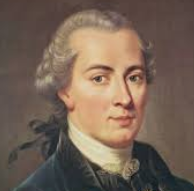
Religion is too important a matter to its devotees to be a subject of ridicule. If they indulge in absurdities, they are to be pitied rather than ridiculed.
▼
Source
A lecture at Königsberg (1775), as quoted in A New Dictionary of Quotations on Historical Principles from Ancient and Modern Sources (1946) by H. L. Mencken, p. 1017
3 months 3 weeks ago
(1) The rules applied are exceedingly various. (2) It is difficult to separate the qualitative problem of simultaneity from the quantitative problem of the measurement of time; no matter whether a chronometer is used, or whether account must be taken of a velocity of transmission, as... of light, because such a velocity could not be measured without measuring a time.
3 months 3 weeks ago
Socrates did not stop with a philosophical consideration of mankind; he addressed himself to each one individually, wrested everything from him, and sent him away empty-handed.
▼
Source
p. 173
3 months 3 weeks ago
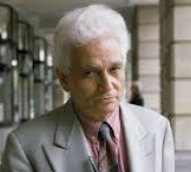
As soon as we cease to believe in such an engineer and in a discourse which breaks with the received historical discourse, and as soon as we admit that every finite discourse is bound by a certain bricolage and that the engineer and the scientist are also species of bricoleurs, then the very idea of bricolage is menaced and the difference in which it took on its meaning breaks down.
▼
Source
"Structure, Sign, and Play in the Discourse of the Human Sciences," Writing and Difference, tr. w/ intro & notes by Alan Bass. The University of Chicago Press. Chicago, 1978. p. 285
3 months 3 weeks ago
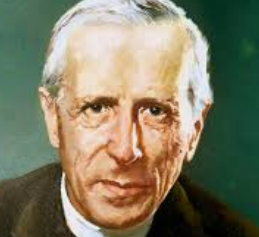
Nowhere... is the need more urgent of building a bridge between the... the physical and the moral...
3 months 3 weeks ago
The newspapers print what the people want, and thus does the savage still swing his club and flourish his spear.
▼
Source
p. 142
3 months 3 weeks ago
The closed language does not demonstrate and explain—it communicates decision, dictum, command. Where it defines, the definition becomes “separation of good from evil;” it establishes unquestionable
▼
Source
p. 101
3 months 3 weeks ago
The concept of space, therefore, is a pure intuition, being a singular concept, not made up by sensations, but itself the fundamental form of all external sensation.
3 months 3 weeks ago
In an age as agitated as ours, it no longer suffices just to be advertised in the newspaper. To be advertised in this way is the same thing as being consigned to oblivion. If one is to be noticed, once must as least appear on the first page under a hand that points to and, as it were, announces or advertises the advertisement.
▼
Source
Søren Kierkegaard, Writing Sampler, Nichol P. 73
3 months 3 weeks ago
If , there is a tendency in all Western democracies no longer to respect the professional politician or even the party member as such, it is no longer only because of some personal insufficiency, some fault, or some incompetence, or because of some scandal that can now be more widely known, amplified, and in fact often produced, if not premeditated by the power of the media. Rather, it is because politicians become more and more, or even solely characters in the media's representation at the very moment when the transformation of the public space, precisely by the media, causes them to lose the essential part of the power and even of the competence they were granted before by the structures of parliamentary representation, by the party apparatuses that were linked to it, and so forth. However competent they may personally be, professional politicians who conform to the old model tend today to become structurally incompetent. The same media power accuses, produces, and amplifies at the same time this incompetence of traditional politicians: on the one hand, it takes aways from them the legitimate power they held in the former political space (party, parliament, and so forth), but, on the other hand, it obliges them to become mere silhouettes, if not marionettes, on the stage of televisual rhetoric. They were thought to be actors of politics, they now often risk, as everyone knows, being no more than TV actors.
▼
Source
Wear and Tears (tableu of a ageless world)
3 months 3 weeks ago
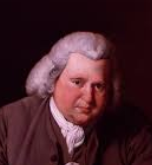
We are not human beings having a spiritual experience; we are spiritual beings having a human experience.
▼
Source
This is attributed to Pierre Teilhard de Chardin in The Joy of Kindness (1993), by Robert J. Furey, p. 138; but it is attributed to G. I. Gurdjieff in Beyond Prophecies and Predictions: Everyone's Guide To The Coming Changes (1993) by Moira Timms, p. 62;
3 months 3 weeks ago
So on his Nɪɢʜᴛᴍᴀʀᴇ through the evening fogFlits the squab Fiend o’er fen, and lake, and bog;Seeks some love-wilder’d Maid with sleep oppress’d,Alights, and grinning sits upon her breast.—Such as of late amid the murky skyWas mark’d by Fᴜsᴇʟɪ’s poetic eye;Whose daring tints, with Sʜᴀᴋᴇsᴘᴇᴀʀ’s happiest grace,Gave to the airy phantom form and place.—Back o’er her pillow sinks her blushing head,Her snow-white limbs hang helpless from the bed;While with quick sighs, and suffocative breath,Her interrupted heart-pulse swims in death.—Then shrieks of captured towns, and widows’ tears,Pale lovers stretch’d upon their blood-stain’d biers,The headlong precipice that thwarts her flight,The trackless desert, the cold starless night,And stern-eye’d Murder with his knife behind,In dread succession agonize her mind.O’er her fair limbs convulsive tremors fleet,Start in her hands, and struggle in her feet;In vain to scream with quivering lips she tries,And strains in palsy’d lids her tremulous eyes;In vain she wills to run, fly, swim, walk, creep;The Wɪʟʟ presides not in the bower of Sʟᴇᴇᴘ.—On her fair bosom sits the Demon-ApeErect, and balances his bloated shape;Rolls in their marble orbs his Gorgon-eyes,And drinks with leathern ears her tender cries.
▼
Source
[Nightmare], The Botanic Garden (1791), Part ii, Canto iii, ll. 51-78.
3 months 3 weeks ago
Now precisely because Galilean science is, in the formation of its concepts, the technic of a specific Lebenswelt, it does not and cannot transcend this Lebenswelt. It remains essentially within the basic experiential framework and within the universe of ends set by this reality.
▼
Source
p. 164
3 months 3 weeks ago
The greatest problem for the human race, to the solution of which Nature drives man, is the achievement of a universal civic society which administers law among men.
▼
Source
Fifth Thesis
3 months 3 weeks ago
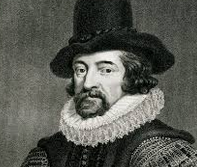
I confess that I have as vast contemplative ends, as I have moderate civil ends: for I have taken all knowledge to be my province; and if I could purge it of two sorts of rovers, whereof the one with frivolous disputations, confutations, and verbosities, the other with blind experiments and auricular traditions and impostures, hath committed so many spoils, I hope I should bring in industrious observations, grounded conclusions, and profitable inventions and discoveries; the best state of that province. This, whether it be curiosity, or vain glory, or nature, or (if one take it favourably) philanthropia, is so fixed in my mind as it cannot be removed. And I do easily see, that place of any reasonable countenance doth bring commandment of more wits than of a man's own; which is the thing I greatly affect.
▼
Source
Letter to William Cecil, 1st Baron Burghley (ca. 1593), published in The Works of Francis Bacon: Baron of Verulam, Viscount St. Alban, and Lord High Chancellor of England, 14 Vols. (1870), James Spedding, Robert L. Ellis, Douglas D. Heath, editors, Vol. V
3 months 3 weeks ago
There are three successive states of morality answering to the three principal stages of human life; the personal, the domestic, and the social stage.
▼
Source
p. 104
3 months 3 weeks ago
Forgetting when God does it in relation to sin, is the opposite of creating, since to create is to bring forth from nothing and to forget is to take back into nothing. What is hidden from my eyes, that I have never seen; but what is hidden behind my back, that I have seen. The one who loves forgives in this way; he forgives, he forgets, he blots out the sin, in love he turns toward the one he forgives; but when he turns toward him, he of course, cannot see what is lying behind his back.
▼
Source
p. 296
3 months 3 weeks ago
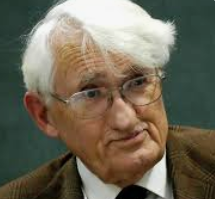
The usage of the words “public" and “public sphere” betrays a multiplicity of concurrent meanings. Their origins go back to various historical phases and, when applied synchronically to the conditions of a bourgeois society that is industrially advanced and constituted as a social-welfare state, they fuse into a clouded amalgam. Yet the very conditions that make the inherited language seem inappropriate appear to require these words, however confused their employment.
▼
Source
p. 1 as cited in: Gandy, M (1997) "Ecology, modernity and the intellectual legacy of the Frankfurt School". In: Light, A and Smith, JM, (eds.) Space, Place and Environmental Ethics. p. 240
3 months 3 weeks ago
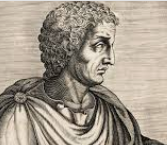
The best plan is, as the common proverb has it, to profit by the folly of others.
▼
Source
Book XVIII, sec. 31.

3 months 3 weeks ago
A totally unmystical world would be a world totally blind and insane.
▼
Source
Grey Eminence (1940)
3 months 3 weeks ago
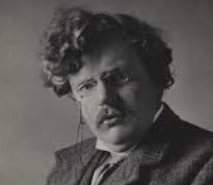
Briefly, you can only find truth with logic if you have already found truth without it.
▼
Source
In The Daily News (25 February 1905)
3 months 3 weeks ago
Psychologists have hitherto failed to realize that imagination is a necessary ingredient of perception itself.
▼
Source
A 120
3 months 3 weeks ago
It is manifest that there is no danger at all in the proportion or quantity of knowledge, how large soever, lest it should make it swell or out-compass itself; no, but it is merely the quality of knowledge, which, be it in quantity more or less, if it be taken without the true corrective thereof, hath in it some nature of venom or malignity, and some effects of that venom, which is ventosity or swelling. This corrective spice, the mixture whereof maketh knowledge so sovereign, is charity, which the Apostle immediately addeth to the former clause; for so he saith, "Knowledge bloweth up, but charity buildeth up".
▼
Source
Book I
3 months 3 weeks ago
Self-accusation is the possibility of justification. The tax collector accused himself. There was no one else who accused him. It was not civic justice that seized him by the chest and said, “You are a criminal”: it was not the people whom he perhaps cheated who beat him on the breast and said, “You are a cheater” – but he beat his own breast and said, "God be merciful to me, a sinner. He accused himself, that he was a sinner before God.
▼
Source
Three Discourses at Friday Communion November 14, 1849 Hong translation 1997 P. 132

3 months 3 weeks ago
Many people ... go through life with hardly an original thought; gravitate from one pleasure or amusement to another; gain a livelihood doing what someone else has assigned; flee boredom as best they can; marry and beget children; and then, without having made the slightest difference of any unique significance, die and decay like any animal.
▼
Source
p. 115
3 months 3 weeks ago
Confronted, when the weather is fine and I am in propitious emotional circumstances, with certain landscapes, certain works of art, certain human beings, I know, for the time being, that God's in his heaven and all's right with the world. On other occasions, skies and destiny being inclement, I am no less immediately certain of the malignant impersonality of an uncaring universe. Every human being has had similar experiences. This being so, the sensible thing to do would be to accept the facts and frame a metaphysic to fit them. But with that talent for doing the wrong thing, that genius for perversity, so characteristically human, men have preferred, especially in recent times, to take another course. They have either denied the existence of these psychological facts; or if they have admitted them, have done so only to condemn as evil all such experiences as cannot be reconciled in a logical system with whatever particular class of experiences they have chosen, arbitrarily, to regard as "true" and morally valuable. Every man tries to pretend that he is consistently one kind of person and does his best consistently to worship one kind of God. And this despite the fact that he experiences diversity and actually feels himself in contact with a variety of divinities.
▼
Source
“One and Many,” pp. 3–4
3 months 3 weeks ago
Atheism is, I suppose, the supreme example of a simple faith. The man says there is no God; if he really says it in his heart, he is a certain sort of man so designated in Scripture [i.e. a fool, Ps. 53:2]. But, anyhow, when he has said it, he has said it; and there seems to be no more to be said. The conversation seems likely to languish. The truth is that the atmosphere of excitement, by which the atheist lived, was an atmosphere of thrilled and shuddering theism, and not of atheism at all; it was an atmosphere of defiance and not of denial. Irreverence is a very servile parasite of reverence; and has starved with its starving lord. After this first fuss about the merely aesthetic effect of blasphemy, the whole thing vanishes into its own void. If there were not God, there would be no atheists.
▼
Source
Where All Roads Lead (1922); this is often misquoted as "If there were no God, there would be no atheists."
3 months 3 weeks ago
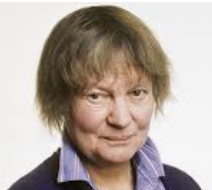
Writing is like getting married. One should never commit oneself until one is amazed at one's luck.
▼
Source
The Black Prince (1973); 2003, p. 10.
3 months 3 weeks ago
The Palestinians living among us have, for the most part, earned a not unfounded reputation for being cheaters, because of their spirit of usury since their exile. Certainly, it seems strange to conceive of a nation of cheaters; but it is just as odd to think of a nation of merchants, the great majority of whom, bound by an ancient superstition that is recognized by the State they live in, seek no civil dignity and try to make up for this loss by the advantage of duping the people among whom they find refuge, and even one another. The situation could not be otherwise, given a whole nation of merchants, as non-productive members of society (for example, the Jews in Poland).
▼
Source
[https://books.google.ca/books?id=nRArBgAAQBAJ&pg=PA77 page 77 of 6 December 2012 publication by Springer Science & Business Media], translation by Mary J. Gregor (The Hague: Martinus Nijhoff, 1974) | [https://books.google.ca/books?id=4EmqLCWUFvEC&pg=PA23
3 months 3 weeks ago
There are four classes of Idols which beset men's minds. To these for distinction's sake I have assigned names — calling the first class, Idols of the Tribe; the second, Idols of the Cave; the third, Idols of the Market-Place; the fourth, Idols of the Theater.
▼
Source
Aphorism 39
3 months 3 weeks ago
When you are reading God's Word, it is not the obscure passages that bind you but what you understand, and with that you comply at once. If you understood only one single passage in all of Holy Scripture, well, then you must do that first of all, but you do not first have to sit down and ponder the obscure passages.
▼
Source
Soren Kierkegaard, For Self-Examination, Hong p. 29
3 months 3 weeks ago
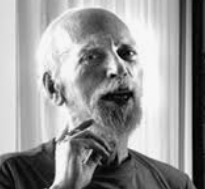
All phenomena are real in some sense, unreal in some sense, meaningless in some sense, real and meaningless in some sense, unreal and meaningless in some sense, and real and unreal and meaningless in some sense.
▼
Source
Nature's God This is a statement derived from one in the Principia Discordia
3 months 3 weeks ago
The end cannot justify the means for the simple and obvious reason that the means employed determine the nature of the ends produced.
▼
Source
Ch. 1, p. 10 [2012 reprint]
3 months 3 weeks ago
The truth is that it is our attitude towards children that is right, and our attitude towards grown-up people that is wrong. Our attitude towards our equals in age consists in a servile solemnity, overlying a considerable degree of indifference or disdain. Our attitude towards children consists in a condescending indulgence, overlying an unfathomable respect.
▼
Source
"A Defence of Baby-Worship"
CivilSimian.com created by AxiomaticPanic, CivilSimian, Kalokagathia