

3 months 4 weeks ago
Those who do not move, do not notice their chains.

3 months 4 weeks ago
Now if plurality and difference belong only to the appearance-form; if there is but one and the same Entity manifested in all living things: it follows that, when we obliterate the distinction between the ego and the non-ego, we are not the sport of an illusion. Rather are we so, when we maintain the reality of individuation, — a thing the Hindus call Maya, that is, a deceptive vision, a phantasma. The former theory we have found to be the actual source of the phaenomenon of Compassion; indeed Compassion is nothing but its translation into definite expression. This, therefore, is what I should regard as the metaphysical foundation of Ethics, and should describe it as the sense which identifies the ego with the non-ego, so that the individual directly recognises in another his own self, his true and very being. From this standpoint the profoundest teaching of theory pushed to its furthest limits may be shown in the end to harmonise perfectly with the rules of justice and loving-kindness, as exercised; and conversely, it will be clear that practical philosophers, that is, the upright, the beneficent, the magnanimous, do but declare through their acts the same truth as the man of speculation wins by laborious research … He who is morally noble, however deficient in mental penetration, reveals by his conduct the deepest insight, the truest wisdom; and puts to shame the most accomplished and learned genius, if the latter's acts betray that his heart is yet a stranger to this great principle, — the metaphysical unity of life.
▼
Source
Part IV, Ch. 2, [https://archive.org/stream/basisofmorality00schoiala#page/273/mode/2up pp. 273]-274

3 months 4 weeks ago
Late at night. I feel like falling into a frenzy, doing some unprecedented thing to release myself, but I don't see against whom, against what...

3 months 4 weeks ago
Those who still think that Carlyle was in some sense more or less Liberal should read his chapter on Democracy in Past and Present. Most of it is occupied with praise of William the Conqueror, and with a description of the pleasant lives enjoyed by serfs in his day. Then comes a definition of liberty : “ The true liberty of a man , you would say, consisted in his finding out, or being forced to find out, the right path, and to walk thereon"...He passes on to the statement that democracy " means despair of finding any Heroes to govern you, and contented putting up with the want of them." The chapter ends by stating, in eloquent prophetical language, that, when democracy shall have run its full course, the problem that will remain is " that of finding government by your Real-Superiors." Is there one word in all this to which Hitler would not subscribe?
▼
Source
Bertrand Russell, "The Ancestry of Fascism", in In Praise of Idleness and other Essays, Allen & Unwin, London, 1935. Also quoted in William A. Robson, "The Political Quarterly" in the Thirties, Allen Lane, London, 1971
3 months 4 weeks ago
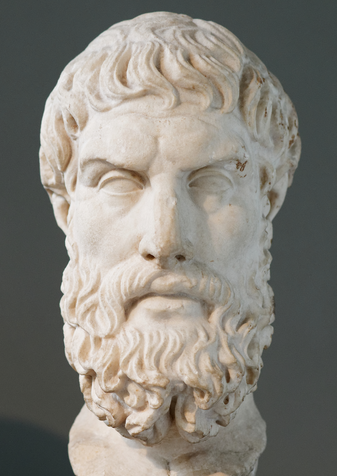
Temperance is that discreet regulation of the desires and passions, by which we are enabled to enjoy pleasures without suffering any consequent inconvenience. They who maintain such a constant self-command, as never to be enticed by the prospect of present indulgence, to do that which will be productive of evil, obtain the truest pleasure by declining pleasure.
3 months 4 weeks ago
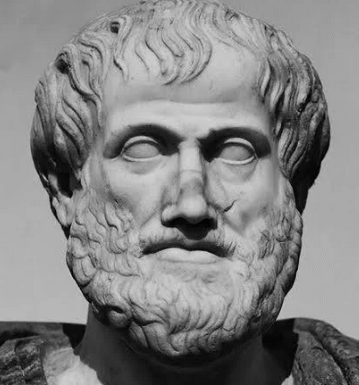
As nothing ought to be dearer to a philosopher than truth, he should, pursue it by the most direct means, devising no actions himself, nor suffering himself to be imposed upon by the fictions of others, neither poets, orators, nor logicians, making no other use of the rules of rhetoric or grammar, than to enable him to speak or write with accuracy and perspicuity, and always preferring a plain and simple to an ornamented style. Whilst some doubt of everything, and others profess to acknowledge everything, a wise man will embrace such tenets, and only such as are built upon experience, or upon certain and indisputable axioms.
▼
Source
Laertius, quoted in [https://www.gutenberg.org/cache/epub/30200/pg30200-images.html#link2H_4_0015 Ancient and Modern Celebrated Freethinkers (Half-Hours with the Freethinkers)] by Charles Bradlaugh, A. Collins, and J. Watts (1877)
3 months 4 weeks ago
Fortune... and chance, are said to be in the number of causes... With some it is dubious whether these things have subsistence or not. For, say they, nothing is produced from fortune, but there is a definite cause of all such things... For if fortune were any thing, it would truly appear to be absurd; and some one might doubt why no one of the ancient wise men, when assigning the causes of generation and corruption, has ever defined any thing concerning fortune. ...Many things are produced, and have a subsistence, from fortune and chance... They did not, however, think that fortune was any thing belonging to friendship or strife, or fire, or intellect, or any thing else of things of this kind. They are chargeable, therefore, with absurdity, whether they did not conceive that it had a substance, or whether fancying that it had, they omitted it; especially since it was sometimes employed by them. Thus Empedocles says that the air...Thus it then chanc'd to run, tho' varying oft.He also says that the greater part of... animals were generated by fortune. But there are some who assign chance to the cause of this heaven, and of all mundane natures... We must consider... whether chance or fortune are the same... or different from each other, and how they fall into definite causes.
▼
Source
Book II, Ch. IV, pp. 113-115.
3 months 4 weeks ago
America began to suffer, and still suffers, from the tiresome task of reconciling the hostile and discordant elements it inherited from the despotic and perverse colonizer, and the imported methods and ideas which have been retarding logical government because they are lacking in local realities. Thrown out of gear for three centuries by a power which denied men the right to use their reason, the continent disregarded or closed its ears to the unlettered throngs that helped bring it to redemption, and embarked on a government based on reason-a reason belonging to all for the common good, not the university brand of reason over the peasant brand. The problem of independence did not lie in a change of forms but in change of spirit.

3 months 4 weeks ago
We live in a contradiction, a brutal state of affairs, profoundly inegalitarian – where all existence is evaluated in terms of money alone – is presented to us as ideal. To justify their conservatism, the partisans of the established order cannot really call it ideal or wonderful. So instead, they have decided to say that all the rest is horrible. Sure, they say, we may not live in a condition of perfect Goodness. But we’re lucky that we don’t live in a condition of Evil. Our democracy is not perfect. But it’s better than the bloody dictatorships. Capitalism is unjust. But it’s not criminal like Stalinism. We let millions of Africans die of AIDS, but we don’t make racist nationalist declarations like Milosevic. We kill Iraqis with our airplanes, but we don’t cut their throats with machetes like they do in Rwanda, etc.
▼
Source
From ' by , 2009. p.5
3 months 4 weeks ago
Great minds are related to the brief span of time during which they live as great buildings are to a little square in which they stand: you cannot see them in all their magnitude because you are standing too close to them.
▼
Source
Vol. 2, Ch. 20, § 242
3 months 4 weeks ago
Erosion of our being by our infirmities: the resulting void is filled by the presence of consciousness, what am I saying? — that void is consciousness itself.
3 months 4 weeks ago
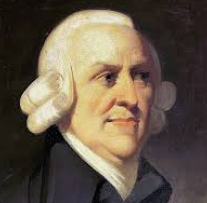
When the happiness or misery of others depends in any respect upon our conduct, we dare not, as self–love might suggest to us, prefer the interest of one to that of many. The man within immediately calls to us, that we value ourselves too much and other people too little, and that, by doing so, we render ourselves the proper object of the contempt and indignation of our brethren. Neither is this sentiment confined to men of extraordinary magnanimity and virtue. It is deeply impressed upon every tolerably good soldier, who feels that he would become the scorn of his companions, if he could be supposed capable of shrinking from danger, or of hesitating, either to expose or to throw away his life, when the good of the service required it.
▼
Source
Chap. III.

3 months 4 weeks ago
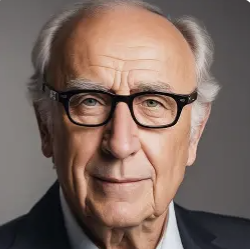
Should it be proved that woman is naturally weaker than man, from whence does it follow that it is natural for her to labour to become still weaker than nature intended her to be? Arguments of this cast are an insult to common sense, and savour of passion. The divine right of husbands, like the divine right of kings, may, it is to be hoped, in this enlightened age, be contested without danger, and though conviction may not silence many boisterous disputants, yet, when any prevailing prejudice is attacked, the wise will consider, and leave the narrow-minded to rail with thoughtless vehemence at innovation.
▼
Source
Ch. 3
3 months 4 weeks ago
Ever since prehistoric antiquity one field of study after another has crossed the divide between what the historian might call its prehistory as a science and its history proper. These transitions to maturity have seldom been so sudden or so unequivocal as my necessarily schematic discussion may have implied. But neither have they been historically gradual, coextensive, that is to say, with the entire development of the fields within which they occurred.
▼
Source
p. 22 (2012 ed.)

3 months 4 weeks ago
If you want to understand the beliefs that are shaping global politics, read the Book of Revelation.
▼
Source
[http://www.guardian.co.uk/books/2006/oct/28/politics Review: Sacred Causes] by Michael Burleigh (2006-10-28)
3 months 4 weeks ago
Every art, and every system, and in like manner every action and purpose aims, it is thought, at some good; for which reason a common and by no means a bad description of the good is, ‘that at which all things aim.’
▼
Source
(Bk I, Ch I)

3 months 4 weeks ago
I know that my unity with all people cannot be destroyed by national boundaries and government orders.
▼
Source
My Religion (1884), as translated in The Human Experience : Contemporary American and Soviet Fiction and Poetry (1989) by the Quaker US/USSR Committee
3 months 4 weeks ago
The merit and strength of a people are measured by their enthusiasm for freedom when the only rewards from it are anguish and martyrdom, the blood and ashes of exile, the sorrow of a house driven by the waves, and the shame of a useless life that lacks the foundation and peace of mind needed to do one's share of the common task.

3 months 4 weeks ago
The enlightened soul is a person who is self-conscious of his "human condition" in his time and historical and social setting, and whose awareness inevitably and necessarily gives him a sense of social responsibility.
▼
Source
p. 1; as cited in: Robert Deemer Lee, Overcoming tradition and modernity: the search for Islamic authenticity, (11997), p. 127.
3 months 4 weeks ago
In early youth, as we contemplate our coming life, we are like children in a theatre before the curtain is raised, sitting there in high spirits and eagerly waiting for the play to begin. It is a blessing that we do not know what is really going to happen. Could we foresee it, there are times when children might seem like innocent prisoners, condemned, not to death, but to life, and as yet all unconscious of what their sentence means.
▼
Source
"On the Sufferings of the World"
3 months 4 weeks ago
Man is fulfilled only when he ceases to be man.
3 months 4 weeks ago
Secrets in manufactures are capable of being longer kept than secrets in trade.
▼
Source
Chapter VII, p. 72.
3 months 4 weeks ago
She strove to reconcile integrity and sexual desire, the duties and needs of women, motherhood and intellectual life, domesticity and fame.
▼
Source
Janet Todd in Mary Wollstonecraft : A Revolutionary Life (2000)
3 months 4 weeks ago
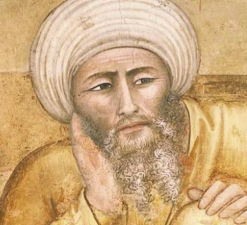
We speak of the matter [of this science] in the sense of its being what the science is about. This is called by some the subject of the science, but more properly it should be called its object, just as we say of a virtue that what it is about is its object, not its subject. As for the object of the science in this sense, we have indicated above that this science is about the transcendentals. And it was shown to be about the highest causes. But there are various opinions about which of these ought to be considered its proper object or subject. Therefore, we inquire about the first. Is the proper subject of metaphysics being as being, as Avicenna claims, or God and the Intelligences, as the Commentator, Averroes, assumes.
▼
Source
Duns Scotus (1266–1308) Quaestiones subtilissimae de metaphysicam Aristotelis, as translated in: William A. Frank, Allan Bernard Wolter (1995) Duns Scotus, metaphysician. p. 20-21
3 months 4 weeks ago
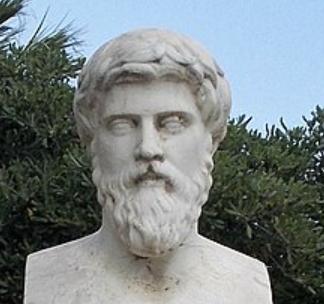
When Darius offered him ten thousand talents, and to divide Asia equally with him, "I would accept it," said Parmenio, "were I Alexander." "And so truly would I," said Alexander, "if I were Parmenio." But he answered Darius that the earth could not bear two suns, nor Asia two kings.
▼
Source
42 Alexander
3 months 4 weeks ago
The idea of a law of progress, or of an all but irresistible tendency to general improvement, is then merely a superstition, one of the tents of the modernist pseudo-religion of humanism. Even if such a law or tendency existed and were demonstrable, the liberal faith in progress would for Santayana be pernicious. For it leads to a corrupt habit of mind in which things are valued, not for their present excellence or perfection, but instrumentally, as leading to something better; and it insinuates into thought and feeling a sort of historical theodicy, in which past evil is justified as a means to present or future good. The idea of progress embodies a kind of time-worship (to adopt an expression used by Wyndham Lewis) in which the particularities of our world are seen and valued, not in themselves, but for what they might perhaps become, thereby leaving us destitute of the sense of the present and, at the same time, of the perspective of eternity.
▼
Source
'Santayana's Alternative' (p.67-8)
3 months 4 weeks ago
The vices respectively fall short of or exceed what is right in both passions and actions, while virtue both finds and chooses that which is intermediate.
▼
Source
Book II, 1107a.4 | Variant: Some vices miss what is right because they are deficient, others because they are excessive, in feelings or in actions, while virtue finds and chooses the mean.

3 months 4 weeks ago
Science does not rest upon solid bedrock. The bold structure of its theories arises, as it were, above a swamp. It is like a building erected on piles. The piles are driven down from above into the swamp, but not down to any natural or 'given' base; and if we stop driving the piles deeper, it is not because we have reached firm ground. We simply stop when we are satisfied that the piles are firm enough to carry the structure, at least for the time being.
▼
Source
Ch. 5 "The Problem of the Empirical Basis", Section 30: Theory and Experiment, p. 94.
3 months 4 weeks ago
Well, Prince, so Genoa and Lucca are now just family estates of the Buonapartes. But I warn you, if you don't tell me that this means war, if you still try to defend the infamies and horrors perpetrated by that Antichrist—I really believe he is Antichrist—I will have nothing more to do with you and you are no longer my friend, no longer my 'faithful slave,' as you call yourself! But how do you do? I see I have frightened you—sit down and tell me all the news.
▼
Source
Bk. I, Ch. I

3 months 4 weeks ago
Everyone's got the same insecurities as you. Everyone's got the same insecurities as you. Believe me it is true. You are not alone. There's no need to feel blue. Everyone's got the same insecurities as you. Believe me it is true. Do not be afraid. To show people the real you.
▼
Source
In Bed with my Doona (2005).

3 months 4 weeks ago
I am not blind to the worth of the wonderful gift of "Leaves of Grass." I find it the most extraordinary piece of wit and wisdom that America has yet contributed. I am very happy in reading it, as great power makes us happy. It meets the demand I am always making of what seemed the sterile and stingy nature, as if too much handiwork, or too much lymph in the temperament, were making our western wits fat and mean. I give you joy of your free and brave thought. I have great joy in it. I find incomparable things said incomparably well, as they must be. I find the courage of treatment which so delights us, and which large perception only can inspire. I greet you at the beginning of a great career, which yet must have had a long foreground somewhere, for such a start. I rubbed my eyes a little, to see if this sunbeam were no illusion; but the solid sense of the book is a sober certainty. It has the best merits, namely, of fortifying and encouraging...
▼
Source
Letter to Walt Whitman, thanking him for a copy of Leaves of Grass (July 21, 1855)

3 months 4 weeks ago
In the heat of our pursuit for fundamental human rights, Black people have been continually cautioned to be patient. We are advised that as long as we remain faithful to the existing democratic order, the glorious moment will eventually arrive when we will come into our own as full-fledged human beings.
3 months 4 weeks ago
Keats, entirely a stranger to error, could believe that the nightingale enchanting him was the same one Ruth heard amid the alien corn of Bethlehem in Judah; Stevenson posits a single bird that consumes the centuries: "the nightingale that devours time." Schopenhauer — impassioned, lucid Schopenhauer — provides a reason: the pure corporeal immediacy in which animals live, oblivious to death and memory. He then adds, not without a smile: Whoever hears me assert that the grey cat playing just now in the yard is the same one that did jumps and tricks there five hundred years ago will think whatever he likes of me, but it is a stranger form of madness to imagine that the present-day cat is fundamentally an entirely different one.
▼
Source
Jorge Luis Borges in "A History of Eternity" as translated in Selected Non-Fictions Vol. 1, (1999), edited by Eliot Weinberger
3 months 4 weeks ago
The surest means of not losing your mind on the spot: remembering that everything is unreal, and will remain so...
3 months 4 weeks ago
Thus the labour of a manufacture adds, generally, to the value of the materials which he works upon, that of his own maintenance, and of his masters profits. The labour of a menial servant, on the contrary, adds to the value of nothing.
▼
Source
Chapter III, p. 364 (see Proverbs 14-23 KJV).
3 months 4 weeks ago
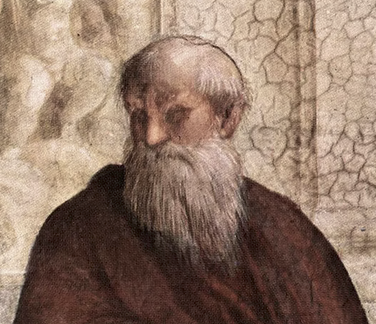
Hence, as Narcissus, by catching at the shadow, plunged himself in the stream and disappeared, so he who is captivated by beautiful bodies, and does not depart from their embrace, is precipitated, not with his body, but with his soul, into a darkness profound and repugnant to intellect (the higher soul), through which, remaining blind both here and in Hades, he associates with shadows.
▼
Source
First Ennead, Book VI, as translated by Thomas Taylor, [https://books.google.com/books?id=vEt0LaOue8IC The Eleusinian and Bacchic Mysteries: A Dissertation] (1891) pp. 43-44.
3 months 4 weeks ago
The measure of a man's life is the well spending of it, and not the length.
3 months 4 weeks ago
The evidence of science and history is that humans are only ever partly and intermittently rational, but for modern humanists the solution is simple: human beings must in future be more reasonable. These enthusiasts for reason have not noticed that the idea that humans may one day be more rational requires a greater leap of faith than anything in religion. Since it requires a miraculous breach in the order of things, the idea that Jesus returned from the dead is not as contrary to reason as the notion that human beings will in future be different from how they have always been.
▼
Source
An Old Chaos: Humanism and Flying Saucers (p. 75)
3 months 4 weeks ago
Happiness depends upon ourselves
▼
Source
An interpretative gloss of Aristotle's position in Nicomachean Ethics book 1 section 9, tacitly inserted by J. A. K. Thomson in his English translation The Ethics of Aristotle (1955). The original Greek at [https://www.perseus.tufts.edu/hopper/text?doc=Pe
3 months 4 weeks ago
Put in a nut-shell, my thesis amounts to this. The repeated attempts made by Rudolf Carnap to show that the demarcation between science and metaphysics coincides with that between sense and nonsense have failed. The reason is that the positivistic concept of 'meaning' or 'sense' (or of verifiability, or of inductive confirmability, etc.) is inappropriate for achieving this demarcation — simply because metaphysics need not be meaningless even though it is not science. In all its variations demarcation by meaninglessness has tended to be at the same time too narrow and too wide: as against all intentions and all claims, it has tended to exclude scientific theories as meaningless, while failing to exclude even that part of metaphysics which is known as 'rational theology'.
▼
Source
Ch 11. "The Demarcation between Science and Metaphysics." (Summary, p. 253)
3 months 4 weeks ago
The peculiar and amusing nature of those answers stems from the fact that modern history is like a deaf person who is in the habit of answering questions that no one has put to them. If the purpose of history be to give a description of the movement of humanity and of the peoples, the first question — in the absence of a reply to which all the rest will be incomprehensible — is: what is the power that moves peoples? To this, modern history laboriously replies either that Napoleon was a great genius, or that Louis XIV was very proud, or that certain writers wrote certain books. All that may be so and mankind is ready to agree with it, but it is not what was asked.
▼
Source
Vol 2, pt 5, p 236 — Selected Works, Moscow, 1869

3 months 4 weeks ago
Once we realize that the principles of our actions have no other support than our blind choice, we really do not believe in them anymore... In order to live, we have to silence the easily silenced voice of reason, which tells us that our principles are in themselves as good or as bad an any other principles. The more we cultivate reason, the more we cultivate nihilism...
▼
Source
p. 6
3 months 4 weeks ago
You shall have joy, or you shall have power, said God; you shall not have both.
▼
Source
October 1842
3 months 4 weeks ago
It should be remembered that the ancestors of many of today's most ardent liberals could not have imagined life without slavery, life without lynching, life without segregation.
▼
Source
Chapter Two
3 months 4 weeks ago
To have grazed every form of failure, including success.
3 months 4 weeks ago
Such taxes [upon the necessaries of life], when they have grown up to a certain height, are a curse equal to the barrenness of the earth and the inclemency of the heavens; and yet it is in the richest and most industrious countries that they have been most generally imposed. No other countries could support so great a disorder.
▼
Source
Chapter II, paragraph 36, p. 500.
3 months 4 weeks ago
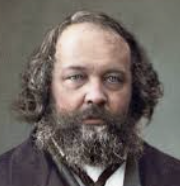
Freedom is the absolute right of every human being to seek no other sanction for his actions but his own conscience, to determine these actions solely by his own will, and consequently to owe his first responsibility to himself alone.
▼
Source
As quoted in Anarchism: From Theory to Practice, Daniel Guérin, New York: NY, Monthly Review Press (1970) p. 31
3 months 4 weeks ago
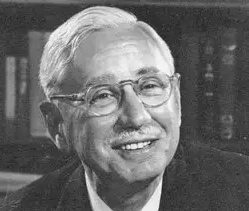
India will teach us the tolerance and gentleness of mature mind, understanding spirit and a unifying, pacifying love for all human beings.

3 months 4 weeks ago
Every body is in place; but nothing essentially incorporeal, or any thing of this kind, has any locality.
▼
Source
1
3 months 4 weeks ago
'[S]cientific knowledge' always remained sheer guesswork... controlled by criticism and experiment. ...[T]his assumption is sufficient for solving the problem of induction—called by Kant 'the problem of Hume'— without sacrificing empiricism...[i.e.,] without adopting a principle of induction and ascribing to it a priori validity. For guesses are not 'induced from observations' (although they may ...be suggested ...by observations). This ... allows us to accept ...(...without Russell's limits of empiricism) Hume's logical criticism of induction and to give up ...an inductive logic, for certainty, and even for probability, while continuing ...scientific search for truth.
CivilSimian.com created by AxiomaticPanic, CivilSimian, Kalokagathia