

3 months 4 weeks ago
With his sharp power of vision, resolute power of action, I doubt not he could have learned to write Books withal, and speak fluently enough;—he did harder things than writing of Books. This kind of man is precisely he who is fit for doing manfully all things you will set him on doing.

3 months 4 weeks ago
Fools learn wisdom through misfortune.

3 months 4 weeks ago
There is no muse of philosophy, nor is there one of translation.
▼
Source
"The Task of the Translator," translated by Harry Zohn

3 months 4 weeks ago
The physicists of Gilbert's time had recourse to mechanism infrequently, and its effective explanations touched only a few disconnected phenomena. The virtuosity, inventiveness, and optimism of Descartes, however, and the counter-example of latter- day hermetists like Robert Fludd, persuaded many that mechanical models offered the only hope for a precise and comprehensible physics. Expectations rose. Physicists demanded more from models, perhaps even a complete fit with phenomena, with little or no negative analogy.Gilbert's countrymen , diplomat and philosopher, and Thomas Browne, physician diplomat and literateur, freed his watery humor objections of Cabeo by concocting it into an unctuous, elastic vapor. Such a vapor could allow Cabeo's rebounds, occasion the reattractions of ricocheting that Digby noticed, and — in its elastic contractions — draw the electric as well as the chaff. This last inference was first made about 1660, by the unconventional Cartesian fellow traveller , S.J., 'a veritable giant in science' and a liberal and candid physicist whenever his Society's obligation to combat Copernicans did interfer.
▼
Source
John L. Heilbron, Electricity in the 17th and 18th centuries: A study of early modern physics. Univ of California Press, 1979. p. 195 | The quote "a veritable giant in science," originates from: Elise C. Otté (1881). Denmark and Iceland, p. 156
3 months 4 weeks ago
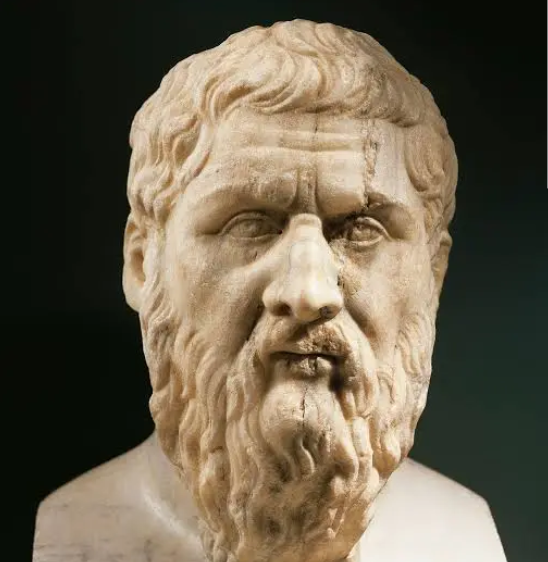
Parmenides: I was pleased with you, Socrates, because you would not discuss the doubtful question in terms of visible objects or in relation to them, but only with reference to what we conceive most entirely by the intellect and may call ideas… But if you wish to get better training, you must do something more than that; you must consider not only what happens if a particular hypothesis is true, but also what happens if it is not true.
▼
Source
135e

3 months 4 weeks ago
On the frontiers of the self: "What I have suffered, what I am suffering, no one will ever know, not even I."

3 months 4 weeks ago
For naturall Bloud is in like manner made of the fruits of the Earth; and circulating, nourisheth by the way, every Member of the Body of Man.
▼
Source
The Second Part, Chapter 24, p. 130 (See also: Velocity of money)
3 months 4 weeks ago
Money is miraculous. What miraculous facilities has it yielded, will it yield us; but also what never-imagined confusions, obscurations has it brought in; down almost to total extinction of the moral-sense in large masses of mankind!
3 months 4 weeks ago
All who delight in the pleasures of the belly, exceeding all measure in eating and drinking and love, find that the pleasures are brief and last but a short while—only so long as they are eating and drinking—but the pains that come after are many and endure. The longing for the same things keeps ever returning, and whenever the objects of one's desire are realized forthwith the pleasure vanishes, and one has no further use for them. The pleasure is brief, and once more the need for the same things returns.

3 months 4 weeks ago
The negative utilitarian might reply that this formulation of the problem is misleading. We do not live in a notional world where only a pinprick, minor pains, or even just "mild" suffering exists. In the real world, frightful horrors as well as humdrum malaise occur every day. The intensity of suffering is sometimes so dreadful that its victims are prepared to destroy themselves to bring their torment to an end. Each year, some 800,000 people across the planet kill themselves while in the grip of suicidal despair. Tens of millions of people are severely depressed or suffer chronic neuropathic pain. By way of contrast, the genteel conventions of an ethics seminar in academic philosophy, or the scholarly technicalities of a journal article, simply fail to come to terms with the enormity of what's at stake. To talk of a "pinprick" is to trivialise the NU ethical stance.
▼
Source
"[https://www.utilitarianism.com/pinprick-argument.html The Pinprick Argument]", BLTC Research, 2005

3 months 4 weeks ago
Jaspers sees the historical meaning of existential philosophy as a struggle to awaken in the individual the possibilities of an authentic and genuine life, in the face of the great modern drift toward a standardized mass society.
▼
Source
Chapter Two, The Encounter With Nothingness, p. 28
3 months 4 weeks ago
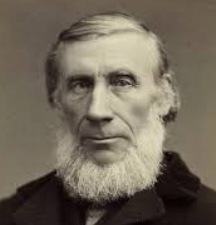
When arguments or proofs were needed, whether on the side of the Jewish Christians or of the Gentile Christians, a document was discovered which met the case, and on which the name of an apostle, or of some authoritative contemporary of the apostles, was boldly inscribed. The end being held to sanctify the means, there was no lack of manufactured testimony.
3 months 4 weeks ago
There have been, and will be again, many destructions of mankind arising out of many causes; the greatest have been brought about by the agencies of fire and water, and other lesser ones by innumerable other causes. There is a story, which even you have preserved, that once upon a time Phaethon, the son of Helios, having yoked the steeds in his father's chariot, because he was not able to drive them in the path of his father, burnt up all that was upon the earth, and was himself destroyed by a thunderbolt. Now this has the form of a myth, but really signifies a declination of the bodies moving in the heavens around the earth, and a great conflagration of things upon the earth, which recurs after long intervals; at such times those who live upon the mountains and in dry and lofty places are more liable to destruction than those who dwell by rivers or on the seashore. And from this calamity the Nile, who is our never-failing saviour, delivers and preserves us. When, on the other hand, the gods purge the earth with a deluge of water, the survivors in your country are herdsmen and shepherds who dwell on the mountains, but those who, like you, live in cities are carried by the rivers into the sea. Whereas in this land, neither then nor at any other time, does the water come down from above on the fields, having always a tendency to come up from below; for which reason the traditions preserved here are the most ancient. The fact is, that wherever the extremity of winter frost or of summer sun does not prevent, mankind exist, sometimes in greater, sometimes in lesser numbers. And whatever happened either in your country or in ours, or in any other region of which we are informed—if there were any actions noble or great or in any other way remarkable, they have all been written down by us of old, and are preserved in our temples.
▼
Source
Benjamin Jowett translation
3 months 4 weeks ago
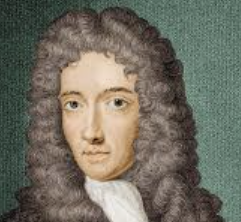
That which I am now entering upon being the Consideration of the things themselves whereinto Spagyrists resolve mixt Bodies by the Fire, If I can shew that these are not of an Elementary Nature, it will be no great matter what names these or those Chymists have been pleased to give them. And I question not that to a Wise man, and consequently to Eleutherius, it will be lesse considerable to know, what Men Have thought of Things, then what they Should have thought.
3 months 4 weeks ago
Woes and wonders of power, that tonic hell, synthesis of poison and panacea.
3 months 4 weeks ago
At the core of Hobbes’s theory of political authority is the provision of security. “The end of Obedience is Protection,” Hobbes insists in chapter 21 of Leviathan. The Obligation of Subjects to the Soveraign, is understood to last as long, and no longer, than the power lasteth, by which he is able to protect them.” This is because “the right men have by Nature to protect themselves, when none else can protect them, can by no Covenant be relinquished.”6 The king’s rightful authority is rooted in his capacity to protect his subjects. As a result, their obligation to obey him, unqualified as it is while it lasts, expires with the king’s ability to protect them.Hobbes spelled this out even more perspicaciously in his discussion of conquest—with clear implications for what was at stake in the Engagement controversy. A person is conquered not by being slain or imprisoned. (In the latter case “he is still an Enemy, and may save himself if hee can.”) Rather, “he that upon promise of Obedience, hath his Life and Liberty allowed him, is then Conquered, and a Subject; and not before.” The long and short of it was that once Parliament had replaced the king as protector of the people of England, they owed Parliament their unqualified allegiance. Engagement was therefore legitimate. Indeed, in the circumstances after 1649, it was obligatory. And it would follow, a fortiori, that should Parliament lose the capacity to provide protection, then the obligation to Engage would cease as well.In this way, Hobbes could counsel Charles’s supporters to promise allegiance to Parliament, but they could do it in a manner that would not compromise their ability to support the king in the event of a restoration. As it turned out, making this move alienated Hobbes from many royalists—even though he offered them a doctrine that promised to get them out of a tight spot and hedge their bets for the future. Their attachment, it seems, was to Charles himself, or at least to the institution of the monarchy.
▼
Source
Ian Shapiro, "Introduction: Reading Hobbes Today", in Thomas Hobbes, Leviathan (Yale University Press, 2010)
3 months 4 weeks ago
A healthy hatred of scoundrels.
▼
Source
Latter Day Pamphlets, No. 12.
3 months 4 weeks ago
What right have humans to impose our values on members of another race or species? The charge is seductive but misplaced. There is no anthropomorphism here, no imposition of human values on alien minds. Human and nonhuman animals are alike in an ethically critical respect. The pleasure-pain axis is universal to sentient life. No sentient being wants to be harmed – to be asphyxiated, dismembered, or eaten alive. The wishes of a terrified toddler or a fleeing zebra to flourish unmolested are not open to doubt even in the absence of the verbal capacity to say so.
▼
Source
"[https://io9.gizmodo.com/the-radical-plan-to-eliminate-earths-predatory-species-1613342963 The Radical Plan to Phase out Earth's Predatory Species]", io9, 30 Jul. 2014

3 months 4 weeks ago
Progressives regarded Woodrow Wilson’s Fourteen Points and the Atlantic Charter of Franklin Roosevelt and Winston Churchill as beacons of hope for mankind—and this precisely because they were considered expressions of nationalism, promising national independence and self-determination to enslaved peoples around the world. Conservatives from Teddy Roosevelt to Dwight Eisenhower likewise spoke of nationalism as a positive good, and in their day Ronald Reagan and Margaret Thatcher were welcomed by conservatives for the “new nationalism” they brought to political life. In other lands, statesmen from Mahatma Gandhi to David Ben-Gurion led nationalist political movements that won widespread admiration and esteem as they steered their peoples to freedom.
3 months 4 weeks ago
If knowing is work, exclusively work, then the one who knows, knows only the fruit of his own, subjective activity, and nothing else. There is nothing in his knowing that is not the fruit of his own efforts; there is nothing "received" in it. It is the mark of "absolute activity" (which Goethe said "makes one bankrupt, in the end"); the hard quality of not-being-able-to-receive; a stoniness of heart, that will not brook any resistance — as expressed once, most radically, in the following terrifying statement: "Every action makes sense, even criminal acts … all passivity is senseless."
▼
Source
p. 14 | The Goethe quote is from his Maximen und Reflexionen, ed. Günther Müller (Stuttgart, 1943), no. 1415. The other quote is from Hermann Rauschning's Conversations with Hitler (Gespräche mit Hitler, 1940).
3 months 4 weeks ago
He filled his writings with mathematical discoveries, and exhibited on every occasion the remarkable connection between mathematics and philosophy.
▼
Source
Eudemus of Rhodes (c. 340 BC), as quoted in Proclus's commentaries on Euclid, referred to as the Eudemian Summary by Florian Cajori in A History of Mathematics (1893) p. 30
3 months 4 weeks ago
Boyle's greatest service to learning consisted in the new spirit he introduced into chemistry. Henceforward chemistry was no longer the mere helpmeet of medicine. She became an independent science, the principles of which were to be ascertained by experiment; a science to be studied with the object of discovering the laws regulating the phenomena with which it is concerned and hence elucidating truth for truth's sake.
3 months 4 weeks ago
We should, out of decency, choose for ourselves the moment to disappear.
3 months 4 weeks ago
The pious soul,—which, if you reflect, will mean the ingenuous and ingenious, the gifted, intelligent and nobly-aspiring soul,—such a soul, in whatever rank of life it were born, had one path inviting it; a generous career, whereon, by human worth and valor, all earthly heights and Heaven itself were attainable. In the lowest stratum of social thraldom, nowhere was the noble soul doomed quite to choke, and die ignobly.
3 months 4 weeks ago
One should be wary of assuming that we're the folk who can properly look after ourselves, whereas our descendants, if they become genetically pre-programmed ecstatics, will get trapped in robot-serviced states of infantile dependence. For it shouldn't be forgotten that exuberantly happy people also have a fierce will to survive. They love life dearly. They take on daunting challenges against seemingly impossible odds. One of the hallmarks of many endogenous depressive states, on the other hand, is so-called behavioural despair. If one learns that apparently no amount of effort can rescue one from an aversive stimulus, then one tends to sink into a lethargic stupor. This syndrome of "learned helplessness" may persist even when the opportunity to escape from the nasty stimulus subsequently arises.
▼
Source
4. Objections, [https://www.hedweb.com/hedethic/hedon4.htm#die 4.2]

3 months 4 weeks ago
The tone in which an Englishman expresses anger would, in Italy, be only a mark of surprise.
▼
Source
As quoted in David Booth, The principles of English composition (1831), p. 8.
3 months 4 weeks ago
Modern religious teachings have little or nothing to say about the place of prudence in life or in the hierarchy of virtues.
3 months 4 weeks ago
The only subversive mind is the one that questions the obligation to exist; all the others, the anarchist at the top of the list, compromise with the established order.
3 months 4 weeks ago
The force that had been lent my father he honorably expended in manful well-doing. A portion of this planet bears beneficent traces of his strong hand and strong head. Nothing that he undertook to do but he did it faithfully and like a true man. I shall look on the houses he built with a certain proud interest. They stand firm and sound to the heart all over his little district.
3 months 4 weeks ago
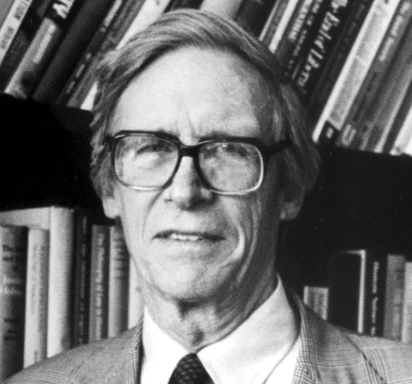
I have assumed throughout that the persons in the original position are rational.
▼
Source
Chapter III, Section 25, pg. 142
3 months 4 weeks ago
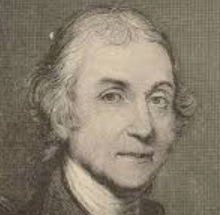
It is known to all persons who are conversant in experimental philosophy, that there are many little attentions and precautions necessary to be observed in the conducting of experiments, which cannot well be described in words, but which it is needless to describe, since practice will necessarily suggest them; though, like all other arts in which the hands and fingers are made use of, it is only much practice that can enable a person to go through complex experiments, of this or any kind, with ease and readiness.
▼
Source
Experiments and Observations of Different Kinds of Air (1775)

3 months 4 weeks ago
Violated, dishonored, wading in blood, dripping filth – there stands bourgeois society. This is it [in reality]. Not all spic and span and moral, with pretense to culture, philosophy, ethics, order, peace, and the rule of law – but the ravening beast, the witches’ sabbath of anarchy, a plague to culture and humanity. Thus it reveals itself in its true, its naked form.
▼
Source
Ch. 1

3 months 4 weeks ago
Just as the witticism brings two very different real objects under one concept, the pun brings two different concepts, by the assistance of accident, under one word.
▼
Source
[http://books.google.com/books?id=US0bhPS4h2UC&pg=PA79 Volume I, Book I]
3 months 4 weeks ago
Three in the morning. I realize this second, then this one, then the next: I draw up the balance sheet for each minute. And why all this? Because I was born. It is a special type of sleeplessness that produces the indictment of birth.
3 months 4 weeks ago
As you introduced Schiller to your countrymen, so you have placed before the Germans our great Prussian King in his full figure; like a living statue. What you said long years ago of the "Hero as Man of Letters"—that he is under the noble obligation to be true,—has been fulfilled in yourself; but, more fortunate than those of whom you then spoke, you may rejoice in what you have accomplished, and continue your work in full vigour, which may God long preserve to you. Accept with my cordial congratulations the assurance of my sincere respect.
▼
Source
Otto von Bismarck to Thomas Carlyle on his History of Frederick the Great (2 December 1875), quoted in New Letters of Thomas Carlyle, Volume II, ed. Alexander Carlyle (1904), pp. 319-320
3 months 4 weeks ago
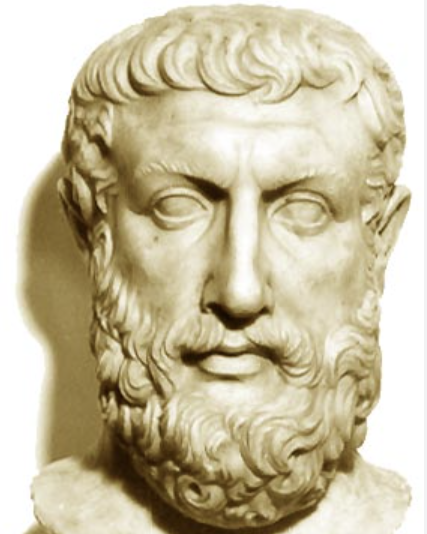
The crisis at the heart of Parmenides' argument, "is or is not," rules out any candidate for an ultimate entity in an explanation of what there is that is subject to coming-to-be, passing-away, or alteration of any sort. Such an entity must be a whole, complete, unchanging unity: it must be a thing that is of a single kind … But it does not follow from this that there can be only one such entity. Parmenides' arguments allow for a plurality of fundamental, predicationally unified entities that can be used to explain the world reported by the senses.
▼
Source
Patricia Curd, in The Legacy of Parmenides (1997), p. 241
3 months 4 weeks ago
The key innovation in Rawl's scenario, designed to ensure that undue selfishness among the participants in this exercise in reflection cancels itself out, is what he calls the "veil of ignorance". Everyone gets to vote on a favored design of society, but when you decide which society you would be happy to live in and give your allegiance to, you vote without knowing your particular role or niche in it will be. You may be a senator or a surgeon or a street sweeper or a soldier; you don't get to find out until after you have voted. Choosing from behind the veil of ignorance ensures that people will give due consideration to the likely effects, the costs and benefits, for all the citizenry, including those worse off.
▼
Source
Daniel Dennett, Darwin's Dangerous Idea, p. 456
3 months 4 weeks ago
It is hardly possible not to suspect the truth of this doctrine of atonement, when we consider that the general maxims to which it may be reduced, are nowhere laid down, or asserted, in the Scriptures, but others quite contrary to them.
▼
Source
Part II : Opinions Relating to the Doctrine of Atonement, § I : That Christ did not die to make satisfaction for the sins of men.
3 months 4 weeks ago
Those who do not move, do not notice their chains.
3 months 4 weeks ago
Now if plurality and difference belong only to the appearance-form; if there is but one and the same Entity manifested in all living things: it follows that, when we obliterate the distinction between the ego and the non-ego, we are not the sport of an illusion. Rather are we so, when we maintain the reality of individuation, — a thing the Hindus call Maya, that is, a deceptive vision, a phantasma. The former theory we have found to be the actual source of the phaenomenon of Compassion; indeed Compassion is nothing but its translation into definite expression. This, therefore, is what I should regard as the metaphysical foundation of Ethics, and should describe it as the sense which identifies the ego with the non-ego, so that the individual directly recognises in another his own self, his true and very being. From this standpoint the profoundest teaching of theory pushed to its furthest limits may be shown in the end to harmonise perfectly with the rules of justice and loving-kindness, as exercised; and conversely, it will be clear that practical philosophers, that is, the upright, the beneficent, the magnanimous, do but declare through their acts the same truth as the man of speculation wins by laborious research … He who is morally noble, however deficient in mental penetration, reveals by his conduct the deepest insight, the truest wisdom; and puts to shame the most accomplished and learned genius, if the latter's acts betray that his heart is yet a stranger to this great principle, — the metaphysical unity of life.
▼
Source
Part IV, Ch. 2, [https://archive.org/stream/basisofmorality00schoiala#page/273/mode/2up pp. 273]-274
3 months 4 weeks ago
Late at night. I feel like falling into a frenzy, doing some unprecedented thing to release myself, but I don't see against whom, against what...
3 months 4 weeks ago
Those who still think that Carlyle was in some sense more or less Liberal should read his chapter on Democracy in Past and Present. Most of it is occupied with praise of William the Conqueror, and with a description of the pleasant lives enjoyed by serfs in his day. Then comes a definition of liberty : “ The true liberty of a man , you would say, consisted in his finding out, or being forced to find out, the right path, and to walk thereon"...He passes on to the statement that democracy " means despair of finding any Heroes to govern you, and contented putting up with the want of them." The chapter ends by stating, in eloquent prophetical language, that, when democracy shall have run its full course, the problem that will remain is " that of finding government by your Real-Superiors." Is there one word in all this to which Hitler would not subscribe?
▼
Source
Bertrand Russell, "The Ancestry of Fascism", in In Praise of Idleness and other Essays, Allen & Unwin, London, 1935. Also quoted in William A. Robson, "The Political Quarterly" in the Thirties, Allen Lane, London, 1971
3 months 4 weeks ago
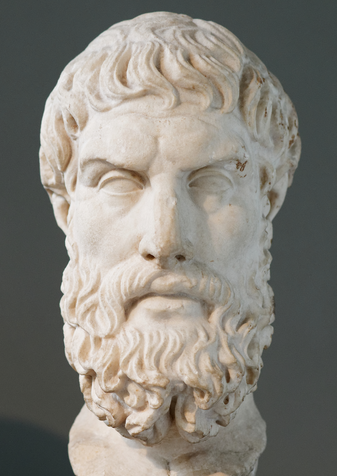
Temperance is that discreet regulation of the desires and passions, by which we are enabled to enjoy pleasures without suffering any consequent inconvenience. They who maintain such a constant self-command, as never to be enticed by the prospect of present indulgence, to do that which will be productive of evil, obtain the truest pleasure by declining pleasure.
3 months 4 weeks ago
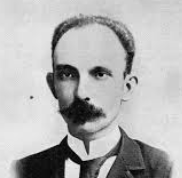
Only those who hate the Negro see hatred in the Negro.
▼
Source
Manifesto of Montecristi (1895)
3 months 4 weeks ago
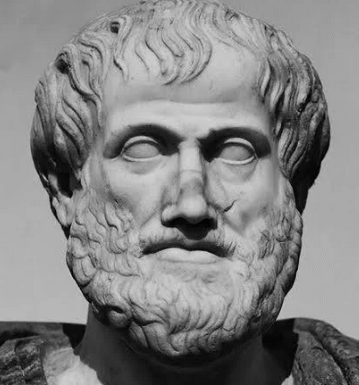
The premises of demonstrative knowledge must be true, primary, immediate, more knowable than and prior to the conclusion, which is further related to them as effect to cause... The premises must be the cause of the conclusion, more knowable than it, and prior to it; its causes, since we possess scientific knowledge of a thing only when we know its cause; prior, in order to be causes; antecedently known, this antecedent knowledge being not our mere understanding of the meaning, but knowledge of the fact as well. Now 'prior' and 'more knowable' are ambiguous terms, for there is a difference between what is prior and more knowable in the order of being and what is prior and knowable to man. I mean that objects nearer to sense are prior and more knowable to man; objects without qualification prior and more knowable are those further from sense. Now the most universal causes are furthest from sense and particular causes are nearest to sense, and they are thus exactly opposed to each other.
▼
Source
I.2, 71b.9 sqq

3 months 4 weeks ago
According to the way it is generally used today, the term 'ethics' relates above all to the domain of human rights, 'the rights of man'- or, by derivation, the rights of living beings. We are supposed to assume the existence of a universally recognizable human subject possessing 'rights' that are in some sense natural: the right to live, to avoid abusive, to enjoy 'fundamental' liberties (of opinion, of expression, of democratic choice in the election of governments, etc.) These rights are held to be self-evident, and the result of a wide consensus. 'Ethics' is a matter of busying ourselves with these rights, of making sure that they are respected.
▼
Source
Chapter One, "Does Man Exist?"
3 months 4 weeks ago
For the purpose of acquiring gain, everything else is pushed aside or thrown overboard, for example, as is philosophy by the professors of philosophy.
▼
Source
E. Payne, trans. (1974) Vol. 1, p. 347
3 months 4 weeks ago
No position is so false as having understood and still remaining alive.
3 months 4 weeks ago
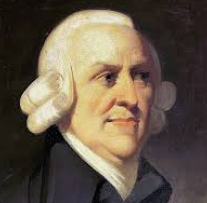
How selfish soever man may be supposed, there are evidently some principles in his nature, which interest him in the fortune of others, and render their happiness necessary to him, though he derives nothing from it except the pleasure of seeing it.
▼
Source
Section I, Chap. I.

3 months 4 weeks ago
About nine o'clock this morning the King passed by my window, moving silently along excepting now and then a few strokes on the drum, which rendered the stillness more awful through empty streets... I can scarcely tell you why, but an association of ideas made the tears flow insensibly from my eyes, when I saw Louis, sitting with more dignity than I expected from his character, in a hackney coach, going to meet death where so many of his race have triumphed... I have been alone ever since, and though my mind is calm, I cannot dismiss the lively images that have filled my imagination all the day. Nay, do not smile, but pity me; for once or twice, lifting my eyes from the paper, I have seen eyes glare through a glass door opposite my chair, and bloody hands shook at me... I wish I had even kept the cat with me! I want to see something alive; death, in so many frightful shapes, has taken hold of my fancy. I am going to bed, and for the first time in my life I cannot put out the candle.
▼
Source
Letter to Gilbert Imlay (26 December 1792), quoted in C. Kegan Paul, 'Memoir', Mary Wollstonecraft: Letters to Imlay, with Prefatory Memoir by C. Kegan Paul (1879), pp. xxxiv-xxxv
CivilSimian.com created by AxiomaticPanic, CivilSimian, Kalokagathia