
3 months 4 weeks ago
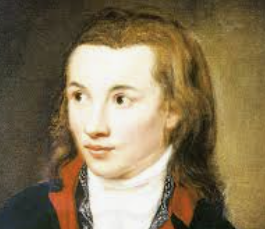
The world must be romanticized. In this way the originary meaning may be found again.
▼
Source
As quoted in The Experience of the Foreign : Culture and Translation in Romantic Germany (1992) by Antoine Berman | Variant translation: Romanticize the world.
3 months 4 weeks ago
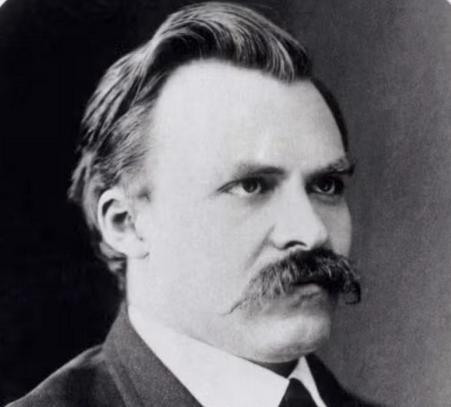
In Germany there is much complaining about my "eccentricities." But since it is not known where my center is, it won't be easy to find out where or when I have thus far been "eccentric." That I was a philologist, for example, meant that I was outside my center (which fortunately does not mean that I was a poor philologist). Likewise, I now regard my having been a Wagnerian as eccentric. It was a highly dangerous experiment; now that I know it did not ruin me, I also know what significance it had for me — it was the most severe test of my character.
▼
Source
Letter to Carl Fuchs (14 December 1887)

3 months 4 weeks ago
A commercial company enslaved a nation comprising two hundred millions. Tell this to a man free from superstition and he will fail to grasp what these words mean. What does it mean that thirty thousand men, not athletes but rather weak and ordinary people, have subdued two hundred million vigorous, clever, capable, and freedom-loving people? Do not the figures make it clear that it is not the English who have enslaved the Indians, but the Indians who have enslaved themselves?
▼
Source
V

3 months 4 weeks ago
Abraham ... was sunk in Ur of the Chaldees among foolish idolaters. His father and mother and all the people worshipped the stars. ... He knew that all were mistaken and that what caused them to err was worship of the images which drove the Truth out of their minds. ... It was proper to destroy and smash the idols so that the people should not err by them like those who think there is no god save images.
▼
Source
Treatise 4: “Idolatry,” H. Russell, trans. (1983), p. 73

3 months 4 weeks ago
Shallow men believe in luck, believe in circumstances...Strong men believe in cause and effect.
▼
Source
Worship
3 months 4 weeks ago
So long as mathematicians can impose up-and-down semantics upon students while trafficking personally in the non-up-and-down advantages of their concise statements, they can impose upon the ignorance of man a monopoly of access to accurate processing of information and can fool even themselves by thought habits governing the becoming behavior of professional specialists, by disclaiming the necessity of, or responsibility for, comprehensive adjustment of the a priori thought to total reality of universal principles. The everywhere-relative velocities and momentums of interactions, of energetic phenomena of universe, are central to the preoccupations and realizations of the comprehensive designer. The concept of relativity involves high frequency of re-established awareness, and progressively integrating consideration of the respective, and also integrated dynamic complexities of the moving and transforming frame of reference and of the integrated dynamic complexities of the observed, as well as of the series of integrated sub-dynamic complexities, in respect to each of the major categories of the relatively moving frames of reference, of the observer and the observed. It also involves constant reference of all the reciprocating sub-sets to the comprehensive totality of non-simultaneous universe, from which naught may be lost.
▼
Source
"The Designers and the Politicians" (1962), later published in Ideas and Integrities : A Spontaneous Autobiographical Disclosure (1969), p. 234, and The Buckminster Fuller Reader (1970), p. 305

3 months 4 weeks ago
Beauty, my dear Sir, is not so much a quality of the object beheld, as an effect in him who beholds it. If our sight were longer or shorter, or if our constitution were different, what now appears beautiful to us would seem misshapen, and what we now think misshapen we should regard as beautiful. The most beautiful hand seen through the microscope will appear horrible. Some things are beautiful at a distance, but ugly near; thus things regarded in themselves, and in relation to God, are neither ugly nor beautiful. Therefore, he who says that God has created the world, so that it might be beautiful, is bound to adopt one of the two alternatives, either that God created the world for the sake of men's pleasure and eyesight, or else that He created men's pleasure and eyesight for the sake of the world. Now, whether we adopt the former or the latter of these views, how God could have furthered His object by the creation of ghosts, I cannot see. Perfection and imperfection are names which do not differ much from the names beauty and ugliness.
▼
Source
Letter to Hugo Boxel (October 1674) The Chief Works of Benedict de Spinoza (1891) Tr. R. H. M. Elwes, Vol. 2, Letter 58 (54).
3 months 4 weeks ago
Over his own heart and his own thoughts he watched attentively. He knew not whither his longing was carrying him. As he grew up, he wandered far and wide; viewed other lands, other seas, new atmospheres, new rocks, unknown plants, animals, men; descended into caverns, saw how in courses and varying strata the edifice of the Earth was completed, and fashioned clay into strange figures of rocks. By and by, he came to find everywhere objects already known, but wonderfully mingled, united; and thus often extraordinary things came to shape in him. He soon became aware of combinations in all, of conjunctures, concurrences. Erelong, he no more saw anything alone. — In great variegated images, the perceptions of his senses crowded round him; he heard, saw, touched and thought at once. He rejoiced to bring strangers together. Now the stars were men, now men were stars, the stones animals, the clouds plants; he sported with powers and appearances; he knew where and how this and that was to be found, to be brought into action; and so himself struck over the strings, for tones and touches of his own.
3 months 4 weeks ago
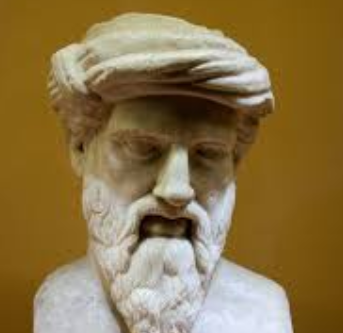
None but God is wise.
▼
Source
As quoted in The Diegesis (1829) by Robert Taylor, p. 219
3 months 4 weeks ago
A man as he ought to be: that sounds to us as insipid as "a tree as it ought to be."
▼
Source
Sec. 332 (Notebook W II 3. November 1887 - March 1888, KGW VIII, 2.304, KSA 13.62)
3 months 4 weeks ago
People try to do all sorts of clever and difficult things to improve life instead of doing the simplest, easiest thing—refusing to participate in activities that make life bad.
▼
Source
p. 210
3 months 4 weeks ago
No form remains permanently in a substance; a constant change takes place, one form is taken off and another is put on.
▼
Source
Ch.8
3 months 4 weeks ago
So nigh is grandeur to our dust, So near is God to man, When Duty whispers low, Thou must, The youth replies, I can.
▼
Source
Voluntaries, st. 3 <!-- Bartlett's, 10th ed. (1919): "So nigh is grandeur to our dust, / So near is God to man, / When Duty whispers low, Thou must, / The youth replies, I can!"
3 months 4 weeks ago
I am convinced all of humanity is born with more gifts than we know. Most are born geniuses and just get de-geniused rapidly.
▼
Source
Statement made in 1974, quoted in People magazine. In Thomas T. K. Zung, "Buckminster Fuller: Anthology for the New Millenium" (2002), 174.
3 months 4 weeks ago
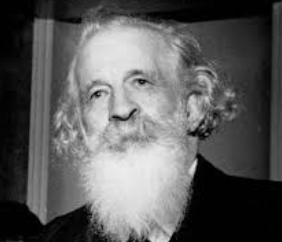
The words of the world want to make sentences.
▼
Source
Ch. 5, sect. 4
3 months 4 weeks ago
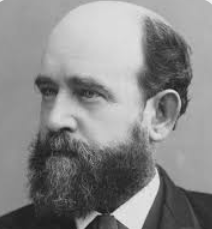
The needs of labor require more than kind words, and are not to be satisfied by such soft phrases as we address to a horse when we want to catch him that we may put a bit in his mouth and a saddle on his back. Let me ask those who are disposed to regard protection as favorable to the aspirations of labor, to consider whether it can be true that what labor needs is to be protected? To admit that labor needs protection is to acknowledge its inferiority; it is to acquiesce in an assumption that degrades the workman to the position of a dependent, and leads logically to the claim that the employee is bound to vote in the interest of the employer who provides him with work. There is something in the very word "protection" that ought to make workingmen cautious of accepting anything presented to them under it. The protection of the masses has in all times been the pretense of tyranny — the plea of monarchy, of aristocracy, of special privilege of every kind. The slave owners justified slavery as protecting the slaves.
▼
Source
Ch. 2
3 months 4 weeks ago
The spirit of Poesy is the morning light, which makes the Statue of Memnon sound.
3 months 4 weeks ago
Abstain from animals.
▼
Source
Symbol 39; explained in the edition used here: "This Symbol exhorts to justice, to all the honour of kindred, to the reception of similar life, and to many other things of a like kind."
3 months 4 weeks ago
Mathematics would certainly have not come into existence if one had known from the beginning that there was in nature no exactly straight line, no actual circle, no absolute magnitude.
▼
Source
As quoted in The Puzzle Instinct: The Meaning of Puzzles in Human Life (2004) by Marcel Danesi, p. 71 from Human All-Too-Human
3 months 4 weeks ago
The play that Luisa Capetillo wrote in 1909, Influencias de las ideas modernas (The Influence of Modern Ideas), published in San Juan in 1916, was inspired by Tolstoy's philosophy and included a main character who resembled him.
▼
Source
Luisa Capetillo, Pioneer Puerto Rican Feminist, Norma Valle-Ferrer
3 months 4 weeks ago
The more we desire for that which is superfluous, the more we meet with difficulties; our strength and possessions are spent in unnecessary things, and are wanting when required for that which is necessary.
▼
Source
Ch.12
3 months 4 weeks ago
Can anybody remember when the times were not hard and money not scarce?
▼
Source
Works and Days
3 months 4 weeks ago
We evolute toward ever lesser brain comprehension lags — ergo, toward ever diminishing error; ergo, ever diminishing misunderstandings; ergo, ever diminishing fear, and its brain-lagging painful errors of objectivity; wherefore we approach eternal instantaneity of absolute and total comprehension. The eternal instantaneity of no lag at all. However, we have now learned from our generalizations of the great complexity of the interactions of principles as we are disembarrassed of our local, exclusively physical chemistry of information-sensing devices — that what is approached is eternal and instant awareness of absolute reality of all that ever existed. All the great metaphysical integrity of all the individuals, which is potential and inherent in the complex interactions of generalized principles, will always and only coexist eternally.

3 months 4 weeks ago
A small piece of pure ... was placed upon an insulated disk of platina, connected with the negative side of the battery... and a platina wire communicating with the positive side, was brought into contact with the... surface of the alkali. ...The potash began to fuse at both its points of electrization. There was a violent effervescence at the upper surface; at the lower, or negative, surface, there was no liberation of elastic fluid; but small globules, having a high metallic lustre, and being precisely similar in visible characters to quicksilver, appeared, some of which burnt with explosion and bright flame, as soon as they were formed, and others remained, and were merely tarnished, and finally covered with a white film which formed on their surfaces.
▼
Source
"The Bakerian Lecture, on some new Phenomena of chemical Changes produced by Electricity, particularly the Decomposition of the fixed Alkalis, and on the Exhibition of the new substances which constitute their bases; and on the general Nature of alkaline
3 months 4 weeks ago
He is not rich, that enjoyeth not his own goods.
3 months 4 weeks ago
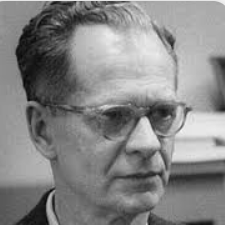
The way positive reinforcement is carried out is more important than the amount.
▼
Source
As quoted in Meditations for Parents Who Do Too Much (1993) by Jonathon Lazear and Wendy Lazear, p. 5

3 months 4 weeks ago
What do I know about God and the purpose of life? I know that this world exists. That I am placed in it like my eye in its visual field. That something about it is problematic, which we call its meaning. This meaning does not lie in it but outside of it. That life is the world. That my will penetrates the world. That my will is good or evil. Therefore that good and evil are somehow connected with the meaning of the world. The meaning of life, i.e. the meaning of the world, we can call God. And connect with this the comparison of God to a father. To pray is to think about the meaning of life.
▼
Source
Journal entry (11 June 1916), p. 72e and 73e
3 months 4 weeks ago
God's knowledge extends to things not in existence, and includes also the infinite.
▼
Source
Ch.20
3 months 4 weeks ago
Every artist was first an amateur.
▼
Source
Progress of Culture
3 months 4 weeks ago
The effective decisions can only be made by the independently thinking and adequately informed human individuals and their telepathically intercommunicated wisdom--the wisdom of the majority of all such human individuals -- qualifying for continuance in Universe as local cosmic problem-solvers -- in love with the truth and in individually spontaneous self-commitment to absolute faith in the wisdom, integrity, and love of God, who seems to wish Earthian humans to survive.
3 months 4 weeks ago
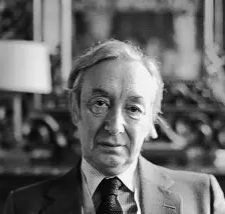
I am using the word "perceive". I am using it here in such a way that to say of an object that it is perceived does not entail saying that it exists in any sense at all. And this is a perfectly correct and familiar usage of the word. If there is thought to be a difficulty here, it is perhaps because there is also a correct and familiar usage of the word "perceive", in which to say of an object that it is perceived does carry the implication that it exists.
▼
Source
The Foundations of Empirical Knowledge (1940).

3 months 4 weeks ago
Since it is Reason which shapes and regulates all other things, it ought not itself to be left in disorder.
▼
Source
Book I, ch. 17, § 1.
3 months 4 weeks ago
There is nothing so easy but that it becomes difficult when you do it reluctantly.
▼
Source
Terence, in Heauton Timoroumenos [The Self-Tormentor]
3 months 4 weeks ago
My propositions are elucidatory in this way: he who understands me finally recognizes them as senseless, when he has climbed out through them, on them, over them. (He must so to speak throw away the ladder, after he has climbed up on it.) (6.54)
▼
Source
Original German: Meine Sätze erläutern dadurch, dass sie der, welcher mich versteht, am Ende als unsinnig erkennt, wenn er durch sie—auf ihnen—über sie hinausgestiegen ist. (Er muss sozusagen die Leiter wegwerfen, nachdem er auf ihr hinaufgestiegen ist.)
3 months 4 weeks ago
According to the theory of those weak minded persons, man is more perfect than his Creator. For what man says or does has a certain object, whilst the actions of God are different; He commands us to do what is of no use to us, and forbids us to do what is harmless. Far be this! On the contrary, the sole object of the Law is to benefit us.
▼
Source
Ch.31
3 months 4 weeks ago
I hung my verse in the wind Time and tide their faults will find.
▼
Source
"The Test", as quoted in Emerson As A Poet (1883) by Joel Benton, p. 40
3 months 4 weeks ago
I have to say, I think that we are in some kind of final examination as to whether human beings now, with this capability to acquire information and to communicate, whether we're really qualified to take on the responsibility we're designed to be entrusted with. And this is not a matter of an examination of the types of governments, nothing to do with politics, nothing to do with economic systems. It has to do with the individual. Does the individual have the courage to really go along with the truth?

3 months 4 weeks ago
On fact, the whole machinery of our intelligence, our general ideas and laws, fixed and external objects, principles, persons, and gods, are so many symbolic, algebraic expressions. They stand for experience; experience which we are incapable of retaining and surveying in its multitudinous immediacy. We should flounder hopelessly, like the animals, did we not keep ourselves afloat and direct our course by these intellectual devices. Theory helps us to bear our ignorance of fact.
▼
Source
Pt. III, Form; § 30: "The average modified in the direction of pleasure.", p. 125

3 months 4 weeks ago
Iamblichus set out to give a systematic and decisive character to Plotinus' dialectic at its most sublime but also most obscure moment, that of absolute unity and its forms, already dealt with by Amelius and Porphyry; that is, around the way of reconciling and harmonising the mystical theory of the One with the variety of unitary principles that are expected to preside over the various aspects of life: that is, the transcendent One and the immanent One, the unity of thought and being, thinking thought and thought thought, and finally thought as an intelligible world.
▼
Source
(La Scuola di giamblico, “'School of Iamblichus”', XXX, p. 187)
3 months 4 weeks ago
Some of their faults people readily admit, but others not so readily.
▼
Source
Book II, ch. 21, § 1
3 months 4 weeks ago
Pythagoras was indeed the first man to call himself a philosopher. Others before had called themselves wise (sophos), but Pythagoras was the first to call himself a philosopher, literally a lover of wisdom. More importantly, for Pythagoras and his followers philosophy was not merely an intellectual pursuit, but a way of life, the aim of which was the assimilation to God.
▼
Source
Kenneth Sylvan Guthrie and David R. Fideler, The Pythagorean Sourcebook and Library: An Anthology of Ancient Writings which Relate to Pythagoras and Pythagorean Philosophy (1919)
3 months 4 weeks ago
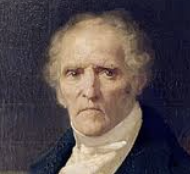
An empire derives no advantage from the caresses of two turtledoves who spend a year cooing to each other in public meetings.
▼
Source
Charles Fourier: The Visionary and His World, J. Beecher (1986), p. 315
3 months 4 weeks ago
Make sure that your religion is a matter between you and God only.
▼
Source
Comment to Maurice O'Connor Drury, as quoted in Wittgenstein Reads Freud : The Myth of the Unconscious (1996) by Jacques Bouveresse, as translated by Carol Cosman, p. 14

3 months 4 weeks ago
By a pardonable abridgment of history, the Rationalist character may be seen springing from the exaggeration of Bacon's hopes and the neglect of the scepticism of Descartes; modern Rationalism is what commonplace minds made out of the inspiration of men of discrimination and genius.
3 months 4 weeks ago
Nothing is rich but the inexhaustible wealth of Nature. She shows us only surfaces, but she is million fathoms deep.
▼
Source
p. 183
3 months 4 weeks ago
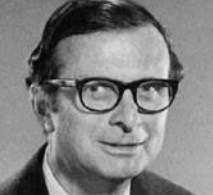
One cannot help but be struck by the diversity that characterizes efforts to study the management process. If it is true that psychologists like to study personality traits in terms of a person's reactions to objects and events, they could not choose a better stimulus than management science. Some feel it is a technique, some feel it is a branch of mathematics, or of mathematical economics, or of the "behavioral sciences," or of consultation services, or just so much nonsense. Some feel it is for management (vs. labor), some feel it ought to be for the good of mankind — or for the good of underpaid professors.
3 months 4 weeks ago
The Bible is literature, not dogma.
3 months 4 weeks ago
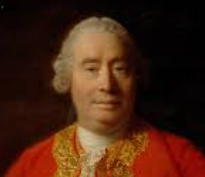
Love in animals, has not for its only object animals of the same species, but extends itself farther, and comprehends almost every sensible and thinking being. A dog naturally loves a man above his own species, and very commonly meets with a return of affection.
▼
Source
Part 2, Section 12
3 months 4 weeks ago
You are a little soul carrying a corpse around, as Epictetus used to say.
▼
Source
Fragment 26 ([https://en.wikisource.org/wiki/Epictetus,_the_Discourses_as_reported_by_Arrian,_the_Manual,_and_Fragments/Fragments Oldfather translation]). This fragment originates from Marcus Aurelius, Meditations, IV. 41.
3 months 4 weeks ago
It was a maxim of Pythagoras that the two most excellent things for man were to speak the truth, and to render benefits to each other.
▼
Source
Joseph Dame Weeks, History of the Knights of Pythias, with an Account of the Life and Times of Damon and Pythias (1874) Note: The bolded portion of this has sometimes been presented as a quote of Pythagoras, but has not been found in this form in any exis
CivilSimian.com created by AxiomaticPanic, CivilSimian, Kalokagathia