

3 months 4 weeks ago
You may take great comfort from the fact that suffering inwardly for the sake of truth proves abundantly that one loves it and marks one out as being of the elect.
▼
Source
Saint Sulpice and the Hidden God.

3 months 4 weeks ago
94. I did not get my picture of the world by satisfying myself of its correctness; nor do I have it because I am satisfied of its correctness. No: it is the inherited background against which I distinguish between true and false.

3 months 4 weeks ago
As soon as you concern yourself with the "good" and "bad" of your fellows, you create an opening in your heart for maliciousness to enter. Testing, competing with, and criticizing others weakens and defeats you.

3 months 4 weeks ago
That which struck me most, as distinguishing him from most other human beings, is nobility. He is a born nobleman.
▼
Source
Fredrika Bremer, The homes of the New World: impressions of America (1853), p. 154
3 months 4 weeks ago
The systems approach goes on to discovering that every world-view is terribly restricted.
▼
Source
C. West Churchman, (1970) cited in: Michael C. Jackson ( 1992) Systems Methodology for the Management Sciences. p. 137
3 months 4 weeks ago
Philosophers are as jealous as women. Each wants a monopoly of praise.
▼
Source
P. 30
3 months 4 weeks ago
Where men are the most sure and arrogant, they are commonly the most mistaken, and have there given reins to passion, without that proper deliberation and suspense, which can alone secure them from the grossest absurdities.
▼
Source
§ 9.13 : Conclusion, Pt. 1
3 months 4 weeks ago
It is certain that the Theory of Numbers originated in the school of Pythagoras.
▼
Source
Sir Thomas Little Heath, A History of Greek Mathematics, [https://books.google.com/books?id=h4JsAAAAMAAJ Vol. 1], p.66
3 months 4 weeks ago
The fundamental political question is why do people obey a government. The answer is that they tend to enslave themselves, to let themselves be governed by tyrants. Freedom from servitude comes not from violent action, but from the refusal to serve. Tyrants fall when the people withdraw their support.
▼
Source
This quote is a paraphrase of the contents of the first chapter of Discourse on Voluntary Servitude. The quote appears in an edition titled Politics of Obedience: The Discourse of Voluntary Servitude edited by Murray Rothbard and Harry Kurz (1975), p. [ht
3 months 4 weeks ago
There is no more light in a genius than in any other honest man—but he has a particular kind of lens to concentrate this light into a burning point.
▼
Source
p. 41e
3 months 4 weeks ago
It cannot be denied that Islam, regarded as an ethical ideal plus a certain kind of polity – by which expression I mean a social structure regulated by a legal system and animated by a specific ethical ideal – has been the chief formative factor in the life-history of the Muslims of India. It has furnished those basic emotions and loyalties which gradually unify scattered individuals and groups, and finally transform them into a well-defined people, possessing a moral consciousness of their own.
▼
Source
Sir Muhammad Iqbal’s 1930 Presidential Address to the 25th Session of the All-India Muslim League, Allahabad, 29 December 1930 (from [http://www.columbia.edu/itc/mealac/pritchett/00islamlinks/txt_iqbal_1930.html University of Columbia website])
3 months 4 weeks ago
Mr. Herschel ... brought with him the calculations of the computers, and we commenced the tedious process of verification. After a time many discrepancies occurred, and at one point these discordances were so numerous that I exclaimed, "I wish to God these calculations had been executed by steam," to which Herschel replied, "It is quite possible."
▼
Source
Babbage in November 1839, recalling events in 1821; quoted in Harry Wilmot Buxton and Anthony Hyman (1988), Memoir of the Life and Labours of the Late Charles Babbage. "Computers" here refers to people calculating by hand.
3 months 4 weeks ago
Burke said with a depth that it is impossible to admire enough that art is man’s nature: yes, undoubtedly, man with all his affections, all his knowledge, all his arts, is truly the man of nature, and the weaver’s web is as natural as the spider’s.
▼
Source
p. 52
3 months 4 weeks ago
Beauty is no quality in things themselves: It exists merely in the mind which contemplates them; and each mind perceives a different beauty. One person may even perceive deformity, where another is sensible of beauty; and every individual ought to acquiesce in his own sentiment, without pretending to regulate those of others.
▼
Source
Part I, Essay 23: Of The Standard of Taste
3 months 4 weeks ago
I would really like to slow down the speed of reading with continual punctuation marks. For I would like to be read slowly. (As I myself read.)
▼
Source
p. 77e

3 months 4 weeks ago
All content of science, and also their protocol statements that are used for verification, are selected on the basis of decisions and can be altered in principle.
▼
Source
Otto Neurath (1934:102), as cited in: Cartwright (2008;199)
3 months 4 weeks ago
If we define a miracle as an effect of which the cause is unknown to us, then we make our ignorance the source of miracles! and the universe itself would be a standing miracle. A miracle might be perhaps defined more exactly as an effect which is not the consequence or effect of any known laws of nature.
▼
Source
"Passages from the life of a philosopher", Appendix, p. 489
3 months 4 weeks ago
Why so many laws? Because there is no legislator. What have these so-called legislators done in six years? Nothing, for to destroy is not to make.
3 months 4 weeks ago
Well, it does not really explain things; in fact the founding fathers of quantum mechanics rather prided themselves on giving up the idea of explanation. They were very proud that they dealt only with phenomena: they refused to look behind the phenomena, regarding that as the price one had to pay for coming to terms with nature. And it is a fact of history that the people who took that agnostic attitude towards the real world on the microphysical level were very successful. At the time it was a good thing to do. But I don't believe it will be so indefinitely. Of course, I cannot produce theorems to that effect. If you go back to, say, David Hume, who made a careful analysis of our reasons for believing things, you find that there is no good reason for believing that the sun will come up tomorrow, or that this programme will ever be broadcast. It's a habit we have, of believing that things will continue very much as they did before. However, it is a fact that this seems to be a good habit! I cannot make that a theorem, because I think Hume's analysis is sound, but nevertheless I do believe it's a good habit, to look for explanations.
▼
Source
John S. Bell, interview in The Ghost in the Atom: A Discussion of the Mysteries of Quantum Physics (1986) edited by P. C. W. Davies and Julian R. Brown
3 months 4 weeks ago
[He was] a magician and had qualities of magic in his relations with people.
▼
Source
Sir Colin St John Wilson, as quoted in Autism and Creativity : Is there a link between autism in men and exceptional ability? (2004) by Michael Fitzgerald, p. 93

3 months 4 weeks ago
And you, young engineer, you who dream of improving the lot of the workers by the application of science to industry — what a sad disappointment, what terrible disillusions await you! You devote the useful energy of your mind to working out the scheme of a railway which, running along the brink of precipices and burrowing into the very heart of mountains of granite, will bind together two countries which nature has separated. But once at work, you see whole regiments of workers decimated by privations and sickness in this dark tunnel — you see others of them returning home carrying with them, maybe, a few pence, and the undoubted seeds of consumption; you see human corpses — the results of a groveling greed — as landmarks along each yard of your road; and, when the railroad is finished, you see, lastly, that it becomes the highway for the artillery of an invading army...
3 months 4 weeks ago
Popper's skepticism about scientific truth in The Logic of Scientific Discovery is that kind of reaction, of which the epitome is given in Aesop's fable of the fox and the grapes. The parallel would be complete if the fox, having become convinced that neither he nor anyone else could ever succeed in tasting grapes, should nevertheless write many long books on the progress of viticulture.
▼
Source
[https://www.google.com.au/books/edition/Popper_and_After/9iOoBQAAQBAJ Popper and After: Four Modern Irrationalists], Oxford: Pergamon, 1982. Page 52.
3 months 4 weeks ago
By means of [the microscope and the telescope] man touched, one might say, the two infinities. With the aid of glass, he could contemplate at his leisure the mite and the ring of Saturn. […] Master of glass through fire, and master of light through glass, he had lenses and mirrors of all kinds, prisms, containers, beakers, tubes, and finally barometers and thermometers. However all this originally began with the astronomical lens, which honours glass; and physics is born in some manner from astronomy, as it was written that, even in a material and gross sense, all science must descend from heaven.
▼
Source
p. 47

3 months 4 weeks ago
Do not mistake yourself by believing that your being has something in it more exalted than that of others.
3 months 4 weeks ago
The masses have never believed in sophisms taught by economists, uttered more to confirm exploiters in their rights than to convert exploited! Peasants and workers, crushed by misery and finding no support in the well-to-do classes, have let things go, save from time to time when they have affirmed their rights by insurrection. And if workers ever thought that the day would come when personal appropriation of capital would profit all by turning it into a stock of wealth to be shared by all, this illusion is vanishing like so many others. The worker perceives that he has been disinherited, and that disinherited he will remain, unless he has recourse to strikes or revolts to tear from his masters the smallest part of riches built up by his own efforts; that is to say, in order to get that little, he already must impose on himself the pangs of hunger and face imprisonment, if not exposure to Imperial, Royal, or Republican fusillades.But a greater evil of the present system becomes more and more marked; namely, that in a system based on private appropriation, all that is necessary to life and to production — land, housing, food and tools — having once passed into the hands of a few, the production of necessities that would give well-being to all is continually hampered. The worker feels vaguely that our present technical power could give abundance to all, but he also perceives how the capitalistic system and the State hinder the conquest of this well-being in every way.Far from producing more than is needed to assure material riches, we do not produce enough.
3 months 4 weeks ago
Ignorance plays the chief part among men, and the multitude of words.
▼
Source
Cleobulus, 4.
3 months 4 weeks ago
Rules for Definitions. I. Not to undertake to define any of the things so well known of themselves that the clearer terms cannot be had to explain them. II. Not to leave any terms that are at all obscure or ambiguous without definition. III. Not to employ in the definition of terms any words but such as are perfectly known or already explained.
3 months 4 weeks ago
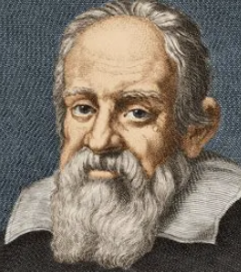
My purpose is to set forth a very new science dealing with a very ancient subject. There is, in nature, perhaps nothing older than motion, concerning which the books written by philosophers are neither few nor small; nevertheless I have discovered by experiment some properties of it which are worth knowing and which have not hitherto been either observed or demonstrated. Some superficial observations have been made, as, for instance, that the free motion [naturalem motum] of a heavy falling body is continuously accelerated; but to just what extent this acceleration occurs has not yet been announced; for so far as I know, no one has yet pointed out that the distances traversed, during equal intervals of time, by a body falling from rest, stand to one another in the same ratio as the odd numbers beginning with unity.
▼
Source
Author, Third Day. Change of Position
3 months 4 weeks ago
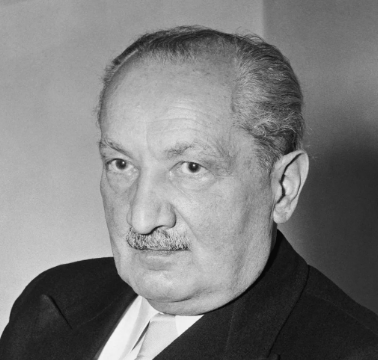
It is said that "being" is the most universal and the emptiest concept. As such it resists every attempt at definition. Nor does this most universal and thus indefinable concept need any definition. Everybody uses it constantly and also already understands what is meant by it.
▼
Source
Introduction: The Exposition of the Question of the Meaning of Being (Stambaugh translation)
3 months 4 weeks ago
There is not even a thought, or an invention, which is not common property, born of the past and the present. Thousands of inventors, known and unknown, who have died in poverty, have co-operated in the invention of each of these machines which embody the genius of man.
▼
Source
Ch. 1 : Our Riches
3 months 4 weeks ago
The road to Hades is the easiest to travel.
▼
Source
Bion, 49.
3 months 4 weeks ago
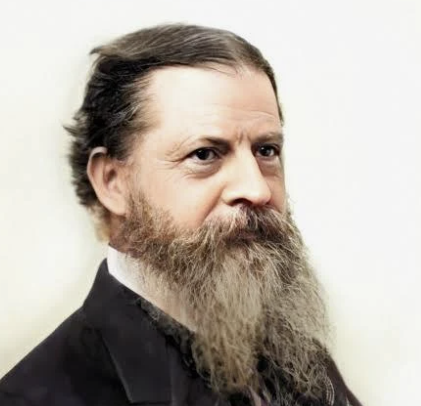
The old dualistic notion of mind and matter, so prominent in Cartesianism, as two radically different kinds of substance, will hardly find defenders to-day. Rejecting this, we are driven to some form of hylopathy, otherwise called monism.
3 months 4 weeks ago
The relation of feeling toward art and its bringing-forth can be one of production or one of reception and enjoyment.
▼
Source
p. 78
3 months 4 weeks ago
If we put aside those gardeners who chiefly cultivate the... primeurs—strawberries ripened in January, and the like—if we take only those who grow crops in the open field, and resort to frames exclusively for the earlier days of the life of the plant and if we analyse their system, we see that its very essence is first, to create for the plant a nutritive and porous soil, which contains both the necessary decaying organic matter and the inorganic compounds; and then to keep that soil and the surrounding atmosphere at a temperature and moisture superior to those of the open air. The whole system is summed up in these few words. If the French maraîcher spends prodigies of labour, intelligence, and imagination in combining different kinds of manure so as to make them ferment at a given speed, he does so for no purpose but the above: a nourishing soil and a desired equal temperature of the air and the soil. All of his empirical art is devoted to the achievement of these two aims. But... the soil can be improved by hand, but it need not be made by hand. Any soil... can be made by machinery. ...We shall see manufactures of as soon as there is a demand for them.
3 months 4 weeks ago
One ought to seek out virtue for its own sake, without being influenced by fear or hope, or by any external influence. Moreover, that in that does happiness consist.
▼
Source
Zeno, 53.

3 months 4 weeks ago
The notion contradicts reality when the latter has become self-contradictory. Hegel says that a prevailing social form can be successfully attacked by thought only if this form has come into open contradiction with its own ‘truth,’ in other words, if it can no longer fulfill the demands of its own contents. P. 51

3 months 4 weeks ago
Among animals, some learn to speak and sing; they remember tunes, and strike the notes as exactly as a musician. Others, for instance the ape, show more intelligence... would it be absolutely impossible to teach the ape a language? I do not think so.
3 months 4 weeks ago
Feeling which has not yet emerged into immediate consciousness is already affectible and already affected. In fact, this is habit, by virtue of which an idea is brought up into the present consciousness by a bond that has already been established between it and another idea while it was still in futuro.

3 months 4 weeks ago
He who receives a good turn should never forget it; he who does one should never remember it.
▼
Source
p. 213 (Gratitude)
3 months 4 weeks ago
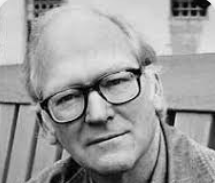
Donald Davidson has notoriously retorted that the resources of existing natural languages seem perfectly adequate for dealing with even the most dramatic cases of purported incommensurability reported by writers like Benjamin Whorf and Thomas Kuhn. But Davidson’s argument seems questionable in itself, relying as it does on such a strict application of the verification principle in order to rule out the idea of alternative conceptual schemes. Furthermore, Davidson’s scepticism is insufficient to undermine the sense in which I am defending anything resembling a thesis of incommensurability. I am merely contending that it will always be a mistake for an historian to assume that the task of explicating an alien concept can be reduced to that of finding a counterpart in his or her own language for the term that expresses it.
▼
Source
Quentin Skinner, "Interpretation, rationality and truth", Visions of Politics (2002)
3 months 4 weeks ago
The social and political theory responsible for the development of Fascist Germany was, then, related to Hegelianism in a completely negative way. P. 418
3 months 4 weeks ago
Unless man have a natural bent in accordance with nature's, he has no chance of understanding nature at all.
▼
Source
IV
3 months 4 weeks ago
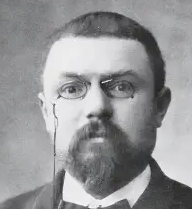
We can not... escape the conclusion that the rule of reasoning by recurrence is irreducible to the principle of contradiction. ...Neither can this rule come to us from experience... This rule, inaccessible to analytic demonstration and to experience, is the veritable type of the synthetic a priori judgment. On the other hand, we can not think of seeing in it a convention, as in some of the postulates of geometry. ...it is only the affirmation of the power of the mind which knows itself capable of conceiving the indefinite repetition of the same act when once this act is possible. The mind has a direct intuition of this power, and experience can only give occasion for using it and thereby becoming conscious of it.
▼
Source
Ch. I. (1905) Tr. George Bruce Halstead
3 months 4 weeks ago
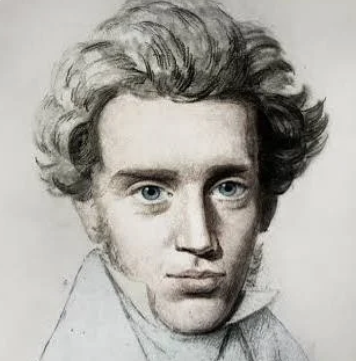
If someone were to expound that godliness is to belong to childhood in the temporal sense and thus dwindle and die with the years as childhood does, is to be a happy frame of mind that cannot be preserved but only recollected; if someone were to expound that repentance as a weakness of old age accompanies the decline of one's powers, when the senses are dulled, when sleep no longer strengthens but increases lethargy-this would be ungodliness and foolishness.
▼
Source
Upbuilding Discourses in Various Spirits, Hong p. 12

3 months 4 weeks ago
Everything is so arranged that the blind logic of mathematics executes the will of the most enlightened and free Mind.
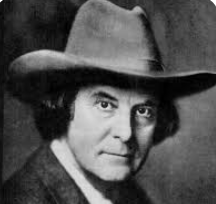
3 months 4 weeks ago
If men could only know each other, they would never either idolize or hate.
▼
Source
p. 13
3 months 4 weeks ago
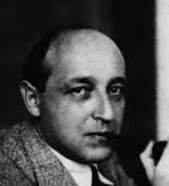
While this bourgeois order found its rich—and even affirmative—representation in art and literature, … it remained an order which was over-shadowed, broken, refuted by another dimension which was irreconcilably antagonistic to the order of business, indicting it and denying it. And in the literature, this other dimension is represented not by the religious, spiritual, moral heroes (who often sustain the established order) but rather by such disruptive characters as the artist. the prostitute, the adulteress, the great criminal and outcast, the warrior, the rebel-poet, the devil, the fool—those who don't earn a living, at least not in an orderly and normal way. To be sure, these characters have not disappeared from the literature of advanced industrial society, but they … perform a function very different from and even contrary to that of their cultural predecessors. They are no longer images of another way of life but rather freaks or types of the same life, serving as an affirmation rather than negation of the established order.
▼
Source
pp. 58-59
3 months 4 weeks ago
In order to be transmuted into knowledge, every perception is and must be ordered and organized into categories. The extent, however, to which we can organize and express our experience in such conceptual forms is, in turn, dependent upon the frames of reference which happen to be available at a given historical moment. The concepts which we have and the universe of discourse in which we move, together with the directions in which they tend to elaborate themselves, are dependent largely upon the historical-social situation of the intellectually active and responsible members of the group.
3 months 4 weeks ago
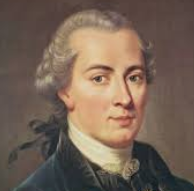
Freedom is the alone unoriginated birthright of man, and belongs to him by force of his humanity; and is independence on the will and co-action of every other in so far as this consists with every other person’s freedom.
▼
Source
[http://oll.libertyfund.org/?option=com_staticxt&staticfile=show.php%3Ftitle=1443&chapter=56215&layout=html&Itemid=27 Immanuel Kant, The Metaphysics of Ethics by Immanuel Kant, trans. J.W. Semple, ed. with Iintroduction by Rev. Henry Calderwood (Edinburgh
3 months 4 weeks ago
All laws are... deduced from experiment; but to enunciate them, a special language is needful... ordinary language is too poor...This... is one reason why the physicist can not do without mathematics; it furnishes him the only language he can speak. And a well-made language is no indifferent thing;...the analyst, who pursues a purely esthetic aim, helps create, just by that, a language more fit to satisfy the physicist....law springs from experiment, but not immediately. Experiment is individual, the law deduced from it is general; experiment is only approximate, the law is precise...In a word, to get the law from experiment, it is necessary to generalize... But how generalize? ...in this choice what shall guide us?It can only be analogy. ...What has taught us to know the true profound analogies, those the eyes do not see but reason divines?It is the mathematical spirit, which disdains matter to cling only to pure form.
CivilSimian.com created by AxiomaticPanic, CivilSimian, Kalokagathia