
3 months 4 weeks ago
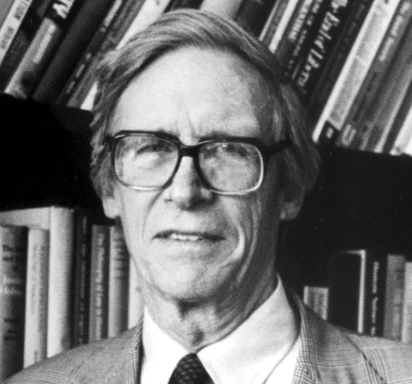
The key innovation in Rawl's scenario, designed to ensure that undue selfishness among the participants in this exercise in reflection cancels itself out, is what he calls the "veil of ignorance". Everyone gets to vote on a favored design of society, but when you decide which society you would be happy to live in and give your allegiance to, you vote without knowing your particular role or niche in it will be. You may be a senator or a surgeon or a street sweeper or a soldier; you don't get to find out until after you have voted. Choosing from behind the veil of ignorance ensures that people will give due consideration to the likely effects, the costs and benefits, for all the citizenry, including those worse off.
▼
Source
Daniel Dennett, Darwin's Dangerous Idea, p. 456
3 months 4 weeks ago
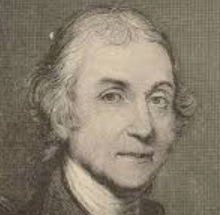
It is hardly possible not to suspect the truth of this doctrine of atonement, when we consider that the general maxims to which it may be reduced, are nowhere laid down, or asserted, in the Scriptures, but others quite contrary to them.
▼
Source
Part II : Opinions Relating to the Doctrine of Atonement, § I : That Christ did not die to make satisfaction for the sins of men.
3 months 4 weeks ago
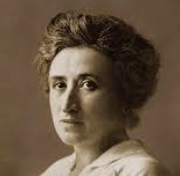
Those who do not move, do not notice their chains.

3 months 4 weeks ago
Now if plurality and difference belong only to the appearance-form; if there is but one and the same Entity manifested in all living things: it follows that, when we obliterate the distinction between the ego and the non-ego, we are not the sport of an illusion. Rather are we so, when we maintain the reality of individuation, — a thing the Hindus call Maya, that is, a deceptive vision, a phantasma. The former theory we have found to be the actual source of the phaenomenon of Compassion; indeed Compassion is nothing but its translation into definite expression. This, therefore, is what I should regard as the metaphysical foundation of Ethics, and should describe it as the sense which identifies the ego with the non-ego, so that the individual directly recognises in another his own self, his true and very being. From this standpoint the profoundest teaching of theory pushed to its furthest limits may be shown in the end to harmonise perfectly with the rules of justice and loving-kindness, as exercised; and conversely, it will be clear that practical philosophers, that is, the upright, the beneficent, the magnanimous, do but declare through their acts the same truth as the man of speculation wins by laborious research … He who is morally noble, however deficient in mental penetration, reveals by his conduct the deepest insight, the truest wisdom; and puts to shame the most accomplished and learned genius, if the latter's acts betray that his heart is yet a stranger to this great principle, — the metaphysical unity of life.
▼
Source
Part IV, Ch. 2, [https://archive.org/stream/basisofmorality00schoiala#page/273/mode/2up pp. 273]-274

3 months 4 weeks ago
Late at night. I feel like falling into a frenzy, doing some unprecedented thing to release myself, but I don't see against whom, against what...

3 months 4 weeks ago
Those who still think that Carlyle was in some sense more or less Liberal should read his chapter on Democracy in Past and Present. Most of it is occupied with praise of William the Conqueror, and with a description of the pleasant lives enjoyed by serfs in his day. Then comes a definition of liberty : “ The true liberty of a man , you would say, consisted in his finding out, or being forced to find out, the right path, and to walk thereon"...He passes on to the statement that democracy " means despair of finding any Heroes to govern you, and contented putting up with the want of them." The chapter ends by stating, in eloquent prophetical language, that, when democracy shall have run its full course, the problem that will remain is " that of finding government by your Real-Superiors." Is there one word in all this to which Hitler would not subscribe?
▼
Source
Bertrand Russell, "The Ancestry of Fascism", in In Praise of Idleness and other Essays, Allen & Unwin, London, 1935. Also quoted in William A. Robson, "The Political Quarterly" in the Thirties, Allen Lane, London, 1971
3 months 4 weeks ago
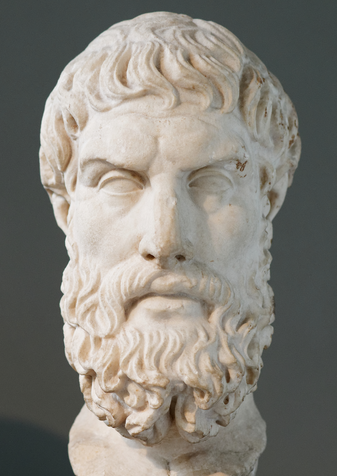
Temperance is that discreet regulation of the desires and passions, by which we are enabled to enjoy pleasures without suffering any consequent inconvenience. They who maintain such a constant self-command, as never to be enticed by the prospect of present indulgence, to do that which will be productive of evil, obtain the truest pleasure by declining pleasure.
3 months 4 weeks ago
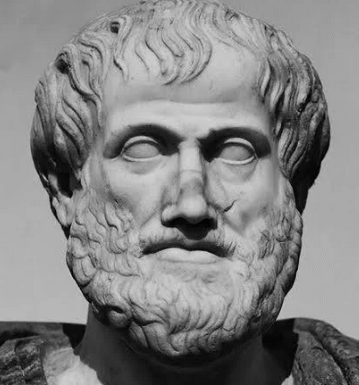
The premises of demonstrative knowledge must be true, primary, immediate, more knowable than and prior to the conclusion, which is further related to them as effect to cause... The premises must be the cause of the conclusion, more knowable than it, and prior to it; its causes, since we possess scientific knowledge of a thing only when we know its cause; prior, in order to be causes; antecedently known, this antecedent knowledge being not our mere understanding of the meaning, but knowledge of the fact as well. Now 'prior' and 'more knowable' are ambiguous terms, for there is a difference between what is prior and more knowable in the order of being and what is prior and knowable to man. I mean that objects nearer to sense are prior and more knowable to man; objects without qualification prior and more knowable are those further from sense. Now the most universal causes are furthest from sense and particular causes are nearest to sense, and they are thus exactly opposed to each other.
▼
Source
I.2, 71b.9 sqq
3 months 4 weeks ago
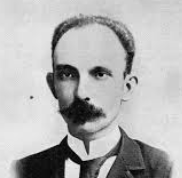
Only those who hate the Negro see hatred in the Negro.
▼
Source
Manifesto of Montecristi (1895)

3 months 4 weeks ago
According to the way it is generally used today, the term 'ethics' relates above all to the domain of human rights, 'the rights of man'- or, by derivation, the rights of living beings. We are supposed to assume the existence of a universally recognizable human subject possessing 'rights' that are in some sense natural: the right to live, to avoid abusive, to enjoy 'fundamental' liberties (of opinion, of expression, of democratic choice in the election of governments, etc.) These rights are held to be self-evident, and the result of a wide consensus. 'Ethics' is a matter of busying ourselves with these rights, of making sure that they are respected.
▼
Source
Chapter One, "Does Man Exist?"
3 months 4 weeks ago
For the purpose of acquiring gain, everything else is pushed aside or thrown overboard, for example, as is philosophy by the professors of philosophy.
▼
Source
E. Payne, trans. (1974) Vol. 1, p. 347
3 months 4 weeks ago
No position is so false as having understood and still remaining alive.
3 months 4 weeks ago
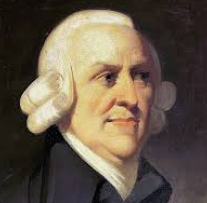
How selfish soever man may be supposed, there are evidently some principles in his nature, which interest him in the fortune of others, and render their happiness necessary to him, though he derives nothing from it except the pleasure of seeing it.
▼
Source
Section I, Chap. I.
3 months 4 weeks ago
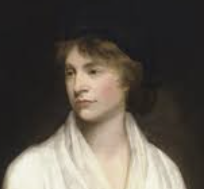
About nine o'clock this morning the King passed by my window, moving silently along excepting now and then a few strokes on the drum, which rendered the stillness more awful through empty streets... I can scarcely tell you why, but an association of ideas made the tears flow insensibly from my eyes, when I saw Louis, sitting with more dignity than I expected from his character, in a hackney coach, going to meet death where so many of his race have triumphed... I have been alone ever since, and though my mind is calm, I cannot dismiss the lively images that have filled my imagination all the day. Nay, do not smile, but pity me; for once or twice, lifting my eyes from the paper, I have seen eyes glare through a glass door opposite my chair, and bloody hands shook at me... I wish I had even kept the cat with me! I want to see something alive; death, in so many frightful shapes, has taken hold of my fancy. I am going to bed, and for the first time in my life I cannot put out the candle.
▼
Source
Letter to Gilbert Imlay (26 December 1792), quoted in C. Kegan Paul, 'Memoir', Mary Wollstonecraft: Letters to Imlay, with Prefatory Memoir by C. Kegan Paul (1879), pp. xxxiv-xxxv
3 months 4 weeks ago
But voice is a certain sound of that which is animated; for nothing inanimate emits a voice; but they are said to emit a voice from similitude, as a pipe, and a lyre, and such other inanimate things, have extension, modulation, and dialect; for thus it appears, because voice, also, has these.
▼
Source
Book II: On the soul; In: Aristotle (1808). Works, Vol. 4. p. 63 (412a-424b)
3 months 4 weeks ago
What right do white racist, who believe their race is superior, have for complaining about black racists, who see something special in their own race? What right do black racists, who see a special character in their race, have for complaining about white racists? White men who think their race makes them superior to black men admit the idea of racial difference and authorize and initiate black racists. Black men who proclaim their race — when what they are really proclaiming is the spiritual identity that distinguishes one ethnic group from another — authorize and incite white racists. Peace demands of Nature the recognition of human rights; discrimination is contrary to Nature and the enemy of peace. Whites who isolate themselves also isolate Negroes. Negroes who isolate themselves incite and isolate whites.

3 months 4 weeks ago
Logic is justly considered the basis of all other sciences, even if only for the reason that in every argument we employ concepts taken from the field of logic, and that ever correct inference proceeds in accordance with its laws.
▼
Source
Introduction to Logic: and to the Methodology of Deductive Sciences. (1941/2013) Tr. Olaf Helmer, pp. 108-110.
3 months 4 weeks ago
The poet presents the imagination with images from life and human characters and situations, sets them all in motion and leaves it to the beholder to let these images take his thoughts as far as his mental powers will permit. This is why he is able to engage men of the most differing capabilities, indeed fools and sages together. The philosopher, on the other hand, presents not life itself but the finished thoughts which he has abstracted from it and then demands that the reader should think precisely as, and precisely as far as, he himself thinks. That is why his public is so small.
▼
Source
Vol. 2 "On Philosophy and the Intellect" as translated in Essays and Aphorisms (1970), as translated by R. J. Hollingdale
3 months 4 weeks ago
To found a family. I think it would have been easier for me to found an empire.
3 months 4 weeks ago
It is the necessary, though very slow and gradual, consequence of a certain propensity in human nature which has in view no such extensive utility; the propensity to truck, barter, and exchange one thing for another.
▼
Source
Chapter II
3 months 4 weeks ago
It appears to me impossible that I should cease to exist, or that this active, restless spirit, equally alive to joy and sorrow, should only be organised dust — ready to fly abroad the moment the spring snaps, or the spark goes out which kept it together. Surely something resides in this heart that is not perishable, and life is more than a dream.
3 months 4 weeks ago
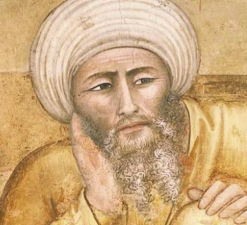
On the whole, a man who denies the existence of the effects arranged according to the causes in the question of arts, or whose wisdom cannot understand it, then he has no knowledge of the art of its Maker.
3 months 4 weeks ago
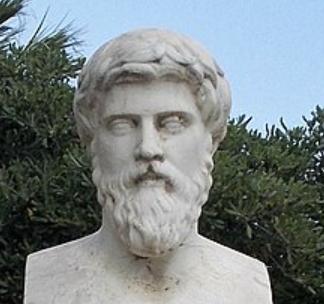
Be ruled by time, the wisest counsellor of all.
▼
Source
Pericles (Tr. Dryden and Clough)

3 months 4 weeks ago
Talk of secularism is meaningful when it refers to the weakness of traditional religious belief or the lack of power of churches and other religious bodies. That is what is meant when we say Britain is a more secular country than the United States, and in this sense secularism is an achievable condition. But if it means a type of society in which religion is absent, secularism is a kind of contradiction, for it is defined by what it excludes. Post-Christian secular societies are formed by the beliefs they reject, whereas a society that had truly left Christianity behind would lack the concepts that shaped secular thought.
▼
Source
Post-Apocalypse: After Secularism (pp. 267-8)
3 months 4 weeks ago
The life of money-making is one undertaken under compulsion, and wealth is evidently not the good we are seeking; for it is merely useful and for the sake of something else.
▼
Source
Book I, 1096a.5

3 months 4 weeks ago
Science may be described as the art of systematic over-simplification — the art of discerning what we may with advantage omit.
▼
Source
The Open Universe : An Argument for Indeterminism (1992), p. 44

3 months 4 weeks ago
Not only does the action of Governments not deter men from crimes; on the contrary, it increases crime by always disturbing and lowering the moral standard of society. Nor can this be otherwise, since always and everywhere a Government, by its very nature, must put in the place of the highest, eternal, religious law (not written in books but in the hearts of men, and binding on every one) its own unjust, man-made laws, the object of which is neither justice nor the common good of all but various considerations of home and foreign expediency.
▼
Source
The Meaning of the Russian Revolution (1906), a work about the 1905 Russian Revolution.
3 months 4 weeks ago
Like stones rolling down hills, fair ideas reach their objectives despite all obstacles and barriers. It may be possible to speed or hinder them, but impossible to stop them.

3 months 4 weeks ago
Progressive art can assist people to learn not only about the objective forces at work in the society in which they live, but also about the intensely social character of their interior lives. Ultimately, it can propel people toward social emancipation.
▼
Source
"For a People's Culture." Political Affairs, March 1995.
3 months 4 weeks ago
The chief objection I have to Pantheism is that it says nothing. To call the world "God" is not to explain it; it is only to enrich our language with a superfluous synonym for the word "world".
▼
Source
On Pantheism as quoted in Faiths of Famous Men in Their Own Words (1900) by John Kenyon Kilbourn; also in Religion: A Dialogue and Other Essays (2007), p. 40
3 months 4 weeks ago
When we know what words are worth, the amazing thing is that we try to say anything at all, and that we manage to do so. This requires, it is true, a supernatural nerve.
3 months 4 weeks ago
In England, and in all Roman Catholic countries, the lottery of the church is in reality much more advantageous than is necessary.
▼
Source
Chapter X, Part II, p. 155.
3 months 4 weeks ago
A soldier told Pelopidas, "We are fallen among the enemies." Said he, "How are we fallen among them more than they among us?"
▼
Source
63 Pelopidas
3 months 4 weeks ago
Evangelical atheists preach the need for a scientific view of things, but a settled view does not go with scientific method. If we know anything it is that most of the theories that prevail at any one time are false. Scientific theories are not components of a world-view but tools we use to tinker with the world.
▼
Source
Sweet Morality (p. 224)
3 months 4 weeks ago
A whole is that which has beginning, middle, and end.
▼
Source
1450b.26
3 months 4 weeks ago
There is no history of mankind, there is only an indefinite number of histories of all kinds of aspects of human life. And one of these is the history of political power. This is elevated into the history of the world. But this, I hold, is an offence against every decent conception of mankind. It is hardly better than to treat the history of embezzlement or of robbery or of poisoning as the history of mankind. For the history of power politics is nothing but the history of international crime and mass murder (including it is true, some of the attempts to suppress them). This history is taught in schools, and some of the greatest criminals are extolled as heroes.
▼
Source
Vol 2, Ch. 25 "Has History any Meaning?" Variant: There is no history of mankind, there are only many histories of all kinds of aspects of human life. And one of these is the history of political power. This is elevated into the history of the world.
3 months 4 weeks ago
Everything comes in time to him who knows how to wait.
▼
Source
Bk. X, ch. 16

3 months 4 weeks ago
No bloody or unbloody change of society can eradicate the evil in man: as long as there will be men, there will be malice, envy and hatred, and hence there cannot be a society which does not have to employ coercive restraint.
▼
Source
The City and Man, p. 5 (1964)

3 months 4 weeks ago
Four snakes gliding up and down a hollow for no purpose that I could see — not to eat, not for love, but only gliding.
▼
Source
April 11, 1834
3 months 4 weeks ago
This is not the first period during which we have confronted the difficult problem of using difference as a way of bringing people together, rather than as incontrovertible evidence of separation. There are more options than sameness, opposition, or hierarchical relations. One of the basic challenges confronting women of color today, as Audre Lorde has pointed out, is to think about and act upon notions of equality across difference. There are so many ways in which we can conceptualize coalitions, alliances, and networks that we would be doing ourselves a disservice to argue that there is only one way to construct relations across racial and ethnic boundaries. We cannot assume that if it does not unfold in one particular way, then it is not an authentic coalition.
3 months 4 weeks ago
What an incitation to hilarity, hearing the word goal while following a funeral procession!
3 months 4 weeks ago
The commodities of Europe were almost all new to America, and many of those of America were new to Europe. A new set of exchanges, therefore, began..and which should naturally have proved as advantageous to the new, as it certainly did to the old continent. The savage injustice of the Europeans rendered an event, which ought to have been beneficial to all, ruinous and destructive to several of those unfortunate countries.
▼
Source
Chapter I, p. 481.
3 months 4 weeks ago
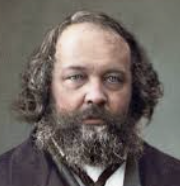
What all other men are is of the greatest importance to me. However independent I may imagine myself to be, however far removed I may appear from mundane considerations by my social status, I am enslaved to the misery of the meanest member of society. The outcast is my daily menace. Whether I am Pope, Czar, Emperor, or even Prime Minister, I am always the creature of their circumstance, the conscious product of their ignorance, want and clamoring. They are in slavery, and I, the superior one, am enslaved in consequence.
▼
Source
Solidarity in Liberty: The Workers' Path to Freedom (1867)
3 months 4 weeks ago
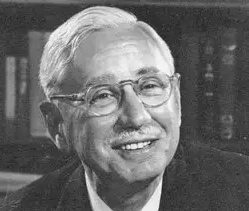
Science tells us how to heal and how to kill; it reduces the death rate in retail and then kills us wholesale in war; but only wisdom — desire coordinated in the light of all experience — can tell us when to heal and when to kill. To observe processes and to construct means is science; to criticize and coordinate ends is philosophy: and because in these days our means and instruments have multiplied beyond our interpretation and synthesis of ideals and ends, our life is full of sound and fury, signifying nothing. For a fact is nothing except in relation to desire; it is not complete except in relation to a purpose and a whole. Science without philosophy, facts without perspective and valuation, cannot save us from havoc and despair. Science gives us knowledge, but only philosophy can give us wisdom.
▼
Source
Introduction : On the Uses of Philosophy
3 months 4 weeks ago
It is extremely difficult to say whether he wishes to expound moral philosophy with historical examples, or decorate the narration of important affairs...with philosophical arguments.
▼
Source
Francesco Sansovino, dedication to Plutarch, Le vite de gli uomini illustri (Venice, 1564), quoted in Peter Burke, 'A Survey of the Popularity of Ancient Historians, 1450–1700', History and Theory, Vol. 5, No. 2 (1966), p. 142
3 months 4 weeks ago
Near-ubiquitous technological monitoring is a consequence of the decline of cohesive societies that has occurred alongside the rising demand for individual freedom.
▼
Source
In the Puppet Theatre: An Iron Mountain and a Shifting Spectacle (p. 121)
3 months 4 weeks ago
In matter-theory, as in astronomy, the Church's commitment to Aristotle was in due course to prove an embarassment. In both branches of science his speculative distinction between terrestrial and celestial matter was insecure from the very beginning. His own most loyal commentator, ... had already dreamt of a theory unifying all things, and John Philoponos... had rejected the distinction between terrestrial and celestial matter outright. Nevertheless, it was still an axiom of almost a thousand years later.
▼
Source
, , The Architecture of Matter (1962)
3 months 4 weeks ago
By 'arguing...' I mean... criticizing... inviting... criticism; and trying to learn from it.
3 months 4 weeks ago
The man is making preparations for a year, and does not know that he will die before evening. And I remembered God's second saying, "Learn what is not given to man." 'What dwells in man" I already knew. Now I learnt what is not given him. It is not given to man to know his own needs.
▼
Source
Ch. XI
3 months 4 weeks ago
We believe that failing to call a spade a spade is not scientific.
▼
Source
p. 50
CivilSimian.com created by AxiomaticPanic, CivilSimian, Kalokagathia