
3 months 4 weeks ago
Liars ... when they speak the truth they are not believed.

3 months 4 weeks ago
The true Enlightenment thinker, the true rationalist, never wants to talk anyone into anything. No, he does not even want to convince; all the time he is aware that he may be wrong. Above all, he values the intellectual independence of others too highly to want to convince them in important matters. He would much rather invite contradiction, preferably in the form of rational and disciplined criticism. He seeks not to convince but to arouse — to challenge others to form free opinions.

3 months 4 weeks ago
“They must understand that we can only lose by taking the offensive. Patience and time are my warriors, my champions,” thought Kutúzov. He knew that an apple should not be plucked while it is green. It will fall of itself when ripe, but if picked unripe the apple is spoiled, the tree is harmed, and your teeth are set on edge.
▼
Source
Bk XIII, Ch. 17

3 months 4 weeks ago
Persecution, then, gives rise to a peculiar technique of writing, and therewith to a peculiar type of literature, in which the truth about all crucial things is presented exclusively between the lines. That literature is addressed, not to all readers, but to trustworthy and intelligent readers only.
▼
Source
p. 25

3 months 4 weeks ago
Man exists for his own sake and not to add a laborer to the state.
▼
Source
November 15, 1839

3 months 4 weeks ago
Many people are familiar with the campaign to abolish the death penalty. In fact, it has already been abolished in most countries. Even the staunchest advocates of capital punishment acknowledge the fact that the death penalty faces serious challenges. Few people find life without the death penalty difficult to imagine.
▼
Source
Chapter One

3 months 4 weeks ago
If I were asked to summarize as briefly as possible my vision of things, to reduce it to its most succinct expression, I should replace words with an exclamation point, a definitive !
3 months 4 weeks ago
In manufactures, a very small advantage will enable foreigners to undersell our own workmen, even in the home market. It will require a very great one to enable them to do so in the rude produce of the soil. If the free importation of foreign manufactures were permitted, several of the home manufactures would probably suffer, and some of them, perhaps, go to ruin altogether, and a considerable part of the stock and industry at present employed in them, would be forced to find out some other employment. But the freest importation of the rude produce of the soil could have no such effect upon the agriculture of the country.
▼
Source
Chapter II
3 months 4 weeks ago
It is the peculiarity of privilege and of every privileged position to kill the intellect and heart of man. The privileged man, whether he be privileged politically or economically, is a man depraved in intellect and heart.
▼
Source
As quoted in "Socialism" article of ', 9th edition (1887), edited by with assistance of , Vol. 22, p. 216, '
3 months 4 weeks ago
[on Epicurus] His starting point is a conviction that apathy is impossible, and that pleasure — though not necessarily sensual pleasure — is the only conceivable, and quite legitimate, end of life and action. “Nature leads every organism to prefer its own good to every other good” — even the stoic finds a subtle pleasure in renunciation. “We must not avoid pleasures, but we must select them”. Epicurus, then, is no epicurean, he exalts the joys of intellect rather than those of sense; he warns against pleasures that excite and disturb the soul which they should rather quite and appease. In the end he proposes to seek not pleasure in its usual sense, but ataraxia — tranquility, equaninimity, repose of mind; all of which trembles on the verge of Zeno’s “Apathy”
3 months 4 weeks ago
The idea that consciousness is a mystery is a prejudice inherited from monotheism. The early seventeenth-century French philosopher René Descartes believed that animals other than humans are insensate machines. Obviously, this was a restatement in rationalist terms of the Christian belief that only humans have souls. Even if mind and matter were categorically distinct, that would not mean humans alone have minds. It was reported that in order to test his theories, Descartes used to throw animals out of the window and observe their reactions. Looking at behaviour of this kind, one might reasonably conclude that humans are the senseless machines.
▼
Source
Freedom for Über-Marionettes: What Science Won't Tell You (p. 151)
3 months 4 weeks ago
The doctrine that there is as much science in a subject as... mathematics in it, or as much... measurement or 'precision' in it, rests upon... misunderstanding.
3 months 4 weeks ago
One can only live while one is intoxicated with life; as soon as one is sober it is impossible not to see that it is all a mere fraud and a stupid fraud!
▼
Source
Ch. 4 | Variant: It is possible to live only as long as life intoxicates us; once we are sober we cannot help seeing that it is all a delusion, a stupid delusion.
3 months 4 weeks ago
When speaking of a “body of knowledge” or of “the results of research,” e.g., we tacitly assign the same cognitive status to inherited knowledge and to independently acquired knowledge. To counteract this tendency a special effort is required to transform inherited knowledge into genuine knowledge by revitalizing its original discovery, and to discriminate between the genuine and the spurious elements of what claims to be inherited knowledge.
▼
Source
p. 77
3 months 4 weeks ago
Give me health and a day, and I will make the pomp of emperors ridiculous.
▼
Source
Beauty
3 months 4 weeks ago
Feminist methodologies, both for research and for organizing, impel us to explore connections that are not always apparent, they drive us to inhabit contradictions and discover what is productive in these contradictions and methods of thought and action; they urge us to think things together that appear to be entirely separate and to disaggregate things that appear to belong naturally together.
3 months 4 weeks ago
Antinatalism
3 months 4 weeks ago
The directors of such [joint-stock] companies, however, being the managers rather of other people's money than of their own, it cannot well be expected, that they should watch over it with the same anxious vigilance with which the partners in a private copartnery frequently watch over their own.... Negligence and profusion, therefore, must always prevail, more or less, in the management of the affairs of such a company.
▼
Source
Chapter I, Part III, Article I, orig.p. 233.
3 months 4 weeks ago
All religions, with their gods, their demigods, and their prophets, their messiahs and their saints, were created by the credulous fancy of men who had not attained the full development and full possession of their faculties. Consequently, the religious heaven is nothing but a mirage in which man, exalted by ignorance and faith, discovers his own image, but enlarged and reversed — that is, divinized. The history of religion, of the birth, grandeur, and decline of the gods who have succeeded one another in human belief, is nothing, therefore, but the development of the collective intelligence and conscience of mankind.
3 months 4 weeks ago
Here is a fulfillment of long centuries of civilization and culture; here, in romantic love, more than the triumph of thought or the victories of power is the topmost reach of human beings.
▼
Source
Ch. 2 : On Youth
3 months 4 weeks ago
Since the Jews may not licitly keep those things which they have extorted from others through usury, the consequence is also that if you [rulers] receive these things from them, neither may you licitly keep them.[…] You should restore them to those to whom the Jews themselves are morally bound to make restitution.
▼
Source
art. 1
3 months 4 weeks ago
Some anarchists have claimed not merely that we would be better off without a state, but that any state necessarily violates people's moral rights and hence is intrinsically immoral. Our starting point then, though nonpolitical, is by intention far from nonmoral. Moral philosophy sets the background for, and boundaries of, political philosophy. What persons may and may not do to one another limits what they may do through the apparatus of a state, or do to establish such an apparatus.
▼
Source
Ch. 1 : Why State of Nature Theory?; Political Philosophy, p. 6
3 months 4 weeks ago
The Quakers sent me books, from which I learnt how they had, years ago, established beyond doubt the duty for a Christian of fulfilling the command of non-resistance to evil by force, and had exposed the error of the Church's teaching in allowing war and capital punishment.
▼
Source
Chapter I, The Doctrine of Non-resistance to Evil by Force has been Professed by a Minority of Men from the Very Foundation of Christianity
3 months 4 weeks ago
Leo Strauss is professor of political philosophy in Chicago, highly respected. Wrote a good book about Hobbes (as well as the one about Spinoza). Now another about natural law. He is a convinced orthodox atheist. Very odd. A truly gifted intellect. I don't like him.
▼
Source
Hannah Arendt, in letter to Karl Jaspers in 1954, published in Hannah Arendt and Karl Jaspers, Correspondence, 1926-1969 (1993)
3 months 4 weeks ago
That which is best about conservatism, that which, though it cannot be expressed in detail, inspires reverence in all, is the Inevitable.
3 months 4 weeks ago
Fear and destructiveness are the major emotional sources of fascism, eros belongs mainly to democracy.
▼
Source
The Authoritarian Personality (1950), p. 976, co-written with Else Frenkel-Brunswik, Daniel Levinson, and Nevitt Sanford
3 months 4 weeks ago
if people know about a world historical figure like Angela Y. Davis, it’s because somehow in spite of the dramatic story of her coming to national prominence, arrest, FBI most wanted. And in spite of the actual things that she’s written and said over time, that somehow all Angela Y. Davis was trying to do was get a spot in the university, or become something that would reproduce rather than interrupt the kinds of social relations that made her and her parents radical in the first place. So there’s that. So if we draw forward from when 1970, ’71, when, again, Angela was suddenly catapulted to the global stage and was, as she said, says herself, “Saved by the people.”
▼
Source
Ruth Wilson Gilmore, [https://truthout.org/audio/ruth-wilson-gilmore-on-abolition-the-climate-crisis-and-what-must-be-done/ Interview] with Truthout (2022)
3 months 4 weeks ago
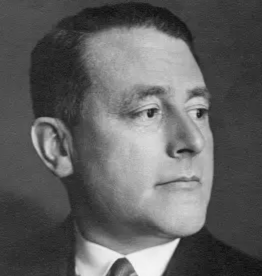
To be sure, Protestant theology presents a different, supposedly unpolitical doctrine, conceiving of God as the "wholly other," just as in political liberalism the state and politics are conceived of as the "wholly other." We have come to recognize that the political is the total, and as a result we know that any decision about whether something is unpolitical is always a political decision, irrespective of who decides and what reasons are advanced. This also holds for the question whether a particular theology is a political or an unpolitical theology.
3 months 4 weeks ago
About this time two others, men of great talents and learning, promoted the cause of the injured Africans, by the manner in which they introduced them to notice in their respective works. Dr. Adam Smith, in his Theory of Moral Sentiments, had, so early as the year 1759, held them up in an honourable, and their tyrants in a degrading light. "There is not a Negro from the coast of Africa, who does not, in this respect, possess a degree of magnanimity which the soul of his sordid master is too often scarce capable of conceiving. Fortune never exerted more cruelly her empire over mankind, than when she subjected those nations of heroes to the refuse of the gaols of Europe, to wretches who possess the virtue neither of the countries they came from, nor of those they go to, and whose levity, brutality, and baseness so justly expose them to the contempt of the vanquished." And now, in 1776, in his Wealth of Nations he showed in a forcible manner (for he appealed to the interest of those concerned,) the dearness of African labour; or the impolicy of employing slaves.
▼
Source
Thomas Clarkson The History of the Rise, Progress, and Accomplishment of the Abolition of the African Slave-Trade by the British Parliament, p. 75 (1808) [https://books.google.com/books?id=mfVeAAAAcAAJ&pg=PA75][http://www.gutenberg.org/ebooks/10633]
3 months 4 weeks ago
One man does not assert the truth which he knows, because he feels himself bound to the people with whom he is engaged; another, because the truth might deprive him of the profitable position by which he maintains his family; a third, because he desires to attain reputation and authority, and then use them in the service of mankind; a fourth, because he does not wish to destroy old sacred traditions; a fifth, because he has no desire to offend people; a sixth, because the expression of the truth would arouse persecution, and disturb the excellent social activity to which he has devoted himself. One serves as emperor, king, minister, government functionary, or soldier, and assures himself and others that the deviation from truth indispensable to his condition is redeemed by the good he does. Another, who fulfils the duties of a spiritual pastor, does not in the depths of his soul believe all he teaches, but permits the deviation from truth in view of the good he does. A third instructs men by means of literature, and notwithstanding the silence he must observe with regard to the whole truth, in order not to stir up the government and society against himself, has no doubt as to the good he does. A fourth struggles resolutely with the existing order as revolutionist or anarchist, and is quite assured that the aims he pursues are so beneficial that the neglect of the truth, or even of the falsehood, by silence, indispensable to the success of his activity, does not destroy the utility of his work. In order that the conditions of a life contrary to the consciousness of humanity should change and be replaced by one which is in accord with it, the outworn public opinion must be superseded by a new and living one. And in order that the old outworn opinion should yield its place to the new living one, all who are conscious of the new requirements of existence should openly express them. And yet all those who are conscious of these new requirements, one in the name of one thing, and one in the name of another, not only pass them over in silence, but both by word and deed attest their exact opposites.
▼
Source
Ch. 17

3 months 4 weeks ago
Marriage is therefore not an ordinary contract, since in terminating it, the two parties cannot return themselves to the same state they were in before entering into it. And if the contract is voluntary at the time it is entered into, it can no longer be voluntary, and almost never is, at the time of its termination, since the party which manifests the desire to dissolve it takes all liberty from the other party to refuse, and has only too many means to force its consent.
3 months 4 weeks ago
But these young scholars who invade our hills, Bold as the engineer who fells the wood, And travelling often in the cut he makes, Love not the flower they pluck, and know it not, And all their botany is Latin names.
▼
Source
Blight, st. 2
3 months 4 weeks ago
Being, in whose name Heidegger’s philosophy increasingly concentrates itself, is for him—as a pure self-presentation to passive consciousness—just as immediate, just as independent of the mediations of the subject as the facts and the sensory data are for the positivists. In both philosophical movements thinking becomes a necessary evil and is broadly discredited. Thinking loses its element of independence. The autonomy of reason vanishes: the part of reason that exceeds the subordinate reflection upon and adjustment to pre-given data. With it, however, goes the conception of freedom and, potentially, the self-determination of human society.
▼
Source
p. 9

3 months 4 weeks ago
All wish to live in the nearness of God, but only the Hindus bring it to pass.
▼
Source
Apollonius of Tyana quoted by Philostratus. Quoted in Eliot, Charles, Sir, Hinduism and Buddhism; an historical sketch London, Routledge & K. Paul [1921] volume I p. lxii. Quoted from Londhe, S. (2008). [https://books.google.com/books/about/A_Tribute_to_H
3 months 4 weeks ago
The various philosophies of life presented themselves as a conquest of materialism, or in any case, they readily claimed it. That does not change anything: their valuations, revaluations, and explanations of disvalue have been emptied into the over-all secularization stream, where they have only hastened the tendency to unlearn, which is a neutralizing process, after all.
3 months 4 weeks ago
Most economists now recognize climate change as a market failure, but only a few understand it as part of the larger pattern of environmental destruction that scientists have labelled the 'Great Acceleration'. Capitalism as currently practised has imperilled the existence of millions of planetary species, as well as the health and well-being of billions of humans. It also threatens the prosperity that it was intended to create. Challenging 250 years of dominant economic thinking, the climate crisis has shown that the unrestrained pursuit of self-interest does not serve the common good. It has shown, in the words of economist Joseph Stiglitz, that Adam Smith's invisible hand - the idea that free markets lead to efficiency as if consciously guided - is invisible because it is not there'. And it has proved, in the words of Pope Francis, that 'technological products are not neutral, for they create a framework which ends up conditioning lifestyles and shaping social possibilities along the lines dictated by the interests of certain powerful groups'.
▼
Source
Naomi Oreskes in The Climate Book edited by Greta Thunberg (2022)
3 months 4 weeks ago
In the depth of his soul he knew that his action was so base, abominable and cruel that, with that action upon his conscience, not only would he have no right to condemn others but he should not be able to look others in the face, to say nothing of considering himself the good, noble, magnanimous man he esteemed himself. And he had to esteem himself as such in order to be able to continue to lead a valiant and joyous life. And there was but one way of doing so, and that was not to think of it. This he endeavored to do.
▼
Source
Ch. 18

3 months 4 weeks ago
All breathing, existing, living, sentient creatures should not be slain, nor treated with violence, nor abused, nor tormented, nor driven away.
▼
Source
Ācharanga Sutra, Book 1, lecture 4, lesson 1, as translated by H. Jacobi, quoted in The Boundless Circle : Caring for Creatures and Creation (1996) by Michael W. Fox, p. 262.
3 months 4 weeks ago
I find the Englishman to be him of all men who stands firmest in his shoes. They have in themselves what they value in their horses, — mettle and bottom.
▼
Source
Manners

3 months 4 weeks ago
Heraclitus too, a man who was not easily pleased, has praised him; saying, "In Priene there lived Bias the son of Teutamus, whose reputation is higher than that of the others."
3 months 4 weeks ago
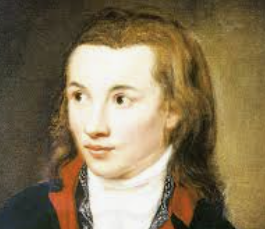
Philosophy ... bears witness to the deepest love of reflection, to absolute delight in wisdom.
▼
Source
“Logological Fragments,” Philosophical Writings, M. Stolijar, trans. (Albany: 1997) #12

3 months 4 weeks ago
The person attempting to travel two roads at once will get nowhere.
▼
Source
Quoted in: Errick A. Ford (2010) Iron Sharpens Iron: Wisdom of the Ages, p. 48
3 months 4 weeks ago
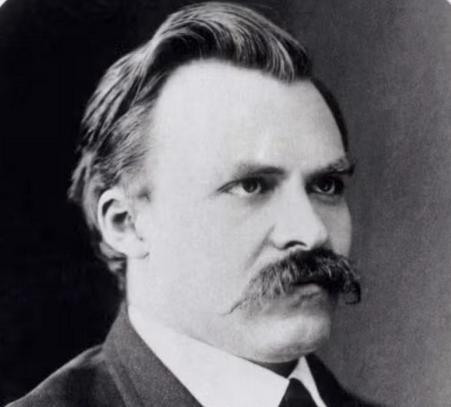
Freier Wille ohne Fatum ist ebenso wenig denkbar, wie Geist ohne Reelles, Gutes ohne Böses.
▼
Source
Free will without fate is no more conceivable than spirit without matter, good without evil. | "Fatum und Geschichte," April 1862
3 months 4 weeks ago
The inherent contradiction of human life has now reached an extreme degree of tension: on the one side there is the consciousness of the beneficence of the law of love, and on the other the existing order of life which has for centuries occasioned an empty, anxious, restless, and troubled mode of life, conflicting as it does with the law of love and built on the use of violence. This contradiction must be faced, and the solution will evidently not be favourable to the outlived law of violence, but to the truth which has dwelt in the hearts of men from remote antiquity: the truth that the law of love is in accord with the nature of man. But men can only recognize this truth to its full extent when they have completely freed themselves from all religious and scientific superstitions and from all the consequent misrepresentations and sophistical distortions by which its recognition has been hindered for centuries.
▼
Source
VI

3 months 4 weeks ago
Do not imagine that these most difficult problems can be thoroughly understood by any one of us. This is not the case. At times the truth shines so brilliantly that we perceive it as clear as day. Our nature and habit then draw a veil over our perception, and we return to a darkness almost as dense as before. We are like those who, though beholding frequent flashes of lightning, still find themselves in the thickest darkness of the night. On some the lightning flashes in rapid succession, and they seem to be in continuous light, and their night is as clear as the day. This was the degree of prophetic excellence attained by (Moses) the greatest of prophets, to whom God said," But as for thee, stand thou here by Me" (Deut. v. 31), and of whom it is written" the skin of his face shone," etc. (Exod. xxxiv. 29). [Some perceive the prophetic flash at long intervals; this is the degree of most prophets.] By others only once during the whole night is a flash of lightning perceived. This is the case with those of whom we are informed," They prophesied, and did not prophesy again" (Num. xi. 25). There are some to whom the flashes of lightning appear with varying intervals; others are in the condition of men, whose darkness is illumined not by lightning, but by some kind of crystal or similar stone, or other substances that possess the property of shining during the night; and to them even this small amount of light is not continuous, but now it shines and now it vanishes, as if it were" the flame of the rotating sword."
3 months 4 weeks ago
Make yourself necessary to somebody. Do not make life hard to any.
▼
Source
Considerations by the Way
3 months 4 weeks ago
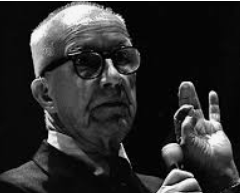
One of my working assumptions which has been proven successful so often as seemingly to qualify it as a reliable tenet is that A problem adequately stated is a problem solved theoretically and immediately, and therefore subsequently to be solved, realistically. Others have probably stated the principle in many ways. The assumption is that the inevitability of a solution's realization is inherent in the interaction of human intellect and the constantly transformative evolution of physical universe. At first the, only subconsciously apprehended, approaching confluences of complex events make themselves known intuitively within the intellectual weather. Then comes a gradually awakening consciousness of the presence of new families of differentiating-out challenging concepts of every day prominence. It is with these randomly patterning families of separate concepts that evolution is about to deal integratively. As a now specific unitary problem it may be disposed of effectively when and if that unified problem becomes "adequately stated" and thereby comprehensibly solvable.
▼
Source
[http://challenge.bfi.org/sites/challenge.bfi.org/files/pdf_files/wdsd_phase1_doc3.pdf World Design Science Decade 1965-1975 Phase I (1965), Document 3 : Comprehensive Thinking, "Venus Proximity Day", p. 33]
3 months 4 weeks ago
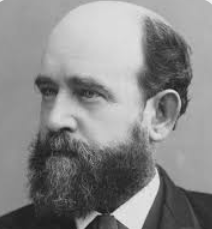
It is too narrow an understanding of production which confines it merely to the making of things. Production includes not merely the making of things, but the bringing of them to the consumer. The merchant or storekeeper is thus as truly a producer as is the manufacturer, or farmer, and his stock or capital is as much devoted to production as is theirs.
▼
Source
Book I, Ch. 2
3 months 4 weeks ago
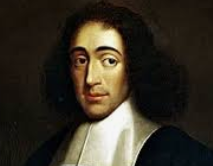
I do not think it necessary for salvation to know Christ according to the flesh : but with regard to the Eternal Son of God, that is the Eternal Wisdom of God, which has manifested itself in all things and especially in the human mind, and above all in Christ Jesus, the case is far otherwise. For without this no one can come to a state of blessedness, inasmuch as it alone teaches, what is true or false, good or evil. And, inasmuch as this wisdom was made especially manifest through Jesus Christ, as I have said, his disciples preached it, in so far as it was revealed to them through him, and thus showed that they could rejoice in that spirit of Christ more than the rest of mankind. The doctrines added by certain churches, such as that God took upon himself human nature, I have expressly said that I do not understand; in fact, to speak the truth, they seem to me no less absurd than would a statement, that a circle had taken upon itself the nature of a square. This I think will be sufficient explanation of my opinions concerning the three points mentioned. Whether it will be satisfactory to Christians you will know better than I.
▼
Source
Letter 21 (73) to Henry Oldenburg, November (1675) | Variant translation: The eternal wisdom of God … has shown itself forth in all things, but chiefly in the mind of man, and most of all in Jesus Christ.
3 months 4 weeks ago
Nature too remains, so far as we have yet come, ever a frightful Machine of Death: everywhere monstrous revolution, inexplicable vortices of movement; a kingdom of Devouring, of the maddest tyranny; a baleful Immense: the few light-points disclose but a so much the more appalling Night, and terrors of all sorts must palsy every observer.
CivilSimian.com created by AxiomaticPanic, CivilSimian, Kalokagathia