

3 months 3 weeks ago
I had wished to visit a slaughter-house, in order to see with my own eyes the reality of the question raised when vegetarianism is discussed. But at first I felt ashamed to do so, as one is always ashamed of going to look at suffering which one knows is about to take place, but which one cannot avert; and so I kept putting off my visit. But a little while ago I met on the road a butcher ... He is not yet an experienced butcher, and his duty is to stab with a knife. I asked him whether he did not feel sorry for the animals that he killed. He gave me the usual answer: 'Why should I feel sorry? It is necessary.' But when I told him that eating flesh is not necessary, but is only a luxury, he agreed; and then he admitted that he was sorry for the animals.
▼
Source
Ch. IX

3 months 3 weeks ago
In order to see the relation between philosophy as rigorous science and the alternative to it clearly, one must look at the political conflict between the two antagonists, i.e. at the essential character of that conflict.

3 months 3 weeks ago
None believeth in the soul of man, but only in some man or person old and departed.
▼
Source
p. 25

3 months 3 weeks ago
In the way we think about past movements, I encourage people to look beyond heroic male figures. While Martin Luther King is someone I revere, I don't like to allow his representation to erase the contributions of ordinary people. The 1955 Montgomery bus boycott was successful because Black women, domestic workers, refused to ride the bus. Had they not, where would we be today?
3 months 3 weeks ago
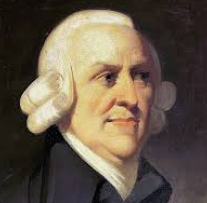
When national debts have once been accumulated to a certain degree, there is scarce, I believe, a single instance of their having been fairly and completely paid. The liberation of the public revenue, if it has ever been brought about at all, has always been brought about by bankruptcy; sometimes by an avowed one, but always by a real one, though frequently by a pretend payment.
▼
Source
Chapter III, Part V, p. 1012.
3 months 3 weeks ago
No contemporary philosopher possesses a more imaginative mind, broader interests, or greater dialectical abilities than Robert Nozick.
▼
Source
Review of Anarchy, State, and Utopia (1974), in Harper's magazine (as quoted on back of the softcover edition).
3 months 3 weeks ago
We know very well that we are only allowed to go on eating our dinner, to finish seeing the new play, or to enjoy to the end the ball, the Christmas fete, the promenade, the races or, the hunt, thanks to the policeman's revolver or the soldier's rifle, which will shoot down the famished outcast who has been robbed of his share, and who looks round the corner with covetous eyes at our pleasures, ready to interrupt them instantly, were not policeman and soldier there prepared to run up at our first call for help.
▼
Source
Chapter XII, Conclusion—Repent Ye, for the Kingdom of Heaven is at Hand

3 months 3 weeks ago
Those who are in ideology believe themselves by definition outside ideology: one of the effects of ideology is the practical denegation of the ideological character of ideology by ideology: ideology never says, ‘I am ideological’. It is necessary to be outside ideology, i.e. in scientific knowledge, to be able to say: I am in ideology (a quite exceptional case) or (the general case): I was in ideology. As is well known, the accusation of being in ideology only applies to others, never to oneself (unless one is really a Spinozist or a Marxist, which, in this matter, is to be exactly the same thing). Which amounts to saying that ideology has no outside (for itself), but at the same time that it is nothing but outside (for science and reality).
▼
Source
p. 118
3 months 3 weeks ago
Whoso walketh in solitude, And inhabiteth the wood, Choosing light, wave, rock, and bird, Before the money-loving herd, Into that forester shall pass From these companions power and grace.
▼
Source
Wood-notes, no. II, st. 4
3 months 3 weeks ago
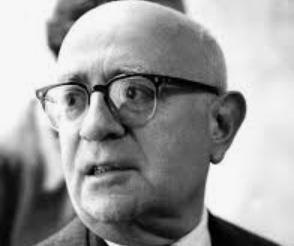
In the products of the culture industry human beings get into trouble only so that they can be rescued unharmed, usually by representatives of a benevolent collective; and then, in illusory harmony, they are reconciled with the general interest whose demands they had initially experienced as irreconcilable with their own.
▼
Source
Section 14

3 months 3 weeks ago
The Taste of Beauty, and the Relish of what is decent, just, and amiable, perfects the Character of the Gentleman, and the Philosopher. And the Study of such a Taste or Relish will, as we suppose, be ever the great Employment and Concern of him, who covets as well to be wise and good, as agreeable and polite.
▼
Source
Vol. 2, p. 207; "Miscellany III".
3 months 3 weeks ago
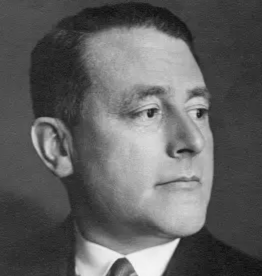
Political thought and political instinct prove themselves theoretically and practically in the ability to distinguish friend and enemy. The high points of politics are simultaneously the moments in which the enemy is, in concrete clarity, recognized as the enemy.
3 months 3 weeks ago
What the Wealth of Nations is all about is the difference between one kind of market system in commercial society and another. It is about the difference between, on the one hand, a market system dominated by merchants and manufacturers who are able to bend the government to their will in order to obtain legislation which makes what is in their private interest the law of the land, and, on the other, a truly open and competitive—"natural"—market system in which everyone who is industrious and/or has any capital has a fair chance. The withdrawal of the state is not, for Smith, the removal of government from its role as owner, entrepreneur, economic planner or re-distributor—roles readily conceivable to all who know of socialism but wholly inconceivable to Adam Smith—but its removal from the role of regulator of private enterprise, a role in which it had long been used to promote the interests of the merchants and the manufacturers over those of all others.
▼
Source
Heinz Lubasz, 'Adam Smith and the ‘free market’', in Stephen Copley and Kathryn Sutherland (eds.), Adam Smith's Wealth of Nations: New Interdisciplinary Essays (1995), p. 52
3 months 3 weeks ago
The good is the everlasting, the pinnacle of our life. ... life is striving towards the good, toward God. The good is the most basic idea ... an idea not definable by reason ... yet is the postulate from which all else follows. But the beautiful ... is just that which is pleasing. The idea of beauty is not an alignment to the good, but is its opposite, because for most part, the good aids in our victory over our predilections, while beauty is the motive of our predilections. The more we succumb to beauty, the further we are displaced from the good. ...the usual response is that there exists a moral and spiritual beauty ... we mean simply the good. Spiritual beauty or the good, generally not only does not coincide with the typical meaning of beauty, it is its opposite.

3 months 3 weeks ago
No objection can be made to these voluntary associations upon the ground that they would lack that knowledge of justice, as a science, which would be necessary to enable them to maintain justice, and themselves avoid doing injustice. Honesty, justice, natural law, is usually a very plain and simple matter, easily understood by common minds. Those who desire to know what it is, in any particular case, seldom have to go far to find it.
▼
Source
Section IV, p. 8
3 months 3 weeks ago
In actions of enthusiasm, this drawback appears: but in those lower activities, which have no higher aim than to make us more comfortable and more cowardly, in actions of cunning, actions that steal and lie, actions that divorce the speculative from the practical faculty, and put a ban on reason and sentiment, there is nothing else but drawback and negation.
▼
Source
Goethe; or, The Writer

3 months 3 weeks ago
Cherish wisdom as a means of travelling from youth to old age, for it is more lasting than any other possession.
3 months 3 weeks ago
We hear only ourselves.
3 months 3 weeks ago
Poetry heals the wounds inflicted by reason.
▼
Source
As quoted in Quote, Unquote (1989) by Jonathan Williams, p. 136
3 months 3 weeks ago
Against that positivism which stops before phenomena, saying "there are only facts," I should say: no, it is precisely facts that do not exist, only interpretations.
▼
Source
Notebooks (Late 1886 – Spring 1887) [http://www.nietzschesource.org/eKGWB/NF-1886,7[60]] | Popular usage: "There are no facts, only interpretations."
3 months 3 weeks ago
These new justifications are termed "scientific". But by the term "scientific" is understood just what was formerly understood by the term "religious": just as formerly everything called "religious" was held to be unquestionable simply because it was called religious, so now all that is called "scientific" is held to be unquestionable. In the present case the obsolete religious justification of violence which consisted in the recognition of the supernatural personality of the God-ordained ruler ("there is no power but of God") has been superseded by the "scientific" justification which puts forward, first, the assertion that because the coercion of man by man has existed in all ages, it follows that such coercion must continue to exist. This assertion that people should continue to live as they have done throughout past ages rather than as their reason and conscience indicate, is what "science" calls "the historic law". A further "scientific" justification lies in the statement that as among plants and wild beasts there is a constant struggle for existence which always results in the survival of the fittest, a similar struggle should be carried on among humanbeings, that is, who are gifted with intelligence and love; faculties lacking in the creatures subject to the struggle for existence and survival of the fittest. Such is the second "scientific" justification. The third, most important, and unfortunately most widespread justification is, at bottom, the age-old religious one just a little altered: that in public life the suppression of some for the protection of the majority cannot be avoided — so that coercion is unavoidable however desirable reliance on love alone might be in human intercourse. The only difference in this justification by pseudo-science consists in the fact that, to the question why such and such people and not others have the right to decide against whom violence may and must be used, pseudo-science now gives a different reply to that given by religion — which declared that the right to decide was valid because it was pronounced by persons possessed of divine power. "Science" says that these decisions represent the will of the people, which under a constitutional form of government is supposed to find expression in all the decisions and actions of those who are at the helm at the moment. Such are the scientific justifications of the principle of coercion. They are not merely weak but absolutely invalid, yet they are so much needed by those who occupy privileged positions that they believe in them as blindly as they formerly believed in the immaculate conception, and propagate them just as confidently. And the unfortunate majority of men bound to toil is so dazzled by the pomp with which these "scientific truths" are presented, that under this new influence it accepts these scientific stupidities for holy truth, just as it formerly accepted the pseudo-religious justifications; and it continues to submit to the present holders of power who are just as hard-hearted but rather more numerous than before.
▼
Source
IV

3 months 3 weeks ago
After a long time the great and awful Name was forgotten and the people, men, women and children, only recognized an image of wood or stone and the temple of wood or stone which they had been brought up from infancy to serve by bowing down.
▼
Source
“Idolatry,” H. Russell, trans. (1983), p. 72
3 months 3 weeks ago
The louder he talked of his honor, the faster we counted our spoons.
▼
Source
Worship
3 months 3 weeks ago
Relativity is inherently convergent, though convergent toward a plurality of centers of abstract truths. Degrees of accuracy are only degrees of refinement and magnitude in no way affects the fundamental reliability, which refers, as directional or angular sense, toward centralized truths. Truth is a relationship.
▼
Source
"The Designers and the Politicians" (1962), later published in Ideas and Integrities : A Spontaneous Autobiographical Disclosure (1969), p. 233, and The Buckminster Fuller Reader (1970), p. 305
3 months 3 weeks ago
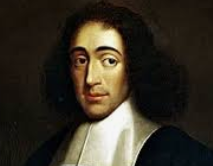
This impels me, before going into your reasons, to set forth briefly my opinion on the question, whether the world was made by chance. But I answer, that as it is clear that chance and necessity are two contraries, so is it also clear, that he, who asserts the world to be a necessary effect of the divine nature, must utterly deny that the world has been made by chance; whereas, he who affirms that God need not have made the world, confirms, though in different language, the doctrine that it has been made by chance; inasmuch as he maintains that it proceeds from a wish, which might never have been formed. However, as this opinion and theory is on the face of it absurd, it is commonly very unanimously admitted, that God's will is eternal, and has never been indifferent; hence... the world is a necessary effect of the divine nature. Let them call it will, understanding, or any name they like, they come at last to the same conclusion, that under different names they are expressing one and the same thing. If you ask them, whether the divine will does not differ from the human, they answer, that the former has nothing in common with the latter except its name; especially as they generally admit that God's will, understanding, intellect, essence, and nature are all identical; so I... lest I... confound the divine nature with the human, do not assign to God human attributes, such as will, understanding, attention, hearing, &c. I therefore say, as I have said already, that the world is a necessary effect of the divine nature, and that it has not been made by chance. I think this is enough to persuade you, that the opinion of those (if such there be) who say that the world has been made by chance, is entirely contrary to mine; and relying on this hypothesis, I proceed to examine those reasons which lead you to infer the existence of all kinds of ghosts.
▼
Source
Letter to Hugo Boxel (October 1674) [https://books.google.com/books?id=Nz1kRKDMbUMC The Chief Works of Benedict de Spinoza] (1891) Tr. R. H. M. Elwes, Vol. 2, Letter 58 (54).
3 months 3 weeks ago
Surely this voice meant our Teacher; for it is he that can collect the indications which lie scattered on all sides. A singular light kindles in his looks, when at length the high Rune lies before us, and he watches in our eyes whether the star has yet risen upon us, which is to make the Figure visible and intelligible.
3 months 3 weeks ago
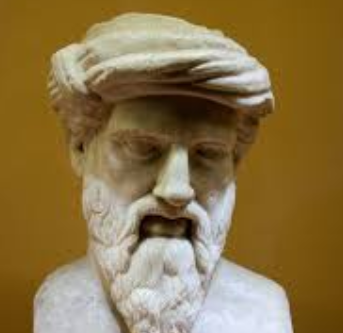
Sobriety is the strength of the soul, for it preserves its reason unclouded by passion.
▼
Source
As quoted in The History of Philosophy: From the Earliest Times to the Beginning of the Present Century (1819) by William Enfield | Sobriety is the strength of the mind; for it preserves reason unclouded by passion. | As quoted in Bible of Reason (1831) b
3 months 3 weeks ago
Moralities and religions are the principal means by which one can make whatever one wishes out of man, provided one possesses a superfluity of creative forces and can assert one's will over long periods of time — in the form of legislation and customs.
▼
Source
Sec. 144 (Notebook N VII 1. April - June 1885, KGW VII, 3.198, KSA 11.478)
3 months 3 weeks ago
Memento mori—remember death! These are important words. If we kept in mind that we will soon inevitably die, our lives would be completely different. If a person knows that he will die in a half hour, he certainly will not bother doing trivial, stupid, or, especially, bad things during this half hour. Perhaps you have half a century before you die—what makes this any different from a half hour?
▼
Source
p. 209
3 months 3 weeks ago
Transient bodies are only subject to destruction through their substance and not through their form, nor can the essence of their form be destroyed; in this respect they are permanent.
▼
Source
Ch.8
3 months 3 weeks ago
I think no virtue goes with size; The reason of all cowardice Is, that men are overgrown, And, to be valiant, must come down To the titmouse dimension.
▼
Source
The Titmouse, st. 5
3 months 3 weeks ago
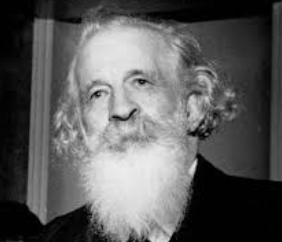
Pollution is nothing but resources we're not harvesting. We allow them to disperse because we've been ignorant of their value. But if we got onto a planning planning basis, the government could trap pollutants in the stacks and spillages and get back more money than this would cost out of the stockpiled chemistries they'd be collecting. Margaret Mead gets cross with me when I talk like this because she says people are doing some very important things because they're worried and excited and I'm going to make them relax and stop doing those things. But we're dealing with something much bigger than we're accustomed to understanding, we're on a very large course indeed. You speak of racism, for example, and I tell you that there's no such thing as race. The point is that racism is the product of tribalism and ignorance and both are falling victim to communications and world-around literacy.
▼
Source
As quoted in [http://books.google.com/books?id=kVMEAAAAMBAJ&q=%22Pollution+is+nothing+but+resources+we're+not+harvesting+We+allow+them+to+disperse+because+we've+been+ignorant+of+their+value%22&pg=PA52#v=onepage "The View from the Year 2000"] by Barry Farr
3 months 3 weeks ago
Man is an imagining being.
▼
Source
Ch. 2, sect. 10
3 months 3 weeks ago
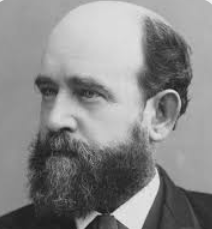
The aim of protection, in short, is to prevent the bringing into a country of things in themselves useful and valuable, in order to compel the making of such things. But what all mankind in the individual affairs of every-day life, regard as to be desired is not the making of things, but the possession of things.
▼
Source
Henry George, page 39, (1896)
3 months 3 weeks ago
The ideal of Morality has no more dangerous rival than the ideal of highest Strength, of most powerful life; which also has been named (very falsely as it was there meant) the ideal of poetic greatness. It is the maximum of the savage; and has, in these times, gained, precisely among the greatest weaklings, very many proselytes. By this ideal, man becomes a Beast-Spirit, a Mixture; whose brutal wit has, for weaklings, a brutal power of attraction.
3 months 3 weeks ago
I teach you the Overman. Man is something which shall be surpassed.
▼
Source
Thus Spake Zarathustra.
3 months 3 weeks ago
Tolstoy was an advocate of non-resistance only because he was protected from people's impudence by his innumerable friends. One man can stand for non-resistance, because those who stand for resistance will protect him. You will not be able to do without resistance advocates.
▼
Source
Konstantin Tsiolkovsky
3 months 3 weeks ago
Those who observe the nature of the Universe and the commandments of the Law, and know their purpose, see clearly God's mercy and truth in everything; they seek, therefore, that which the Creator intended to be the aim of man, viz., comprehension. Forced also by claims of the body, they seek that which is necessary for the preservation of the body, "bread to eat and garment to clothe," and this is very little; but they seek nothing superfluous; with very slight exertion man can obtain it, so long as he is contented with that which is indispensable.
▼
Source
Ch.12
3 months 3 weeks ago
The days .... come and go like muffled and veiled figures, sent from a distant friendly party; but they say nothing, and if we do not use the gifts they bring, they carry them as silently away.
▼
Source
Works and Days
3 months 3 weeks ago
The highest of generalizations is the synergetic integration of truth and love.
▼
Source
[http://www.rwgrayprojects.com/synergetics/s10/p0520.html#1005.50 1005.56]

3 months 3 weeks ago
A sacred spark created by his breath, The immortal mind of man his image bears;A spirit living 'midst the forms of death, Oppressed, but not subdued, by mortal cares.
▼
Source
"Written After Recovery from a Dangerous Illness" (c. 1801), in John Ayrton Paris, The Life of Sir Humphry Davy (London: Henry Colburn and Richard Bentley, 1831) p. 84, and in John Davy (ed.) Collected Works, vol. 1 (London: Smith, Elder and Co, 1839) ch.
3 months 3 weeks ago
True and perfect Friendship is, to make one heart and mind of many hearts and bodies.
3 months 3 weeks ago
I do not admire myself as a person. My successes do not override my shortcomings.
▼
Source
Journal of Humanistic Psychology (Spring 1991) Vol. 31 No. 2, p. 112

3 months 3 weeks ago
Certainly it is correct to say: Conscience is the voice of God.
▼
Source
p. 75
3 months 3 weeks ago
The theory that Divine Providence does not extend to man, and that there is no difference between man and other animals, implies very bad notions about God; it disturbs all social order, removes and destroys all the moral and intellectual virtues of man.
▼
Source
Ch.17
3 months 3 weeks ago
Every really able man, in whatever direction he work,—a man of large affairs, an inventor, a statesman, an orator, a poet, a painter,—if you talk sincerely with him, considers his work, however much admired, as far short of what it should be.
▼
Source
Immortality
3 months 3 weeks ago
Love is metaphysical gravity.
3 months 3 weeks ago
There is philosophy, which is about conceptual analysis — about the meaning of what we say — and there is all of this … all of life.
▼
Source
Emphasizing his views on philosophy as something abstract and separate from normal life to Isaiah Berlin, in the early 1930s, as quoted in A.J. Ayer: A Life (1999) by Ben Rogers, p. 2.
3 months 3 weeks ago
Were I a nightingale, I would act the part of a nightingale; were I a swan, the part of a swan.
▼
Source
Book I, ch. 16, § 20.
CivilSimian.com created by AxiomaticPanic, CivilSimian, Kalokagathia