

5 months 1 week ago
Reductionism (ultimately, the empirical explanability of everything and a cornerstone of science), has uses that are appropriate, and it also can be used inappropriately. It is appropriately used as a way (one way) of understanding what is empirically known or empirically knowable. When it becomes merely an intellectual "position" confronting what is not empirically known or knowable, then it becomes very quickly absurd, and also grossly desensitizing and false.


8 months 1 week ago
Is it conceivable to adhere to a religion founded by someone else?
7 months 2 weeks ago
Our design, not respecting arts, but philosophy, and our subject, not manual, but natural powers, we consider chiefly those things which relate to gravity, levity, elastic force, the resistance of fluids, and the like forces, whether attractive or impulsive; and therefore we offer this work as mathematical principles of philosophy; for all the difficulty of philosophy seems to consist in this - from the phenomena of motions to investigate the forces of nature, and then from these forces to demonstrate the other phenomena...
▼
Source
source
Preface
8 months 1 week ago
If there is anything that we wish to change in the child, we should first examine it and see whether it is not something that could better be changed in ourselves.
▼
Source
source
p. 285

9 months 1 week ago
Appealing to his [Einstein's] way of expressing himself in theological terms, I said: If God had wanted to put everything into the universe from the beginning, He would have created a universe without change, without organisms and evolution, and without man and man's experience of change. But he seems to have thought that a live universe with events unexpected even by Himself would be more interesting than a dead one.
▼
Source
source
As quoted in Omnipotence and Other Theological Mistakes by Charles Hartshorne

8 months 2 weeks ago
It is manifest that every soul has a certain continuity with the soul of the Universe, so that it must be understood to exist and to be included not only there where it liveth and feeleth, but it is also by its essence and substance diffused throughout immensity. The power of each soul is itself somehow present afar in the Universe. It is not mixed, yet is there in some presence.
7 months 6 days ago
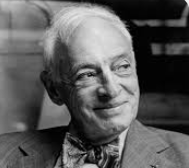
In an age of enormities, the emotions are naturally weakened. We are continually called upon to have feelings - about genocide, for instance, or about famine or the blowing up of passenger planes - and we are all aware that we are incapable of reacting appropriately. A guilty consciousness of emotional inadequacy or impotence makes people doubt their own human weight.
▼
Source
source
"The Distracted Public" (1990), p. 156

5 months 1 week ago
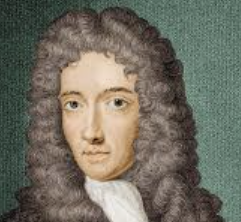
Those hypotheses do not a little hinder the progress of Humane knowledge, that introduce Morals and Politicks into the Explications of Corporeal Nature, where all things are indeed transacted according to Laws Mechanical.
▼
Source
source
Reflections upon the Hypothesis of Alcali and Acidum (1675) p. 33.
5 months 3 days ago
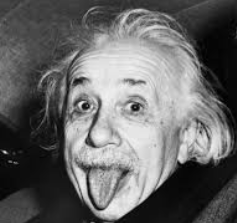
Everything should be made simple as possible but no simpler.
▼
Source
source
Repeated throughout his life, see: [http://quoteinvestigator.com/2011/05/13/einstein-simple/ Quote Investigator]

9 months 4 weeks ago
But if one should guide his life by true principles, man's greatest riches is to live on a little with contented mind; for a little is never lacking.
▼
Source
source
Book V, lines 1117-1119 (tr. Rouse)

9 months 1 week ago
Not my idea of God, but God.
5 months 3 weeks ago
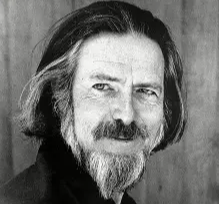
In an autobiography one must surely be allowed to boast, just for fun. I have, at a range of twenty feet, shot the tobacco out of a cigarette and left the paper intact. At a range of thirty feet, I have split a target, edge towards me, with an air pistol. I am also the world's champion in a game called "You Are the Target," in which anyone better than I would be dead. The game is to shoot an arrow straight up and see how near to you it can be allowed to land. You have to watch its fall very carefully, but I have had it hit the ground exactly between my feet. Of course, there were no witnesses. Had there been, they would forcefully have discouraged the experiment. I was using a fifty-five pound bow.
▼
Source
source
p. 18

8 months 2 weeks ago
Countless attempts have been made to no avail to construct a continuity from the supreme principle of the intellectual world to the finite world. The oldest and most frequent of these attempts is well known: the principle of emanation, according to which the outflowings from the godhead, in gradual increments and detachment from the ordinary source, losing their divine perfection until, in the end, they pass into the opposite (matter, privation), just as light is finally confined by darkness.
▼
Source
source
P. 24

9 months 1 week ago
The necessity of faith as an ingredient in our mental attitude is strongly insisted on by the scientific philosophers of the present day; but by a singularly arbitrary caprice they say that it is only legitimate when used in the interests of one particular proposition, - the proposition, namely, that the course of nature is uniform. That nature will follow to-morrow the same laws that she follows to-day is, they all admit, a truth which no man can know; but in the interests of cognition as well as of action we must postulate or assume it.
5 months 3 days ago
I am enough of an artist to draw freely upon my imagination. Imagination is more important than knowledge. Knowledge is limited. Imagination encircles the world.

7 months 3 weeks ago
There will be no mass-based feminist movement as long as feminist ideas are understood only by a well-educated few.

7 months 1 week ago
Until writing was invented, man lived in acoustic space: boundless, directionless, horizonless, in the dark of the mind, in the world of emotion, by primordial intuition, terror. Speech is a social chart of this bog.
▼
Source
source
(p. 48)

5 months 1 week ago
Where any work can be done conformably to the reason which is common to gods and men, there we have nothing to fear; for where we are able to get profit by means of the activity which is successful and proceeds according to our constitution, there no harm is to be suspected.
▼
Source
source
VII, 53

7 months 1 week ago
Let your life be pleasing to the multitude, and it can not be so to yourself.
▼
Source
source
Maxim 1075

9 months 2 weeks ago
A spectre is haunting Europe; the spectre of Communism.
▼
Source
source
Preamble, paragraph 1, line 1.

8 months 1 week ago
The third category of which I come now to speak is precisely that whose reality is denied by nominalism. For although nominalism is not credited with any extraordinarily lofty appreciation of the powers of the human soul, yet it attributes to it a power of originating a kind of ideas the like of which Omnipotence has failed to create as real objects, and those general conceptions which men will never cease to consider the glory of the human intellect must, according to any consistent nominalism, be entirely wanting in the mind of Deity.
▼
Source
source
Lecture II : The Universal Categories, §3. Laws: Nominalism, CP 5.62

7 months 3 weeks ago
What is beginning to emerge, then, is a theory about psychic sensitivity. It runs as follows. When I relax deeply, it is as if someone opened up the partition between the two compartments of my brain, turning them into a single large room. I experience a sense of mental freedom as if I can suddenly breathe more deeply, and a feeling of contact with things. Everyone has had the experience of being in a state of hurry or excitement, and failing to notice that they have bruised or scratched themselves -- until the excitement evaporates and the pain makes itself known. Hurry and tension raise our sensitivity threshold, and at the same time, erect a glass wall between us and reality. In the "unicameral" state, this wall vanishes, and everything seems more real.
▼
Source
source
p. 51
7 months 1 week ago
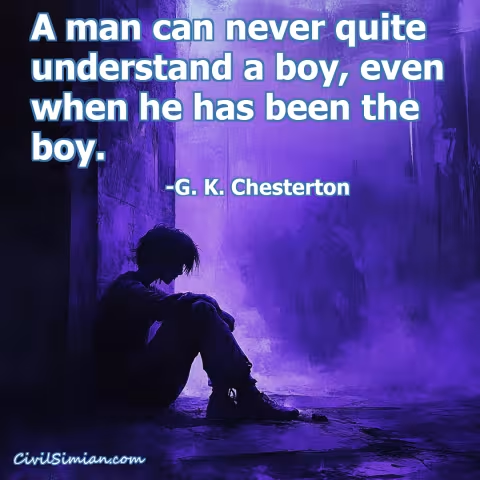
Mysticism is just tomorrow's science dreamed today.
8 months 1 week ago
Religion comforts us for the defeat of our will to power. It adds new worlds to ours, and thus brings us hope of new conquests and new victories. We are converted to religion out of fear of suffocating within the narrow confines of this world.
8 months 2 weeks ago
Of the eternal incorporeal substance nothing is changed, is formed or deformed, but there always remains only that thing which cannot be a subject of dissolution, since it is not possible that it be a subject of composition, and therefore, either of itself or by accident, it cannot be said to die.
▼
Source
source
As translated by Arthur Imerti

9 months 1 week ago
Yes, Lord, you are innocence itself: how could you conceive of Nothingness, you who are plenitude? Your gaze is light and transforms all into light: how could you know the half-light in my heart?
▼
Source
source
Act 3, sc. 6

5 months 4 weeks ago
The archer must know what he is seeking to hit; then he must aim and control the weapon by his skill. Our plans miscarry because they have no aim. When a man does not know what harbour he is making for, no wind is the right wind. Chance must necessarily have great influence over our lives, because we live by chance. It is the case with certain men, however, that they do not know that they know certain things. Just as we often go searching for those who stand beside us, so we are apt to forget that the goal of the Supreme Good lies near us.
▼
Source
source
Line 3
6 months 3 days ago
To speak ill of others is a dishonest way of praising ourselves; let us be above such transparent egotism. If you can't say good and encouraging things, say nothing. Nothing is often a good thing to do, and always a clever thing to say.
▼
Source
source
We Have a Right To Be Happy Today, commencement address at the Webb School of Claremont, California



9 months 1 week ago
There are many things of which a wise man might wish to be ignorant.
▼
Source
source
Demonology

9 months 4 weeks ago
It is the act of an ill-instructed man to blame others for his own bad condition; it is the act of one who has begun to be instructed, to lay the blame on himself; and of one whose instruction is completed, neither to blame another, nor himself.
▼
Source
source
(5) [tr. George Long (1888)].
5 months 2 weeks ago
You have your brush, you have your colours, you paint paradise, then, in you go.
▼
Source
source
As quoted in Journal of Modern Literature Vol. 2, No. 2, Nikos Kazantzakis
9 months 1 week ago
Lord, you have cursed Cain and Cain's children: thy will be done. You have allowed men's hearts to be corrupted, that their intentions be rotten, that their actions putrefy and stink: thy will be done.
▼
Source
source
Act 1

9 months 2 weeks ago
The poet presents the imagination with images from life and human characters and situations, sets them all in motion and leaves it to the beholder to let these images take his thoughts as far as his mental powers will permit. This is why he is able to engage men of the most differing capabilities, indeed fools and sages together. The philosopher, on the other hand, presents not life itself but the finished thoughts which he has abstracted from it and then demands that the reader should think precisely as, and precisely as far as, he himself thinks. That is why his public is so small.
▼
Source
source
Vol. 2 "On Philosophy and the Intellect" as translated in Essays and Aphorisms (1970), as translated by R. J. Hollingdale

8 months 2 weeks ago
That Vulcan gave arrows unto Apollo and Diana the fourth day after their Nativities, according to Gentile Theology, may pass for no blind apprehension of the Creation of the Sun and Moon, in the work of the fourth day.
▼
Source
source
Opening lines of Ch. 1

9 months 3 weeks ago
I say that man without the grace of God nonetheless remains the general omnipotence of God who effects, and moves and impels all things in a necessary, infallible course; but the effect of man's being carried along is nothing--that is, avails nothing in God's sight, nor is reckoned to be anything but sin.
▼
Source
source
p. 265
7 months 6 days ago
In the greatest confusion there is still an open channel to the soul. It may be difficult to find because by midlife it is overgrown, and some of the wildest thickets that surround it grow out of what we describe as our education. But the channel is always there, and it is our business to keep it open, to have access to the deepest part of ourselves.
▼
Source
source
Foreword to The Closing of the American Mind by Allan Bloom
7 months 3 weeks ago
In Administrative Behavior, bounded rationality is largely characterized as a residual category - rationality is bounded when it falls short of omniscience. And the failures of omniscience are largely failures of knowing all the alternatives, uncertainty about relevant exogenous events, and inability to calculate consequences. There was needed a more positive and formal characterization of the mechanisms of choice under conditions of bounded rationality... Two concepts are central to the characterization: search and satisficing.
▼
Source
source
p. 502; As cited in Barros (2010, p. 464-5).
9 months 1 week ago
Intellectuals cannot be good revolutionaries; they are just good enough to be assassins.
▼
Source
source
Act 5, sc. 3
5 months 1 week ago
About fame... Just as the sand-dunes, heaped one upon another, hide each the first, so in life the former deeds are quickly hidden by those that follow after.
▼
Source
source
VII, 34
7 months 4 weeks ago
Objectification is above all exteriorization, the alienation of spirit from itself.
▼
Source
source
p. 63

9 months 2 weeks ago
All exact science is dominated by the idea of approximation. When a man tells you that he knows the exact truth about anything, you are safe in inferring that he is an inexact man.
▼
Source
source
The Scientific Outlook (1931), Part I, chapter II, "Characteristics of the Scientific Method"
9 months 4 weeks ago
Although life is a matter of indifference, the use which you make of it is not a matter of indifference.
▼
Source
source
Book II, ch. 6, 1.
7 months 1 week ago
A woman loves to be obeyed at first, although afterwards she finds her pleasure in obeying.
▼
Source
source
The Suicide Club, Story of the Physician and the Saratoga Trunk.

7 months 4 weeks ago
For the kingdom of heaven is with us today.
7 months 1 week ago
The argument of this book is that we, and all other animals, are machines created by our genes.
▼
Source
source
Ch. 1. Why Are People?
CivilSimian.com created by AxiomaticPanic, CivilSimian, Kalokagathia