

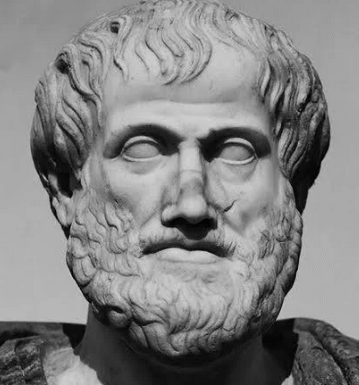
10 months 1 week ago
All things as subsist from nature appear to contain in themselves a principle of motion and permanency; some according to place, others according to increase and diminuation; and others according to change in quality.
▼
Source
source
Book II, Ch. I, p. 88.
6 months 1 week ago
News and truth are not the same thing and must be clearly distinguished. The function of news is to signalize an event, the function of truth is to bring to light the hidden facts, to set them into relation with each other, and make a picture of reality on which men can act. Only at those points, where social conditions take recognizable and measurable shape, do the body of truth and the body of news coincide.
▼
Source
source
Ch. XXIV: "News, Truth, and a Conclusion", p. 358 The clause in bold is sometimes quoted on its own in the form, "The news and the truth are not the same thing."
7 months 2 weeks ago
Computers were within my sphere of attention, but only computers used as number crunchers. In spite of the "giant brain" metaphor, there is little suggestion in this 1950 talk that the most important application of computers might lie in imitating intelligence symbolically, not numerically.
▼
Source
source
p. 199.
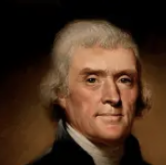
5 months 1 week ago
The bank mania is one of the most threatening of these imitations. It is raising up a moneyed aristocracy in our country which has already set the government at defiance, and although forced at length to yield a little on this first essay of their strength, their principles are unyielded and unyielding. These have taken deep root in the hearts of that class from which our legislators are drawn, and the sop to Cerberus from fable has become history. Their principles lay hold of the good, their pelf of the bad, and thus those whom the Constitution had placed as guards to its portals, are sophisticated or suborned from their duties.
▼
Source
source
Letter to Josephus B. Stuart (May 10, 1817) ME 15:112; reported in The Writings of Thomas Jefferson, ed. Andrew A. Lipscomb (1904), vol. 15, p. 112
10 months 1 week ago
Nature does not do anything in vain.
9 months 3 weeks ago
Be not swept off your feet by the vividness of the impression, but say, "Impression, wait for me a little. Let me see what you are and what you represent. Let me try you."
▼
Source
source
Book II, ch. 18, § 24, Reported in Bartlett's Quotations (1919) as "Be not hurried away by excitement, but say, "Semblance, wait for me a little".

9 months 1 week ago
I hardly know an intellectual man, even, who is so broad and truly liberal that you can think aloud in his society. Most with whom you endeavor to talk soon come to a stand against some institution in which they appear to hold stock, - that is, some particular, not universal, way of viewing things.
▼
Source
source
p. 490

5 months 3 weeks ago
Do you ask me whom I have conquered? Neither the Persians, nor the far-off Medes, nor any warlike race that lies beyond the Dahae; not these, but greed, ambition, and the fear of death that has conquered the conquerors of the world.
5 months 2 weeks ago
The Greeks made Space the subject-matter of a science of supreme simplicity and certainty. and certainty Out of it grew, in the mind of classical antiquity, the idea of pure science. Geometry became one of the most powerful expressions of that sovereignty of the intellect that inspired the thought of those times. At a later epoch, when the intellectual despotism of the Church... had crumbled, and a wave of scepticism threatened to sweep away all that had seemed most fixed, those who believed in Truth clung to Geometry as to a rock, and it was the highest ideal of every scientist to carry on his science "more geometrico". Matter... could be measured as a quantity and... its characteristic expression as a substance was the Law of Conservation of Matter... This, which has hitherto represented our knowledge of space and matter, and which was in many quarters claimed by philosophers as a priori knowledge, absolutely general and necessary, stands to-day a tottering structure.
▼
Source
source
Introduction

9 months 1 week ago
But you must see that if two things are alike, then it is a further question whether the first is copied from the second, or the second from the first, or both from a third.''What would the third be?''Some have thought that all these loves were copies of our love for the Landlord.'
▼
Source
source
Pilgrim's Regress 59

9 months 1 week ago
Worry means always and invariably inhibition of associations and loss of effective power. Of course, the sovereign cure for worry is religious faith; and this, of course, you also know. The turbulent billows of the fretful surface leave the deep parts of the ocean undisturbed, and to him who has a hold on vaster and more permanent realities the hourly vicissitudes of his personal destiny seem relatively insignificant things. The really religious person is accordingly unshakable and full of equanimity, and calmly ready for any duty that the day may bring forth.
▼
Source
source
"The Gospel of Relaxation"


5 months 1 week ago
The abyss of endless time that swallows it all. The emptiness of all those applauding hands. The people who praise us-how capricious they are, how arbitrary. And the tiny region in which it all takes place.
▼
Source
source
(Hays translation) IV, 4
10 months 1 week ago
What a human being believes, however, no matter with what ardor, is not necessarily objective truth.


10 months 1 week ago
For anyone who is alone, without God and without a master, the weight of days is dreadful. Hence one must choose a master, God being out of style.

9 months 1 week ago
No man's knowledge here can go beyond his experience.
▼
Source
source
Book II, Ch. 1, sec. 19
8 months 1 day ago
To-day the Enlightenment ideal has been changed into a reality; not only in legislation, which is the mere framework of public life, but in the heart of every individual, whatever his ideas may be, and even if he be a reactionary in his ideas, that is to say, even when he attacks and castigates institutions by which those rights are sanctioned.... The sovereignty of the unqualified individual, of the human being as such, generically, has now passed from being a juridical idea or ideal to be a psychological state inherent in the average man. And note this, that when what was before an ideal becomes a component part of reality, it inevitably ceases to be an ideal. The prestige and the magic that are attributes of the ideal are volatilised.
▼
Source
source
Chap.II: The Rise Of The Historic Level

8 months 6 days ago
Fourth, this supreme law, which is celestial and living harmony, does not so much as demand that the special ideas shall surrender their peculiar arbitrariness and caprice entirely; for that would be self-destructive. It only requires that they influence and be influenced by one another.

6 months 1 day ago
Wise command, wise obedience: the capability of these two is the net measure of culture, and human virtue, in every man; all good lies in the possession of these two capabilities; all evil, wretchedness and ill-success in the want of these.
9 months 2 weeks ago
Lend yourself to others, but give yourself to yourself.
▼
Source
source
Ch. 10. Of Managing the Will

9 months 3 weeks ago
The Heavenly City outshines Rome, beyond comparison. There, instead of victory, is truth; instead of high rank, holiness; instead of peace, felicity; instead of life, eternity.
▼
Source
source
Book II, Chapter 29
5 months 1 week ago
Why dost thou not pray... to give thee the faculty of not fearing any of the things which thou fearest, or of not desiring any of the things which thou desirest, or not being pained at anything, rather than pray that any of these things should not happen or happen?
▼
Source
source
IX, 40
10 months 1 week ago
The greatest saving one can make in the order of thought is to accept the unintelligibility of the world and to pay attention to man.
8 months 6 days ago
Accordingly, time logically supposes a continuous range of intensity of feeling. It follows then, from the definition of continuity, that when any particular kind of feeling is present, an infinitesimal continuum of all feelings differing infinitesimally from that, is present.
8 months 1 week ago
Spirit: Do not be deceived by sophists and half philosophers; things do not appear to thee by means of any representatives. Of the thing that exists, and that can exist, thou art conscious immediately ; thou, thyself, art that of which thou art conscious. By a fundamental law of thy being thou art thus presented to thyself, and thrown out of thyself.
▼
Source
source
Jane Sinnett, trans 1846 p. 53
7 months 1 week ago
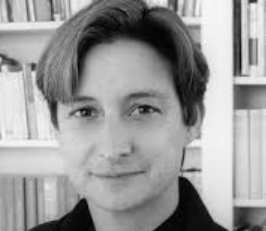
Gender is a kind of imitation for which there is no original; in fact, it is a kind of imitation that produces the very notion of the original as an effect and consequence of the imitation itself.
▼
Source
source
"Imitation and Gender Insubordination" in Inside/Out (1991) edited by Diana Fuss

7 months 1 week ago
The conscience of a man of our circle, if he retains but a scrap of it, cannot rest, and poisons all the comforts and enjoyments of life supplied to us by the labour of our brothers, who suffer and perish at that labour. And not only does every conscientious man feel this himself (he would be glad to forget it, but cannot do so in our age) but all the best part of science and art - that part which has not forgotten the purpose of its vocation - continually reminds us of our cruelty and of our unjustifiable position. The old firm justifications are all destroyed; the new ephemeral justifications of the progress of science for science's sake and art for art's sake do not stand the light of simple common sense. Men's consciences cannot be set at rest by new excuses, but only by a change of life which will make any justification of oneself unnecessary as there will be nothing needing justification.

8 months 1 week ago
The writers against religion, whilst they oppose every system, are wisely careful never to set up any of their own.
▼
Source
source
Preface
9 months 1 week ago
We have two bits of evidence about the Somebody. One is the universe He has made. If we used that as our only clue, I think we should have to conclude that He was a great artist (for the universe is a very beautiful place), but also that He is quite merciless and no friend to man (for the universe is a very dangerous and terrifying place.) ...The other bit of evidence is that Moral Law which He has put in our minds. And this is a better bit of evidence than the other, because it is inside information. You find out more about God from the Moral Law than from the universe in general just as you find out more about a man by listening to his conversation than by looking at a house he has built.
▼
Source
source
Book I, Chapter 5, "We Have Cause to Be Uneasy"
7 months 1 week ago
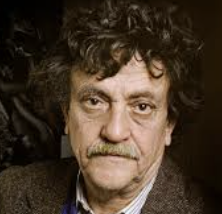
There are plenty of good reasons for fighting," I said, "but no good reason ever to hate without reservation, to imagine that God Almighty Himself hates with you, too. Where's evil? It's that large part of every man that wants to hate without limit, that wants to hate with God on its side. It's that part of every man that finds all kinds of ugliness so attractive.

6 months 5 days ago
Now the argument that I make in my book is that part of the current disaffection with liberalism is not from any of its basic principles, but... is the result of certain deformations of liberal principles that were carried to extremes that led... to bad outcomes... There's a move in this direction on the right and... on the left.
▼
Source
source
12:25 Ref: Francis Fukuyama, Liberalism and Its Discontents

7 months 3 weeks ago
What the sorrowful Jew of Amsterdam called the essence of a thing, the effort that it makes to persist indefinitely in its own being, self-love, the longing for immortality, is it not perhaps the primal and fundamental condition of all reflective or human knowledge? And is it not therefore the true base, the real starting-point, of all philosophy, although the philosophers, perverted by intellectualism, do not recognize it?
9 months 1 week ago
It is hard to have patience with people who say 'There is no death' or 'Death doesn't matter.' There is death. And whatever is matters. And whatever happens has consequences, and it and they are irrevocable and irreversible. You might as well say that birth doesn't matter.
8 months 2 days ago
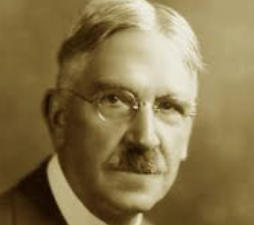
Art expresses, it does not state; it is concerned with existences in their perceived qualities, not with conceptions symbolized in terms.
▼
Source
source
p. 139
5 months 1 week ago
I heard the bells from the future churches, the children playing and laughing in the schoolyards ... and here was an almond tree in bloom before me: I must reach out and cut a flowering branch. For, by believing passionately in something which still does not exist, we create it. The nonexistent is whatever we have not sufficiently desired, whatever we have not irrigated with our blood to such a degree that it becomes strong enough to stride across the somber threshold of nonexistence.
▼
Source
source
p. 434; in a few publications since 2008 part of this has been misattributed to Franz Kafka: "By believing passionately in something which still does not exist, we create it. The nonexistent is whatever we have not sufficiently desired."
9 months 1 week ago
We have nothing to do but to receive, resting absolutely upon the merit, power, and love of our Redeemer.
▼
Source
source
Reported in Dictionary of Burning Words of Brilliant Writers (1895) edited by Josiah Hotchkiss Gilbert, p. 225

6 months 2 weeks ago
The true goal of the bourgeois life, in other words, is not self-enactment, but diversion. Most people need the organised distraction of work (if they can find it). Idleness - the life of the playboy who doesn't answer the phone - is simply too demanding. "
▼
Source
source
A difficult business," New Statesman
10 months 1 week ago
One has attained to mastery when one neither goes wrong nor hesitates in the performance.

9 months 1 week ago
Nothing contributes more to nourish elevation of sentiments in a people, than the large and free character of their habitations.
▼
Source
source
(p. 55)
5 months 1 week ago
War as the most extreme political means discloses the possibility which underlies every political idea, namely, the distinction of friend and enemy.
5 months 3 weeks ago
To be free from convention is not to spurn it but not to be deceived by it. It is to be able to use it as an instrument instead of being used by it.
▼
Source
source
p. 11

9 months 1 week ago
We are born believing. A man bears beliefs as a tree bears apples.
▼
Source
source
Worship

9 months 1 week ago
Belief in God and a future life makes it possible to go through life with less of stoic courage than is needed by skeptics. A great many young people lose faith in these dogmas at an age at which despair is easy, and thus have to face a much more intense unhappiness than that which falls to the lot of those who have never had a religious upbringing. Christianity offers reasons for not fearing death or the universe, and in so doing it fails to teach adequately the virtue of courage. The craving for religious faith being largely an outcome of fear, the advocates of faith tend to think that certain kinds of fear are not to be deprecated. In this, to my mind, they are gravely mistaken. To allow oneself to entertain pleasant beliefs as a means of avoiding fear is not to live in the best way. In so far as religion makes its appeal to fear, it is lowering to human dignity.
▼
Source
source
p. 107
CivilSimian.com created by AxiomaticPanic, CivilSimian, Kalokagathia