
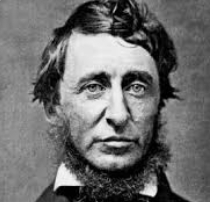
4 months 2 weeks ago
Indeed I am inclined to go so far as to say that the one cause for which one may properly make war is the cause of peace.
▼
Source
"Non-Resistance and The Present War - A Reply to Mr. Russell," International Journal of Ethics (April 1915), vol. 25, no. 3, pp. 307-316

4 months 2 weeks ago
We may not appreciate the fact; but a fact nevertheless it remains: we are living in a Golden Age, the most gilded Golden Age of human history — not only of past history, but of future history. For, as Sir Charles Darwin and many others before him have pointed out, we are living like drunken sailors, like the irresponsible heirs of a millionaire uncle. At an ever accelerating rate we are now squandering the capital of metallic ores and fossil fuels accumulated in the earth's crust during hundreds of millions of years. How long can this spending spree go on? Estimates vary. But all are agreed that within a few centuries or at most a few millennia, Man will have run through his capital and will be compelled to live, for the remaining nine thousand nine hundred and seventy or eighty centuries of his career as Homo sapiens, strictly on income. Sir Charles is of the opinion that Man will successfully make the transition from rich ores to poor ores and even sea water, from coal, oil, uranium and thorium to solar energy and alcohol derived from plants. About as much energy as is now available can be derived from the new sources — but with a far greater expense in man hours, a much larger capital investment in machinery. And the same holds true of the raw materials on which industrial civilization depends. By doing a great deal more work than they are doing now, men will contrive to extract the diluted dregs of the planet's metallic wealth or will fabricate non-metallic substitutes for the elements they have completely used up. In such an event, some human beings will still live fairly well, but not in the style to which we, the squanderers of planetary capital, are accustomed.
▼
Source
"Tomorrow and Tomorrow and Tomorrow" in Adonis and the Alphabet (1956); later in Collected Essays (1959), p. 293
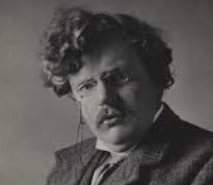
4 months 2 weeks ago
Either criticism is no good at all (a very defensible position) or else criticism means saying about an author the very things that would have made him jump out of his boots.
▼
Source
Appreciations and Criticisms of the Works of Charles Dickens (1911) Ch. 6: "Old Curiosity Shop"
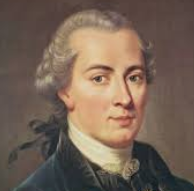
4 months 2 weeks ago
All the interests of my reason, speculative as well as practical, combine in the three following questions: 1. What can I know? 2. What ought I to do? 3. What may I hope?
▼
Source
B 832-833
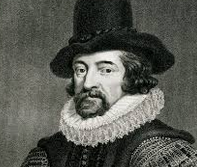
4 months 2 weeks ago
I could not be true and constant to the argument I handle, if I were not willing to go beyond others; but yet not more willing than to have others go beyond me again: which may the better appear by this, that I have propounded my opinions naked and unarmed, not seeking to preoccupate the liberty of men's judgments by confutations.
▼
Source
Book II
4 months 2 weeks ago
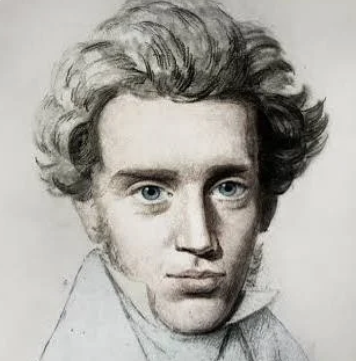
"In hidden inwardness all are Christians; who would dare deny this? Anyone who would take it upon himself to deny it surely runs the risk of wanting to play the knower of hearts. So no one can deny it. That everyone is Christian in hidden inwardness is in this way a secretiveness that is almost locked up, so to speak, behind a jammed lock: it is impossible to find out whether all these thousands upon thousands actually are Christians, for they all are that, so it is said, in hidden inwardness. And not only for the Church but for everybody it holds true that one does not pass judgment on hidden and secret things, because one is unable to judge. Should it not, however, be possible to break this secretiveness and have a little disclosure without becoming guilty of being a knower of hearts? Yes, indeed! How so? In this way, that someone quite simply on his own responsibility takes it upon himself to confess Christ in the midst of Christendom. He does not judge a single person, far from it, but many will disclose themselves by the way they judge him. He does not claim to be a better Christian than others, no, far from it; on the contrary, to the others he makes the admission that they undoubtedly are better Christians than he, they who keep it hidden out of religious fear of winning honor and esteem, whereas he, poor simpleton that he is, on his own behalf is so afraid that it might prove to be shadowboxing with such an extreme Christianity, and therefore he holds to the old Christianity of confessing Christ. Therefore he does not inform against any of the others, that they are not Christians; far from it, he informs only against himself, that he is such a poor simpleton. Nevertheless the thoughts of many hearts would be disclosed by how they judge this poor simpleton, this imperfect Christian."
▼
Source
p. 220
4 months 2 weeks ago
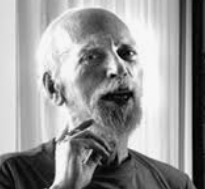
My early work is politically anarchist fiction, in that I was an anarchist for a long period of time. I'm not an anarchist any longer, because I've concluded that anarchism is an impractical ideal. Nowadays, I regard myself as a libertarian. I suppose an anarchist would say, paraphrasing what Marx said about agnostics being "frightened atheists," that libertarians are simply frightened anarchists. Having just stated the case for the opposition, I will go along and agree with them: yes, I am frightened. I'm a libertarian because I don't trust the people as much as anarchists do. I want to see government limited as much as possible; I would like to see it reduced back to where it was in Jefferson's time, or even smaller. But I would not like to see it abolished. I think the average American, if left totally free, would act exactly like Idi Amin. I don't trust the people any more than I trust the government.
▼
Source
"Robert Anton Wilson: Searching For Cosmic Intelligence" - interview by Jeffrey Elliot (1980)
4 months 2 weeks ago
The film concludes with ... the most nauseatingly luscious, the most penetratingly vulgar mammy song that it has ever been my lot to hear. My flesh crept as the loud speaker poured out those sodden words, the greasy, sagging melody. I felt ashamed of myself for listening to such things, for even being a member of the species to which such things are addressed.
▼
Source
“Silence is Golden,” p. 62
4 months 2 weeks ago
A stiff apology is a second insult.
▼
Source
[http://books.google.com/books?id=2mpaAAAAMAAJ&q=%22A+stiff+apology+is+a+second+insult%22&pg=PA121#v=onpage "The Real Dr. Johnson"], The Common Man (1950)

4 months 2 weeks ago
Perhaps when distant people on other planets pick up some wave-length of ours all they hear is a continuous scream.
▼
Source
The Message to the Planet (1989) p. 509.
4 months 2 weeks ago
[T]his species works intentionally on its own destruction (by war). This, however, does not keep the rational creatures of such a constantly advancing culture, even in the midst of war, from promising to mankind in coming centuries an unequivocal prospect of bliss which will never end.
▼
Source
Kant, Immanuel (1996), page 185
4 months 2 weeks ago
In the same manner as we are cautioned by religion to show our faith by our works we may very properly apply the principle to philosophy, and judge of it by its works; accounting that to be futile which is unproductive, and still more so, if instead of grapes and olives it yield but the thistle and thorns of dispute and contention.
▼
Source
Aphorism 73
4 months 2 weeks ago
If self-knowledge does not lead to knowing oneself before God - well, then there is something to what purely human self-observation says, namely, this self-knowledge leads to a certain emptiness that produces dizziness. Only by being before God can one totally come to oneself in the transparency of soberness. p. 106
4 months 2 weeks ago
There are periods of history when the visions of madmen and dope fiends are a better guide to reality than the common-sense interpretation of data available to the so-called normal mind. This is one such period, if you haven't noticed already.
▼
Source
Part I : The Eye in the Pyramid, p. 32
4 months 2 weeks ago
A great deal of attention has been paid ... to the technical languages in which men of science do their specialized thinking ... But the colloquial usages of everyday speech, the literary and philosophical dialects in which men do their thinking about the problems of morals, politics, religion and psychology — these have been strangely neglected. We talk about "mere matters of words" in a tone which implies that we regard words as things beneath the notice of a serious-minded person. This is a most unfortunate attitude. For the fact is that words play an enormous part in our lives and are therefore deserving of the closest study. The old idea that words possess magical powers is false; but its falsity is the distortion of a very important truth. Words do have a magical effect — but not in the way that magicians supposed, and not on the objects they were trying to influence. Words are magical in the way they affect the minds of those who use them. "A mere matter of words," we say contemptuously, forgetting that words have power to mould men's thinking, to canalize their feeling, to direct their willing and acting. Conduct and character are largely determined by the nature of the words we currently use to discuss ourselves and the world around us.
▼
Source
Quoted as the opening passage of "BOOK ONE: The Functions of Language" in Language in Thought and Action (1949) by S. I. Hayakawa, p. 3
4 months 2 weeks ago
It is amusing to think how much conservative ingenuity has been wasted in the defence of the House of Lords by men who were desperately endeavouring to prove that the House of Lords consisted of clever men. There is one really good defence of the House of Lords [...] and that is, that the House of Lords, in its full and proper strength, consists of stupid men. It really would be a plausible defence of that otherwise indefensible body to point out that the clever men in the Commons, who owed their power to cleverness, ought in the last resort to be checked by the average man in the Lords, who owed their power to accident.
4 months 2 weeks ago
Kant's view of the nature of what is "actually real" remained unaltered throughout his life. Reality is in itself a system of existing thought-essences brought into a unity by teleological relations that are intuitively thought by the Divine intellect, and by this very act of thought posited as real. ...If one... makes Kant either a sceptical agnostic who teaches the unknowableness of things-in-themselves, or a subjective idealist for whom there is no reality in itself at all, he will never be able to make anything of his philosophy. ...Kant is no forbidding or threatening name, but a kindly disposed patron.It happens that for many the Critique of Pure Reason is the first philosophical book that they seriously attempt to read. ...the book is not well suited to this purpose. Kant himself would not have recommended it. He did not even write the Prolegomena for pupils, but for future teachers of philosophy. ...They presuppose nothing less than an acquaintance with the entire state of philosophy at the time, with dogmatism and scepticism, with Leibniz and Hume....Kant's philosophy is the door to the philosophy of our century, and the door to the Kantian philosophy is the Critique of Pure Reason.
▼
Source
, [https://books.google.com/books?id=tGMdAAAAMAAJ Immanuel Kant: His Life and Doctrine] (1902) Preface to the First Edition (1898) pp. xiii-xv.
4 months 2 weeks ago
The Lord Chancellor was not particularly interested in the writings of the humanists.
▼
Source
Carlos G. Noreña. 1907. Juan Luis Vives. Springer Science & Business Media. 241.

4 months 2 weeks ago
The arbitrary rule of a just and enlightened prince is always bad. His virtues are the most dangerous and the surest form of seduction: they lull a people imperceptibly into the habit of loving, respecting, and serving his successor, whoever that successor may be, no matter how wicked or stupid.
▼
Source
"Refutation of Helvétius" (written 1773-76, published 1875)

4 months 2 weeks ago
Logic is not concerned with human behavior in the same sense that physiology, psychology, and social sciences are concerned with it. These sciences formulate laws or universal statements which have as their subject matter human activities as processes in time. Logic, on the contrary, is concerned with relations between factual sentences (or thoughts). If logic ever discusses the truth of factual sentences it does so only conditionally, somewhat as follows: if such-and-such a sentence is true, then such-and-such another sentence is true. Logic itself does not decide whether the first sentence is true, but surrenders that question to one or the other of the empirical sciences.
▼
Source
Rudolf Carnap (1937) cited in: Irving J. Lee (1967) The Language of Wisdom and Folly: Background Readings in Semantics. International Society for General Semantics, p. 44
4 months 2 weeks ago
The Beatific Vision, Sat Chit Ananda, Being-Awareness-Bliss-for the first time I understood, not on the verbal level, not by inchoate hints or at a distance, but precisely and completely what those prodigious syllables referred to. And then I remembered a passage I had read in one of Suzuki's essays. “What is the Dharma-Body of the Buddha?” ('“the Dharma-Body of the Buddha” is another way of saying Mind, Suchness, the Void, the Godhead.) The question is asked in a Zen monastery by an earnest and bewildered novice. And with the prompt irrelevance of one of the Marx Brothers, the Master answers, “The hedge at the bottom of the garden.” “And the man who realizes this truth,” the novice dubiously inquires, “what, may I ask, is he?” Groucho gives him a whack over the shoulders with his staff and answers, “A golden-haired lion.”
4 months 2 weeks ago
Ireland is a country in which the political conflicts are at least genuine; they are about something. They are about patriotism, about religion, or about money: the three great realities. In other words, they are concerned with what commonwealth a man lives in, or with what universe a man lives in, or with how he is to manage to live in either.
▼
Source
"The Irishman"
4 months 2 weeks ago
The good of the people must be the great purpose of government. By the laws of nature and of reason, the governors are invested with power to that end. And the greatest good of the people is liberty. It is to the state what health is to the individual.
▼
Source
Article on Government

4 months 2 weeks ago
The constitution of madness as mental illness, at the end of the eighteenth century, bears witness to a rupture in a dialogue, gives the separation as already enacted, and expels from the memory all those imperfect words, of no fixed syntax, spoken falteringly, in which the exchange between madness and reason was carried out. The language of psychiatry, which is a monologue by reason about madness, could only have come into existence in such a silence.
▼
Source
Preface to 1961 edition
4 months 2 weeks ago
The natural law is an instrument for progress, not a weapon of revolution.
4 months 2 weeks ago
The survival of democracy depends on the ability of large numbers of people to make realistic choices in the light of adequate information.
▼
Source
Chapter 6 (p. 47)
4 months 2 weeks ago
The rich are the scum of the earth in every country.
▼
Source
Ch. XV: "The Songs of the Car Club"
4 months 2 weeks ago
The blood of Jesus Christ can cover a multitude of sins, it seems to me.
4 months 2 weeks ago
The public execution is to be understood not only as a judicial, but also as a political ritual. It belongs, even in minor cases, to the ceremonies by which power is manifested.
▼
Source
Chapter One, The body of the condemned

4 months 2 weeks ago
I tore myself away from the safe comfort of certainties through my love for truth — and truth rewarded me.
▼
Source
All Said and Done (1972), p. 16
4 months 2 weeks ago
Like a piece of litmus paper, he has always been quick to take the colour of his times.
▼
Source
"Author Profile : Aldous Huxley" in The Observer(27 February 1949; also quoted in The Encarta Dictionary of Quotations, (2000), p. 459
4 months 2 weeks ago
And he smiles, but not as Sultans smile, and settles back the blade.... (But Don John of Austria rides home from the Crusade.)
▼
Source
Lepanto

4 months 2 weeks ago
I regard utility as the ultimate appeal on all ethical questions; but it must be utility in the largest sense, grounded on the permanent interests of man as a progressive being.
▼
Source
Ch. 1: Introductory
4 months 2 weeks ago
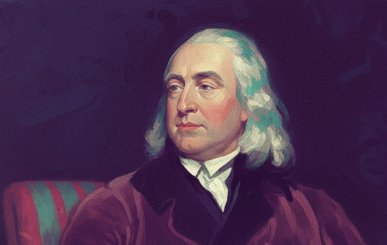
The principle of utility judges any action to be right by the tendency it appears to have to augment or diminish the happiness of the party whose interests are in question... if that party be the community the happiness of the community, if a particular individual, the happiness of that individual.
▼
Source
Introduction (1789 edition)
4 months 2 weeks ago
Today, criminal justice functions and justifies itself only by this perpetual reference to something other than itself, by this unceasing reinscription in non-juridical systems.
4 months 2 weeks ago
The present enshrines the past—and in the past all history has been made by men.
▼
Source
[http://books.google.com/books?id=kUW0AAAAIAAJ&q=%22The+present+enshrines+the+past+and+in+the+past+all+history+has+been+made+by+men%22&pg=PA122#v=onepage Introduction : Woman as Other]
4 months 2 weeks ago
Yet he is right enough about there being a white magic, if he only knows where to look for it.
4 months 2 weeks ago
It is better to be a human being dissatisfied than a pig satisfied; better to be Socrates dissatisfied than a fool satisfied. And if the fool, or the pig, are of a different opinion, it is because they only know their own side of the question. The other party to the comparison knows both sides.
▼
Source
Ch. 2
4 months 2 weeks ago
The play Ion is... devoted to the problem of parrhesia... It pursues the question; who has the right, the duty, and the courage to speak the truth?
4 months 2 weeks ago
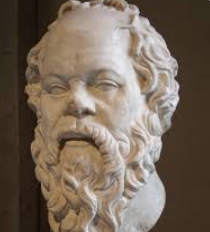
Has a philosopher like you failed to discover that our country is more to be valued and higher and holier far than mother or father or any ancestor, and more to be regarded in the eyes of the gods and of men of understanding?
▼
Source
Crito
4 months 2 weeks ago
The great pessimists in the history of thought [...] have prepared our minds to understand that despair can be what it was for Nietzsche (though on an infra-ontological level and in a domain fraught with mortal dangers) the springboard to the loftiest affirmation.
4 months 2 weeks ago
Of the evils most liable to attend on any sort of early proficiency, and which often fatally blights its promise, my father most anxiously guarded against. This was self-conceit. He kept me, with extreme vigilance, out of the way of hearing myself praised, or of being led to make self-flattering comparisons between myself and others. From his own intercourse with me I could derive none but a very humble opinion of myself; and the standard of comparison he always held up to me, was not what other people did, but what a man could and ought to do. He completely succeeded in preserving me from the sort of influences he so much dreaded. I was not at all aware that my attainments were anything unusual at my age.
▼
Source
([https://archive.org/details/autobiography01mill/page/32/mode/1up pp. 32–33])

4 months 2 weeks ago
To-day the [Enlightenment] ideal has been changed into a reality; not only in legislation, which is the mere framework of public life, but in the heart of every individual, whatever his ideas may be, and even if he be a reactionary in his ideas, that is to say, even when he attacks and castigates institutions by which those rights are sanctioned.… The sovereignty of the unqualified individual, of the human being as such, generically, has now passed from being a juridical idea or ideal to be a psychological state inherent in the average man. And note this, that when what was before an ideal becomes a component part of reality, it inevitably ceases to be an ideal. The prestige and the magic that are attributes of the ideal are volatilised.
▼
Source
Chap.II: The Rise Of The Historic Level
4 months 2 weeks ago
But the soul which has been polluted, and is impure at the time of her departure, and is the companion and servant of the body always, and is in love with and fascinated by the body and by the desires and pleasures of the body, until she is led to believe that the truth exists only in bodily form, which a man may touch and see and taste and use for the purposes of his lusts—the soul, I mean, accustomed to hate and fear and avoid the intellectual principle, which to the bodily eye is dark and invisible, and can be attained only by philosophy—do you suppose that such a soul as this will depart pure and unalloyed?

4 months 2 weeks ago
What does winter or autumn or spring or summer know of memory. They know nothing of memory. They know that seasons pass and return. They know that they are seasons. That they are time. And they know how to affirm themselves. And they know how to impose themselves. And they know how to maintain themselves, What does autumn know of summer. What sorrows do seasons have. None hate. None love. They just pass.
4 months 2 weeks ago
The correct statement would be, not that I disliked poetry, but that I was theoretically indifferent to it. I disliked any sentiments in poetry which I should have disliked in prose; and that included a great deal. And I was wholly blind to its place in human culture, as a means of educating the feelings. But I was always personally very susceptible to some kinds of it. ...Long before I had enlarged in any considerable degree, the basis of my intellectual creed, I had obtained in the natural course of my mental progress, poetic culture of the most valuable kind, by means of reverential admiration for the lives and characters of heroic persons; especially the heroes of philosophy. The same inspiring effect which so many of the benefactors of mankind have left on record that they had experienced from Plutarch’s Lives, was produced on me by Plato’s pictures of Socrates, and by some modern biographies, above all by Condorcet's Life of Turgot; a book well calculated to rouse the best sort of enthusiasm, since it contains one of the wisest and noblest of lives, delineated by one of the wisest and noblest of men. The heroic virtue of these glorious representatives of the opinions with which I sympathized, deeply affected me, and I perpetually recurred to them as others do to a favourite poet, when needing to be carried up into the more elevated regions of feeling and thought. I may observe by the way that this book cured me of my sectarian follies. The two or three pages beginning "Il regardait toute secte comme nuisible," and explaining why Turgot always kept himself perfectly distinct from the Encyclopedists, sank deeply into my mind. I left off designating myself and others as Utilitarians, and by the pronoun "we" or any other collective designation, I ceased to afficher, sectarianism. My real inward sectarianism I did not get rid of till later, and much more gradually.
▼
Source
([https://archive.org/details/autobiography01mill/page/112/mode/1up pp. 112-114])
4 months 2 weeks ago
To imagine that Caesar aspired to do something in the way Alexander did it — and this is what almost all historians have believed — is definitely to give up trying to understand him. Caesar is very nearly the opposite of Alexander. …[I]t is not merely a universal kingdom that Caesar has in view. His purpose is a deeper one. He wants a Roman empire which does not live on Rome, but on the periphery, on the provinces, and this implies the complete supersession of the City-State. It implies a State in which the most diverse peoples collaborate, in regard to which all feel solidarity.
▼
Source
Chapter XIV: Who Rules The World?

4 months 2 weeks ago
Her reverence for the divine, her generosity, her inability not only to do wrong but even to conceive of doing it. And the simple way she lived—not in the least like the rich. (Hays translation)
▼
Source
I, 3
4 months 2 weeks ago
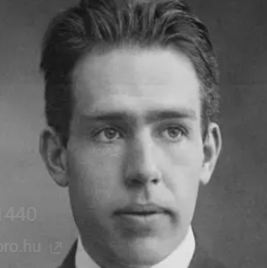
However far the phenomena transcend the scope of classical physical explanation, the account of all evidence must be expressed in classical terms. The argument is that simply by the word "experiment" we refer to a situation where we can tell others what we have done and what we have learned and that, therefore, the account of the experimental arrangement and of the results of the observations must be expressed in unambiguous language with suitable application of the terminology of classical physics.
▼
Source
Niels Bohr, "Discussions with Einstein on Epistemological Problems in Atomic Physics," in , Albert Einstein: Philosopher Scientist (1949) pp. 199-241.
4 months 2 weeks ago
[In the world below...] those who appear to have lived neither well not ill, go to the river Acheron, and mount such conveyances as they can get, and are carried in them to the lake, and there they dwell and are purified of their evil deeds, and suffer the penalty of the wrongs which they have done to others, and are absolved, and receive the rewards of their good deeds according to their deserts. But those who appear to be incurable by reason of the greatness of their crimes—who have committed many and terrible deeds of sacrilege, murders foul and violent, or the like—such are hurled into Tartarus, which is their suitable destiny, and they never come out. Those again who have committed crimes, which, although great, are not unpardonable—who in moment of anger, for example, have done violence to a father or a mother, and have repented for the remainder of their lives, or who have taken the life of another under like extenuating circumstances—these are plunged into Tartarus, the pains of which they are compelled to undergo for a year, but at the end of the year the wave casts them forth—mere homicides by way of Cocytus, patricides and matricides by Pyriphlegethon—and they are borne to the Acherusian Lake, and here they lift up their voices and call upon the victims whom they have slain or wronged, to have pity on them, and to receive them, and to let them come out of the river into the lake. And if they prevail, then they come forth and cease from their troubles; but if not, they are carried back again into Tartarus and from thence into the rivers unceasingly, until they obtain mercy from those whom they have wronged: for this is the sentence inflicted upon them by their judges.
CivilSimian.com created by AxiomaticPanic, CivilSimian, Kalokagathia