

6 months 3 weeks ago
That passivity was the essence of the problem. The human being was intended to be passive only in a condition of fatigue, and not always then. Too much passivity of body produced surplus fat, short-windedness, indigestion: passivity of mind produced the same symptoms on the mental level. a feeling of spiritual dyspepsia. Since the average human being has no purposes that are not connected with the activities of keeping alive, the black room was bound to produce passivity, increasing dullness, a state in which the mind is at once awake and static, motionless, stagnant. This sense of dullness was nothing less than the collapse of the sense of reality and of values, the retreat into one's inner world.
▼
Source
source
p. 72
6 months 3 weeks ago
Christians are beginning to lose the spirit of intolerance which animated them: experience has shown the error of the expulsion of the Jews from Spain, and of the persecution of those Christians in France whose belief differed a little from that of the king. They have realized that zeal for the advancement of religion is different from a due attachment to it; and that in order to love it and fulfill its behests, it is not necessary to hate and persecute those who are opposed to it.
▼
Source
source
No. 60. (Usbek writing to Ibben)

6 months 2 weeks ago
Women are never supposed to have any occupation of sufficient importance not to be interrupted, except "suckling their fools "; and women themselves have accepted this, have written books to support it, and have trained themselves so as to consider whatever they do as not of such value to the world or to others, but that they can throw it up at the first "claim of social life." They have accustomed themselves to consider intellectual occupation as a merely selfish amusement, which it is their " duty " to give up for every trifler more selfish than themselves.

7 months 1 day ago
If anyone comes to Me and does not hate his father and mother, wife and children, brothers and sisters, yes, and his own life also, he cannot be My disciple.
▼
Source
source
14:26
6 months 2 weeks ago
The family uses people, not for what they are, nor for what they are intended to be, but for what it wants them for - its own uses. It thinks of them not as what God has made them, but as the something which it has arranged that they shall be.

4 months 1 week ago
Were we directed from Washington when to sow and when to reap, we should soon want bread.
▼
Source
source
Autobiography (1821), reprinted in Basic Writings of Thomas Jefferson, ed. Philip S. Foner, New York: Wiley Book Company (1944} p. 464

8 months 4 days ago
Our greatest stupidities may be very wise.
▼
Source
source
p. 39e
6 months 3 weeks ago
The dominant, almost general, idea of revolution - particularly the Socialist idea - is that revolution is a violent change of social conditions through which one social class, the working class, becomes dominant over another class, the capitalist class. It is the conception of a purely physical change, and as such it involves only political scene shifting and institutional rearrangements. Bourgeois dictatorship is replaced by the "dictatorship of the proletariat" - or by that of its "advance guard," the Communist Party. Lenin takes the seat of the Romanovs, the Imperial Cabinet is rechristened Soviet of People's Commissars, Trotsky is appointed Minister of War, and a labourer becomes the Military Governor General of Moscow. That is, in essence, the Bolshevik conception of revolution, as translated into actual practice.

8 months 3 weeks ago
What is the use of believing, if the dost blaspheme? Thou adorest Him as Head, and dost blaspheme Him in His body. He loves His body. Thou canst cut thyself off from the body, but the Head does not detach itself from its body. "Thou dost honor me in vain," He cries from heaven, "thou dost honor Me in vain!" If someone wished to kiss thy cheek, but insisted at the same time on trampling thy feet; if with his hailed boots he were to crush thy feet as he tries to hold thy head and kiss thee, wouldst thou not interrupt his expression of respect and cry out: "What are thou doing, man? Thou art trampling upon me!" It is for this reason that before He ascended into heaven our Lord Jesus Christ recommended to us His body, by which He was to remain upon earth. For He foresaw that many would pay Him homage because of His glory in heaven, but that their homage would be vain, so long as they despise His members on earth.
▼
Source
source
(pp. 436-437)

6 months 1 week ago
The only significance of life consists in helping to establish the kingdom of God; and this can be done only by means of the acknowledgment and profession of the truth by each one of us. Chapter XII, Conclusion-Repent Ye, for the Kingdom of Heaven is at Hand Variant translation: The sole meaning of life is to serve humanity by contributing to the establishment of the kingdom of God, which can only be done by the recognition and profession of the truth by every man.



6 months 1 week ago
One can imagine a computer simulation of the action of peptides in the hypothalamus that is accurate down to the last synapse. But equally one can imagine a computer simulation of the oxidation of hydrocarbons in a car engine or the action of digestive processes in a stomach when it is digesting pizza. And the simulation is no more the real thing in the case of the brain than it is in the case of the car or the stomach. Barring miracles, you could not run your car by doing a computer simulation of the oxidation of gasoline, and you could not digest pizza by running the program that simulates such digestion. It seems obvious that a simulation of cognition will similarly not produce the effects of the neurobiology of cognition.
▼
Source
source
"Is the Brain's Mind a Computer Program?", Scientific American (January 1990).
9 months 1 week ago
A whole is that which has beginning, middle, and end.
6 months 4 days ago
It is hard to believe that this simple truth is not understood by those leaders who forbid their followers to use effective contraceptive methods. They express a preference for 'natural' methods of population limitation, and a natural method is exactly what they are going to get. It is called starvation.
▼
Source
source
Ch. 7. Family planning
7 months 2 weeks ago
We have two ears and one mouth, so we should listen more than we say.
▼
Source
source
As quoted in Diogenes Laërtius Lives and Opinions of Eminent Philosophers, vii. 23.

7 months 2 weeks ago
The heart of man is the place the devil dwells in; I feel sometimes a hell within myself.
▼
Source
source
Section 51
4 months 3 weeks ago
Whatever people do in the market economy, is the execution of their own plans. In this sense every human action means planning. What those calling themselves planners advocate is not the substitution of planned action for letting things go. It is the substitution of the planner's own plan for the plans of his fellow-men. The planner is a potential dictator who wants to deprive all other people of the power to plan and act according to their own plans. He aims at one thing only: the exclusive absolute pre-eminence of his own plan.

8 months 1 week ago
People who originally have no means but are ultimately able to earn a great deal, through whatever talents they may possess, almost always come to think that these are permanent capital and that what they gain through them is interest. Accordingly, they do not put aside part of their earnings to form a permanent capital, but spend their money as fast as they earn it. But they are then often reduced to poverty because their earnings decrease or come to an end after their talent, which was of a transitory nature, is exhausted, as happens, for example, in the case of almost all the fine arts; or because it could be brought to bear only under a particular set of circumstances that has ceased to exist.
▼
Source
source
E. Payne, trans. (1974) Vol. 1, p. 348
9 months 1 week ago
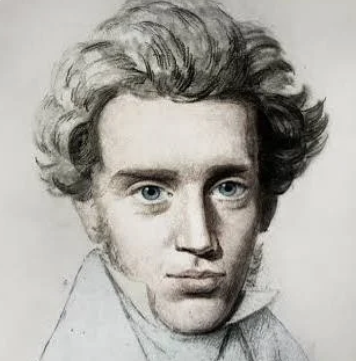
So it happens at times that a person believes that he has a world-view, but that there is yet one particular phenomenon that is of such a nature that it baffles the understanding, and that he explains differently and attempts to ignore in order not to harbor the thought that this phenomenon might overthrow the whole view, or that his reflection does not possess enough courage and resolution to penetrate the phenomenon with his world-view.
6 months 3 weeks ago
It cannot be sufficiently emphasized that revolution is in vain unless inspired by its ultimate ideal. Revolutionary methods must be in tune with revolutionary aims. The means used to further the revolution must harmonize with its purposes. In short, the ethical values which the revolution is to establish in the new society must be initiated with the revolutionary activities of the so-called transitional period. The latter can serve as a real and dependable bridge to the better life only if built of the same material as the life to be achieved.

7 months 4 weeks ago
Men have made an idol of luck as an excuse for their own thoughtlessness. Luck seldom measures swords with wisdom. Most things in life quick wit and sharp vision can set right.

8 months 1 week ago
Revolutions never go backwards.
▼
Source
source
p. 214
5 months 3 weeks ago
The student of development finds, not only that the chick commences its existence as an egg, primarily identical, in all essential respects, with that of the Dog, but that the yelk of this egg undergoes division-that the primitive groove arises, and that the contiguous parts of the germ are fashioned, by precisely similar methods into a young chick, which, at one stage of its existence, is so like the nascent Dog, that ordinary inspection would hardly distinguish the two.
▼
Source
source
The history of the development of any other vertebrate animal, Lizard, Snake, Frog, or Fish, tells the same story. Ch.2, p. 79
7 months 1 day ago
Can the children of the bridechamber mourn, as long as the bridegroom is with them? but the days will come, when the bridegroom shall be taken from them, and then shall they fast. No man putteth a piece of new cloth unto an old garment, for that which is put in to fill it up taketh from the garment, and the rent is made worse. Neither do men put new wine into old bottles: else the bottles break, and the wine runneth out, and the bottles perish: but they put new wine into new bottles, and both are preserved.
▼
Source
source
9:15-17 (KJV)
7 months 4 days ago
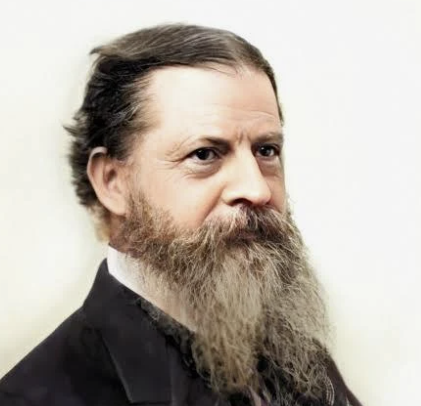
All nature abounds in proofs of other influences than merely mechanical action, even in the physical world. They crowd in upon us at the rate of several every minute. And my observation of men has led me to this little generalization. Speaking only of men who really think for themselves and not of mere reporters, I have not found that it is the men whose lives are mostly passed within the four walls of a physical laboratory who are most inclined to be satisfied with a purely mechanical metaphysics. On the contrary, the more clearly they understand how physical forces work the more incredible it seems to them that such action should explain what happens out of doors. A larger proportion of materialists and agnostics is to be found among the thinking physiologists and other naturalists, and the largest proportion of all among those who derive their ideas of physical science from reading popular books.
▼
Source
source
Lecture II : The Universal Categories, §3. Laws: Nominalism, CP 5.65

6 months 6 days ago
Faced with information overload, we have no alternative but pattern-recognition.
▼
Source
source
(p. 132)

7 months 4 days ago
"Neither this world, nor the next, nor happiness are for the being abandoned to doubt." - This point in the Gita is my death sentence.
4 months 1 week ago
If God holds all mankind guilty for the sin of Adam, if he has visited upon the innocent the punishment of the guilty, if he is to torture any single soul for ever, then it is wrong to worship him.
▼
Source
source
[Lectures and essays (1879), vol. 2, p. 224]

7 months 2 weeks ago
If all things are in common among friends, the most precious is Wisdom. What can Juno give which thou canst not receive from Wisdom? What mayest thou admire in Venus which thou mayest not also contemplate in Wisdom? Her beauty is not small, for the lord of all things taketh delight in her. Her I have loved and diligently sought from my youth up.
▼
Source
source
As quoted in Giordano Bruno : His Life and Thought (1950) by Dorothea Waley Singer

6 months 3 weeks ago
The pornographic face says nothing. It has no expressivity or mystery.
7 months 1 week ago
Speculative philosophy as the realisation of God is the positing of God, and at the same time his cancellation or negation; theism and at the same time atheism: for God - in the sense of theology - is God only as long as he is taken to be a being distinguished from and independent of the being of man as well as of nature. The theism that as the positing of God is simultaneously his negation or, conversely, as the negation of God equally his affirmation, is pantheism. Theological theism - that is, theism properly speaking - is nothing other than imaginary pantheism which itself is nothing other than real and true theism.
▼
Source
source
Part I, Section 14
8 months 1 week ago
Nature is no sentimentalist, - does not cosset or pamper us. We must see that the world is rough and surly, and will not mind drowning a man or a woman, but swallows your ships like a grain of dust. The cold, inconsiderate of persons, tingles your blood, benumbs your feet, freezes a man like an apple. The diseases, the elements, fortune, gravity, lightning, respect no persons.
▼
Source
source
p. 182
6 months 6 days ago
Either be silent or say something better than silence.
▼
Source
source
Maxim 960

5 months 4 days ago
The poor are thought to be dangerous, either morally dangerous because they are unproductive social parasites - thieves, prostitutes, drug addicts, and the like - or potentially dangerous because they are disorganized, unpredictable, and tendentially reactionary. In fact the term lumpenproletariat (or rad proletariat) has functioned for times to demonize the poor as a whole. ... The industrial reserve army is a constant threat hanging over the heads of the existing working class because, first of all, its misery serves as a terrifying example to workers of what could happen to them, and, second, the excess supply of labor it represents lowers the costs of labor and undermines workers' power against employers (by serving potentially as strike breakers, for example).
▼
Source
source
130


8 months 1 week ago
There is an almost universal tendency, perhaps an inborn tendency, to suspect the good faith of a man who holds opinions that differ from our own opinions. ... It obviously endangers the freedom and the objectivity of our discussion if we attack a person instead of attacking an opinion or, more precisely, a theory.
▼
Source
source
"The Importance of Critical Discussion" in On the Barricades: Religion and Free Inquiry in Conflict (1989) by Robert Basil
8 months 1 week ago
Discord which appears at first to be a lamentable breach and dissolution of the unity of a party, is really the crowning proof of its success.
▼
Source
source
§ 575
4 months 2 weeks ago
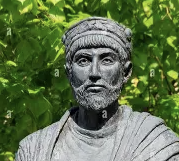
But how many are the final causes of union, the most beautiful, which this deity contains within himself? The Sun, that is, Apollo, is "Leader of the Muses;" and inasmuch as he completes our life with good order, he produces in the world Æsculapius; for even before the world was, he had the latter by his side. But were one to discuss the numerous other qualities belonging to this god, he would never arrive to the end of them.
5 months 3 weeks ago
It cannot be doubted, I think, that Mr. Darwin has satisfactorily proved that what he terms selection, or selective modification, must occur, and does occur, in nature; and he has also proved to superfluity that such selection is competent to produce forms as distinct, structurally, as some genera even are. If the animated world presented us with none but structural differences, I should have no hesitation in saying that Mr. Darwin has demonstrated the existence of a true physical cause, amply competent to account for the origin of living species, and of man among the rest.
▼
Source
source
Ch.2, p. 126

7 months 1 day ago
As also the great number of Corporations; which are as it were many lesser Common-wealths in the bowels of a greater, like wormes in the entrayles of a natural man.
▼
Source
source
The Second Part, Chapter 29, p. 174
5 months 1 day ago
Far from secularization inexorably leading to the death of religion, it has instead given birth to the search for new forms of religious life. The imminent victory of the Kingdom of Reason has never materialized. As a whole, mankind can never get rid of the need for religious self-identification: who am I, where did I come from, where do I fit in, why am I responsible, what does my life mean, how will I face death? Religion is a paramount aspect of human culture. Religious need cannot be excommunicated from culture by rationalist incantation. Man does not live by reason alone.
▼
Source
source
Interview with Nathan Gardels

8 months 1 week ago
The unconsciousness of man is the consciousness of God.
6 months 3 weeks ago
The Outsider's miseries are the prophet's teething pains. He retreats into his room, like a spider in a dark corner; he lives alone, wishes to avoid people.
▼
Source
source
Chapter Four The Attempt to Gain Control
4 months 3 weeks ago
It is, they say, not Russia that plans aggression but, on the contrary, the decaying capitalist democracies. Russia wants merely to defend its own independence. This is an old and well-tried method of justifying aggression. Louis XIV and Napoleon I, Wilhelm II and Hitler were the most peace-loving of all men. When they invaded foreign countries, they did so only in just self-defence. Russia was as much menaced by Estonia or Latvia as Germany was by Luxemburg or Denmark.
6 months 3 weeks ago
The God idea is growing more impersonal and nebulous in proportion as the human mind is learning to understand natural phenomena and in the degree that science progressively correlates human and social events.
7 months 4 days ago
Far from diminishing the appetite for power, suffering exasperates it; hence the mind feels more comfortable in the society of a braggart than in that of a martyr; and nothing is more repugnant to it than the spectacle of dying for an idea.
8 months 3 weeks ago
If you believe what you like in the gospels, and reject what you don't like, it is not the gospel you believe, but yourself.
▼
Source
source
Earliest attribution found in Who Said That?: More than 2,500 Usable Quotes and Illustrations (1995) by George Sweeting. Online sources always attribute the quote to Augustine, but never specify in which of his works it is to be found.

1 year 1 week ago
This is probably the fundamental dimension of 'ideology': ideology is not simply a 'false consciousness', an illusory representation of reality, it is rather this reality itself which is already to be conceived as 'ideological' - 'ideological' is a social reality whose very existence implies the non-knowledge of its participants as to its essence -that is, the social effectivity, the very reproduction of which implies that the individuals 'do not know what they are doing'. 'Ideological is not the false consciousness of a (social) being but this being itself in so far as it is supported by "false consciousness"'. Thus we have finally reached the dimension of the symptom, because one of its possible definitions would also be 'a formation whose very consistency implies a certain non-knowledge on the part of the subject': the subject can 'enjoy his symptom' only in so far as its logic escapes him - the measure of the success of its interpretation is precisely its dissolution.
CivilSimian.com created by AxiomaticPanic, CivilSimian, Kalokagathia