

7 months 3 days ago
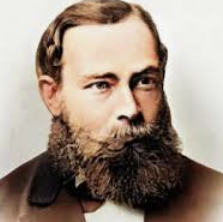
Gottlob Frege created modern logic including "for all," "there exists," and rules of proof. Leibniz and Boole had dealt only with what we now call "propositional logic" (that is, no "for all" or "there exists"). They also did not concern themselves with rules of proof, since their aim was to reach truth by pure calculation with symbols for the propositions. Frege took the opposite track: instead of trying to reduce logic to calculation, he tried to reduce mathematics to logic, including the concept of number.
▼
Source
source
Michael J. Beeson, "The Mechanization of Mathematics," in Alan Turing: Life and Legacy of a Great Thinker2004

7 months 3 days ago
Are ye also yet without understanding? Do not ye yet understand, that whatsoever entereth in at the mouth goeth into the belly, and is cast out into the draught? But those things which proceed out of the mouth come forth from the heart; and they defile the man. For out of the heart proceed evil thoughts, murders, adulteries, fornications, thefts, false witness, blasphemies: These are the things which defile a man: but to eat with unwashen hands defileth not a man.
▼
Source
source
15:16-20 (KJV)

8 months 1 week ago
His business is here, it is here that he is despised and vilified, it is here that he must carry out his undertaking.
▼
Source
source
p. 67

7 months 1 week ago
"Neither this world, nor the next, nor happiness are for the being abandoned to doubt." - This point in the Gita is my death sentence.
7 months 3 days ago
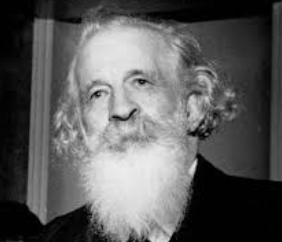
If I were asked to name the chief benefit of the house, I should say: the house shelters day-dreaming, the house protects the dreamer, the house allows one to dream in peace.
▼
Source
source
Ch. 1

8 months 1 week ago
The sins of the flesh are bad, but they are the least bad of all sins. All the worst pleasures are purely spiritual: the pleasure of putting other people in the wrong, of bossing and patronising and spoiling sport, and back-biting; the pleasures of power, of hatred. For there are two things inside me, competing with the human self which I must try to become. They are the Animal self, and the Diabolical self. The Diabolical self is the worse of the two. That is why a cold, self-righteous prig who goes regularly to church may be far nearer to hell than a prostitute. But, of course, it is better to be neither.
▼
Source
source
Book III, Chapter 5, "Sexual Morality"
9 months 1 week ago
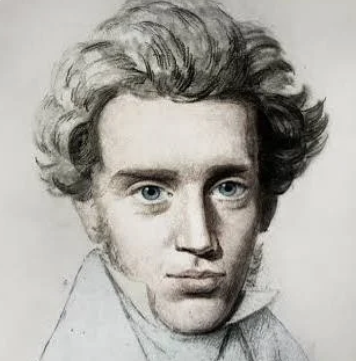
To the contemporary, Christ can only say: I will offer myself as a sacrifice for the sins of the world and for yours also. Is this easier to believe now than when he has done it, has offered himself? Or is the comfort greater because of his saying that he will do it than it is because of his having done it? There is no greater love than this, that someone lays down his life for another, but when is it easier to believe, and when is the comfort greater: when the loving one says he will do it, or when he has done it?
4 months 2 weeks ago
In reality, chivalry was animated by the impulse toward a 'traditional' restoration in the highest sense of the word, with the silent or explicit overcoming of the Christian religious spirit.
9 months 1 week ago
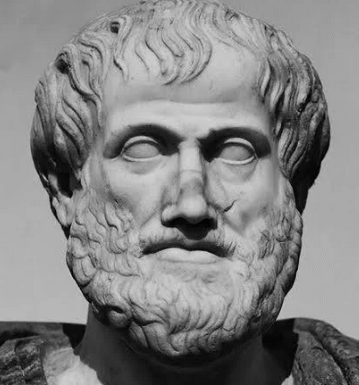
Concerning the generation of animals akin to them, as hornets and wasps, the facts in all cases are similar to a certain extent, but are devoid of the extraordinary features which characterize bees; this we should expect, for they have nothing divine about them as the bees have.

8 months 1 week ago
Daughters of Time, the hypocritic Days, Muffled and dumb like barefoot dervishes, And marching single in an endless file, Bring diadems and fagots in their hands.
▼
Source
source
Days
4 months 1 week ago
This book is not a biography; it is the confession of every man who struggles. In publishing it I have fulfilled my duty, the duty of a person who struggled much, was embittered in his life,


6 months 2 weeks ago
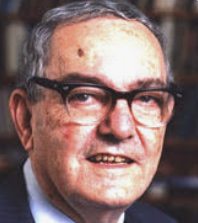
The function of knowledge in the decision-making process is to determine which consequences follow upon which of the alternative strategies. It is the task of knowledge to select from the whole class of possible consequences a more limited subclass, or even (ideally) a single set of consequences correlated with each strategy.
▼
Source
source
p. 78.
8 months 2 weeks ago
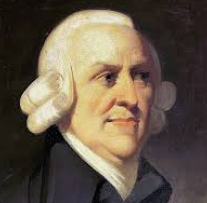
By nature a philosopher is not in genius and disposition half so different from a street porter, as a mastiff is from a greyhound.
▼
Source
source
Chapter II, p. 17.
7 months 3 days ago
Did ye never read in the scriptures, The stone which the builders rejected, the same is become the head of the corner: this is the Lord's doing, and it is marvellous in our eyes? Therefore say I unto you, The kingdom of God shall be taken from you, and given to a nation bringing forth the fruits thereof. And whosoever shall fall on this stone shall be broken: but on whomsoever it shall fall, it will grind him to powder.
▼
Source
source
21:27-42 and 44 (KJV)
7 months 1 week ago
If we could sleep twenty-four hours a day, we would soon return to the primordial slime, the beatitude of that perfect torpor before Genesis-the dream of every consciousness sick of itself.

7 months 1 week ago
The recognition by one person of another's personality takes place by means to some extent identical to the means by which he is conscious of his own personality. The idea of the second personality, which is as much as to say that second personality itself, enters within the direct consciousness of the first person, and is immediately perceived as his ego, though less strongly. At the same time, the opposition between the two persons is perceived, so that the externality of the second is perceived.

8 months 1 week ago
There are, besides, eternal truths, such as Freedom, Justice, etc., that are common to all states of society. But Communism abolishes eternal truths, it abolishes all religion, and all morality, instead of constituting them on a new basis; it therefore acts in contradiction to all past historical experience.
▼
Source
source
Section 2, paragraph 63

9 months 1 week ago
All systems of morality are based on the idea that an action has consequences that legitimize or cancel it. A mind imbued with the absurd merely judges that those consequences must be considered calmly. It is ready to pay up. In other words, there may be responsible persons, but there are no guilty ones, in its opinion. At very most, such a mind will consent to use past experience as a basis for its future actions.
9 months 1 week ago
The least initial deviation from the truth is multiplied later a thousandfold.
4 months 3 weeks ago
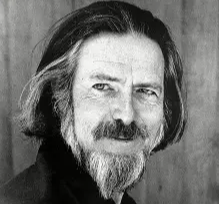
Speaking as of today, I do not consider it intellectually respectable to be a partisan in matters of religion. I see religion as I see such other basic fascinations as art and science, in which there is room for many different approaches, styles, techniques, and opinions. Thus I am not formally a committed member of any creed or sect and hold no particular religious view or doctrine as absolute. I deplore missionary zeal, and consider excessive dedication to and advocacy of any particular religion, as either the best or the only true way, an almost irreligious arrogance. Yet my work and my life are fully concerned with religion, and the mystery of being is my supreme fascination, though, as a shameless mystic, I am more interested in religion as feeling and experience than as conception and theory.
▼
Source
source
p. 61
4 months 1 week ago
There is only one woman in the world. One woman, with many faces.
▼
Source
source
This occurs in the film The Last Temptation of Christ (1988), based upon the novel by Kazantzakis, but has not been located in the novel itself.
5 months ago
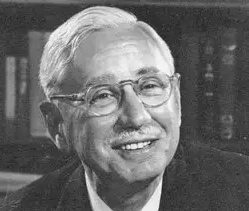
Middle age begins with marriage; for then work and responsibility replace carefree play, passion surrenders to the limitations of social order, and poetry yields to prose.
▼
Source
source
Ch. 3 : On Middle Age

8 months 1 week ago
It is a bad thing to perform menial duties even for the sake of freedom; to fight with pinpricks, instead of with clubs. I have become tired of hypocrisy, stupidity, gross arbitrariness, and of our bowing and scraping, dodging, and hair-splitting over words. Consequently, the government has given me back my freedom.
▼
Source
source
Letter from Marx to Arnold Ruge (25 January 1843)
5 months 5 days ago
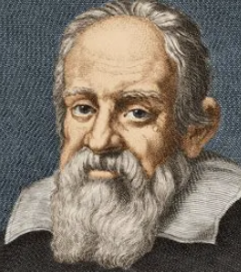
I am certainly interested in a tribunal in which, for having used my reason, I was deemed little less than a heretic. Who knows but men will reduce me from the profession of a philosopher to that of historian of the Inquisition! But they behave to me in order that I may become the ignoramus and the fool of Italy...
▼
Source
source
p. 244

8 months 1 week ago
"What is meant by saying that my choice of which way to walk home after the lecture is ambiguous and matter of chance?...It means that both Divinity Avenue and Oxford Street are called but only one, and that one either one, shall be chosen.
▼
Source
source
The Dilemma of Determinism (1884) p.155

7 months 1 week ago
Law and arbitrary power are in eternal enmity. Name me a magistrate, and I will name property; name me power, and I will name protection. It is a contradiction in terms, it is blasphemy in religion, it is wickedness in politics, to say that any man can have arbitrary power. In every patent of office the duty is included. For what else does a magistrate exist? To suppose for power is an absurdity in idea. Judges are guided and governed by the eternal laws of justice, to which we are all subject. We may bite our chains, if we will, but we shall be made to know ourselves, and be taught that man is born to be governed by law; and he that will substitute will in the place of it is an enemy to God.
▼
Source
source
Speech in opening the impeachment of Warren Hastings (16 February 1788), quoted in The Works of the Right Honourable Edmund Burke, Volume the Ninth (1899), p. 458

6 months 2 weeks ago
Once we know our weaknesses they cease to do us any harm.
▼
Source
source
D 5
7 months 1 week ago
When you know that every problem is only a false problem, you are dangerously close to salvation.
5 months 5 days ago
We do not have and cannot have any means of discovering whether or not we are carried along in a uniform motion of translation.
▼
Source
source
L'état actuel et l'avenir de la physique mathematique

6 months 3 weeks ago
A society like the Church, which claims to be Divine is perhaps more dangerous on account of the ersatz good which it contains then on account of the evil which sullies it. Something of the social labelled divine: an intoxicating mixture which carries with it every sort of license.
▼
Source
source
Devil disguised. p. 122

9 months ago
The wise is one only. It is unwilling and willing to be called by the name of Zeus.

8 months 1 week ago
The possession and the exercise of political, and among others of electoral, rights, is one of the chief instruments both of moral and of intellectual training for the popular mind; and all governments must be regarded as extremely imperfect, until every one who is required to obey the laws, has a voice, or the prospect of a voice, in their enactment and administration.
▼
Source
source
Thoughts on Parliamentary Reform (1859), p. 22
8 months 1 week ago
It costs a beautiful person no exertion to paint her image on our eyes; yet how splendid is that benefit! It costs no more for a wise soul to convey his quality to other men.
▼
Source
source
Uses of Great Men
8 months 1 week ago
Religious suffering is, at one and the same time, the expression of real suffering and a protest against real suffering. Religion is the sigh of the oppressed creature, the heart of a heartless world, and the soul of soulless conditions. It is the opium of the people.The abolition of religion as the illusory happiness of the people is the demand for their real happiness. To call on them to give up their illusions about their condition is to call on them to give up a condition that requires illusions. The criticism of religion is, therefore, in embryo, the criticism of that vale of tears of which religion is the halo.Criticism has plucked the imaginary flowers on the chain not in order that man shall continue to bear that chain without fantasy or consolation, but so that he shall throw off the chain and pluck the living flower.

4 months 1 week ago
As the entire middle class, the bourgeois and petty bourgeois intelligentsia, boycotted the Soviet government for months after the October Revolution and crippled the railroad, post and telegraph, and educational and administrative apparatus, and, in this fashion, opposed the workers government, naturally all measures of pressure were exerted against it. These included the deprivation of political rights, of economic means of existence, etc., in order to break their resistance with an iron fist. It was precisely in this way that the socialist dictatorship expressed itself, for it cannot shrink from any use of force to secure or prevent certain measures involving the interests of the whole.

7 months 3 days ago
Desire, to know why, and how, CURIOSITY; such as is in no living creature but Man; so that Man is distinguished, not only by his Reason; but also by this singular Passion from other Animals; in whom the appetite of food, and other pleasures of Sense, by predominance, take away the care of knowing causes; which is a Lust of the mind, that by a perseverance of delight in the continual and indefatigable generation of Knowledge, exceedeth the short vehemence of any carnal Pleasure.
▼
Source
source
The First Part, Chapter 6, p. 26
9 months 1 week ago
He realized now that to be afraid of this death he was staring at with animal terror meant to be afraid of life. Fear of dying justified a limitless attachment to what is alive in man. And all those who had not made the gestures necessary to live their lives, all those who feared and exalted impotence — they were afraid of death because of the sanction it gave to a life in which they had not been involved. They had not lived enough, never having lived at all.
8 months 1 week ago
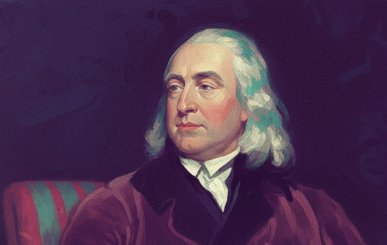
Liberty therefore not being more fit than other words in some of the instances in which it has been used, and not so fit in others, the less the use that is made of it the better. I would no more use the word liberty in my conversation when I could get another that would answer the purpose, than I would brandy in my diet, if my physician did not order me: both cloud the understanding and inflame the passions.
▼
Source
source
Jeremy Bentham, quoted in P. J. Kelly, Utilitarianism and Distributive Justice: Jeremy Bentham and the Civil Law, Oxford, 1990, p. 96

8 months 1 week ago
Since Adam and Eve ate the apple, man has never refrained from any folly of which he was capable. The End.
▼
Source
source
Full text of Russell's book History of the World in Epitome , written in 1959

4 months 2 weeks ago
For a long time there have been no true sovereigns, monarchs by divine right capable of wielding sword and scepter, and symbols of a higher human ideal. More than a century ago, Juan Donoso Cortés stated that no kings existed capable of proclaiming themselves as such except "by the will of the nation," adding that, even if any had existed, they would not have been recognized. The few monarchies still surviving are notoriously impotent and empty, while the traditional nobility has lost its essential character as a political class and any existential prestige and rank along with it. Its current representatives may still interest our contemporaries when put on the same plane as film actors and actresses, sport heroes and opera stars, and when through some private, sentimental, or scandalous chance, they serve as fodder for magazine articles.
▼
Source
source
p. 172

6 months 3 weeks ago
I hope I shall never live to see Anarchism become thoroughly respectable, for then I shall have to look for a new ideal.
▼
Source
source
Letter to Helen Keller (1916), published by "The American Foundation for the Blind"

8 months 1 week ago
Wherever Law ends, Tyranny begins.
▼
Source
source
Second Treatise of Government, Sec. 202
CivilSimian.com created by AxiomaticPanic, CivilSimian, Kalokagathia