



9 months 1 week ago
The slave begins by demanding justice and ends by wanting to wear a crown. He must dominate in his turn.

6 months 2 weeks ago
There are people who possess not so much genius as a certain talent for perceiving the desires of the century, or even of the decade, before it has done so itself.
▼
Source
source
D 70

8 months 6 days ago
What is troubling us is the tendency to believe that the mind is like a little man within.
▼
Source
source
Remarks to John Wisdom, quoted in Zen and the Work of WIttgenstein by Paul Weinpaul in The Chicago Review Vol. 12, (1958), p. 70
8 months 6 days ago
A new word is like a fresh seed sown on the ground of the discussion.

5 months 2 weeks ago
In ancient Europe, Stoics asserted that a slave could be freer than a master who suffers from self-division. In China, Daoists imagined a type of sage who responded to the flow of events without weighing alternatives. Disciples of monotheistic faiths have believed something similar: freedom, they say, is obeying God's will. What those who follow these traditions want most is not any kind of freedom of choice. Instead, what they long for is freedom from choice.
▼
Source
source
The Faith of Puppets: The Freedom of the Marionette (p. 6-7)
7 months 1 week ago
All religions, with their gods, their demigods, and their prophets, their messiahs and their saints, were created by the credulous fancy of men who had not attained the full development and full possession of their faculties. Consequently, the religious heaven is nothing but a mirage in which man, exalted by ignorance and faith, discovers his own image, but enlarged and reversed - that is, divinized. The history of religion, of the birth, grandeur, and decline of the gods who have succeeded one another in human belief, is nothing, therefore, but the development of the collective intelligence and conscience of mankind.
8 months 1 day ago
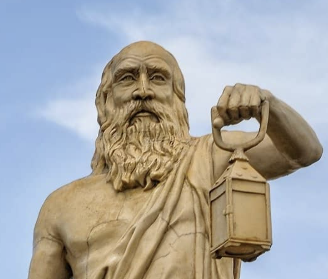
When the slave auctioneer asked in what he was proficient, he replied, "In ruling people."
▼
Source
source
Diogenes Laërtius, vi. 74

6 months 3 days ago
The university, in a society ruled by public opinion, was to have been an island of intellectual freedom where all views were investigated without restriction. ... But by consenting to play an active or "positive," a participatory role in society, the university has become inundated and saturated with the backflow of society's "problems." Preoccupied with questions of Health, Sex, Race, War, academics make their reputations and their fortunes. ... Any proposed reforms of liberal education which might bring the university into conflict with the whole of the U.S.A. are unthinkable. Increasingly, the people "inside" are identical in their appetites and motives with the people "outside" the university.
▼
Source
source
p. 18

7 months 1 week ago
In an article published in The Monist for January, 1891, I endeavored to show what ideas ought to form the warp of a system of philosophy, and particularly emphasized that of absolute chance. In the number of April, 1892, I argued further in favor of that way of thinking, which it will be convenient to christen tychism (from τύχη, chance). A serious student of philosophy will be in no haste to accept or reject this doctrine; but he will see in it one of the chief attitudes which speculative thought may take, feeling that it is not for an individual, nor for an age, to pronounce upon a fundamental question of philosophy. That is a task for a whole era to work out. I have begun by showing that tychism must give birth to an evolutionary cosmology, in which all the regularities of nature and of mind are regarded as products of growth, and to a Schelling-fashioned idealism which holds matter to be mere specialized and partially deadened mind.


8 months 2 weeks ago
Valor is stability, not of legs and arms, but of courage and the soul.
5 months 5 days ago
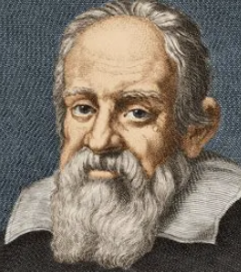
In the long run my observations have convinced me that some men, reasoning preposterously, first establish some conclusion in their minds which, either because of its being their own or because of their having received it from some person who has their entire confidence, impresses them so deeply that one finds it impossible ever to get it out of their heads. Such arguments in support of their fixed idea as they hit upon themselves or hear set forth by others, no matter how simple and stupid these may be, gain their instant acceptance and applause. On the other hand whatever is brought forward against it, however ingenious and conclusive, they receive with disdain or with hot rage - if indeed it does not make them ill. Beside themselves with passion, some of them would not be backward even about scheming to suppress and silence their adversaries.
▼
Source
source
p. 322
6 months 3 days ago
There is only one way to defeat the enemy, and that is to write as well as one can. The best argument is an undeniably good book.
▼
Source
source
Quoted by Granville Hicks in The Living Novel: A Symposium (Macmillan, 1957; digitized version in 2006), p. ix
5 months 6 days ago
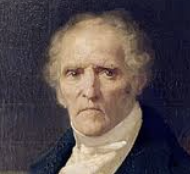
When we see civilization elated with this declining and decrepit phase of its career, we are reminded of a faded belle who, boasting of her attractions in her fiftieth year, excites at once the remark that she was fairer at twenty-five. So it is with civilization, which, dreaming of perfection and progress, is constantly deteriorating, and which will find but too soon in its industrial achievements new sources of political oppression, crimes and commotions.

6 months 3 weeks ago
Man is said to be a reasoning animal. I do not know why he has not been defined as an affective or feeling animal. Perhaps that which differentiates him from other animals is feeling rather than reason. More often I have seen a cat reason than laugh or weep. Perhaps it weeps or laughs inwardly - but then perhaps, also inwardly, the crab resolves equations of the second degree.

8 months 1 week ago
By necessity, by proclivity, and by delight, we all quote.
▼
Source
source
Quotation and Originality
8 months 1 week ago
Blessed are those who have no talent!
▼
Source
source
February 1850
8 months 1 week ago
Solvency is maintained by means of the national debt, on the principle, "If you will not lend me the money, how can I pay you?"
▼
Source
source
Ability
9 months 1 week ago
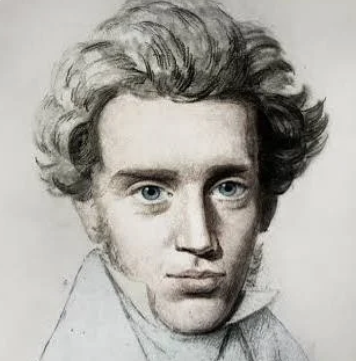
There is no one at the Communion table who retains against you even the least of your sins, no one, unless you yourself do it. So cast them away from yourself, and the recollection of them, lest in it your retain them; and cast the recollection of your having cast your sins away, lest in it you retain them.
4 months 1 week ago
'Natural History' ought to form a part of intellectual education, in order to correct certain prejudices which arise from cultivating the intellect by means of mathematics alone and in order to lead the student to see that the division of things into kinds, and the attribution and use of names, are processes susceptible of great precision.

7 months 1 week ago
There are no solutions, only cowardice masquerading as such.


9 months 1 week ago
In the world of today can there be peace anywhere until there is peace everywhere?

7 months 1 day ago
To imagine that Caesar aspired to do something in the way Alexander did it - and this is what almost all historians have believed - is definitely to give up trying to understand him. Caesar is very nearly the opposite of Alexander. ...[I]t is not merely a universal kingdom that Caesar has in view. His purpose is a deeper one. He wants a Roman empire which does not live on Rome, but on the periphery, on the provinces, and this implies the complete supersession of the City-State. It implies a State in which the most diverse peoples collaborate, in regard to which all feel solidarity.
▼
Source
source
Chapter XIV: Who Rules The World?

6 months 3 weeks ago
Self-expression is impossible in relation with other men; their self-expression interferes with it. The greatest heights of self-expression in poetry, music, painting - are achieved by men who are supremely alone.
▼
Source
source
Chapter Eight, The Outsider as a Visionary
4 months 1 day ago
Besides agreeing with the aims of vegetarianism for aesthetic and moral reasons, it is my view that a vegetarian manner of living by its purely physical effect on the human temperament would most beneficially influence a lot of mankind.

4 months 1 week ago
When you wake up in the morning, tell yourself: The people I deal with today will be meddling, ungrateful, arrogant, dishonest, jealous, and surly. They are like this because they can't tell good from evil. (Hays translation) Say to yourself in the early morning: I shall meet today inquisitive, ungrateful, violent, treacherous, envious, uncharitable men. All these things have come upon them through ignorance of real good and ill.
▼
Source
source
II, 1
8 months 2 weeks ago
He that defers his charity 'till he is dead, is (if a man weighs it rightly) rather liberal of another man's, than of his own.
▼
Source
source
Ornamenta Rationalia, [§55]

8 months 1 week ago
I am looking forward very much to getting back to Cambridge, and being able to say what I think and not to mean what I say: two things which at home are impossible. Cambridge is one of the few places where one can talk unlimited nonsense and generalities without anyone pulling one up or confronting one with them when one says just the opposite the next day.
▼
Source
source
Letter to Alys Pearsall Smith (1893); published in The Selected Letters of Bertrand Russell, Volume 1: The Private Years (1884-1914), edited by Nicholas Griffin

8 months 5 days ago
In its most general form, confinement was explained, or at least justified, by a will to avoid scandal. It thereby signalled an important change in the consciousness of evil. The Renaissance had let unreason in all its forms come out into the light of day, as public exposure gave evil the chance to redeem itself and to serve as an exemplum.
▼
Source
source
Part One: 5. The Insane
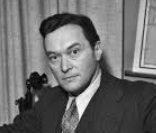
5 months 1 week ago
In a free society the state does not administer the affairs of men. It administers justice among men who conduct their own affairs.
▼
Source
source
Ch. XII: "The Political Principles of Liberalism", §6, p. 267
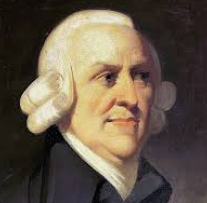
8 months 2 weeks ago
Poor David Hume is dying very fast, but with great cheerfulness and good humour and with more real resignation to the necessary course of things then any whining Christian ever dyed with pretended resignation to the will of God.
▼
Source
source
Letter to Alexander Wedderburn 14 August 1776. The Correspondence of Adam Smith edited by E.C. Mossner and Ian Simpson Ross, 2nd edition, Oxford University Press 1986. The Future Hope in Adam Smith's System, Paul Oslington
8 months 2 weeks ago
The proposal of any new law or regulation of commerce which comes from this order, ought always to be listened to with great precaution, and ought never to be adopted till after having been long and carefully examined, not only with the most scrupulous, but with the most suspicious attention. It comes from an order of men, whose interest is never exactly the same with that of the public, who have generally an interest to deceive and even to oppress the public, and who accordingly have, upon many occasions, both deceived and oppressed it.
▼
Source
source
Chapter XI, Part III, Conclusion of the Chapter, p. 292.
7 months 1 week ago
Mind, even more deadly to empires than to individuals, erodes them, compromises their solidity.

4 months 1 week ago
The selfish spirit of commerce knows no country, and feels no passion or principle but that of gain.
▼
Source
source
Letter to Larkin Smith

5 months 2 days ago
Philosophy complains that Custom has hoodwinked us, from the first; that we do everything by Custom, even Believe by it; that our very Axioms, let us boast of Free-thinking as we may, are oftenest simply such Beliefs as we have never heard questioned. Nay, what is Philosophy throughout but a continual battle against Custom; an ever-renewed effort to transcend the sphere of blind Custom, and so become Transcendental?
▼
Source
source
Bk. III, ch. 8.
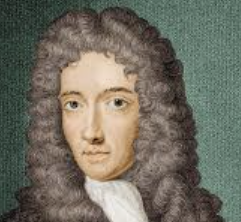
4 months 1 week ago
I am glad (sayes Eleutherius) to see the Vanity or Envy of the canting Chymists thus discover'd and chastis'd; and I could wish, that Learned Men would conspire together to make these deluding Writers sensible, that they must no longe[r] hope with Impunity to abuse the World. For whilst such Men are quietly permitted to publish Books with promising Titles, and therein to Assert what they please, and contradict others, and ev'n themselves as they please, with as little danger of being confuted as of being understood, they are encourag'd to get themselves a name, at the cost of the Readers, by finding that intelligent Men are wont for the reason newly mention'd, to let their Books and Them alone: And the ignorant and credulous (of which the number is still much greater then that of the other) are forward to admire most what they least understand.

8 months 1 week ago
It is the nature and intention of a constitution to prevent governing by party, by establishing a common principle that shall limit and control the power and impulse of party, and that says to all parties, thus far shalt thou go and no further. But in the absence of a constitution, men look entirely to party; and instead of principle governing party, party governs principle.

8 months 2 weeks ago
For the history of the centuries that have passed since the birth of Christ nowhere reveals conditions like those of the present. There has never been such building and planting in the world. There has never been such gluttonous and varied eating and drinking as now. Wearing apparel has reached its limit in costliness. Who has ever heard of such commerce as now encircles the earth? There have arisen all kinds of art and sculpture, embroidery and engraving, the like of which has not been seen during the whole Christian era. In addition men are so delving into the mysteries of things that today a boy of twenty knows more than twenty doctors formerly knew.
▼
Source
source
Sermon for the Second Sunday in Advent, Luke 21:25-36 (1522), as translated in The Precious and Sacred Writings of Martin Luther (1905) edited by John Nicholas Lenker
9 months 1 week ago
Outside intelligences, exploring the Solar System with true impartiality, would be quite likely to enter the Sun in their records thus: Star X, spectral class G0, 4 planets plus debris.
4 months 3 weeks ago
It is the greatest of all mistakes to do nothing because you can only do little.
▼
Source
source
Lecture XIX : On the Conduct of the Understanding, Part II

8 months 3 weeks ago
People travel to wonder at the height of mountains, at the huge waves of the sea, at the long courses of rivers, at the vast compass of the ocean, at the circular motion of the stars; and they pass by themselves without wondering.
▼
Source
source
Variant: Men go abroad to admire the heights of mountains, the mighty billows of the sea, the broad tides of rivers, the compass of the ocean, and the circuits of the stars, and pass themselves by. X
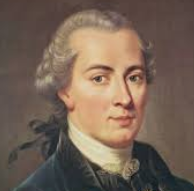
8 months 1 week ago
Newton... (after having remarked that geometry only requires two of the mechanical actions which it postulates, namely, to describe a straight line and a circle) says: geometry is proud of being able to achieve so much while taking so little from extraneous sources. One might say of metaphysics, on the other hand: it stands astonished, that with so much offered it by pure mathematics it can effect so little. In the meantime, this little is something which mathematics indispensably requires in its application to natural science, which, inasmuch as it must here necessarily borrow from metaphysics, need not be ashamed to allow itself to be seen in company with the latter.
▼
Source
source
Preface, Tr. Bax (1883) citing Isaac Newton's Principia
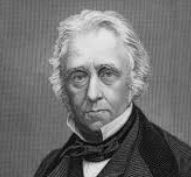
5 months 4 weeks ago
Let us remember that the government and the society act and react on each other. Sometimes the government is in advance of the society, and hurries the society forward. So urged, the society gains on the government, comes up with the government, outstrips the government, and begins to insist that the government shall make more speed. If the government is wise, it will yield to that just and natural demand. The great cause of revolutions is this, that, while nations move onward, constitutions stand still. The peculiar happiness of England is that here, through many generations, the constitution has moved onward with the nation.
▼
Source
source
Speech in the House of Commons on the Reform Bill (5 July 1831), quoted in Speeches of the Right Honourable T. B. Macaulay, M.P. (1854), p. 25
5 months 2 days ago
My father's education was altogether of the worst and most limited. I believe he was never more than three months at any school. What he learned there showed what he might have learned. A solid knowledge of arithmetic, a fine antique handwriting - these, with other limited practical etceteras, were all the things he ever heard mentioned as excellent. He had no room to strive for more.

CivilSimian.com created by AxiomaticPanic, CivilSimian, Kalokagathia