



6 days ago
The teachers are everywhere. What is wanted is a learner.
▼
Source
source
"Healing"

6 days ago
You say that I have been dished up to you as an antifederalist, and ask me if it be just. My opinion was never worthy enough of notice to merit citing; but since you ask it I will tell it you. I am not a Federalist, because I never submitted the whole system of my opinions to the creed of any party of men whatever in religion, in philosophy, in politics, or in anything else where I was capable of thinking for myself. Such an addiction is the last degradation of a free and moral agent. If I could not go to heaven but with a party, I would not go there at all. Therefore I protest to you I am not of the party of federalists. But I am much farther from that than of the Antifederalists.
▼
Source
source
Letter to Francis Hopkinson
6 days ago
The naturalists, you know, distribute the history of nature into three kingdoms or departments: zoology, botany, mineralogy. Ideology, or mind, however, occupies so much space in the field of science, that we might perhaps erect it into a fourth kingdom or department. But inasmuch as it makes a part of the animal construction only, it would be more proper to subdivide zoology into physical and moral.
▼
Source
source
Thomas Jefferson, Letter (24 Mar 1824) to Mr. Woodward. Collected in The Writings of Thomas Jefferson: Correspondence (1854), 339.
3 months 4 days ago
Every political good carried to the extreme must be productive of evil.
▼
Source
source
The French Revolution, Bk. V, ch. 4

4 months 5 days ago
What do I care about Jupiter? Justice is a human issue, and I do not need a god to teach it to me.
▼
Source
source
Orestes, Act 2
4 months 3 weeks ago
If what the philosophers say be true,—that all men's actions proceed from one source; that as they assent from a persuasion that a thing is so, and dissent from a persuasion that it is not, and suspend their judgment from a persuasion that it is uncertain, so likewise they seek a thing from a persuasion that it is for their advantage.
▼
Source
source
Book I, ch. 18, 1.

3 weeks 6 days ago
Yet with every allowance, one feels it difficult to see how any mortal ever could consider this Koran as a Book written in Heaven, too good for the Earth; as a well-written book, or indeed as a book at all; and not a bewildered rhapsody; written, so far as writing goes, as badly as almost any book ever was!

2 months 3 weeks ago
I must avert here once again to my view of the opposition that exists between individuality and personality, notwithstanding the fact that the one demands the other. Individuality is, if I may so express it, the container or thing which contains, personality the content or thing contained, or I might say that my personality is in a certain sense my comprehension, that which I comprehend or embrace within myself - which is in a certain way the whole Universe - and that my individuality is my extension; the one my infinite, the other my finite.
5 months 1 week ago
But it is clear there is a difference in the ends proposed: for in some cases they are activities, and in others results beyond the mere activities, and where there are certain ends beyond and beside the actions, the results are naturally superior to the activities. Now, as there are numerous kinds of actions and numerous arts and sciences, it follows that the ends are also various. Thus the end of the healing art is health, of ship-building ships, of strategy victory, of economy wealth.

4 months 1 week ago
The Austrians are a highly civilised race, half-surrounded by Slavs in a relatively backward state of culture. ... Servia, a country so barbaric that a man can secure the throne by instigating the assassination of his predecessor, is engaged constantly in fermenting the racial discontent of men of the same race who are Austrian subjects.
▼
Source
source
War: The Offspring of Fear (1914), quoted in Ray Monk, Bertrand Russell: The Spirit of Solitude, 1872-1921 (1996), p. 373
3 months 3 weeks ago
The distance between oneself and other persons and other species can fall anywhere on a continuum. Even for other persons the understanding of what it is like to be them is only partial, and when one moves to species very different from oneself, a lesser degree of partial understanding may still be available. The imagination is remarkably flexible. My point, however, is not that we cannot know what it is like to be a bat. I am not raising that epistemological problem. My point is rather that even to form a conception of what it is like to be a bat and a fortiori to know what it is like to be a bat, one must take up the bat's point of view.
▼
Source
source
p. 172, note 8.
1 month 2 weeks ago
I wonder why I bother to tell the truth when people ask me what I think of this and that and how I feel about this and that. I get so complicated and introspective that people often don't understand and are frankly puzzled and (naturally enough) bored. So why bother! It would be so much easier to say what they expected you to, and everything would be easy and pleasant.

4 months 1 week ago
Sphere Music - Some sounds seem to reverberate along the plain, and then settle to earth again like dust; such are Noise, Discord, Jargon. But such only as spring heavenward, and I may catch from steeples and hilltops in their upward course, which are the more refined parts of the former, are the true sphere music - pure, unmixed music - in which no wail mingles.
▼
Source
source
August 5, 1838
4 months 3 weeks ago
What! You would convict me from my own words, and bring against me what I had said or written elsewhere. You may act in that manner with those who dispute by established rules. We live from hand to mouth, and say anything that strikes our mind with probability, so that we are the only people who are really at liberty.
▼
Source
source
Book 5 Section 11

4 months 1 week ago
What a noble privilege is it of human reason to attain the knowledge of the supreme Being; and, from the visible works of nature, be enabled to infer so sublime a principle as its supreme Creator? But turn the reverse of the medal. Survey most nations and most ages. Examine the religious principles, which have, in fact, prevailed in the world. You will scarcely be persuaded, that they are any thing but sick men's dreams: Or perhaps will regard them more as the playsome whimsies of monkies in human shape, than the serious, positive, dogmatical asseverations of a being, who dignifies himself with the name of rational.
▼
Source
source
Part XV - General corollary
4 months 3 weeks ago
Christ is not valued at all unless He be valued above all.
▼
Source
source
p. 395
3 days ago
Never let the future disturb you. You will meet it, if you have to, with the same weapons of reason which today arm you against the present.
▼
Source
source
VII, 8 (Penguin Classics edition of Meditations, translated by Maxwell Staniforth)

4 months 6 days ago
A thing forgotten on one day will be remembered on the next. Something we have made the most strenuous efforts to recall, but all in vain, will, soon after... saunter into the mind... The sphere of possible recollection may be wider than we think, and... apparent oblivion is no proof against possible recall under other conditions.
▼
Source
source
Ch. 16
2 months 1 week ago
The sense in which an automatic door "understands instructions" from its photoelectric cell is not at all the sense in which I understand English.
3 days ago
Keep this thought handy when you feel a bit of rage coming on - it isn't manly to be enraged. Rather, gentleness and civility are more human, and therefore manlier. A real person doesn't give way to anger and discontent, and such a person has strength, courage, and endurance - unlike the angry and complaining. The nearer a man comes to a calm mind, the closer he is to strength.
▼
Source
source
XI 11.18.5b:41

3 months 3 weeks ago
Throw moderation to the winds, and the greatest pleasures bring the greatest pains.

4 months 5 days ago
And then one babbles - 'if only I could bear it, or the worst of it, or any of it, instead of her.' But one can't tell how serious that bid is, for nothing is staked on it. If it suddenly became a real possibility, then, for the first time, we should discover how seriously we had meant it. But is it ever allowed? It was allowed to One, we are told, and I find I can now believe again, that He has done vicariously whatever can be done. He replies to our babble, 'you cannot and dare not. I could and dared.'
4 months 1 week ago
As the biggest library if it is in disorder is not as useful as a small but well-arranged one, so you may accumulate a vast amount of knowledge but it will be of far less value to you than a much smaller amount if you have not thought it over for yourself; because only through ordering what you know by comparing every truth with every other truth can you take complete possession of your knowledge and get it into your power. You can think about only what you know, so you ought to learn something; on the other hand, you can know only what you have thought about.
▼
Source
source
Vol. 2, Ch. 22, § 257 "On Thinking for Yourself" as translated in Essays and Aphorisms(1970) as translated by R. J. Hollingdale
3 days ago
Art thy not content that thou hast done something conformable to thy nature, and dost thou seek to be paid for it? Just as if the eye demanded recompense for seeing, or the feet for walking. For as these members are formed for a particular purpose... so also is man formed by nature to acts of benevolence.
▼
Source
source
IX, 42
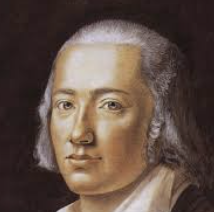
3 months 1 week ago
You seek life, and a godly fire Gushes and gleams for you out of the earth, As, with shuddering long, you Hurl yourself down to the flames of the Etna. So by a queen's wanton whim Pearls were dissolved in wine- heed her not! What folly, poet, to cast your riches Into that bright and bubbling cup! Yet still are you holy to me, as the might of the earth That bore you away, audaciously perishing! And I would follow the hero into the depths Did love not hold me.
▼
Source
source
"Empedokles"
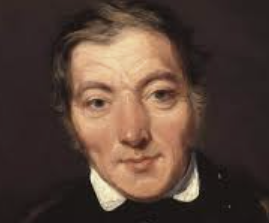
2 months ago
As there are a very great variety of religious sects in the world (and which are probably adapted to different constitutions under different circumstances, seeing there are many good and conscientious characters in each), it is particularly recommended, as a means of uniting the inhabitants of the village into one family, that while each faithfully adheres to the principles which he most approves, at the same time all shall think charitably of their neighbours respecting their religious opinions, and not presumptuously suppose that theirs alone are right.
▼
Source
source
"Rules and Regulations for the Inhabitants of New Lanark"

4 months 2 weeks ago
Sacred and inspired divinity, the sabaoth and port of all men's labours and peregrinations.
▼
Source
source
Book II
6 days ago
I think myself that we have more machinery of government than is necessary, too many parasites living on the labor of the industrious.
▼
Source
source
Letter to William Ludlow
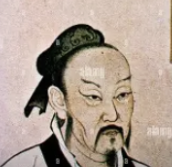
4 weeks ago
It would be better to be without the Shu-King than to believe every word of it.
▼
Source
source
"Knowledge and Wisdom", no. 131 · "Celebration and Worship", no. 587

3 months 1 week ago
The formula 'two plus two equals five' is not without its attractions.
▼
Source
source
Part 1, Chapter 9 (tr. ?)
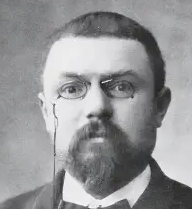
1 month ago
Mathematicians do not study objects, but the relations between objects; to them it is a matter of indifference if these objects are replaced by others, provided that the relations do not change. Matter does not engage their attention, they are interested in form alone.
▼
Source
source
Ch. II: Dover abridged edition (1952), p. 20
3 months 6 days ago
Death is the most blessed dream.
▼
Source
source
Act II.

4 months 6 days ago
The word liberty in the mouth of Mr. Webster sounds like the word love in the mouth of a courtesan.
▼
Source
source
February 12, 1851; cf. the remark of John Wilkes about Samuel Johnson, "Liberty is as ridiculous in his mouth as Religion in mine" (20 March 1778), quoted in Boswell's Life of Johnson, 1791
2 months 4 weeks ago
Science is the knowledge of Consequences, and dependence of one fact upon another: by which, out of that we can presently do, we know how to do something else when we will, or the like, another time.
▼
Source
source
The First Part, Chapter 5, p. 21
4 months 5 days ago
Kant stated defensively that he had "found it necessary to deny knowledge. . . to make room for faith," but he had not made room for faith; he had made room for thought, and he had not "denied knowledge" but separated knowledge from thinking.
▼
Source
source
p. 14
3 months 3 weeks ago
The animals themselves are incapable of demanding their own liberation, or of protesting against their condition with votes, demonstrations, or boycotts. Human beings have the power to continue to oppress other species forever, or until we make this planet unsuitable for living beings. Will our tyranny continue, proving that morality counts for nothing when it clashes with selfinterest, as the most cynical of poets and philosophers have always said? Or will we rise to the challenge and prove our capacity for genuine altruism by ending our ruthless exploitation of the species in our power, not because we are forced to do so by rebels or terrorists, but because we recognize that our position is morally indefensible? The way in which we answer this question depends on the way in which each one of us, individually, answers it.
▼
Source
source
Ch. 6: Speciesism Today
5 months 3 days ago
At any street corner the feeling of absurdity can strike any man in the face.
2 months 2 weeks ago
What makes our poetry so contemptible nowadays is its paucity of ideas. If you want to be read, invent. Who the Devil wouldn't like to read something new?
▼
Source
source
D 62
5 months 1 week ago
It is love that leniently and mercifully says: I forgive you everything-if you are forgiven only little, then it is because you love only little. Justice severely sets the boundary and says: No further! This is the limit. For you there is no forgiveness, and there is nothing more to be said.
4 days ago
Furthermore, the monad produces itself and is produced from itself, since it is self-sufficient and has no power set over it and is everlasting; and it is evidently the cause of permanence, just as God is thought to be in the case of actual physical things, and to be the preserver and maintainer of natures.
▼
Source
source
On the Monad

4 months 2 days ago
I sit astride life like a bad rider on a horse. I only owe it to the horse's good nature that I am not thrown off at this very moment.
▼
Source
source
p. 36e
2 months 2 weeks ago
An elaborated culture has a density, complexity, and historical-semantic value that is so strong as to make politics possible... Gramsci's insight is to have recognised that subordination, fracturing, diffusion, reproducing, as much as producing, creating, forcing, guiding, are necessary aspects of elaboration.
▼
Source
source
Quoted in Richard Middleton, Studying Popular Music (Philadelphia: Open University Press, 1990, ISBN 0-335-15275-9), p. 248

4 months 1 week ago
I am sure that university life would be better, both intellectually and morally, if most university students had temporary childless marriages. This would afford a solution to the sexual urge neither restless nor surreptitious, neither mercenary nor casual, and of such a nature that it need not take up time which ought to be given to work.
▼
Source
source
"Sex in Education", p. 119-120
5 months 1 week ago
Be attentive therefore, according to the instruction of the Gospel, to learn obedience from the lily and the bird. Be not affrighted, do no despair, when thou comparest thy life with these teachers. There is nothing to despair about, for indeed thou shalt learn from them; and the Gospel first comforts thee by telling thee that God is the God of patience, and then it adds: 'Thou shalt learn from the lilies and the birds, learn to be absolutely obedient like the lilies and the birds, learn not to serve two masters; for no man can serve two masters, he must either ... or.
5 months 1 week ago
Out of love, God becomes man. He says: Here you see what it is to be a human being; but he adds: Take care, for I am also God - blessed is he who takes no offense at me.
▼
Source
source
As translated by Howard V. Hong and EdnaH. Hong (1980) Variant translation; Out of love, God becomes man. He says: "See, here is what it is to be a human being."
6 days ago
The mother principle is that 'governments are republican only in proportion as they embody the will of their people, and execute it.
CivilSimian.com created by AxiomaticPanic, CivilSimian, Kalokagathia