

4 months 6 days ago
A philosophy without heart and a faith without intellect are abstractions from the true life of knowledge and faith. The man whom philosophy leaves cold, and the man whom real faith does not illuminate, may be assured that the fault lies in them, not in knowledge and faith. The former is still an alien to philosophy, the latter an alien to faith.
3 months 2 days ago
The dream is the small hidden door in the deepest and most intimate sanctum of the soul, which opens to that primeval cosmic night that was soul long before there was conscious ego and will be soul far beyond what a conscious ego could ever reach.
▼
Source
source
The Meaning of Psychology for Modern Man

2 days ago
What need is there of suspicious fear, since it is in thy power to inquire what ought to be done? And if thy seest clear, go by this way content, without turning back: but if thy dost not see clear, stop and take the best advisers. But if any other things oppose thee, go on according to thy powers with due consideration, keeping to that which appears to be just. For it is best to reach this object, and if thou dost fail, let thy failure be in attempting this. He who follows reason in all things is both tranquil and active at the same time, and also cheerful and collected.
▼
Source
source
X, 12
3 months 2 days ago
My soul, my soul, where are you? Do you hear me? I speak, I call you-are you there? I have returned, here I am again. I have shaken the dust of all the lands from my feet, and I have come to you again, I am with you. After long years of long wandering, I have come to you anew. Shall I tell you everything I have seen, experienced, and drunk in? Or do you not want to hear about all the noise of life and the world? But one thing you must know, the one thing I have learned is that one must live this life. This life is the way, the long sought-after way to the unfathomable, which we call "divine". There is no other way. All other ways are false paths.
▼
Source
source
Book 2, 12. Nov. 1913

5 months 3 days ago
There is a kind of selective memory that afflicts men when they view the past. They see the good and overlook the evil.
4 days ago
All law is "situational law." The sovereign produces and guarantees the situation in its totality. He has the monopoly over this last decision.
▼
Source
source
p.13
2 months 3 days ago
We may with advantage at times forget what we know.
▼
Source
source
Maxim 234

4 months 1 day ago
When I obey a rule, I do not choose. I obey the rule blindly.
▼
Source
source
§ 219


4 months 1 week ago
There can be no doubt that the Virgin Mary is in heaven. How it happened we do not know.
▼
Source
source
Weimar edition of Martin Luther's Works (Translation by William J. Cole) Vol. 10, p. 268

2 months 2 weeks ago
Sadism is plainly connected with the need for self-assertion. At the same time it cannot be separated from the idea of defeat. A sadist is a man, who, in some sense, has his back to the wall. Nothing is further from sadism, for example, than the cheerful, optimistic mentality of a Shaw or Wells.
▼
Source
source
p. 158

4 months 6 days ago
Truth, Goodness, Beauty - those celestial thrins,Continually are born; e'en now the Universe,With thousand throats, and eke with greener smiles,Its joy confesses at their recent birth.
▼
Source
source
June 14, 1838
2 days ago
Choose what's best.-Best is what benefits me.
▼
Source
source
(Hays translation) III, 6
4 months 1 day ago
"It is necessary to be given the prop that all elementary props are given." This is not necessary because it is even impossible. There is no such prop! That all elementary props are given is SHOWN by there being none having an elementary sense which is not given.
▼
Source
source
Notes of 1919, as quoted in Ludwig Wittgenstein : The Duty of Genius (1990) by Ray Monk

1 month 5 days ago
Of faith and morals, one cannot speak honestly for long without hurting feelings. Therefore, most people speak dishonestly of the most important subjects. Many recent philosophers prefer not to speak of them at all. But in some situations honesty is incompatible with silence.

3 months 5 days ago
That the uneducated and the ill-educated should think the hypothesis that all races of beings, man inclusive, may in process of time have been evolved from the simplest monad, a ludicrous one, is not to be wondered at. But for the physiologist, who knows that every individual being is so evolved-who knows, further, that in their earliest condition the germs of all plants and animals whatever are so similar, "that there is no appreciable distinction amongst them, which would enable it to be determined whether a particular molecule is the germ of a Conferva or of an Oak, of a Zoophyte or of a Man";-for him to make a difficulty of the matter is inexcusable.
▼
Source
source
Spencer here references William Benjamin Carpenter, Principles of Comparative Physiology see p. 473

4 months 3 weeks ago
Man desires to praise thee, for he is a part of thy creation; he bears his mortality about with him and carries the evidence of his sin and the proof that thou dost resist the proud. Still he desires to praise thee, this man who is only a small part of thy creation. Thou hast prompted him, that he should delight to praise thee, for thou hast made us for thyself and restless is our heart until it comes to rest in thee.
▼
Source
source
I, 1
4 months 3 weeks ago
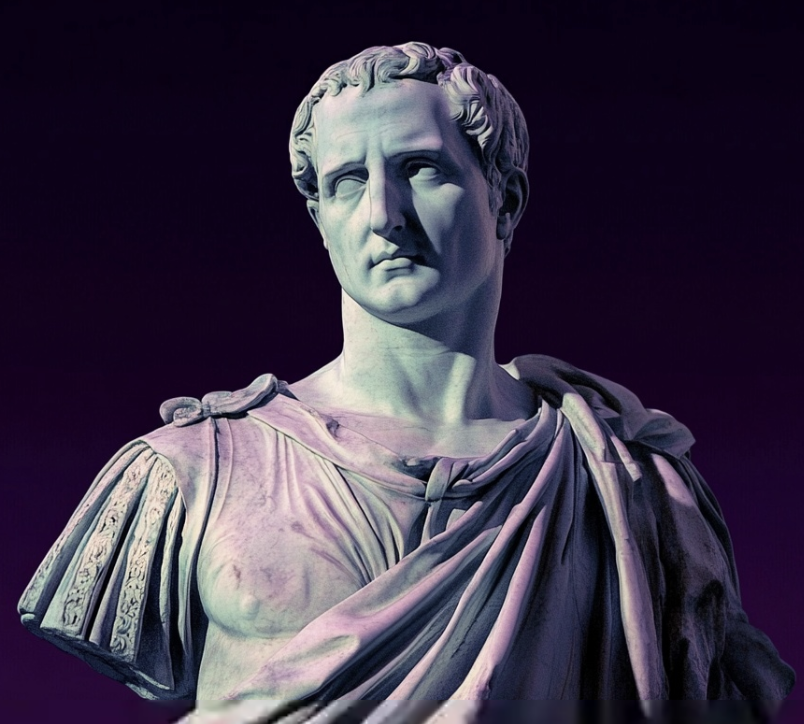
since our leading men think themselves in a seventh heaven, if there are bearded mullets in their fish-ponds that will come to hand for food, and neglect everything else, do not you think that I am doing no mean service if I secure that those who have the power, should not have the will, to do any harm?
▼
Source
source
Letters to Atticus, Book II, 1.
5 months 3 days ago
Anything could be found in figures if the search were long enough and hard enough and if the proper pieces of information were ignored or overlooked.

4 months 6 days ago
Classical political economy nearly touches the true relation of things, without, however,consciously formulating it. This it cannot so long as it sticks in its bourgeois skin.
▼
Source
source
Vol. I, Ch. 19, pg. 594.

2 months 4 weeks ago
Notwithstanding I have a few things against thee, because thou sufferest that woman Jezebel, which calleth herself a prophetess, to teach and to seduce my servants to commit fornication, and to eat things sacrificed unto idols. And I gave her space to repent of her fornication; and she repented not. Behold, I will cast her into a bed, and them that commit adultery with her into great tribulation, except they repent of their deeds. And I will kill her children with death; and all the churches shall know that I am he which searcheth the reins and hearts: and I will give unto every one of you according to your works.
▼
Source
source
Revelation
4 weeks 1 day ago
Is not my present nearer my past of yesterday than the present of Sirius?

4 months 4 days ago
We may become the makers of our fate when we have ceased to pose as its prophets.
▼
Source
source
Introduction
4 months 6 days ago
The yogi, absorbed in contemplation, contributes in his degree to creation: he breathes a divine perfume, he hears wonderful things. Divine forms traverse him without tearing him, and, united to the nature which is proper to him, he goes, he acts as animating original matter. To some extent, and at rare intervals even I am a yogi .
▼
Source
source
Quoted in R. Malhotra and V. Viswanathan, Snakes in the Ganga: Breaking India 2.0., 2022
4 months 6 days ago
I take it for granted, when I am invited to lecture anywhere, - for I have had a little experience in that business, - that there is a desire to hear what I think on some subject, though I may be the greatest fool in the country, - and not that I should say pleasant things merely, or such as the audience will assent to; and I resolve, accordingly, that I will give them a strong dose of myself. They have sent for me, and engaged to pay for me, and I am determined that they shall have me, though I bore them beyond all precedent.
▼
Source
source
p. 484
2 months 2 weeks ago
There certainly is self division. The man who watches a woman undressing has the red eyes of an ape; yet the man who sees two young lovers, really alone for the first time, who brings out all the pathos, the tenderness and uncertainty when he tells about it, is no brute; he is very much human. And the ape and the man exist in one body; and when the ape's desires are about to be fulfilled, he disappears and is succeeded by the man, who is disgusted with the ape's appetite.
▼
Source
source
Chapter one, The Country of the Blind
2 months 1 week ago
It is the real, and not the map, whose vestiges persist here and there in the deserts that are no longer those of the Empire, but ours: The desert of the real itself.
▼
Source
source
"The Precession of Simulacra," p. 1

3 months 2 weeks ago
Many words befall men, mean and noble alike; do not be astonished by them, nor allow yourself to be constrained. If a lie is told, bear with it gently. But whatever I tell you, let it be done completely. Let no one persuade you by word or deed to do or say whatever is not best for you.
▼
Source
source
As quoted in Divine Harmony: The Life and Teachings of Pythagoras by John Strohmeier and Peter Westbrook.

3 months 3 weeks ago
By convention sweet is sweet, bitter is bitter, hot is hot, cold is cold, color is color; but in truth there are only atoms and the void.
▼
Source
source
(trans. Durant 1939), Ch. XVI, §II, p. 353; citing C. Bakewell, Sourcebook in Ancient Philosophy, New York, 1909, "Fragment O" (Diels), p. 60

4 months 6 days ago
The second matter in which Mill's principles condemn existing legislation is homosexuality. If two adults voluntarily enter into such a relation, this is a matter which concerns them only, and in which, therefore, the community ought not to intervene. If it were still believed, as it once was, that the toleration of such behavior would expose the community to the fate of Sodom and Gomorrah, the community would have every right to intervene. But it does not acquire a right to intervene merely on the ground that such conduct is thought wicked. The criminal law may rightly be invoked to prevent violence or fraud inflicted upon unwilling victims, but it ought not to be invoked when whatever damage there may be is suffered only by the agents-always assuming that the agents are adults.
▼
Source
source
p. 139

1 month 2 weeks ago
Our present-day neurochemical cocktail, we are asked to believe, is the medium through which alien realms of consciousness can be grasped and neutrally appraised from a third-person perspective. Empirical research suggests this optimism is at best naïve.
▼
Source
source
Storming Heaven: LSD and the American Dream, BLTC Research

4 months 3 weeks ago
Sincerity is the way of Heaven. The attainment of sincerity is the way of men. He who possesses sincerity is he who, without an effort, hits what is right, and apprehends, without the exercise of thought — he is the sage who naturally and easily embodies the right way. He who attains to sincerity is he who chooses what is good, and firmly holds it fast. To this attainment there are requisite the extensive study of what is good, accurate inquiry about it, careful reflection on it, the clear discrimination of it, and the earnest practice of it.
2 months 3 weeks ago
When at the beginning of the so-called modern age, at the Renaissance, the pagan sense of religion came to life again, it took the concrete form in the knightly ideal with its codes of conduct of love and honor. But it was a paganism Christianized, baptized. "Woman - la donna - was the divinity enshrined within those savage breasts. Whosoever will investigate the memorials of primitive times will find this ideal of woman in its full force and purity; the Universe is woman.
5 months 6 days ago
Since the science of nature is conversant with magnitudes, motion, and time, each of which must necessarily be either infinite or finite...[we] should speculate the infinite, and consider whether it is or not; and if it is what it is. ...[A]ll those who appear to have touched on a philosophy of this kind... consider it as a certain principle of beings. Some, indeed, as the Pythagoreans and Plato, consider it, per se, not as being an accident to any thing else, but as having an essential subsistence... the Pythagoreans... consider the infinite as subsisting in sensibles; for they do not make number to be separate; and they assert that what is beyond the heavens is infinite; but Plato says that beyond the heavens there is not any body, nor ideas, because these are no where: he affirms, however, that the infinite is both in sensibles, and in ideas. ...Plato establishes two infinities, viz. the great and the small.

4 months 5 days ago
The plain fact is that men's minds are built, as has been often said, in water-tight compartments. Religious after a fashion, they yet have many other things in them beside their religion, and unholy entanglements and associations inevitably obtain. The basenesses so commonly charged to religion's account are thus, almost all of them, not chargeable at all to religion proper, but rather to religion's wicked practical partner, the spirit of corporate dominion. And the bigotries are most of them in their turn chargeable to religion's wicked intellectual partner, the spirit of dogmatic dominion, the passion for laying down the law in the form of an absolutely closed-in theoretic system. The ecclesiastical spirit in general is the sum of these two spirits of dominion.
▼
Source
source
Lectures XIV and XV, "The Value of Saintliness"
4 months 6 days ago
The prospect for the human race is sombre beyond all precedent. Mankind are faced with a clear-cut alternative: either we shall all perish, or we shall have to acquire some slight degree of common sense. A great deal of new political thinking will be necessary if utter disaster is to be averted.

1 month ago
A further threat to liberalism has to do with the mode of cognition that we call modern natural science. The early liberals were very closely aligned with the founders of modern natural science, people like Bacon and Descartes and Newton, who believed that there was an objective world beyond our subjective consciousnesses, that we could perceive this world through the experimental method, and then come to manipulate it. Natural science gave us technology... that made the world much more habitable, by conquering disease, by inventing things that vastly increased human productivity. So... it's closely related to the wealth, and... the safety and comfort of a modern economically developed world.
▼
Source
source
18:49

5 months 6 days ago
If it were so, as conceited sagacity, proud of not being deceived, thinks, that we should believe nothing that we cannot see with our physical eyes, then we first and foremost ought to give up believing in love. ... We can be deceived by believing what is untrue, but we certainly are also deceived by not believing what is true. ... Which deception is more dangerous?
4 months 3 weeks ago
As the soul is the life of the body, so God is the life of the soul. As therefore the body perishes when the soul leaves it, so the soul dies when God departs from it.
▼
Source
source
p. 277
2 months 1 week ago
When the real is no longer what it was, nostalgia assumes its full meaning. "The Precession of Simulacra,"
▼
Source
source
p. 6

4 months 5 days ago
To aspire to be superhuman is a most discreditable admission that you lack the guts, the wit, the moderating judgment to be successfully and consummately human.
▼
Source
source
Spinoza's Worm," p. 75
5 months 6 days ago
It is of this sort of divine service I used the expression that, in comparison with the Christianity of the New Testament, it is playing Christianity. The expression is essentially true and characterizes the thing perfectly. For what does it mean to play, when one reflects how the word must be understood in this connection? It means to imitate, to counterfeit, a danger when there is no danger, and to do it in such a way that the more art is applied to it, the more delusive the pretense is that the danger is present.
3 months 3 weeks ago
In fact we do not know anything infallibly, but only that which changes according to the condition of our body and of the [influences] that reach and impinge upon it.
4 months 4 days ago
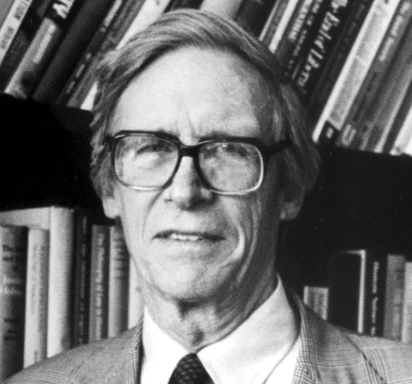
Justice is the first virtue of social institutions, as truth is of systems of thought. A theory however elegant and economical must be rejected or revised if it is untrue; likewise laws and institutions no matter how efficient and well-arranged must be reformed or abolished if they are unjust. Each person possesses an inviolability founded on justice that even the welfare of society as a whole cannot override. For this reason justice denies that the loss of freedom for some is made right by a greater good shared by others. It does not allow that the sacrifices imposed on a few are outweighed by the larger sum of advantages enjoyed by many. Therefore in a just society the liberties of equal citizenship are taken as settled; the rights secured by justice are not subject to political bargaining or to the calculus of social interests.
▼
Source
source
Chapter I, Section 1, pg. 3-4

4 months 1 week ago
All of the days go toward death and the last one arrives there.
▼
Source
source
Ch. 20. Of the Force of Imagination
4 months 1 week ago
Men of learning are those who have read the contents of books. Thinkers, geniuses, and those who have enlightened the world and furthered the race of men, are those who have made direct use of the book of the world.
▼
Source
source
"Thinking for Oneself"
2 months 1 day ago
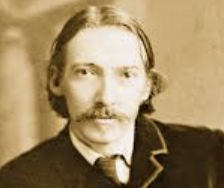
Falling in love is the one illogical adventure, the one thing of which we are tempted to think as supernatural, in our trite and reasonable world. The effect is out of all proportion with the cause. Two persons, neither of them, it may be, very amiable or very beautiful, meet, speak a little, and look a little into each other's eyes. That has been done a dozen or so of times in the experience of either with no great result. But on this occasion all is different. They fall at once into that state in which another person becomes to us the very gist and centrepoint of God's creation, and demolishes our laborious theories with a smile; in which our ideas are so bound up with the one master-thought that even the trivial cares of our own person become so many acts of devotion, and the love of life itself is translated into a wish to remain in the same world with so precious and desirable a fellow-creature.
▼
Source
source
Virginibus Puerisque, Ch. 3.
CivilSimian.com created by AxiomaticPanic, CivilSimian, Kalokagathia