

5 months 4 days ago
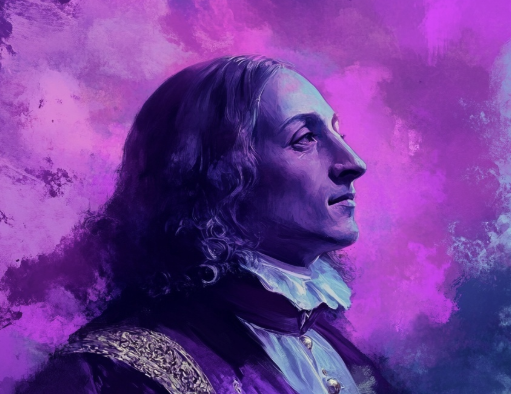
One man will say a thing of himself without comprehending its excellence, in which another will discern a marvelous series of conclusions, which makes us affirm that it is no longer the same expression, and that he is no more indebted for it to the one from whom he has learned it, than a beautiful tree belongs to the one who cast the seed, without thinking of it, or knowing it, into the fruitful soil which caused its growth by its own fertility.
4 months 3 weeks ago
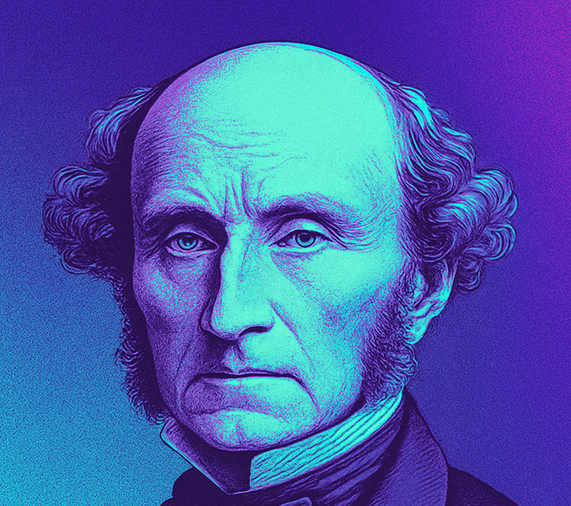
Whatever crushes individuality is despotism, by whatever name it may be called, and whether it professes to be enforcing the will of God or the injunctions of men.
▼
Source
source
Ch. III: Of Individuality, As One of the Elements of Well-Being
3 months 3 weeks ago
To theology, ... only what it holds sacred is true, whereas to philosophy, only what holds true is sacred.
▼
Source
source
Lecture II, R. Manheim, trans. (1967), p. 11


3 weeks ago
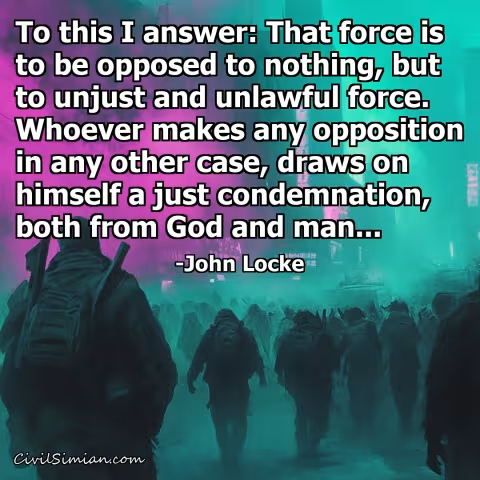
We took the liberty to make some enquiries concerning the ground of their pretensions to make war upon nations who had done them no injury, and observed that we considered all mankind as our friends who had done us no wrong, nor had given us any provocation. The Ambassador [of Tripoli] answered us that it was founded on the Laws of their Prophet, that it was written in their Koran, that all nations who should not have acknowledged their authority were sinners, that it was their right and duty to make war upon them wherever they could be found, and to make slaves of all they could take as Prisoners, and that every Musselman who should be slain in battle was sure to go to Paradise.
▼
Source
source
Letter from the commissioners (John Adams, Thomas Jefferson) to John Jay, 28 March 1786, in Thomas Jefferson Travels: Selected Writings, 1784-1789, by Anthony Brandt, pp. 104-105

5 months 3 weeks ago
He who humbleth himself wants to be exalted.
2 months 2 weeks ago
The will of man has no power whatever over his opinions; he must, and ever did, and ever will, believe what has been, is, or may be impressed on his mind by his predecessors, and the circumstances which surround him.
5 months 4 days ago
If, being duke and peer, you would not be contented with my standing uncovered before you, but should also wish that I should esteem you, I should ask you to show me the qualities that merit my esteem. If you did this, you would gain it, and I could not refuse it to you with justice; but if you did not do it, you would be unjust to demand it of me; and assuredly you would not succeed, were you the greatest prince in the world.

4 months 3 weeks ago
One must care about a world one will not see.
▼
Source
source
Attributed to Russell in The Wordsworth Dictionary of Quotations (1997), p. 450, and in Robertson's Dictionary of Quotations (1998), p. 362, but no specific source is given.

2 weeks 4 days ago
The things you think about determine the quality of your mind. Your soul takes on the color of your thoughts.
▼
Source
source
(Hays translation) The soul becomes dyed with the colour of its thoughts. V, 16

4 months 2 weeks ago
The soul is the prison of the body.
▼
Source
source
Discipline and Punish (1977) as translated by Alan Sheridan, p. 30
3 weeks 1 day ago
Even the most humble insect and the most insignificant idea are the military encampments of God. Within them, all of God is arranged in fighting position for a critical battle. Even in the most meaningless particle of earth and sky I hear God crying out: "Help me!" Everything is an egg in which God's sperm labors without rest, ceaselessly. Innumerable forces within and without it range themselves to defend it. With the light of the brain, with the flame of the heart, I besiege every cell where God is jailed, seeking, trying, hammering to open a gate in the fortress of matter, to create a gap through which God may issue in heroic attack.
4 months 3 weeks ago
The observer, when he seems to himself to be observing a stone, is really, if physics is to be believed, observing the effects of the stone upon himself.
▼
Source
source
An Inquiry into Meaning and Truth (1940), Introduction, p. 15

4 months 2 weeks ago
The hatefulness of a hated person is "real"-in hatred you see men as they are; you are disillusioned; but the loveliness of a loved person is merely a subjective haze concealing a "real" core of sexual appetite or economic association. Wars and poverty are "really" horrible; peace and plenty are mere physical facts about which men happen to have certain sentiments.
▼
Source
source
Letter XXX

2 months 2 weeks ago
The criminal, like the artist, is a social explorer.
▼
Source
source
quoted in "Marshall McLuhan, Author, Dies; Declared 'Medium Is the Message'" by Alden Whitman, The New York Times, January 1, 1981

3 months 3 weeks ago
I am convinced that we have a degree of delight, and that no small one, in the real misfortunes and pains of others.
▼
Source
source
Part I Section XIV

4 months 3 weeks ago
When the qualification to vote is regulated by years, it is placed on the firmest possible ground, because the qualification is such as nothing but dying before the time can take away; and the equality of Rights, as a principle, is recognized in the act of regulating the exercise. But when Rights are placed upon, or made dependent upon property, they are on the most precarious of all tenures. "Riches make themselves wings, and fly away," and the rights fly with them ; and thus they become lost to the man when they would be of most value.
3 months 2 weeks ago
Men may one day feel that they are partakers of a common nature, and that true freedom and perfect equity, like food and air, are pregnant with benefit to every constitution.
▼
Source
source
Vol. 1, bk. 1, ch. 3

3 months 3 weeks ago
If you were to destroy in mankind the belief in immortality, not only love but every living force maintaining the life of the world would at once be dried up. Moreover, nothing then would be immoral, everything would be lawful, even cannibalism.
▼
Source
source
Book II, ch. 6 (trans. Constance Garnett) Pyotr Miusov, summarizing an argument made by Ivan at a social gathering
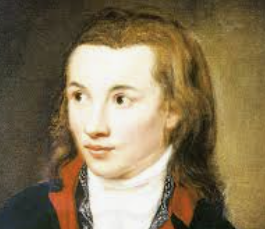
3 months 2 weeks ago
A character is a completely fashioned will.
▼
Source
source
(vollkommen gebildeter Wille).

4 months 2 weeks ago
In writing what he does not speak, what he would never say and, in truth, would probably never even think, the author of the written speech is already entrenched in the posture of the sophist; the man of non-presence and non-truth. Writing is thus already on the scene. The incompatibility between written and the true is clearly announced at the moment Socrates starts to recount the way in which men are carried out themselves by pleasure, become absent from themselves, forget themselves and die in the thrill of song.
▼
Source
source
Plato's Pharmacy, Pharmacia

3 months 3 weeks ago
If the State, modeled after the universe, is split into two spheres or classes of beings - wherein the free represent the ideas and the unfree the concrete and sensate things - then the ultimate and uppermost order remains unrealized by both. By using sensate things as tools or organs, the ideas obtain a direct relationship to the apparitions and enter into them as souls. God, however, as identity of the highest order, remains above all reality and eternally has merely an indirect relationship. If then in the higher moral order the State represents a second nature, then the divine can never have anything other than an indirect relationship to it, never can it bear any real relationship to it, and religion, if it seeks to preserve itself in unscathed pure ideality, can therefore never exist - even in the most perfect State - other than esoterically in the form of mystery cults.
▼
Source
source
P. 51

1 month 1 week ago
Had there not been a natural goodness and indestructible force in my father, I see not how be could have bodied himself forth from these mean impediments. I suppose good precepts were not wanting. There was the Bible to read. Old John Orr, the schoolmaster, used from time to time to lodge with them; be was religious and enthusiastic (though in practice irregular with drink). In my grandfather, also, there seems to have been a certain geniality; for instance, he and a neighbor, Thomas Hogg, read "Anson's Voyages;" also tho "Arabian Nights," for which latter my father, armed with zealous conviction, scrupled not to censure them openly. By one means and another, at an early age he had acquired principles, lights that not only flickered, but shone steadily to guide his way.
3 months 3 weeks ago
It is not as a child that I believe and confess Jesus Christ. My hosanna is born of a furnace of doubt.
▼
Source
source
As quoted in Kierkegaard, the Melancholy Dane (1950) by Harold Victor Martin.

1 month 6 days ago
A great pilot can sail even when his canvas is rent.
▼
Source
source
Line 3.
3 months 3 weeks ago
If we owe to it [civil society] any duty, it is not subject to our will. Duties are not voluntary. Duty and will are even contradictory terms. Now though civil society might be at first a voluntary act (which in many cases it undoubtedly was) its continuance is under a permanent standing covenant, coexisting with the society; and it attaches upon every individual of that society, without any formal act of his own. This is warranted by the general practice, arising out of the general sense of mankind.
▼
Source
source
p. 442
4 months 3 weeks ago
The life of man is a long march through the night, surrounded by invisible foes, tortured by weariness and pain, towards a goal that few can hope to reach, and where none may tarry long.
3 weeks ago
My religious reading has long been confined to the moral branch of religion, which is the same in all religions; while in that branch which consists of dogmas, all differ.
▼
Source
source
Letter to Thomas Leiper (21 January 1809).
1 month 1 week ago
Blessed is the healthy nature; it is the coherent, sweetly co-operative, not incoherent, self-distracting, self-destructive one!

4 months 1 week ago
Verily we know nothing. Truth is buried deep.
▼
Source
source
(Another translation: "Of truth we know nothing, for truth is in a well." Diogenes Laertius, Lives of Eminent Philosophers R.D. Hicks, Ed.)

2 weeks 5 days ago
It is from the shadow of a cloister that there emerges one of mankind's greatest very greatest scourges. Luther appears; Calvin follows him. The Peasants' Revolt; the Thirty Years' War; the civil war in France; the massacre of the Low Countries; the massacre of Ireland; the massacre of the Cévennes; St Bartholomew's Day; the murders of Henry II, Henry IV, Mary Stuart, and Charles I; and finally, in our day, from the same source, the French Revolution.
▼
Source
source
Chapter III, p. 27

3 months 1 week ago
Like monarchy, monotheism had a martial origin. "It is only on the march and it time of war," says Robertson Smith in The Prophets of Israel, "that a nomad people feels any urgent need of a central authority, and so it came about that in the first beginnings of national organization, centering in the sanctuary of the ark, Israel was thought of mainly as a host of Jehovah. the very name of Israel is martial, and means 'God (El) fighteth,' and Jehovah in the Old Testament is Iahwé Cebāôth - the Jehovah of the armies of Israel. It was on the battlefield that Jehovah's presence was most clearly realized; but in primitive nations the leader in time of war is also the natural judge in time of peace."

1 month 4 weeks ago
Before Christianity suicide was not in any way troubling. Our lives were our own, and when we tired of them we were at liberty to end them. One might think that as Christianity has declined, this freedom would be reclaimed. Instead secular creeds have sprung up, in which each person's life belongs to everyone else. To hand back the gift of life because it does not please is still condemned as a kind of blasphemy, though the offended deity is now humanity instead of God.
▼
Source
source
Sweet Morality (p. 231-2)
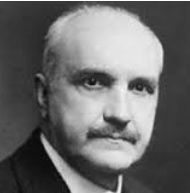
3 months 2 weeks ago
Culture is on the horns of this dilemma: if profound and noble, it must remain rare, if common, it must become mean.
▼
Source
source
Ch. IV: The Aristocratic Ideal

5 months 2 weeks ago
It is an odd fact that anyone who wishes to start a war must always make it appear that he is fighting in a just cause even if the real motive is naked aggression. Fortunately for the would-be aggressor, a "just cause" is very easy to find.
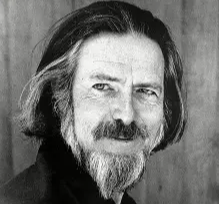
1 month 2 days ago
Religion is always falling apart. Buddhism, the Religion of No-Religion.
4 months 3 weeks ago
The reservedness and distance that fathers keep, often deprive their sons of that refuge which would be of more advantage to them than an hundred rebukes or chidings.
▼
Source
source
Sec. 96
5 months 4 days ago
One of the principal reasons that diverts those who are entering upon this knowledge so much from the true path which they should follow, is the fancy that they take at the outset that good things are inaccessible, giving them the name great, lofty, elevated, sublime. This destroys everything. I would call them low, common, familiar: these names suit it better; I hate such inflated expressions.

2 weeks 6 days ago
Every new discovery may be considered as a new species of manufacture, awakening moral industry and sagacity, and employing, as it were, new capital of mind.
▼
Source
source
In The Edinburgh Review, or Critical Journal (June-October 1827) as quoted in Lee Johnson and Joseph Meany, Graphene
2 months 2 weeks ago
Kant's position is extremely subtle - so subtle, indeed, that no commentator seems to agree with any other as to what it is.
▼
Source
source
Some More -isms (p. 25)
2 months 4 days ago
Societies, not states, are 'the social atoms' with which students of history have to deal.
▼
Source
source
Vol. 1

3 months 4 days ago
The people are asleep; they remain indifferent. They forge their own chains and do the bidding of their masters to crucify their Christs.
▼
Source
source
(p. 304)
3 months 3 weeks ago
Think of something finite molded into the infinite, and you think of man.
▼
Source
source
"Selected Ideas (1799-1800)", Dialogue on Poetry and Literary Aphorisms, Ernst Behler and Roman Struc, trans. (1968) #98

2 weeks 4 days ago
A brilliant man is his own best company, unless he can find other company of the same sort.
4 months 2 weeks ago
In politics, love is a stranger, and when it intrudes upon it nothing is being achieved except hypocrisy. All the characteristics you stress in the Negro people: their beauty, their capacity for joy, their warmth, and their humanity, are well-known characteristics of all oppressed people. They grow out of suffering and they are the proudest possession of all pariahs. Unfortunately, they have never survived the hour of liberation by even five minutes. Hatred and love belong together, and they are both destructive; you can afford them only in private and, as a people, only so long as you are not free.
▼
Source
source
Letter to James Baldwin
4 weeks 1 day ago
Immortality is the privilege of the few, and, according to the Aryan conception, specifically the privilege of heroes. Continuing to live - not as a shadow, but as a demigod - is reserved to those which a special spiritual action has elevated from the one nature to the other.
▼
Source
source
p. 102
4 weeks 1 day ago
These influences of my young childhood were greatest: 1, the mountain landscape, 2, my father the impossible idealist, and 3, the upringing of a closely-knit Christian home.
▼
Source
source
Memoirs of an Octogenarian (1975), pp. 8-9

4 months 2 weeks ago
It seems to me certain that more people are killed out of righteous stupidity than out of wickedness.
▼
Source
source
p. 368

4 months 4 weeks ago
But the other conception, namely the infusion of the soul, it is piously and suitably believed, was without any sin, so that while the soul was being infused, she would at the same time be cleansed from original sin and adorned with the gifts of God to receive the holy soul thus infused. And thus, in the very moment in which she began to live, she was without all sin.
▼
Source
source
Weimar edition of Martin Luther's Works, English translation edited by J. Pelikan [Concordia: St. Louis], Vol. 4, 694
CivilSimian.com created by AxiomaticPanic, CivilSimian, Kalokagathia