

3 months 6 days ago
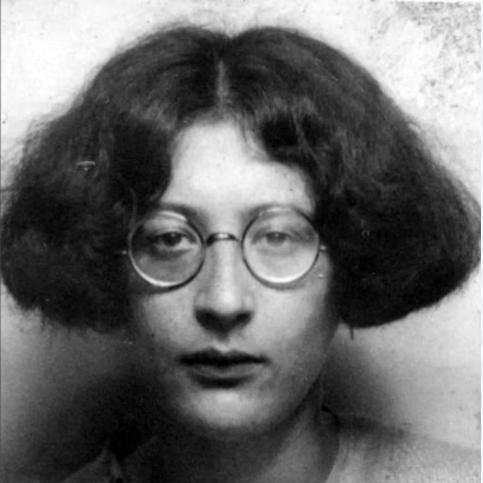
The needs of a human being are sacred. Their satisfaction cannot be subordinated either to reasons of state, or to any consideration of money, nationality, race, or colour, or to the moral or other value attributed to the human being in question, or to any consideration whatsoever. There is no legitimate limit to the satisfaction of the needs of a human being except as imposed by necessity and by the needs of other human beings. The limit is only legitimate if the needs of all human beings receive an equal degree of attention.
5 months 1 week ago
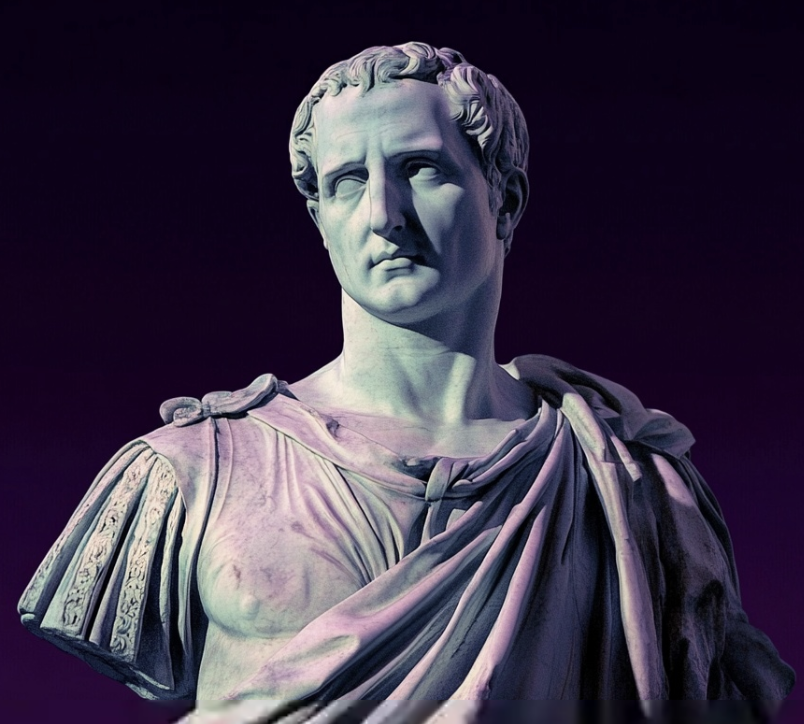
After death the sensation is either pleasant or there is none at all. But this should be thought on from our youth up, so that we may be indifferent to death, and without this thought no one can be in a tranquil state of mind. For it is certain that we must die, and, for aught we know, this very day. Therefore, since death threatens every hour, how can he who fears it have any steadfastness of soul?
▼
Source
source
section 74

4 months 3 weeks ago
So far as living instruments of labour are concerned, for instance horses, their reproduction is timed by nature itself. Their average lifetime as instruments of labour is determined by the laws of nature. As soon as this term has expired they must be replaced by new ones. A horse cannot be replaced piecemeal; it must be replaced by another horse.
▼
Source
source
Vol. II, Ch. VIII, p. 174.
1 month 1 day ago
Underneath the superficial self, which pays attention to this and that, there is another self, more really us than I. And if you become aware of that unknown self, the more you become aware of it, the more you realize that it is inseparably connected with everything else that there is. That you are a function of this total galaxy, bounded by the Milky Way, and that furthermore, this galaxy is a function of all other galaxies. And that vast thing that you see far off, far off, far off with telescopes, and you look and look and look, one day you are going to wake up and say, why, that's me! And in knowing that, know, you see, that you never die. That you are the eternal thing that comes and goes, that appears now as John Jones, now as Mary Smith, now as Betty Brown, and so it goes forever and ever and ever.
▼
Source
source
Alan Watts, Man in Nature

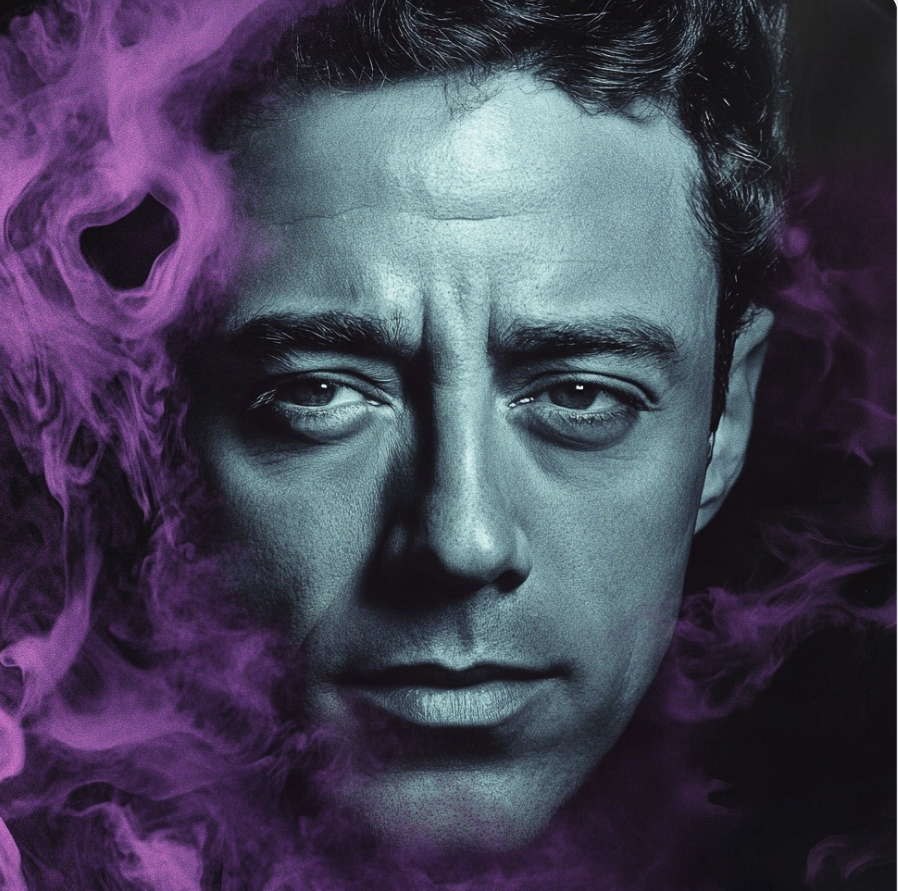
5 months 2 weeks ago
He kept the middle way, that's all: he was the type of man for whom one has an affection of the mild but steady order - which is the kind that wears best.

3 weeks ago
What a strange machine man is! You fill him with bread, wine, fish, and radishes, and out comes sighs, laughter, and dreams.
▼
Source
source
Ch. 23
2 months 2 weeks ago
More generally it is completely unrealistic to claim, as Gould and many others do, that religion keeps itself away from science's turf, restricting itself to morals and values. A universe with a supernatural presence would be a fundamentally and qualitatively different kind of universe from one without. The difference is, inescapably, a scientific difference. Religions make existence claims, and this means scientific claims.
▼
Source
source
When Religion Steps on Science's Turf, Free Inquiry

3 months 3 weeks ago
The Revolution and Hanover succession had been objects of the highest veneration to the old Whigs. They thought them not only proofs of the sober and steady spirit of liberty which guided their ancestors; but of their wisdom and provident care of posterity.-The modern Whigs have quite other notions of these events and actions. They do not deny that Mr. Burke has given truly the words of the acts of parliament which secured the succession, and the just sense of them. They attack not him but the law.
▼
Source
source
p. 436
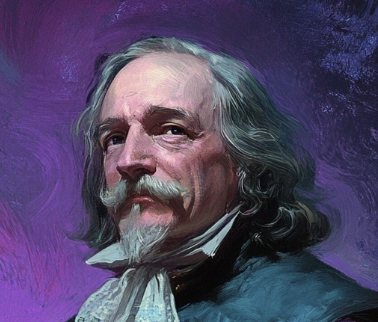
3 months 1 week ago
The passion of laughter is nothing else but a sudden glory arising from sudden conception of some eminency in ourselves, by comparison with the infirmities of others, or with our own formerly...
▼
Source
source
The Elements of Law, Natural and Politic Pt. I Human Nature (1640) Ch. 9
4 months 2 weeks ago
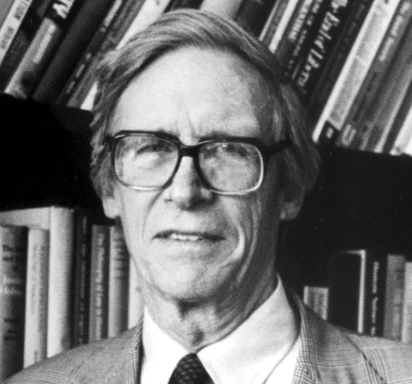
The extreme nature of dominant-end views is often concealed by the vagueness and ambiguity of the end proposed.
▼
Source
source
Chapter IX, Section 83, p. 554
3 months 1 week ago
And as in other things, so in men, not the seller, but the buyer determines the Price.
▼
Source
source
The First Part, Chapter 10, p. 42
2 months 3 weeks ago
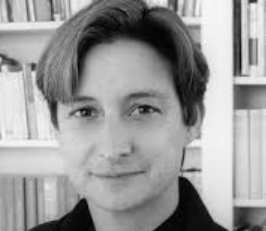
It is precisely because we can destroy that we are under an obligation to know why we ought not to do it, and to summon those countervailing powers that curb our destructive capacity. Nonviolence becomes an ethical obligation by which we are bound precisely because we are bound to one another; it may well be an obligation against which we rail, in which ambivalent swings of the psyche make themselves known, but the obligation to preserve the social bond can be resolved upon without precisely resolving that ambivalence. The obligation not to destroy each other emerges from, and reflects, the vexed social form of our lives, and it leads us to reconsider whether self-preservation is not linked to preserving the lives of others.
▼
Source
source
p. 148
2 months 2 weeks ago
McDonald: Now a lot of people find great comfort from religion. Not everybody is as you are - well-favored, handsome, wealthy, with a good job, happy family life. I mean, your life is good - not everybody's life is good, and religion brings them comfort.Dawkins: There are all sorts of things that would be comforting. I expect an injection of morphine would be comforting - it might be more comforting, for all I know. But to say that something is comforting is not to say that it's true.
1 month 2 weeks ago
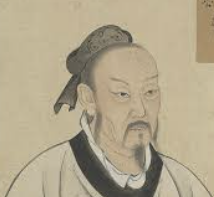
Human nature is evil, and goodness is caused by intentional activity.
▼
Source
source
Quoted in: Fayek S. Hourani (2012) Daily Bread for Your Mind and Soul, p. 336
2 months 3 weeks ago
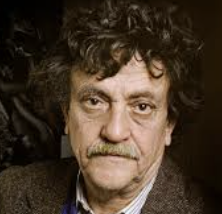
I do feel that evolution is being controlled by some sort of divine engineer. I can't help thinking that. And this engineer knows exactly what he or she is doing and why, and where evolution is headed. That's why we've got giraffes and hippopotami and the clap.
▼
Source
source
On evolution vs. "intelligent design", interviewed by Jon Stewart, The Daily Show
5 months 2 weeks ago
Maman used to say that you can always find something to be happy about.
4 months 3 weeks ago
The sensuous may be exceedingly distinct, while intellectual concepts are extremely confused. The former we observe in the prototype of sensuous knowledge geometry; the latter, in the organon of all intellectual concepts, metaphysics. It is evident how much toil the latter is expending to dispel the fogs of confusion darkening the common intellect, though not always with the happy success of the former science.
4 months 3 weeks ago
To understand political power aright, and derive from it its original, we must consider what estate all men are naturally in, and that is, a state of perfect freedom to order their actions, and dispose of their possessions and persons as they think fit, within the bounds of the law of Nature, without asking leave or depending upon the will of any other man.
▼
Source
source
Second Treatise of Government, Ch. II, sec. 4

4 months 3 weeks ago
His capital is continually going from him in one shape, and returning to him in another, and it is only by means of such circulation, or successive exchanges, that it can yield him any profit. Such capitals, therefore, may very properly be called circulating capitals.
▼
Source
source
Chapter I, p. 305.
4 months 4 weeks ago
It is manifest that there is no danger at all in the proportion or quantity of knowledge, how large soever, lest it should make it swell or out-compass itself; no, but it is merely the quality of knowledge, which, be it in quantity more or less, if it be taken without the true corrective thereof, hath in it some nature of venom or malignity, and some effects of that venom, which is ventosity or swelling. This corrective spice, the mixture whereof maketh knowledge so sovereign, is charity, which the Apostle immediately addeth to the former clause; for so he saith, "Knowledge bloweth up, but charity buildeth up".
▼
Source
source
Book I

4 months 2 days ago
Dear youths, I warn you cherish peace divine, And in your hearts lay deep these words of mine.
▼
Source
source
As reported by Heraclides, son of Sarapion, and Diogenes Laërtius, in Lives and Opinions of Eminent Philosophers, "Pythagoras", Sect. 7, in the translation of C. D. Yonge
1 month 2 weeks ago
The seeds of heavenly bodies are deposited and cared for in the Milky Way, from which they emanate in swarms of comets that travel a ;long time and ordinarily gravitate towards various suns before becoming fixed in orbit.
▼
Source
source
L'attraction passioneé

4 months 3 weeks ago
In the long-run the workman may be as necessary to his master as his master is to him, but the necessity is not so immediate.
▼
Source
source
Chapter VIII, p. 80.

2 months 2 weeks ago
Headlines are icons, not literature.
▼
Source
source
(p. 5)

3 months 1 week ago
Thou shalt do no murder, Thou shalt not commit adultery, Thou shalt not steal, Thou shalt not bear false witness, Honour thy father and thy mother: and, Thou shalt love thy neighbour as thyself.
▼
Source
source
19:18-19 (KJV)

3 months 3 weeks ago
To ruminate upon evils, to make critical notes upon injuries, and be too acute in their apprehensions, is to add unto our own tortures, to feather the arrows of our enemies, to lash ourselves with the scorpions of our foes, and to resolve to sleep no more.
▼
Source
source
Part III, Section XII

4 months 2 days ago
It is better to suffer, than to do, wrong.
1 month 1 day ago
Camus said there is only really one serious philosophical question, which is whether or not to commit suicide. I think there are four or five serious philosophical questions: The first one is: Who started it? The second is: Are we going to make it? The third is: Where are we going to put it? The fourth is: Who's going to clean up? And the fifth: Is it serious?
▼
Source
source
Out Of Your Mind (2004), Audio lecture 1: The Nature of Consciousness: A Game That's Worth The Candle

4 months 4 weeks ago
Wherever your life ends, it is all there. The utility of living consists not in the length of days, but in the use of time; a man may have lived long, and yet lived but a little. Make use of time while it is present with you. It depends upon your will, and not upon the number of days, to have a sufficient length of life. Is it possible you can imagine never to arrive at the place towards which you are continually going? and yet there is no journey but hath its end. And, if company will make it more pleasant or more easy to you, does not all the world go the self-same way?
3 months 1 week ago
Man must be free of it all, of his bad conscience and of the bad salvation from this conscience in order to become in truth the way. Now, he no longer promises others the fulfillment of his duties, but promises himself the fulfillment of man.
▼
Source
source
p. 178

4 months 3 weeks ago
It is clear that thought is not free if the profession of certain opinions makes it impossible to earn a living. It is clear also that thought is not free if all the arguments on one side of a controversy are perpetually presented as attractively as possible, while the arguments on the other side can only be discovered by diligent search.
▼
Source
source
Ch. 12: Free Thought and Official Propaganda, books.google.com, archive.org
3 months 1 week ago
Jesus said that God was not the God of the dead, but of the living. And the other life is not, in fact, thinkable to us except under the same forms as those of this earthly and transitory life.

4 months 3 weeks ago
Accent is the soul of language; it gives to it both feeling and truth.
▼
Source
source
English translation as quoted in A Dictionary of Thoughts: Being a Cyclopedia of Laconic Quotations from the Best Authors of the World, Both Ancient and Modern (1908) by Tryon Edwards, p. 2.
4 months 3 weeks ago
The reservedness and distance that fathers keep, often deprive their sons of that refuge which would be of more advantage to them than an hundred rebukes or chidings.
▼
Source
source
Sec. 96

4 months 2 weeks ago
We can pool information about experiences, but never the experiences themselves. From family to nation, every human group is a society of island universes.
▼
Source
source
Page 159
3 months 1 week ago
Verily I say unto you, All sins shall be forgiven unto the sons of men, and blasphemies wherewith soever they shall blaspheme: But he that shall blaspheme against the Holy Ghost hath never forgiveness, but is in danger of eternal damnation.
▼
Source
source
(Mark 3:28-29) (KJV)
2 weeks 6 days ago
When common words are appropriated as technical terms, their meaning and relations in common use should be retained as far as can conveniently be done.
4 months 3 weeks ago
In principle and in practice, in a right track and in a wrong one, the rarest of all human qualities is consistency.
▼
Source
source
Ch. 1: Of the Principle of Utility
4 months 2 weeks ago
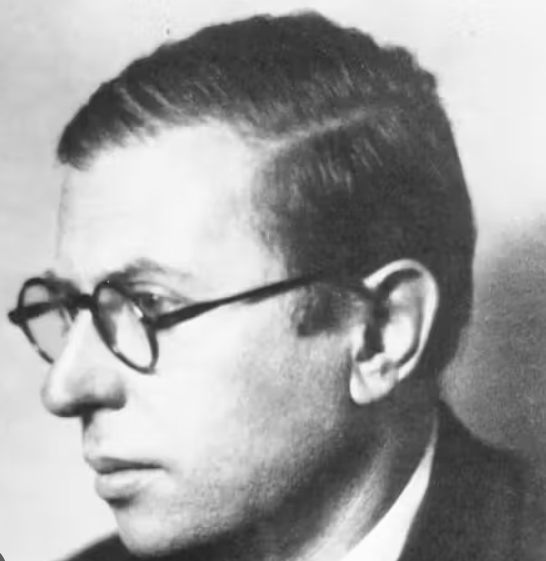
He was free, free in every way, free to behave like a fool or a machine, free to accept, free to refuse, free to equivocate; to marry, to give up the game, to drag this death weight about with him for years to come. He could do what he liked, no one had the right to advise him, there would be for him no Good or Evil unless he thought them into being.
▼
Source
source
L'âge de raison (The Age of Reason)

4 months 2 weeks ago
He [God] lends us a little of His reasoning powers and that is how we think: He puts a little of His love into us and that is how we love one another. When you teach a child writing, you hold its hand while it forms the letters: that is, it forms the letters because you are forming them. We love and reason because God loves and reasons and holds our hand while we do it.
▼
Source
source
Book II, Chapter 4, "The Perfect Penitent"
1 month 1 day ago
There was never a time when the world began, because it goes round and round like a circle, and there is no place on a circle where it begins. Look at my watch, which tells the time; it goes round, and so the world repeats itself again and again. But just as the hour-hand of the watch goes up to twelve and down to six, so, too, there is day and night, waking and sleeping, living and dying, summer and winter. You can't have any one of these without the other, because you wouldn't be able to know what black is unless you had seen it side-by-side with white, or white unless side-by-side with black.
▼
Source
source
Inside information p. 16
4 months 1 week ago
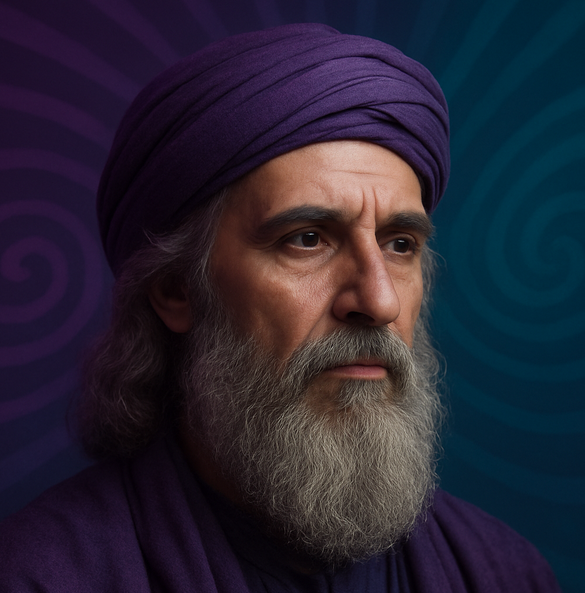
Truth is best (of all that is) good. As desired, what is being desired is truth for him who (represents) the best truth.
▼
Source
source
Ahunuvaiti Gatha; Yasna 27, 14.
3 weeks ago
The heart unites whatever the mind separates, pushes on beyond the arena of necessity and transmutes the struggle into love.
3 months 6 days ago
If all men, by the act of being born, are destined to suffer violence, that is a truth to which the empire of circumstances closes their minds.
▼
Source
source
in The Simone Weil Reader, p. 163
4 months 2 weeks ago
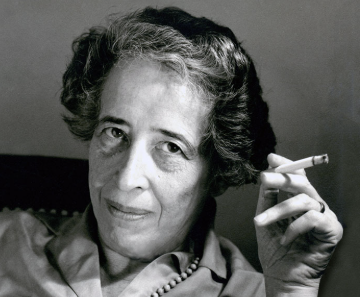
The simple-minded positivism that believes it has found a firm ground of certainty if it only excludes all mental phenomena from consideration and holds fast to observable facts.
▼
Source
source
p. 39
CivilSimian.com created by AxiomaticPanic, CivilSimian, Kalokagathia