


4 months 3 weeks ago
The first law that ever God gave to man was a law of pure obedience; it was a commandment naked and simple, wherein man had nothing to inquire after, nor to dispute; forasmuch as to obey is the proper office of a rational soul, acknowledging a heavenly superior and benefactor.
▼
Source
source
Ch. 12, tr. Cotton, 1685

3 months 4 weeks ago
All the good are friends of one another.
▼
Source
source
As quoted in Stromata, v. 14. by Clement of Alexandria

4 months 2 weeks ago
Where we find a difficulty we may always expect that a discovery awaits us. Where there is cover we hope for game.
▼
Source
source
Reflections on the Psalms (1958), ch. III: Cursings

3 months 4 days ago
Passion is like suffering, and like suffering it creates its object. It is easier for the fire to find something to burn than for something combustible to find the fire.
3 months 1 week ago
To the degree to which they correspond to the given reality, thought and behavior express a false consciousness, responding to and contributing to the preservation of a false order of facts. And this false consciousness has become embodied in the prevailing technical apparatus which in turn reproduces it.
▼
Source
source
p. 145
3 months 4 days ago
Egoism you say? There is nothing more universal than the individual, for what is the property of each is the property of all. Each man is worth more than the whole of humanity, nor will it do to sacrifice each to all save in so far as all sacrifice themselves to each. That which we call egoism is the principle of psychic gravity, the necessary postulate. "Love thy neighbor as thyself," we are told, the presupposition being that each man loves himself; and it is not said "Love thyself." And nevertheless, we do not know how to love ourselves.
2 weeks 2 days ago
As long as the state is a political entity this requirement for internal peace compels it in critical situations to decide also upon the domestic enemy. Every state provides, therefore, some kind of formula for the declaration of an internal enemy.
2 weeks 4 days ago
But we, O blockhead, with dogged spite and armored loveshall force those deaf dark powers to grow ears and hear us!I know that God is earless, eyeless, and heartless too,a brainless Dragon Worm that crawls on earth and hopesin anguish and then in secret that we'll give him soul,for then he, too, may sprout ears, eyes, to match his growth,but God is clay in my ten fingers, and I mould him!
▼
Source
source
Odysseus to Kentaur, Book VIII, line 829
3 months 2 days ago
More and more it is becoming evident that what the West can most readily give to the East is its science and its scientific outlook. This is transferable from country to country, and from race to race, wherever there is a rational society.
▼
Source
source
Ch. 1: "The Origins of Modern Science", p. 4

4 months 2 weeks ago
I asked my guide how it was possible the judicious part of them could suffer such incoherent prating? "We are obliged," said he, "to suffer it, because no one knows, when a brother rises up to hold forth, whether he will be moved by the spirit or by folly. In this uncertainty, we listen patiently to every one. We even allow our women to speak in public; two or three of them are often inspired at the same time, and then a most charming noise is heard in the Lord's house." "You have no priests, then?" said I. "No, no, friend," replied the Quaker; "heaven make us thankful!" Then opening one of the books of their sect, he read the following words in an emphatic tone: "'God forbid we should presume to ordain any one to receive the Holy Spirit on the Lord's day, in exclusion to the rest of the faithful!'
▼
Source
source
Further account of his conversations with Andrew Pit
2 weeks ago
Of my grandfather Verus I have learned to be gentle and meek, and to refrain from all anger and passion... I have learned both shamefastness and manlike behaviour. Of my mother I have learned to be religious, and bountiful; and to forbear, not only to do, but to intend any evil; to content myself with a spare diet, and to fly all such excess as is incidental to great wealth.
▼
Source
source
I, 1

3 months 1 week ago
Notwithstanding I have a few things against thee, because thou sufferest that woman Jezebel, which calleth herself a prophetess, to teach and to seduce my servants to commit fornication, and to eat things sacrificed unto idols. And I gave her space to repent of her fornication; and she repented not. Behold, I will cast her into a bed, and them that commit adultery with her into great tribulation, except they repent of their deeds. And I will kill her children with death; and all the churches shall know that I am he which searcheth the reins and hearts: and I will give unto every one of you according to your works.
▼
Source
source
Revelation


5 months ago
Rules necessary for axioms. Not to demand in axioms any but things perfectly evident.
4 weeks ago
The distinction between private and public undermines the unity of spiritual strength, draining the public of the transcendent energies while trivializing them because the merely private life provides no proper stage for their action.
▼
Source
source
"Commerce and Culture," p. 280.

5 months 1 week ago
The Superior Man has nothing to compete for. But if he must compete, he does it in an archery match, wherein he ascends to his position, bowing in deference. Descending, he drinks (or has [the winner] drink) the ritual cup. Note: Bowing is a courtesy for the host who invites him as well drinking a cup.
2 weeks ago
A man standing by a spring of clear, sweet water and cursing it. While the fresh water keeps on bubbling up. He can shovel mud into it, or dung, and the stream will carry it away, wash itself clean, remain unstained. (Hays translation) Suppose that men kill thee, cut thee in pieces, curse thee. What then can these things do to prevent thy mind from remaining pure, wise, sober, just? For instance, if a man should stand by a limpid pure spring, and curse it, the spring never ceases sending up potable water; and if he should cast clay into it or filth, it will speedily disperse them and wash them out, and will not be at all polluted. How then shalt thou possess a perpetual fountain? By forming thyself hourly to freedom conjoined with contentment, simplicity and modesty.
▼
Source
source
VIII, 51
4 months 2 weeks ago
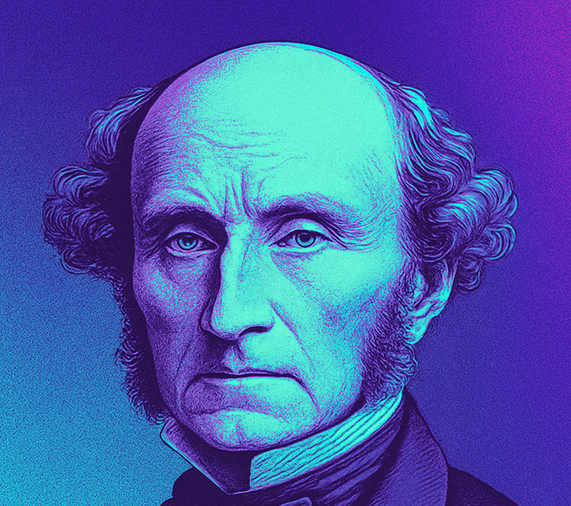
That power should be exercised over any portion of mankind without any obligation of consulting them, is only tolerable while they are in an infantine, or a semi-barbarous state. In any civilized condition, power ought never to be exempt from the necessity of appealing to the reason, and recommending itself by motives which justify it to the conscience and feelings, of the governed.
▼
Source
source
Thoughts on Parliamentary Reform (1859), p. 24

3 months 2 weeks ago
A very great part of the mischiefs that vex the world arises from words.
▼
Source
source
Letter to Richard Burke post 19 February 1792 (1792), in R. B. McDowell and William B. Todd (eds), The Writings and Speeches of Edmund Burke, Vol. 9: I: The Revolutionary War, 1794-1797; II: Ireland. p. 647

4 months 2 weeks ago
The good life is one inspired by love and guided by knowledge.
1 month 1 week ago
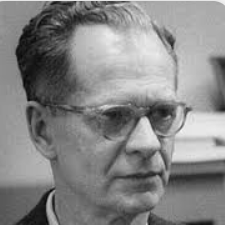
We admire people to the extent that we cannot explain what they do, and the word "admire" then means "marvel at."
▼
Source
source
Beyond Freedom and Dignity

5 months 2 weeks ago
The words that reverberate for us at the confines of this long adventure of rebellion are not formulas for optimism, for which we have no possible use in the extremities of our unhappiness, but words of courage and intelligence which, on the shores of the eternal seas, even have the qualities of virtue.
3 months 3 days ago
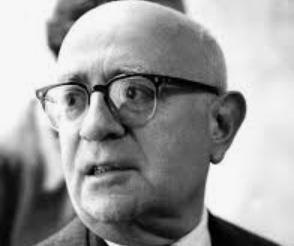
The phrase, the world wants to be deceived, has become truer than had ever been intended. People are not only, as the saying goes, falling for the swindle; if it guarantees them even the most fleeting gratification they desire a deception which is nonetheless transparent to them. They force their eyes shut and voice approval, in a kind of self-loathing, for what is meted out to them, knowing fully the purpose for which it is manufactured. Without admitting it they sense that their lives would be completely intolerable as soon as they no longer clung to satisfactions which are none at all.
▼
Source
source
Section 10

2 months 2 weeks ago
I heard what you were saying. You - you know nothing of my work. You mean my whole fallacy is wrong. How you ever got to teach a course in anything is totally amazing.
▼
Source
source
Cameo appearance as himself in Woody Allen's 1977 film Annie Hall
3 weeks 5 days ago
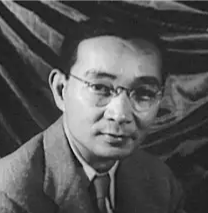
Human history is not the product of the wise direction of human reason, but is shaped by the forces of emotion-our dreams, our pride, our greed, our fears, and our desire for revenge.
▼
Source
source
Confucius Saw Nancy and Essays about Nothing (1936), p. 95
4 months 2 weeks ago
At present we are on the outside of the world, the wrong side of the door. We discern the freshness and purity of the morning, but they do not make us fresh and pure. We cannot mingle with the splendours we see. But all the leaves of the New Testament are rustling with the rumour that it will not always be so. Some day, God willing, we shall get in.

4 months 2 weeks ago
It is an uphill race, and a race against time, for if the American form of democracy overtakes us first, the majority will no more relax their despotism than a single despot would. But our only chance is to come forward as Liberals, carrying out the democratic idea, not as Conservatives, resisting it.
▼
Source
source
Letter to Henry Fawcett (5 February 1860), quoted in Michael St. John Packe, The Life of John Stuart Mill (1954), p. 418

4 months 2 weeks ago
It is in vain to dream of a wildness distant from ourselves.
▼
Source
source
August 30, 1856

4 months 2 weeks ago
The religious world is but the reflex of the real world.
▼
Source
source
Vol. I, Ch. 1, Section 4, pg. 91.
2 weeks 4 days ago
How simple and frugal a thing is happiness: a glass of wine, a roast chestnut, a wretched little brazier, the sound of the sea. . . . All that is required to feel that here and now is happiness is a simple, frugal heart.
▼
Source
source
Ch. 7
4 months 2 weeks ago
A man cannot become a child again, or he becomes childish.
▼
Source
source
Introduction, p. 31.
2 weeks ago
As long as one does not call his own position into question but regards it as absolute, while interpreting his opponents' ideas as a mere function of the social positions they occupy, the decisive step forward has not yet been taken.

3 months 3 weeks ago
The regime which is destroyed by a revolution is almost always an improvement on its immediate predecessor, and experience teaches that the most critical moment for bad governments is the one which witnesses their first steps toward reform.
▼
Source
source
p. 214
1 month 2 weeks ago
Democracy is a meaningless word unless it signifies that differences of opinion have been expressed, represented, and even satisfied in the decision.
▼
Source
source
Ch. IV: "The Line of Least Resistance", pp. 47-48
5 months ago
The best books are those, which those who read them believe they themselves could have written.
4 months 2 weeks ago
I have therefore found it necessary to deny knowledge in order to make room for faith.

4 months 1 week ago
For a large class of cases - though not for all - in which we employ the word meaning it can be explained thus: the meaning of a word is its use in the language.
▼
Source
source
§ 43, this has often been quoted as simply: The meaning of a word is its use in the language.

4 months 2 weeks ago
Put in a nut-shell, my thesis amounts to this. The repeated attempts made by Rudolf Carnap to show that the demarcation between science and metaphysics coincides with that between sense and nonsense have failed. The reason is that the positivistic concept of 'meaning' or 'sense' (or of verifiability, or of inductive confirmability, etc.) is inappropriate for achieving this demarcation - simply because metaphysics need not be meaningless even though it is not science. In all its variations demarcation by meaninglessness has tended to be at the same time too narrow and too wide: as against all intentions and all claims, it has tended to exclude scientific theories as meaningless, while failing to exclude even that part of metaphysics which is known as 'rational theology'.
▼
Source
source
Ch 11. "The Demarcation between Science and Metaphysics." (Summary, p. 253)
3 months ago
Silent listening unites a people and creates community without communication.
1 month 2 days ago
Ah, you flavour everything; you are the vanilla of society.
▼
Source
source
Vol. I, ch. 9, p. 312
4 weeks ago
We cannot abdicate our conscience to an organization, nor to a government. 'Am I my brother's keeper?' Most certainly I am! I cannot escape my responsibility by saying the State will do all that is necessary. It is a tragedy that nowadays so many think and feel otherwise.
▼
Source
source
p. 309

4 months 2 weeks ago
The effects of opposition are wonderful. There are men who rise refreshed on hearing of a threat, - men to whom a crisis which intimidates and paralyzes the majority - demanding, not the faculties of prudence and thrift, but comprehension, immovableness, the readiness of sacrifice - comes graceful and beloved as a bride!
▼
Source
source
p. 189
4 months 2 weeks ago
Cure the drunkard, heal the insane, mollify the homicide, civilize the Pawnee, but what lessons can be devised for the debaucher of sentiment?
▼
Source
source
p. 236
4 weeks ago
In these days the angel of topology and the devil of abstract algebra fight for the soul of each individual mathematical domain.
▼
Source
source
Weyl, Hermann. Invariants. Duke Math. J. 5 (1939), no. 3, 489--502. doi:10.1215/S0012-7094-39-00540-5. http://projecteuclid.org/euclid.dmj/1077491405.
3 months 4 days ago
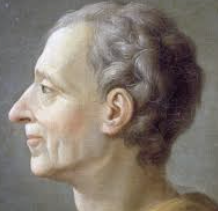
It is a paralogism to say, that the good of the individual should give way to that of the public; this can never take place, except when the government of the community, or, in other words, the liberty of the subject is concerned; this does not affect such cases as relate to private property, because the public good consists in everyone's having his property, which was given him by the civil laws, invariably preserved.
▼
Source
source
Book XXVI, Chapter 15.
3 months 1 week ago
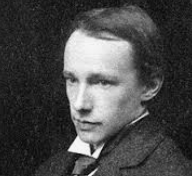
By far the most valuable things, which we know or can imagine, are certain states of consciousness, which may roughly be described as the pleasures of human intercourse and the enjoyment of beautiful objects. No one, probably, who has asked himself the question, has ever doubted that personal affection and the appreciation of what is beautiful in Art or Nature, are good in themselves; nor, if we consider strictly what things are worth having purely for their own sakes, does it appear probable that any one will think that anything else has nearly so much value as the things which are included under these two heads.
▼
Source
source
Principia Ethica (1903; revised edition, Cambridge University Press, 1993).
4 months 5 days ago
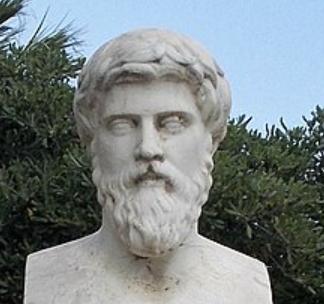
When Darius offered him ten thousand talents, and to divide Asia equally with him, "I would accept it," said Parmenio, "were I Alexander." "And so truly would I," said Alexander, "if I were Parmenio." But he answered Darius that the earth could not bear two suns, nor Asia two kings.
▼
Source
source
42 Alexander
CivilSimian.com created by AxiomaticPanic, CivilSimian, Kalokagathia