

1 week 6 days ago
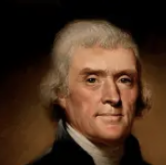
In a democratic republic, where the mass of the people of all parties have the same interest at stake, some respect must be had to the feelings and wishes of the minority, especially when that minority is large and clamorous; otherwise, it will be impossible to avoid discord, and discord weakens the bonds of union.
▼
Source
source
Account of a conversation with Col. Richard M. Johnson in 1809, as recounted in A Biographical Sketch of Col. Richard M. Johnson of Kentucky, p.12

2 months 4 weeks ago
Men can be provincial in time, as well as in place.
▼
Source
source
Preface, p. ix
1 month 1 week ago
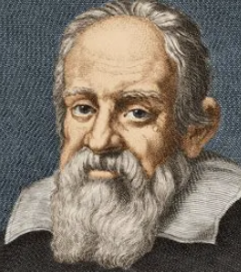
Nature ... is inexorable and immutable; she never transgresses the laws imposed upon her, or cares a whit whether her abstruse reasons and methods of operation are understandable to men. For that reason it appears that nothing physical which sense-experience sets before our eyes, or which necessary demonstrations prove to us, ought to be called in question (much less condemned) upon the testimony of biblical passages which may have some different meaning beneath their words. For the Bible is not chained in every expression to conditions as strict as those which govern all physical effects; nor is God any less excellently revealed in Nature's actions than in the sacred statements of the Bible.
4 months 3 weeks ago
We are beggars: this is true.
▼
Source
source
"The Last Written Words of Luther," Table Talk No. 5468, (16 February 1546), in Dr. Martin Luthers Werke (1909) as translated by James A. Kellerman, Band 85 (TR 5) 317-318

4 weeks 1 day ago
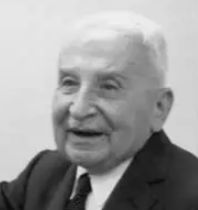
The goal of liberalism is the peaceful cooperation of all men. It aims at peace among nations too. When there is private ownership of the means of production everywhere and when laws, the tribunals and the administration treat foreigners and citizens on equal terms, it is of little importance where a country's frontiers are drawn. Nobody can derive any profit from conquest, but many can suffer losses from fighting. War no longer pays; there is no motive for aggression. The population of every territory is free to determine to which state it wishes to belong, or whether it prefers to establish a state of its own. All nations can coexist peacefully, because no nation is concerned about the size of its state.
▼
Source
source
Omnipotent Government : The Rise of the Total State and Total War

3 months 2 weeks ago
I understand Being in all and over all, as there is nothing without participation in Being, and there is no being without Essence. Thus nothing can be free of the Divine Presence.
▼
Source
source
As quoted in "Giordano Bruno" - Theosophy Vol. 26, No. 8

4 months 1 week ago
Although I consider our political world to be the best of which we have any historical knowledge, we should beware of attributing this fact to democracy or to freedom. Freedom is not a supplier who delivers goods to our door. Democracy does not ensure that anything is accomplished - certainly not an economic miracle. It is wrong and dangerous to extol freedom by telling people that they will certainly be all right once they are free. How someone fares in life is largely a matter of luck or grace, and to a comparatively small degree perhaps also of competence, diligence, and other virtues. The most we can say of democracy or freedom is that they give our personal abilities a little more influence on our well-being.

2 months 3 weeks ago
Now, obviously, the human race is on the point of an extremely interesting evolutionary development. The first step towards escape from this vicious circle is to recognize that the apparent "ordinariness" of the world is a delusion. If we could become deeply and permanently convinced that the world "out there" is endlessly exciting, we would never again allow ourselves to become trapped in the swamp of "taken-for-grantedness". And we would become practically unkillable. Shaw says of his "Ancients" in Back to Methuselah "Even in the moment of death, their life does not fail them". "Life failure" is that feeling that there is nothing new under the sun, and that we all have to accept defeat in the end. If we could learn the mental trick of causing the dynamo to accelerate, this illusion would never again be able to exert its power over us.
▼
Source
source
p. 14
3 months 4 days ago
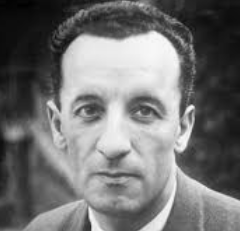
By becoming the pure subject who knows the world objectively, man ultimately realizes that absolute consciousness with respect to which the body and individual existence are no longer anything but objects; death is deprived of meaning. Reduced to the status of object of consciousness, the body could not be conceived as an intermediary between "things" and the consciousness which knows them.
▼
Source
source
p. 204

2 months 1 week ago
We now live in a technologically prepared environment that blankets the earth itself. The humanly contrived environment of electric information and power has begun to take precedence over the old environment of "nature." Nature, as it were, begins to be the content of our technology.
▼
Source
source
p. 276
3 months 1 week ago
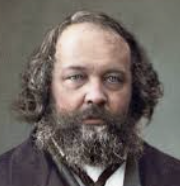
By striving to do the impossible, man has always achieved what is possible. Those who have cautiously done no more than they believed possible have never taken a single step forward.
▼
Source
source
As quoted in The Explorers (1996) by Paolo Novaresio ISBN 1-55670-495-X

5 months 1 day ago
Natural inclinations are present in things from God, who moves all things. So it is impossible for the natural inclinations of a species to be toward evil in itself. But there is in all perfect animals a natural inclination toward carnal union. Therefore it is impossible for carnal union to be evil in itself.
▼
Source
source
III, 126, 3
1 week 6 days ago
We confide in our strength, without boasting of it; we respect that of others, without fearing it.
▼
Source
source
Letter to William Carmichael and William Short

3 months 2 weeks ago
How shall the dead arise, is no question of my faith; to believe only possibilities, is not faith, but mere philosophy.
▼
Source
source
Section 48
4 months ago
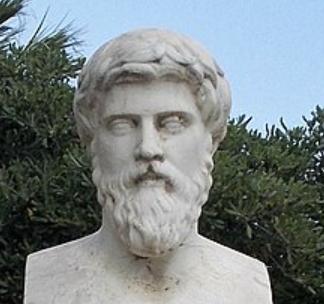
He made one of Antipater's recommendation a judge; and perceiving afterwards that his hair and beard were coloured, he removed him, saying, "I could not think one that was faithless in his hair could be trusty in his deeds."
▼
Source
source
40 Philip
4 months 1 week ago
Never aim at more precision than... required by the problem...

4 months 1 week ago
What we call Man's power over Nature turns out to be a power exercised by some men over other men with Nature as its instrument.
1 month 6 days ago
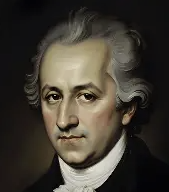
In limitations he first shows himself the master,And the law can only bring us freedom.
▼
Source
source
Was Wir Bringen

5 months 1 week ago
I recognize the necessity of animal experiments with my mind but not with my heart.
2 months 3 weeks ago
This in turn suggests an answer to our question: what happened between the birth of De Sade and the birth of Krafft-Ebbing? The rise of the novel taught Europe to use its imagination. And when imagination was applied to sex, the result was the rise of pornography -- and of "sexual perversion."
▼
Source
source
p. 86
1 week 3 days ago
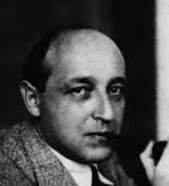
A modern theory of knowledge which takes account of the relational as distinct from the merely relative character of all historical knowledge must start with the assumption that there are spheres of thought in which it is impossible to conceive of absolute truth existing independently of the values and position of the subject and unrelated to the social context. Even a god could not formulate a proposition on historical subjects like 2 x 2 = 4, for what is intelligible in history can be formulated only with reference to problems and conceptual constructions which themselves arise in the flux of historical experience.
3 weeks 2 days ago
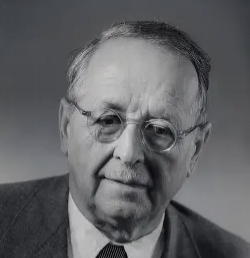
In these days the angel of topology and the devil of abstract algebra fight for the soul of each individual mathematical domain.
▼
Source
source
Weyl, Hermann. Invariants. Duke Math. J. 5 (1939), no. 3, 489--502. doi:10.1215/S0012-7094-39-00540-5. http://projecteuclid.org/euclid.dmj/1077491405.

1 month 4 days ago
Complete, at the same time, was his confidence in his own judgment when it spoke to him decisively. He was one of those few that could believe and know as well as inquire and be of opinion. When I remember how much he admired intellectual force, how much he had of it himself, and yet how unconsciously and contentedly he gave others credit for superiority, I again see the healthy spirit of the genuine man.

3 months 2 weeks ago
France wanted to make proselytes to her opinions, and turn every government in the world into a republic. If every government was against her, it was because she had declared herself hostile to every government. He knew of nothing to which this strange republic could be compared, but to the system of Mahomet, who with the koran in one hand, and a sword in the other, held out the former to the acceptance of mankind, and with the latter compelled them to adopt it as their creed. The koran which France held out, was the declaration of the rights of man and universal fraternity; and with the sword she was determined to propagate her doctrines, and conquer those whom she could not convince.
▼
Source
source
Speech in the House of Commons (14 December 1792), quoted in The Parliamentary History of England, From the Earliest Period to the Year 1803, Vol. XXX (1817), column 72
1 month 4 days ago
Adversity is sometimes hard upon a man; but for one man who can stand prosperity, there are a hundred that will stand adversity. (Often shortened to "can't stand prosperity" as an unknown quote).

4 months 2 weeks ago
Men fear thought as they fear nothing else on earth - more than ruin, more even than death. Thought is subversive and revolutionary, destructive and terrible; thought is merciless to privilege, established institutions, and comfortable habits; thought is anarchic and lawless, indifferent to authority, careless of the well-tried wisdom of the ages. Thought looks into the pit of hell and is not afraid. It sees man, a feeble speck, surrounded by unfathomable depths of silence; yet it bears itself proudly, as unmoved as if it were lord of the universe. Thought is great and swift and free, the light of the world, and the chief glory of man.
▼
Source
source
pp. 178-179
4 months 4 weeks ago
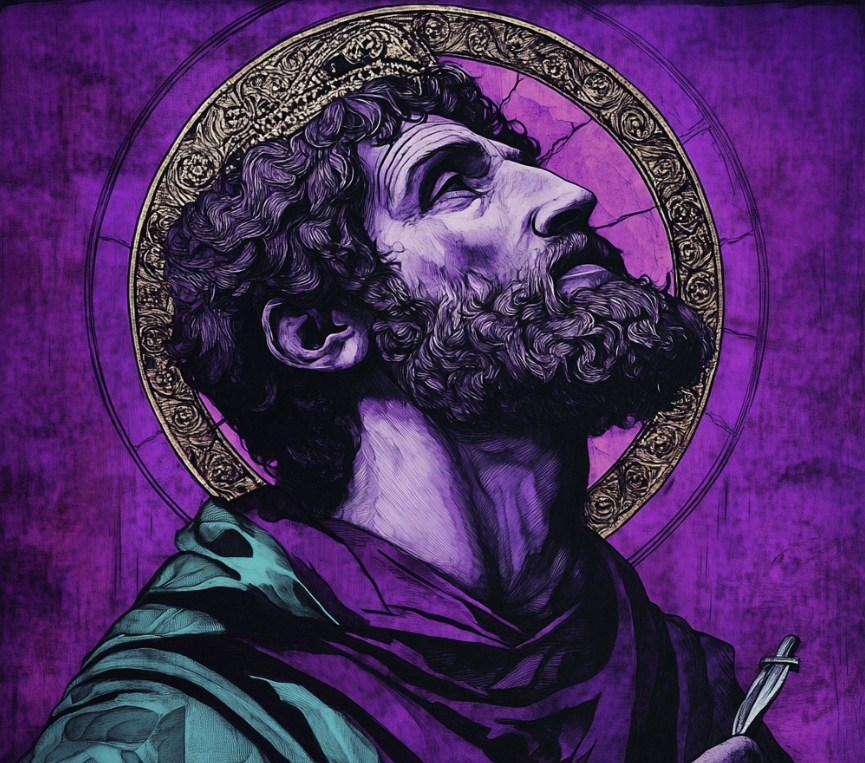
Christ is not valued at all unless He be valued above all.
▼
Source
source
p. 395
2 months 3 weeks ago
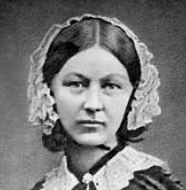
The martyr sacrifices herself (himself in a few instances) entirely in vain. Or rather not in vain; for she (or he) makes the selfish more selfish, the lazy more lazy, the narrow narrower.
▼
Source
source
As quoted in Forever Yours (1990) by Martha Vicinus and Bea Nergaard , p. 275. Letter, c. 1867, to the scholar Benjamin Jowett.

4 months 2 weeks ago
I have no great faith in political arithmetic, and I mean not to warrant the exactness of either of these computations.
▼
Source
source
Chapter V, p. 577.
2 months 3 weeks ago
What excited me was the recognition that this was simply another version of the problem that had obsessed me all of my life -- the problem of those moments when life seems entirely delightful, when we experience a sensation of what G.K. Chesterton called "absurd good news." Life normally strikes most of us as hard, dull and unsatisfying; but in these moments, consciousness seems to glow and expand, and all the contradictions seem to be resolved. Which of the two visions is true? My own reflections had led me to conclude that the vision of "absurd good news" is somehow broader and more comprehensive than the feeling that life is dull, boring and meaningless. Boredom is basically a feeling of narrowness, and surely a narrow vision is bound to be less true than a broad one?
▼
Source
source
p. 16
2 months 2 days ago
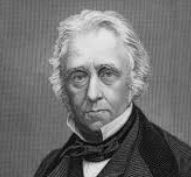
His imagination resembled the wings of an ostrich. It enabled him to run, though not to soar.
▼
Source
source
p. 223
3 months 6 days ago
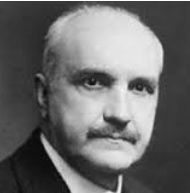
To the mind of the ancients, who knew something of such matters, liberty and prosperity seemed hardly compatible, yet modern liberalism wants them together.
▼
Source
source
"The Irony of Liberalism"
4 months 3 weeks ago
Tell your master that if there were as many devils at Worms as tiles on its roofs, I would enter.
▼
Source
source
Psalm. Ein feste Burg ist unser Gott (translated by Frederic H. Hedge), Reported in Bartlett's Familiar Quotations, 10th ed. (1919).
2 months 1 week ago
Our book technology has Gutenberg at one end and the Ford assembly lines at the other. Both are obsolete.
▼
Source
source
(p. 99)
1 month 4 days ago
Human virtue, if we went down to the roots of it, is not so rare. The materials of human virtue are everywhere abundant as the light of the sun: raw materials,-O woe, and loss, and scandal thrice and threefold, that they so seldom are elaborated, and built into a result! that they lie yet unelaborated, and stagnant in the souls of wide-spread dreary millions, fermenting, festering; and issue at last as energetic vice instead of strong practical virtue!

4 months 2 weeks ago
The New Testament is an invaluable book, though I confess to having been slightly prejudiced against it in my very early days by the church and the Sabbath school, so that it seemed, before I read it, to be the yellowest book in the catalogue. Yet I early escaped from their meshes. It was hard to get the commentaries out of one's head and taste its true flavor. - I think that Pilgrim's Progress is the best sermon which has been preached from this text; almost all other sermons that I have heard, or heard of, have been but poor imitations of this. - It would be a poor story to be prejudiced against the Life of Christ because the book has been edited by Christians.
1 month 1 week ago
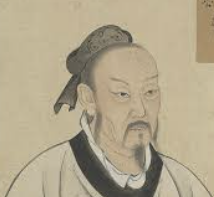
Human nature is evil, and goodness is caused by intentional activity.
▼
Source
source
Quoted in: Fayek S. Hourani (2012) Daily Bread for Your Mind and Soul, p. 336

4 weeks ago
Everything of this sort is not anger, but the semblance of anger, like that of boys who want to beat the ground when they have fallen upon it, and who often do not even know why they are angry, but are merely angry without any reason or having received any injury, yet not without some semblance of injury received, or without some wish to exact a penalty for it.
3 months 6 days ago
As first a man cannot lay down the right of resisting them, that assault him by force, to take away his life; because he cannot be understood to ayme thereby, at any Good to himself.
▼
Source
source
The First Part, Chapter 14, p. 66
1 month 4 days ago
This great maxim of philosophy he had gathered by the teaching of nature alone - that man was created to work, not to speculate or feel or dream. Accordingly, he set his whole heart thitherwards. He did work wisely and unweariedly, and perhaps performed more with the tools he had than any man I now know.
3 months 4 days ago
Plato and his objectivistic successors ... preserved the awareness of differences that pragmatism has been invented to deny-the difference between thinking in the laboratory and in philosophy, and consequently the difference between the destination of mankind and its present course.
▼
Source
source
p. 53.
3 months 2 weeks ago
Through a wise and salutary neglect [of the colonies], a generous nature has been suffered to take her own way to perfection; when I reflect upon these effects, when I see how profitable they have been to us, I feel all the pride of power sink and all presumption in the wisdom of human contrivances melt and die away within me. My vigour relents. I pardon something to the spirit of liberty.

5 months 2 weeks ago
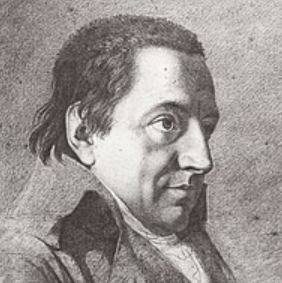
The man who does not wish to belong to the mass needs only to cease taking himself easily; let him follow his conscience, which calls to him: Be your self! All you are now doing, thinking, desiring, is not you yourself.
3 months 1 week ago
Berkeley, Hume, Kant, Fichte, Hegel, James, Bergson all are united in one earnest attempt, the attempt to reinstate man with his high spiritual claims in a place of importance in the cosmic scheme.
▼
Source
source
Edwin Arthur Burtt, The Metaphysical Foundations of Modern Physical Science (1925).

4 months 1 week ago
A writer who takes political, social or literary positions must act only with the means that are his. These means are the written words.
▼
Source
source
Refusing the Nobel Prize, New York Times
1 month 4 weeks ago
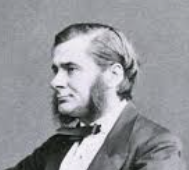
The sceptics end in the infidelity which asserts the problem to be insoluble, or in the atheism which denies the existence of any orderly progress and governance of things: the men of genius propound solutions which grow into systems of Theology or of Philosophy, or veiled in musical language which suggests more than it asserts, take the shape of the Poetry of an epoch.
▼
Source
source
Ch.2, p. 72
2 months 2 weeks ago
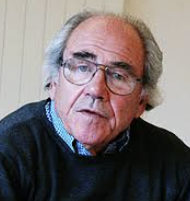
"The Precession of Simulacra,"
▼
Source
source
p. 6
CivilSimian.com created by AxiomaticPanic, CivilSimian, Kalokagathia