

3 months 1 week ago
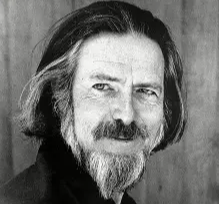
Religion is always falling apart. Buddhism, the Religion of No-Religion.

5 months 1 week ago
I will not say that the more or less poetical and unphilosophical doctrines that I am about to set forth are those which make me live; but I will venture to say that it is my longing to live and to live for ever that inspires these doctrines within me. And if by means of them I succeed in strengthening and sustaining this same longing in another, perhaps when it is all but dead, then I shall have performed a man's work, and above all, I shall have lived. In a word, be it with reason or without reason or against reason, I am resolved not to die. And if, when at last I die out, I die altogether, then I shall not have died out of myself - that is, I shall not have yielded myself to death, but my human destiny shall have killed me. Unless I come to lose my head, or rather my heart, I will not abdicate from life - life will be wrested from me.
7 months 4 weeks ago
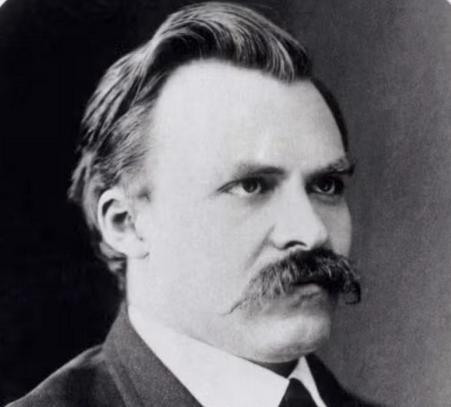
Every word instantly becomes a concept precisely insofar as it is not supposed to serve as a reminder of the unique and entirely individual original experience to which it owes its origin; but rather, a word becomes a concept insofar as it simultaneously has to fit countless more or less similar cases which means, purely and simply, cases which are never equal and thus altogether unequal. Every concept arises from the equation of unequal things. Just as it is certain that one leaf is never totally the same as another, so it is certain that the concept "leaf" is formed by arbitrarily discarding these individual differences and by forgetting the distinguishing aspects.
5 months 2 weeks ago
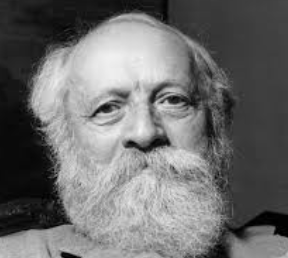
The world is not divine sport, it is divine destiny. There is divine meaning in the life of the world, of man, of human persons, of you and of me. Creation happens to us, burns itself into us, recasts us in burning - we tremble and are faint, we submit. We take part in creation, meet the Creator, reach out to Him, helpers and companions.
5 months 1 week ago
And here, facing this supreme religious sacrifice, we reach the summit of the tragedy, the very heart of it - the sacrifice of our own individual consciousness upon the alter of the perfected Human Consciousness, of the Divine Consciousness. But is there really a tragedy? ...if we could succeed in understanding and feeling that we were going to enrich Christ, should we hesitate for a moment in surrendering ourselves to Him? Would the stream that flows into the sea, and feels in the freshness of its waters the bitterness of the salt of the ocean, wish to flow back to its source? would it wish to return to the cloud which drew it life from the sea? is it not joy to feel itself absorbed?
4 months 3 weeks ago
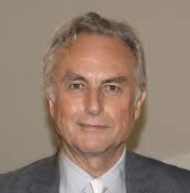
What I can't understand is why you can't see the extraordinary beauty of the idea that life started from nothing - that is such a staggering, elegant, beautiful thing, why would you want to clutter it up with something so messy as a God?
▼
Source
source
" During his conversation with the Archbishop of Canterbury, Dr. Rowan Williams, as quoted in The Telegraph, in 2012-02-24. In "Richard Dawkins: I can't be sure God does not exist"

6 months 3 weeks ago
To acquire immunity to eloquence is of the utmost importance to the citizens of a democracy.
▼
Source
source
Ch. 18: The Taming of Power
7 months 2 weeks ago
All people respect and love their own parents and children, as well as the parents and children of others.
6 months 3 weeks ago
Many of the actions by which men have become rich are far more harmful to the community than the obscure crimes of poor men, yet they go unpunished because they do not interfere with the existing order.
▼
Source
source
Ch. V: Government and Law
3 months 2 weeks ago
...Lucretius talked epicureanism stoically (like Heine's Englishman taking his pleasures sadly), and concluded on his stren gospel of pleasure by committing suicide. His noble epic "on the Nature of Things", follows Epicurus in damning pleasure with faint praise. Almost contemporary with Caesar and Pompey, he lived in the midst of turmoil and alarms; his nervous pen is forever inditing prayers to tranquility and peace. One pictures him as a timid soul whose youth had been darkened with religious fears; for he never tires of telling his readers that there's no hell, except here, and there are no gods except gentlemanly ones who live in a garden of Epicurus in the clouds, and never intrude in the affairs of men.

6 months 3 weeks ago
But how can the characters in a play guess the plot? We are not the playwright, we are not the producer, we are not even the audience. We are on the stage. To play well the scenes in which we are "on" concerns us much more than to guess about the scenes that follow it.
2 months 3 weeks ago
Tried myself in the school of affliction, by the loss of every form of connection which can rive the human heart, I know well, and feel what you have lost, what you have suffered, are suffering, and have yet to endure. The same trials have taught me that for ills so immeasurable, time and silence are the only medicines. I will not, therefore, by useless condolences, open afresh the sluices of your grief, nor, although mingling sincerely my tears with yours, will I say a word more where words are vain.
▼
Source
source
Letter to John Adams (13 November 1818) regarding the death of Abigail Adams


6 months 3 weeks ago
I say a murder is abstract. You pull the trigger and after that you do not understand anything that happens.
▼
Source
source
Act 5, sc. 2
5 months 4 days ago
My own view is that philosophy at its best has always, in every period, included some philosophers who brilliantly represent the moral face of the subject and some philosophers who brilliantly represent the theoretical face, as well as some geniuses whose insights span and unite both sides of the subject. To renounce either the moral ambitions of philosophy or its theoretical ambitions is not just to kill the subject of philosophy; it is to commit intellectual and spiritual suicide.
▼
Source
source
Science and Philosophy
7 months 4 days ago
A wise man sees as much as he ought, not as much as he can.
7 months 3 weeks ago
Truth, like light, blinds. Falsehood, on the contrary, is a beautiful twilight that enhances every object.
7 months 4 days ago
All of the days go toward death and the last one arrives there.
▼
Source
source
Ch. 20. Of the Force of Imagination
6 months 3 weeks ago
Absurd, irreducible; nothing - not even a profound and secret delirium of nature - could explain it. Obviously I did not know everything, I had not seen the seeds sprout, or the tree grow. But faced with this great wrinkled paw, neither ignorance nor knowledge was important: the world of explanations and reasons is not the world of existence. A circle is not absurd, it is clearly explained by the rotation of a straight segment around one of its extremities. But neither does a circle exist. This root, on the other hand, existed in such a way that I could not explain it. Reflections on a chestnut tree root.
7 months ago
In ease of body and peace of mind, all the different ranks of life are nearly upon a level, and the beggar, who suns himself by the side of the highway, possesses that security which kings are fighting for.
▼
Source
source
Chap. I.
2 months 3 weeks ago
When the possessions and households of citizens are no longer honored by the acts, as well as the principles, of their government, then the concentration camp ceases to be one of the possibilities of human nature and becomes one of its likelihoods.
▼
Source
source
The Landscaping of Hell : Strip-Mine Morality
2 months 2 weeks ago
The state of mind which enables a man to do work of this kind is akin to that of the religious worshiper or the lover; the daily effort comes from no deliberate intention or program, but straight from the heart.

4 months 3 days ago
Much in the study of the paranormal was what we would now call pseudo-science. But the line between science and pseudo-science is smudged and shifting; where it lies seems clear only in retrospect. There is no pristine science untouched by the vagaries of faith.
▼
Source
source
Foreword: Two Attempts to Cheat Death (p. 5)

6 months 3 weeks ago
I like a church, I like a cowl, I love a prophet of the soul, And on my heart monastic aisles Fall like sweet strains or pensive smiles; Yet not for all his faith can see, Would I that cowled churchman be. Why should the vest on him allure, Which I could not on me endure?
▼
Source
source
The Problem, st. 1
3 months 2 weeks ago
Pragmatism starts from assumptions similar to those of empiriocriticism, but differs from the latter by its striking formulations, loose aphorisms, and analytical unscrupulousness.
▼
Source
source
Chapter Seven, Pragmatism and Positivism, p. 166

4 months 3 weeks ago
If the slave-owner of our times has no slave, John, whom he can send to the cesspool, he has five shillings, of which hundreds of such Johns are in such need that the slave-owner of our times may choose any one out of hundreds of Johns and be a benefactor to him by giving him the preference, and allowing him, rather than another, to climb down into the cesspool.
▼
Source
source
Chapter 8: Slavery Exists Among Us
6 months 3 weeks ago
Wit makes its own welcome, and levels all distinctions. No dignity, no learning, and no force of character can make any stand against good wit.
▼
Source
source
The Comic
6 months 4 weeks ago
All natural philosophers, who wished to proceed mathematically in their work, have hence invariably (although unknown to themselves) made use of metaphysical principles, and must make use of such, it matters not how energetically they may otherwise repudiate any claim of metaphysics on their science.
▼
Source
source
Preface, Tr. Bax, 1883

6 months 4 weeks ago
The animals are much more content with mere existence than we are; the plants are wholly so; and man is so according to how dull and insensitive he is. The animal's life consequently contains less suffering but also less pleasure than the human's, the direct reason being that on the one hand it is free from care and anxiety and the torments that attend them, but on the other is without hope and therefore has no share in that anticipation of a happy future which, together with the enchanting products of the imagination which accompany it, is the source of most of our greatest joys and pleasures. The animal lacks both anxiety and hope because its consciousness is restricted to what is clearly evident and thus to the present moment: the animal is the present incarnate.
▼
Source
source
Vol. 2 "On the Suffering of the World" as translated in Essays and Aphorisms (1970), as translated by R. J. Hollingdale
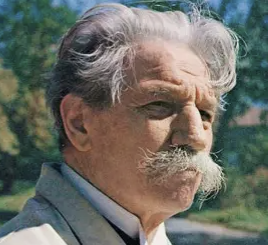
3 months 1 week ago
Profound love demands a deep conception and out of this develops reverence for the mystery of life. It brings us close to all beings, to the poorest and smallest as well as all others.
6 months 3 weeks ago
Ah! yes, I know: those who see me rarely trust my word: I must look too intelligent to keep it.
▼
Source
source
Act 2, sc. 3
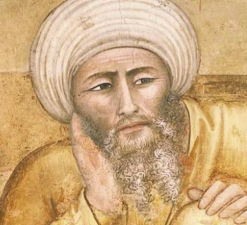
7 months 2 weeks ago
The Asharites have expressed a very peculiar opinion, both with regard to reason and religion; about this problem they have explained it in a way in which religion has not, but have adopted quite an opposite method.
5 months 3 weeks ago
Perfectibility is one of the most unequivocal characteristics of the human species.
▼
Source
source
Vol. 1, bk. 1 : Of the Powers of Man Considered in his Social Capacity, ch. 2

6 months 3 weeks ago
We cannot always choose the vocation to which we believe we are called. Our social relations, to some extent, have already begun to form before we are in a position to determine them.
▼
Source
source
Writings of the Young Marx on Philosophy and Society, L. Easton, trans. (1967), p. 37
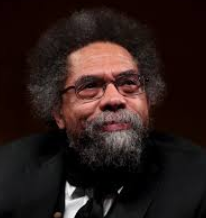
6 months 3 weeks ago
Quality leadership is neither the product of one great individual nor the result of odd historical accidents. Rather, it comes from deeply bred traditions and communities that shape and mold talented and gifted persons. Without a vibrant tradition of resistance passed on to new generations, there can be no nurturing of a collective and critical consciousness-only professional conscientiousness survives.
▼
Source
source
(p37)
7 months 1 week ago
Men are disturbed, not by things, but by the principles and notions which they form concerning things.
▼
Source
source
(5). (Enchiridion 5)
5 months 2 weeks ago
Before his death, Rabbi Zusya said, "In the coming world, they will not ask me: 'Why were you not Moses?' They will ask me: 'Why were you not Zusya?'"
▼
Source
source
Tales of the Hasidim (1947), 1991 Ebook edition, p.251, as quoted in Jewish Currents.
6 months 3 weeks ago
The two parties which divide the State, the party of Conservatism and that of Innovation are very old, and have disputed the possession of the world ever since it was made ... Now one, now the other gets the day, and still the fight renews itself as if for the first time, under new names and hot personalities ... Innovation is the salient energy; Conservatism the pause on the last movement.
▼
Source
source
Via Arthur M. Schlesinger, Jr., The Cycles of American History (Houghton Mifflin, 1986) p. 23
5 months 2 weeks ago
Let a man once overcome his selfish terror at his own finitude, and his finitude is, in one sense, overcome.
7 months 3 weeks ago
Everything considered, a determined soul will always manage.

3 months 5 days ago
But how many are the final causes of union, the most beautiful, which this deity contains within himself? The Sun, that is, Apollo, is "Leader of the Muses;" and inasmuch as he completes our life with good order, he produces in the world Æsculapius; for even before the world was, he had the latter by his side. But were one to discuss the numerous other qualities belonging to this god, he would never arrive to the end of them.
6 months 3 weeks ago
What is new in our time is the increased power of the authorities to enforce their prejudices.
▼
Source
source
Quoted on Who Said That?, BBC TV, 8/8/1958

6 months 2 weeks ago
Fame and wealth without wisdom are unsafe possessions.
4 months 3 weeks ago
The loss which is unknown is no loss at all.
▼
Source
source
Maxim 38
6 months 3 weeks ago
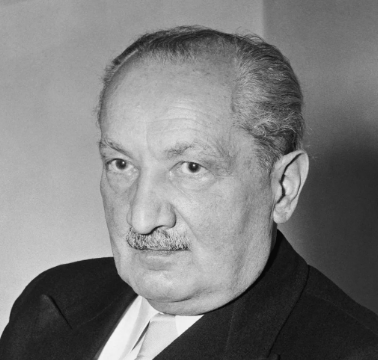
We do not "have" a body; rather, we "are" bodily.
▼
Source
source
p. 99

7 months 5 days ago
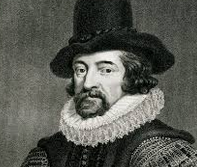
Further, it will not be amiss to distinguish the three kinds and, as it were, grades of ambition in mankind. The first is of those who desire to extend their own power in their native country, a vulgar and degenerate kind. The second is of those who labor to extend the power and dominion of their country among men. This certainly has more dignity, though not less covetousness. But if a man endeavor to establish and extend the power and dominion of the human race itself over the universe, his ambition (if ambition it can be called) is without doubt both a more wholesome and a more noble thing than the other two. Now the empire of man over things depends wholly on the arts and sciences. For we cannot command nature except by obeying her.
▼
Source
source
Aphorism 129

7 months 4 days ago
One should hasten to put such witches to death. Statement of 20 August 1538;
▼
Source
source
as quoted in Conversations With Martin Luther (1915), translated and edited by Preserved Smith and Herbert Percival Gallinger, p. 163
CivilSimian.com created by AxiomaticPanic, CivilSimian, Kalokagathia