


4 months 2 weeks ago
Those who deny the first principle should be flogged or burned until they admit that it is not the same thing to be burned and not burned, or whipped and not whipped.

4 months 1 week ago
It is good to rub and polish our brain against that of others.
▼
Source
source
Book I, Ch. 26



4 months 2 days ago
Truth happens to an idea. It becomes true, is made true by events. Its verity is in fact an event, a process: the process namely of its verifying itself, its veri-fication. Its validity is the process of its valid-ation.
▼
Source
source
Lecture VI, Pragmatism's Conception of Truth

3 months 1 week ago
The genius of democracies is seen not only in the great number of new words introduced but even more in the new ideas they express.
▼
Source
source
Book One, Chapter XVI.
4 months 1 week ago
I believe that it is possible for one to praise, without concern, any man after he is dead since every reason and supervision for adulation is lacking.
▼
Source
source
Book 1

3 months 4 weeks ago
The thought is the significant proposition.
▼
Source
source
(4) Original German: Der Gedanke ist der sinnvolle Satz.

4 months 5 days ago
All... good and useful properties of character have a price in exchange for others which have just as much use. Talent has a market price, since the sovereign or estate-owner can use a talented person in all sorts of ways. Temperament has a fancy price,22 since one can converse well with such a person; he is a pleasant companion. But, character has an inner value[,] and it is above all price.
▼
Source
source
Kant, Immanuel (1996), page 203

4 months 1 week ago
Cato said the best way to keep good acts in memory was to refresh them with new.
▼
Source
source
No. 247

4 months 2 days ago
I was seeing what Adam had seen on the morning of his creation - the miracle, moment by moment, of naked existence.
▼
Source
source
Pages 160-61

2 weeks 3 days ago
The archer must know what he is seeking to hit; then he must aim and control the weapon by his skill. Our plans miscarry because they have no aim. When a man does not know what harbour he is making for, no wind is the right wind. Chance must necessarily have great influence over our lives, because we live by chance. It is the case with certain men, however, that they do not know that they know certain things. Just as we often go searching for those who stand beside us, so we are apt to forget that the goal of the Supreme Good lies near us.
▼
Source
source
Line 3

4 months 3 days ago
A European who goes to New York and Chicago sees the future... when he goes to Asia he sees the past.
▼
Source
source
Ch. 8: Eastern and Western Ideals of Happiness

4 months 1 day ago
I exist, that is all, and I find it nauseating.

3 weeks 2 days ago
Aesop's Fly, sitting on the axle of the chariot, has been much laughed at for exclaiming: What a dust I do raise!
4 months 1 day ago
I will take it all: tongs, molten lead, prongs, garrotes, all that burns, all that tears, I want to truly suffer. Better one hundred bites, better the whip, vitriol, than this suffering in the head, this ghost of suffering which grazes and caresses and never hurts enough.
▼
Source
source
Act 1, sc. 5
2 months 5 days ago
You need to know enough philosophy so that the methods of logical analysis are available to you to be used as a tool. One of the most depressing things about educated people today is that so few of them, even among professional intellectuals, are able to follow the steps of a simple logical argument.

4 months 3 days ago
The violence of love is as much to be dreaded as that of hate. When it is durable, it is serene and equable. Even its famous pains begin only with the ebb of love, for few are indeed lovers, though all would fain be.
▼
Source
source
Pearls of Thought (1881) p. 158

5 months 3 days ago
If I were to imagine a girl deeply in love and some man who wanted to use all his reasoning powers and knowledge to ridicule her passion, well, there's surely no question of the enamoured girl having to choose between keeping her wealth and being ridiculed. No, but if some extremely cool and calculating man calmly told the young girl, "I will explain to you what love is," and the girl admitted that everything he told her was quite correct, I wonder if she wouldn't choose his miserable common sense rather than her wealth?

2 months 3 weeks ago
But fantasy kills imagination, pornography is death to art.
▼
Source
source
The Message to the Planet (1989) p. 43.

4 months 2 days ago
"And your education! Is not that also social, and determined by the social conditions under which you educate, by the intervention, direct or indirect, of society, by means of schools, etc.? The Communists have not invented the intervention of society in education; they do but seek to alter the character of that intervention, and to rescue education from the influence of the ruling class."
▼
Source
source
As quoted in The Communist Manifesto (21 February 1848), p19-20.

2 months 2 weeks ago
The materialists say, it is by means of a series of straight lines more or less perfect that one imagines the perfect straight line as an ideal limit. That is right, but the progression in itself necessarily contains what is infinite; it is in relation to the perfect straight line that one can say that such and such a straight line is less twisted than some other. ... Either one conceives the infinite or one does not conceive at all.
▼
Source
source
p. 87
4 months 2 days ago
Those who believe that they are exclusively in the right are generally those who achieve something.
▼
Source
source
"Note on Dogma"
3 weeks 2 days ago
Mahomet can work no miracles; he often answers impatiently: I can work no miracles. I? "I am a Public Preacher;" appointed to preach this doctrine to all creatures. Yet the world, as we can see, had really from of old been all one great miracle to him. Look over the world, says he; is it not wonderful, the work of Allah; wholly "a sign to you," if your eyes were open!

3 months 3 days ago
Pass by us, and forgive us our happiness.
▼
Source
source
Part 4, Chapter 5

2 days ago
The God who gave us life, gave us liberty at the same time; the hand of force may destroy, but cannot disjoin them.
▼
Source
source
Summary View of the Rights of British America (1774); The Writings of Thomas Jefferson (19 Vols., 1905) edited by Andrew A. Lipscomb and Albert Ellery Bergh, Vol. 1, p. 211
1 month 3 weeks ago
A free society is a community of free beings, bound by the laws of sympathy and by the obligations of family love. It is not a society of people released from all moral constraint-for that is precisely the opposite of a society. Without moral constraint there can be no cooperation, no family commitment, no long-term prospects, no hope of economic, let alone social, order.
▼
Source
source
"The Limits of Liberty," The American Spectator
4 months 3 days ago
Consider the Koran... this wretched book was sufficient to start a world-religion, to satisfy the metaphysical need of countless millions for twelve hundred years, to become the basis of their morality and of a remarkable contempt for death, and also to inspire them to bloody wars and the most extensive conquests. In this book we find the saddest and poorest form of theism. Much may be lost in translation, but I have not been able to discover in it one single idea of value.
▼
Source
source
E. Payne, trans., Vol. II, Ch. XVII: On Man's Need for Metaphysics

3 months 2 weeks ago
Above all things reverence thy Self.
▼
Source
source
Variant translations: Respect yourself above all. As quoted in Divine Harmony: The Life and Teachings of Pythagoras by John Strohmeier and Peter Westbrook. (1999) ISBN 0-9653774-5-8

1 month 1 week ago
Negative-utilitarianism is only one particular denomination of a broad church to which the reader may well in any case not subscribe. Fortunately, the program can be defended on grounds that utilitarians of all stripes can agree on. So a defence will be mounted against critics of the theory and application of a utilitarian ethic in general. For in practice the most potent and effective means of curing unpleasantness is to ensure that a defining aspect of future states of mind is their permeation with the molecular chemistry of ecstasy: both genetically precoded and pharmacologically fine-tuned. Orthodox utilitarians will doubtless find the cornucopian abundance of bliss this strategy delivers is itself an extra source of moral value. Future generations of native ecstatics are unlikely to disagree.
▼
Source
source
2.7 Why Be Negative?

5 months ago
Indeed, it may well be argued that one reason for the decline in science, art, and literature was the increasing absorption of the better minds into a new sort of intellectual pursuit, theology.

2 months ago
All media are extensions of some human faculty -- psychic or physical.
2 months 1 week ago
If we accept values as given and consistent, if we postulate an objective description of the world as it really is, and if we assume that the decision maker's computational powers are unlimited, then two important consequences follow. First, we do not need to distinguish between the real world and the decision maker's perception of it: he or she perceives the world as it really is. Second, we can predict the choices that will be made by a rational decision maker entirely from our knowledge of the real world and without a knowledge of the decision maker's perceptions or modes of calculation. (We do, of course, have to know his or her utility function.)
2 weeks 4 days ago
There were nowhere more docile disciples of Lenin, Trotsky and Stalin than the Nazis were.
3 months 4 weeks ago
One of the most difficult of the philosopher's tasks is to find out where the shoe pinches.
▼
Source
source
p. 61
1 week 6 days ago
Our trouble is that we have ignored and thus feel insecure in the enormous spectrum of love which lies between rather formal friendship and genital sexuality, and thus are always afraid that once we overstep the bounds of formal friendship we must slide inevitably to the extreme of sexual promiscuity.
▼
Source
source
p. 91

3 months 3 weeks ago
The usage of the words "public" and "public sphere" betrays a multiplicity of concurrent meanings. Their origins go back to various historical phases and, when applied synchronically to the conditions of a bourgeois society that is industrially advanced and constituted as a social-welfare state, they fuse into a clouded amalgam. Yet the very conditions that make the inherited language seem inappropriate appear to require these words, however confused their employment.
▼
Source
source
p. 1 as cited in: Gandy, M (1997) "Ecology, modernity and the intellectual legacy of the Frankfurt School". In: Light, A and Smith, JM, (eds.) Space, Place and Environmental Ethics. p. 240

5 months 4 days ago
Our destiny exercises its influence over us even when, as yet, we have not learned its nature: it is our future that lays down the law of our today.
2 months 3 weeks ago
The office of the sovereign, be it a monarch or an assembly, consisteth in the end for which he was trusted with the sovereign power, namely the procuration of the safety of the people, to which he is obliged by the law of nature, and to render an account thereof to God, the Author of that law, and to none but Him. But by safety here is not meant a bare preservation, but also all other contentments of life, which every man by lawful industry, without danger or hurt to the Commonwealth, shall acquire to himself. And this is intended should be done, not by care applied to individuals, further than their protection from injuries when they shall complain; but by a general providence, contained in public instruction, both of doctrine and example; and in the making and executing of good laws to which individual persons may apply their own cases.
▼
Source
source
The Second Part, Chapter 30: Of the Office of the Sovereign Representative
4 months 2 days ago
I will now confess my own utopia. I devoutly believe in the reign of peace and in the gradual advent of some sort of socialistic equilibrium. The fatalistic view of the war function is to me nonsense, for I know that war-making is due to definite motives and subject to prudential checks and reasonable criticisms, just like any other form of enterprise. And when whole nations are the armies, and the science of destruction vies in intellectual refinement with the science of production, I see that war becomes absurd and impossible from its own monstrosity. Extravagant ambitions will have to be replaced by reasonable claims, and nations must make common cause against them.

4 months 2 weeks ago
But the inner part is the better part; for to it, as both ruler and judge, all these messengers of the senses report the answers of heaven and earth and all the things therein, who said, "We are not God, but he made us." My inner man knew these things through the ministry of the outer man, and I, the inner man, knew all this, I, the soul, through the senses of my body. I asked the whole frame of earth about my God, and it answered, "I am not he, but he made me."
▼
Source
source
X, 6
2 months ago
We look at the present through a rear-view mirror. We march backwards into the future.
5 months 4 days ago
Who is the most moral man? First, he who obeys the law most frequently, who ... is continually inventive in creating opportunities for obeying the law. Then, he who obeys it even in the most difficult cases. The most moral man is he who sacrifices the most to custom. ... Self-overcoming is demanded, not on account of any useful consequences it may have for the individual, but so that hegemony of custom and tradition shall be made evident.

5 months 3 days ago
But voice is a certain sound of that which is animated; for nothing inanimate emits a voice; but they are said to emit a voice from similitude, as a pipe, and a lyre, and such other inanimate things, have extension, modulation, and dialect; for thus it appears, because voice, also, has these.

1 month 2 weeks ago
The extinction of race consciousness as between Muslims is one of the outstanding achievements of Islam, and in the contemporary world there is, as it happens, a crying need for the propagation of this Islamic virtue.
▼
Source
source
Ch. 10: Islam, the West, and the Future
5 months 3 days ago
I will not by suppression, or by performing tricks, try to produce the impression that the ordinary Christianity in the land and the Christianity of the New Testament are alike. "What Do I Want?"
2 months 3 weeks ago
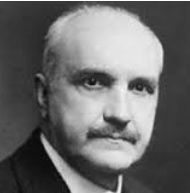
Friendship is almost always the union of a part of one mind with the part of another; people are friends in spots.
▼
Source
source
"Friendships"
5 months ago
Writing is hard work. The fact that I love doing it doesn't make it less hard work. People who love tennis will sweat themselves to exhaustion playing it, and the love of the game doesn't stop the sweating. The casual assumption that writers are unemployed bums because they don't go to the office and don't have a boss is something every writer has to live with. I have never known a writer who hasn't suffered as a result of this, hasn't resented it, and hasn't dreamed of murdering the next person who says "Boy, you've sure got it made. You just sit there and toss off a story or something whenever you feel like it."
2 months 4 weeks ago
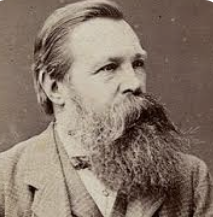
Labour is the source of all wealth, the political economists assert. And it really is the source -- next to nature, which supplies it with the material that it converts into wealth. But it is even infinitely more than this. It is the prime basic condition for all human existence, and this to such an extent that, in a sense, we have to say that labour created man himself.
▼
Source
source
The Part Played by Labour in the Transition from Ape to Man
2 weeks 4 days ago
The State's behavior is violence, and it calls its violence "law"; that of the individual, "crime." The state calls its own violence law, but that of the individual, crime.
▼
Source
source
As quoted in The Great Quotations (1960) by George Seldes, p. 664

4 months 1 week ago
Do not fight against these harmful spells. For you do not know what God wants with them. You do not know the greater divine plan behind it all.
▼
Source
source
As attributed by Kai Lehmann, curator of the exhibition "Luther und die Hexen" ("Luther and the witches"). (2013) in "Interview with Dr. Kai Lehmann, curator of the exhibition "Luther und die Hexen" ("Luther and the witches")"
CivilSimian.com created by AxiomaticPanic, CivilSimian, Kalokagathia