


2 weeks 4 days ago
Do not then consider life a thing of any value. For look at the immensity of time behind thee, and to the time which is before thee, another boundless space. In this infinity then what is the difference between him who lives three days and him who lives three generations?
▼
Source
source
IV. 50, trans. George Long

4 months 3 weeks ago
Act, if you like,-but you do it at your peril. Men's actions are too strong for them. Show me a man who has acted, and who has not been the victim and slave of his action. What they have done commits and enforces them to do the same again. The first act, which was to be an experiment, becomes a sacrament. The fiery reformer embodies his aspiration in some rite or covenant, and he and his friends cleave to the form, and lose the aspiration. The Quaker has established Quakerism, the Shaker has established his monastery and his dance; and, although each prates of spirit, there is no spirit, but repetition, which is anti-spiritual.
▼
Source
source
Goethe; or, the Writer

5 months 2 weeks ago
There has never been any custom, however useless it may become with changing conditions, that isn't clung to desperately simply because it is something old and familiar.
1 month 2 weeks ago
It is certain that nature inclines us toward the amorous orgy, just as much as toward the gastronomic orgy, and that while both are blameworthy in the excess, they would become praiseworthy in an order in which they could be equilibrated.
▼
Source
source
Charles Fourier: The Visionary and His World, J. Beecher (1986), p. 310

4 months 2 weeks ago
All testing, all confirmation and disconfirmation of a hypothesis takes place already within a system. And this system is not a more or less arbitrary and doubtful point of departure for all our arguments; no it belongs to the essence of what we call an argument. The system is not so much the point of departure, as the element in which our arguments have their life.
2 months 2 weeks ago
I think it is not helpful to apply Darwinian language too widely. Conquest of nation by nation is too distant for Darwinian explanations to be helpful. Darwinism is the differential survival of self-replicating genes in a gene pool, usually as manifested by individual behaviour, morphology, and phenotypes. Group selection of any kind is not Darwinism as Darwin understood it nor as I understand it. There is a very vague analogy between group selection and conquest of a nation by another nation, but I don't think it's a very helpful analogy. So I would prefer not to invoke Darwinian language for that kind of historical interpretation.

4 months 3 weeks ago
Possibilities that fail to get realized are, for determinism, pure illusions: they never were possibilities at all. There is nothing inchoate, it says, about this universe of ours, all that was or is or shall be actual having been from eternity virtually there. The cloud of alternatives our minds escort this mass of actuality withal is a cloud of sheer deceptions, to which 'impossibilities' is the only name that rightfully belongs.
▼
Source
source
The Dilemma of Determinism in "The Will to Believe" p. 151

1 month 1 week ago
"Do the Duty which lies nearest thee," which thou knowest to be a Duty! Thy second Duty will already have become clearer.
▼
Source
source
Bk. II, ch. 9.

4 months 2 weeks ago
There is hardly a philosophy which has not invoked something like the will or desire to know, the love of truth, etcetera. But, in truth, very few philosophers-apart, perhaps, from Spinoza and Schopenhauer-have accorded it more than a marginal status; as if there was no need for philosophy to say first of all what the name that it bears actually refers to. As if placing at the head of its discourse the desire to know, which it repeats in its name, was enough to justify its own existence and show-at a stroke-that it is necessary and natural: All men desire to know. Who, then, is not a philosopher, and how could philosophy not be the most necessary thing in the world?
▼
Source
source
pp. 4-5

5 months 1 week ago
To rank the effort above the prize may be called love.
5 months 1 week ago
It is not truth that makes man great, but man that makes truth great.

3 months 1 day ago
As the few adepts in such things well know, universal morality is to be found in little everyday penny-events just as much as in great ones. There is so much goodness and ingenuity in a raindrop that an apothecary wouldn't let it go for less than half-a-crown.
▼
Source
source
B 33

1 month 2 weeks ago
The more progress that has been made toward eradicating social injustices, the more intolerable the remaining injustices seem, and thus the moral imperative to mobilizing to correct them.

3 months 4 weeks ago
Perchance you who pronounce my sentence are in greater fear than I who receive it.
▼
Source
source
His famous response to his judges upon his conviction as a heretic, prior to his transfer to the civil authorities for execution. (16 February 1600); as quoted by Gaspar Schopp of Breslau in a letter to Conrad Rittershausen
3 months 2 weeks ago
Big industry, competition and generally the individualistic organization of production have become a fetter which it must and will shatter.

4 months 3 weeks ago
Suicide may also be regarded as an experiment - a question which man puts to Nature, trying to force her to answer. The question is this: What change will death produce in a man's existence and in his insight into the nature of things? It is a clumsy experiment to make; for it involves the destruction of the very consciousness which puts the question and awaits the answer.
▼
Source
source
Vol. 2, Ch. 13, § 160

3 months 3 weeks ago
If there is one realm in which it is essential to be sublime, it is in wickedness. You spit on a petty thief, but you can't deny a kind of respect for the great criminal.
2 months 2 weeks ago
In many ways an artistic nature unfits a man for practical existence.
▼
Source
source
A Lodging for the Night.

3 months 3 weeks ago
I decline the election. - It has ever been my rule through life, to observe a proportion between my efforts and my objects. I have never been remarkable for a bold, active, and sanguine pursuit of advantages that are personal to myself.
▼
Source
source
Speech at Bristol on declining the poll (9 September 1780), quoted in The Works of the Right Honourable Edmund Burke, Vol. II (1855), p. 170
3 months 2 weeks ago
Industry controlled by society as a whole, and operated according to a plan, presupposes well-rounded human beings, their faculties developed in balanced fashion, able to see the system of production in its entirety.

4 months 3 days ago
Declining from the public ways, walk in unfrequented paths.
▼
Source
source
Symbol 5
1 month 2 days ago
This dogma had first to be shattered before men could once more go out in quest of the historical Jesus, before they could even grasp the thought of His existence. That the historic Jesus is something different from the Jesus Christ of the doctrine of the Two Natures seems to us now self-evident. We can, at the present day, scarcely imagine the long agony in which the historical view of the life of Jesus came to birth. And even when He was once more recalled to life. He was still, like Lazarus of old, bound hand and foot with grave-clothes - the grave-clothes of the dogma of the Dual Nature.
▼
Source
source
p. 3

1 month 6 days ago
Most men ebb and flow in wretchedness between the fear of death and the hardships of life; they are unwilling to live, and yet they do not know how to die.

4 months 3 weeks ago
An irrational fear should never be simply let alone, but should be gradually overcome by familiarity with its fainter forms.
▼
Source
source
On Education, Especially in Early Childhood (1926), Ch. 4: Fear
1 month 2 weeks ago
We have not a direct intuition of the equality of two intervals of time.

2 months 3 weeks ago
Literature is idiosyncratic arrangements in horizontal lines in only twenty-six symbols, ten arabic numbers, and about eight punctuation marks.
▼
Source
source
Public conversation with Lee Stringer, in Like Shaking Hands With God

3 weeks ago
The majority, oppressing an individual, is guilty of a crime, abuses its strength, and by acting on the law of the strongest breaks up the foundations of society.
▼
Source
source
Letter to Éleuthère Irénée du Pont de Nemours

4 months 1 week ago
By convention sweet is sweet, bitter is bitter, hot is hot, cold is cold, color is color; but in truth there are only atoms and the void.
▼
Source
source
(trans. Durant 1939), Ch. XVI, §II, p. 353; citing C. Bakewell, Sourcebook in Ancient Philosophy, New York, 1909, "Fragment O" (Diels), p. 60
3 months 2 weeks ago
Once the first radical attack on private property has been launched, the proletariat will find itself forced to go ever further, to concentrate increasingly in the hands of the state all capital, all agriculture, all transport, all trade. All the foregoing measures are directed to this end; and they will become practicable and feasible, capable of producing their centralizing effects to precisely the degree that the proletariat, through its labor, multiplies the country's productive forces.
5 months 3 weeks ago
The life of money-making is one undertaken under compulsion, and wealth is evidently not the good we are seeking; for it is merely useful and for the sake of something else.
4 months 3 weeks ago
If pains be to be taken to give him a manly air and assurance betimes, it is chiefly as a fence to his virtue when he goes into the world under his own conduct.
▼
Source
source
Sec. 70

3 months 3 weeks ago
Americans cleave to the things of this world as if assured that they will never die,... They clutch everything but hold nothing fast, and so lose grip as they hurry after some new delight. ... Death steps in in the end and stops him before he has grown tired of this futile pursuit of that complete felicity which always escapes him. At first sight there is something astonishing in this spectacle of so many lucky men restless in the midst of abundance. But it is a spectacle as old as the world; all that is new is to see a whole people performing in it.
▼
Source
source
Book Two, Chapter XIII.

3 months 4 days ago
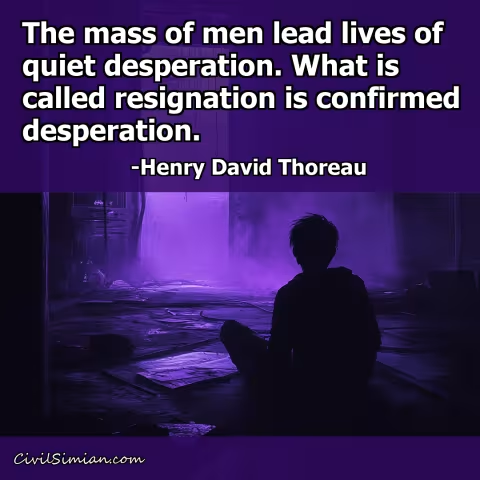
Upper middle-class upbringing has rooted out any element of what might appear to be self-assertion or egoism; good manners is to be like everyone else. So the male of the species becomes accustomed to suppress any stirring of impatience or originality. Shaw once said you can't learn to skate without making a fool of yourself; the British middle-class attitude seems to be that, in that case, you hadn't better skate at all. The result seems to be considerably more oppressive than being brought up in a Jewish ghetto or a west side slum.
▼
Source
source
p. 112, An integrity born of hope: Notes on Christopher Isherwood
1 month 1 week ago
Happy the people whose annals are blank in history books!
▼
Source
source
Life of Frederick the Great, Bk. XVI, ch. 1.
3 months 3 weeks ago
I am well aware, that men love to hear of their power, but have an extreme disrelish to be told of their duty.
▼
Source
source
p. 441

1 month 2 weeks ago
The refusal of work and authority, or really the refusal of voluntary servitude, is the beginning of liberatory politics.
▼
Source
source
204

1 month 6 days ago
Pain he endures, death he awaits.
4 months 1 week ago
O Fortune, cruellest of heavenly powers, why make such game of this poor life of ours?
▼
Source
source
Book II, satire viii, line 61 (trans. Conington)

4 months 2 days ago
Place is the greatest thing, as it contains all things.
▼
Source
source
As quoted in Diogenes Laërtius, The Lives and Opinions of Eminent Philosophers, I, 35

5 months 3 weeks ago
Is Wagner a human being at all? Is he not rather a disease? He contaminates everything he touches - he has made music sick.
5 months 2 weeks ago
Well, then, arrest him. You can accuse him of something or other afterward.
4 months 3 weeks ago
I must before I die, find some way to say the essential thing that is in me, that I have never said yet - a thing that is not love or hate or pity or scorn, but the very breath of life, fierce and coming from far away, bringing into human life the vastness and fearful passionless force of non-human things...
▼
Source
source
p. 261

3 months 1 week ago
Liberating tolerance, then, would mean intolerance against movements from the Right, and toleration of movements from the Left.
▼
Source
source
An Essay on Liberation Beacon Press, 1969, p. 109
3 months 3 weeks ago
We are taught to believe that a desire of domineering over our countrymen is love to our country; and those who hate civil war abet rebellion, and that the amiable and conciliatory virtues of lenity, moderation, and tenderness to the privileges of those who depend on this kingdom are a sort of treason to the state. It is impossible that we should remain long in a situation, which breeds such notions and dispositions, without some great alteration in the national character.
4 months 3 weeks ago
At the present stage in the development of the art of war, there is only way of coping with them, and that is to keep out of war. In all the densely populated countries of Western Europe, it seems almost certain that, within a few days of the outbreak of war, panic will seize the surviving inhabitants of the capitals and the industrial areas, leading to anarchy, starvation, and paralysis of all warlike effort. The only sensible course, therefore, is to prevent war if possible, and to remain neutral if war occurs.
▼
Source
source
Letter to The New Statesman and Nation (10 August 1935)
2 months 2 weeks ago
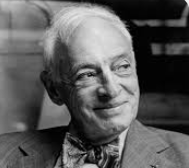
The university, in a society ruled by public opinion, was to have been an island of intellectual freedom where all views were investigated without restriction. ... But by consenting to play an active or "positive," a participatory role in society, the university has become inundated and saturated with the backflow of society's "problems." Preoccupied with questions of Health, Sex, Race, War, academics make their reputations and their fortunes. ... Any proposed reforms of liberal education which might bring the university into conflict with the whole of the U.S.A. are unthinkable. Increasingly, the people "inside" are identical in their appetites and motives with the people "outside" the university.
▼
Source
source
p. 18
3 months 4 days ago
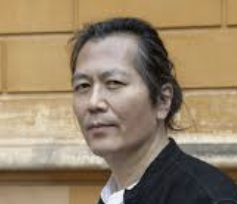
An ethos of freedom stops power from solidifying into domination and makes sure it remains an open game.
CivilSimian.com created by AxiomaticPanic, CivilSimian, Kalokagathia