

3 months 1 week ago
A word is a bud attempting to become a twig. How can one not dream while writing? It is the pen which dreams. The blank page gives the right to dream.
▼
Source
source
Introduction, sect. 6
4 weeks 1 day ago
If the early Chinese people had any chivalry, it was manifested not toward women and children, but toward old people. That feeling of chivalry found clear expression in Mencius in some such saying as, "The people with gray hair should not be seen carrying burdens on the street," which was expressed as the final goal of good government.
▼
Source
source
p. 193

3 months 3 weeks ago
Economy is a distributive virtue, and consists not in saving but selection. Parsimony requires no providence, no sagacity, no powers of combination, no comparison, no judgment.

2 weeks 4 days ago
Either everything is illusion, nature as well as revelation, or experience alone can explain faith.
4 months 3 weeks ago
Philosophical knowledge is the knowledge gained by reason from concepts; mathematical knowledge is the knowledge gained by reason from the construction of concepts.
▼
Source
source
A 713, B 741

4 months 4 weeks ago
Few men have been admired by their own households.
▼
Source
source
Ch. 2

3 months 5 days ago
The greatest invention of the nineteenth century was the invention of the method of invention.
▼
Source
source
Ch. 6: "The Nineteenth Century", p. 136

1 month 2 weeks ago
In the Thirty Years' War... a third of the population of central Europe were killed in a bloody struggle between different Christian religious sects, and the pragmatic part of liberalism was to take final ends [defined by religions] out of political discussion... and to lower the sights of politics to defend life itself, and not "the good life"... as defined by a particular sect of a particular religion.
▼
Source
source
8:28

2 months 3 weeks ago
To say that a life is grievable is to claim that a life, even before it is lost, is, or will be, worthy of being grieved on the occasion of its loss; the life has value in relation to mortality. One treats a person differently if one brings the sense of the grievability of the other to one's ethical bearing toward the other. If an other's loss would register as a loss, would be marked and mourned, and if the prospect of loss is feared, and precautions are thus taken to safeguard that life from harm or destruction, then our very ability to value and safeguard a life depends upon an ongoing sense of its grievability-the conjectured future of a life as an indefinite potential that would be mourned were it cut short or lost.
▼
Source
source
p. 75

2 months 2 weeks ago
Ads represent the main channel of intellectual and artistic effort in the modern world.
▼
Source
source
Commonweal, Vol. 58 (1953), p. 557
4 months 4 weeks ago
The strangest, most generous, and proudest of all virtues is true courage.

2 months 3 weeks ago
I'm prepared to teach acceptance of religion, but, religion has to agree to the social contract. If we have to do it church by church, I'm ready.

3 months 1 week ago
The total victimization of the individual that takes place is encouraged for the specific benefit of the industrial and political bureaucracy. It therefore cannot be justified on the ground of the individual's true interest. National Socialist ideology simply states that true human existence consists in unconditional sacrifice, that it is of the essence of the individual's life to abbey and to serve-'service which never comes to an end because service and life coincide.'
▼
Source
source
P. 416

5 months 2 weeks ago
To succeed, planning alone is insufficient. One must improvise as well.
3 months 1 week ago
The concept of guilt is found most powerfully developed even in the most primitive communal forms which we know: ... the man is guilty who violates one of the original laws which dominate the society and which are mostly derived from a divine founder; the boy who is accepted into the tribal community and learns its laws, which bind him thenceforth, learns to promise; this promise is often given under the sign of death, which is symbolically carried out on the boy, with a symbolical rebirth.
▼
Source
source
p. 178

3 months 3 weeks ago
Only a very bad theologian would confuse the certainty that follows revelation with the truths that are revealed. They are entirely different things.
▼
Source
source
Apology for the Abbé de Prades

4 months 3 weeks ago
There is nothing in any object, consider'd in itself, which can afford us a reason for drawing a conclusion beyond it; even after the observation of the frequent or constant conjunction of objects, we have no reason to draw any inference concerning any object beyond those of which we have had experience.
▼
Source
source
Part 3, Section 12
4 months 3 weeks ago
Love in animals, has not for its only object animals of the same species, but extends itself farther, and comprehends almost every sensible and thinking being. A dog naturally loves a man above his own species, and very commonly meets with a return of affection.
▼
Source
source
Part 2, Section 12

3 months 1 week ago
You read the face of the sky and of the earth, but you have not recognized the one who is before you, and you do not know how to read this moment.

4 months 3 weeks ago
Drunkenness is temporary suicide.
3 months 3 weeks ago
The earth with yellow pears And overgrown with roses wild Upon the pond is bent, And swans divine, With kisses drunk You drop your heads In the sublimely sobering water. But where, with winter come, am I To find, alas, the floweres, and where The sunshine And the shadow of the world? Cold the walls stand And the wordless, in the wind The weathercocks are rattling.
▼
Source
source
"Halves of Life"

1 month 1 week ago
He that has a secret should not only hide it, but hide that he has it to hide.
▼
Source
source
Pt. II, Bk. I, ch. 7.

4 months 3 weeks ago
It was his peculiar doctrine that a man has a perfect right to interfere by force with the slaveholder, in order to rescue the slave. I agree with him. They who are continually shocked by slavery have some right to be shocked by the violent death of the slaveholder, but no others.
4 months 3 weeks ago
The observer, when he seems to himself to be observing a stone, is really, if physics is to be believed, observing the effects of the stone upon himself.
▼
Source
source
An Inquiry into Meaning and Truth (1940), Introduction, p. 15

3 months ago
If countries were named after the words you first hear when you go there, England would have to be called Damn It.
▼
Source
source
F 33

3 months 1 week ago
Writing is like getting married. One should never commit oneself until one is amazed at one's luck.
▼
Source
source
The Black Prince (1973); 2003, p. 10.
2 weeks 6 days ago
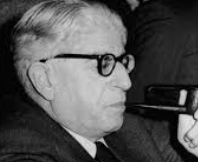
Now to get back to our given Church: it lives almost entirely for modesty and moneyed piety. It zealously inveighs against the harm done to Joseph and the sheep, but it has made its arrangements with the upper classes and serves as their spiritual defender. It bristles at see-through blouses, but not at slums in which half-naked children starve, and not, above all, at the conditions that keep three quarters of mankind in misery. It condemns desperate girls who abort a foetus, but it consecrates war, which aborts millions. It has nationalized its God, nationalized him into ecclesiastic organization, and has inherited the Roman empire under the mask of the Crucified. It preserves misery and injustice, having first tolerated and then approved the class power that causes them; it prevents any seriousness about deliverance by postponing it to St. Never-Ever's Day or shifting it to the beyond.
▼
Source
source
p. 144

3 months 1 week ago
Faith which does not doubt is dead faith.
▼
Source
source
La Agonía del Cristianismo (The Agony of Christianity)
3 weeks ago
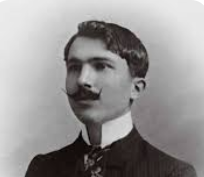
Someone within me is struggling to lift a great weight, to cast off the mind and flesh by overcoming habit, laziness, necessity. I do not know from where he comes or where he goes. I clutch at his onward march in my ephemeral breast, I listen to his panting struggle, I shudder when I touch him.
4 months 3 weeks ago
No man with a genius for legislation has appeared in America. They are rare in the history of the world. There are orators, politicians, and eloquent men, by the thousand; but the speaker has not yet opened his mouth to speak who is capable of settling the much-vexed questions of the day.

3 months 3 weeks ago
I have seen the truth; I have seen and I know that people can be beautiful and happy without losing the power of living on earth. I will not and cannot believe that evil is the normal condition of mankind. And it is just this faith of mine that they laugh at. But how can I help believing it? I have seen the truth - it is not as though I had invented it with my mind, I have seen it, seen it, and the living image of it has filled my soul for ever. I have seen it in such full perfection that I cannot believe that it is impossible for people to have it.

8 months 3 weeks ago
In the more sophisticated versions of the critics of ideology - that developed by the Frankfurt School, for example - it is not just a question of seeing things (that is, social reality) as they 'really are," of throwing away the distorting spectacles of ideology; the main point is to see how the reality itself cannot reproduce itself without this so-called ideological mystification. The mask is not simply hiding the real state of things; the ideological distortion is written into its very essence... the moment we see it 'as it really is,' this being dissolves itself into nothingness or, more precisely, it changes into another kind of reality. That is why we must avoid simple metaphors of demasking, of throwing away the veils which are supposed to hide the naked reality.
1 month 1 week ago
With stupidity and sound digestion man may front much.
▼
Source
source
Bk. II, ch. 4.

4 months 3 weeks ago
To live without duties is obscene.
▼
Source
source
Aristocracy
3 months 3 weeks ago
Yes, I dreamed a dream, my dream of the third of November. They tease me now, telling me it was only a dream. But does it matter whether it was a dream or reality, if the dream made known to me the truth? If once one has recognized the truth and seen it, you know that it is the truth and that there is no other and there cannot be, whether you are asleep or awake. Let it be a dream, so be it, but that real life of which you make so much I had meant to extinguish by suicide, and my dream, my dream - oh, it revealed to me a different life, renewed, grand and full of power!

5 months ago
For the inquisition of Final Causes is barren, and like a virgin consecrated to God produces nothing.
▼
Source
source
Book III, viii
4 months 3 weeks ago
You must read Plato. But you must hold him at arm's length and say, 'Plato, you have delighted and edified mankind for two thousand years. What have you to say to me?'
▼
Source
source
Said to a young Oliver Wendell Holmes, Jr., as reported by Felix Frankfurter in Harlan Buddington Phillips, Felix Frankfurter Reminisces (1960), p. 59
1 month 1 week ago
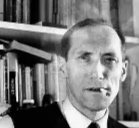
Culture, when it loses its sacred sense, loses all sense. With the disappearance of the sacred, which imposed limits to the perfection which could be attained by the profane, arises one of the most dangerous illusions of our civilization-the illusion that there are no limits to the changes that human life can undergo, that society is 'in principle' an endlessly flexible thing, and that to deny this flexibility and this perfectibility is to deny man's total autonomy and thus to deny man himself.
▼
Source
source
The Revenge of the Sacred in Secular Culture

5 months 1 week ago
With regard to the abuse of authority, this also may come about in two ways. First, when what is ordered by an authority is opposed to the object for which that authority was constituted (if, for example, some sinful action is commanded or one which is contrary to virtue, when it is precisely for the protection and fostering of virtue that authority is instituted). In such a case, not only is there no obligation to obey the authority, but one is obliged to disobey it, as did the holy martyrs who suffered death rather than obey the impious commands of tyrants. Secondly, when those who bear such authority command things which exceed the competence of such authority; as, for example, when a master demands payment from a servant which the latter is not bound to make, and other similar cases. In this instance the subject is free to obey or disobey.
▼
Source
source
in Aquinas: Selected Political Writings (Basil Blackwell: 1974), p. 183
4 months 4 weeks ago
Observe, observe perpetually.

3 weeks ago
Were we directed from Washington when to sow and when to reap, we should soon want bread.
▼
Source
source
Autobiography (1821), reprinted in Basic Writings of Thomas Jefferson, ed. Philip S. Foner, New York: Wiley Book Company (1944} p. 464
4 months 3 weeks ago
It is only when we think abstractly that we have such a high opinion of man. Of men in the concrete, most of us think the vast majority very bad. Civilized states spend more than half their revenue on killing each other's citizens. Consider the long history of the activities inspired by moral fervour: human sacrifices, persecutions of heretics, witch-hunts, pogroms leading up to wholesale extermination by poison gases ... Are these abominations, and the ethical doctrines by which they are prompted, really evidence of an intelligent Creator? And can we really wish that the men who practised them should live for ever? The world in which we live can be understood as a result of muddle and accident; but if it is the outcome of a deliberate purpose, the purpose must have been that of a fiend. For my part, I find accident a less painful and more plausible hypothesis.
▼
Source
source
Essay Do We Survive Death?, 1936
3 months 3 weeks ago
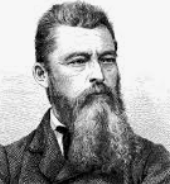
The history of philosophical system is the picture gallery of reason.
▼
Source
source
Z. Hanfi, trans., in The Fiery Brook (1972), p. 68
2 months 1 week ago
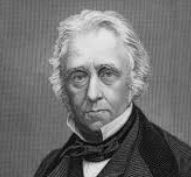
It is surely delightful, Sir, to look forward to that period when a series of liberal and prudent measures shall have delivered islands, so highly favoured by the bounty of Providence, from the curse inflicted on them by the frantic rapacity of man. Then the peasant of the Antilles will no longer crawl in listless and trembling dejection round a plantation from whose fruits he must derive no advantage, and a hut whose door yields him no protection; but, when his cheerful and voluntary labour is performed, he will return with the firm step and erect brow of a British citizen from the field which is his freehold to the cottage which is his castle.
▼
Source
source
Speech to a meeting of the Anti-Slavery Society held in Freemasons' Tavern (25 June 1824), quoted in Report of the Committee of the Society for the Mitigation and Gradual Abolition of Slavery Throughout the British Dominions, Volume I (1824), p. 77
4 months 3 weeks ago
Poetry is the mysticism of mankind.
CivilSimian.com created by AxiomaticPanic, CivilSimian, Kalokagathia