


5 months 2 weeks ago
It is written again, Thou shalt not tempt the Lord thy God.
▼
Source
source
4:7 (KJV) Said to Satan. The reference is to Deuteronomy 6:16, "Ye shall not tempt the Lord your God, as ye tempted him in Massah." (KJV)
5 months 2 weeks ago
Whoever blasphemes against the Father will be forgiven, and whoever blasphemes against the Son will be forgiven, but whoever blasphemes against the Holy Spirit will not be forgiven either on earth or in heaven.
7 months 3 weeks ago
Rhetoric is the counterpart of Dialectic. Both alike are concerned with such things as come, more or less, within the general ken of all men and belong to no definite science. Accordingly, all men make use, more or less, of both; for to a certain extent all men attempt to discuss statements and to maintain them, to defend themselves and to attack others.

6 months 3 weeks ago
Every age has its own poetry; in every age the circumstances of history choose a nation, a race, a class to take up the torch by creating situations that can be expressed or transcended only through poetry.
▼
Source
source
"Orphée Noir (Black Orpheus)"


4 months 2 weeks ago
The river of my title is a river of DNA, and it flows through time, not space. It is a river of information, not a river of bones and tissues.

6 months 3 weeks ago
The unity is brought about by force.
▼
Source
source
Notebook I, The Chapter on Money, p. 70.

6 months 3 weeks ago
Enjoin him to play so many hours every day, and look that he do it; and you shall see he will quickly be sick of it; and willing to leave it. By this means making the recreations you dislike a business to him, he will of himself with delight betake himself to those things you would have him do, especially if they be proposed as rewards for having performed the task in that play which is commanded of him.
▼
Source
source
Sec. 129

2 months 3 weeks ago
Timid men prefer the calm of despotism to the tempestuous sea of liberty.
▼
Source
source
Letter to his Italian friend, Philip Mazzei

6 months 2 weeks ago
Seek after the good, and with much toil shall ye find it; the evil turns up of itself without your seeking it.

2 months 3 weeks ago
We cannot hope to be secure when our government has declared, by its readiness "to act alone," its willingness to be everybody's enemy.

5 months 1 week ago
Every religious practice is an exercise in attention. A temple is the highest degree of attention.

3 months 2 weeks ago
Multitude is a class concept. ... Class is determined by class struggle. There are, of course, in infinite number of ways that humans can be grouped into classes - hair color, blood type, and so forth - but the classes that matter are those defined by the lines of collective struggle. Race is just as much a political concept as economic class is in this regard. ... Class is a political concept, in short, in that a class is and can only be a collectivity that struggles in common.
▼
Source
source
104
6 months 2 weeks ago
"To stamp becoming with the character of being-that is the supreme will to power." (WM 617) This suggests that becoming only is if it is grounded in being as being: "That everything recurs is the closest approximation of a world of becoming to one of being."
▼
Source
source
p. 19

6 months 3 weeks ago
The indispensible is not necessarily the desirable.
▼
Source
source
Chapter 6 (p. 48)

7 months 1 week ago
As the soul is the life of the body, so God is the life of the soul. As therefore the body perishes when the soul leaves it, so the soul dies when God departs from it.
▼
Source
source
p. 277

6 months 3 weeks ago
The hatefulness of a hated person is "real"-in hatred you see men as they are; you are disillusioned; but the loveliness of a loved person is merely a subjective haze concealing a "real" core of sexual appetite or economic association. Wars and poverty are "really" horrible; peace and plenty are mere physical facts about which men happen to have certain sentiments.
▼
Source
source
Letter XXX
5 months 2 weeks ago
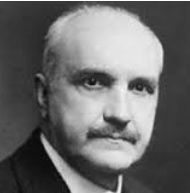
Whenever a nation is converted to Christianity, its Christianity, in practice, must be largely converted to paganism.
▼
Source
source
p. 35

3 months 2 weeks ago
Liberalism has been very severely threatened in recent years. It's been threatened from a number of sources. So internationally you have two great powers, Russia and China, that are definitely not liberal polities, that have expansive ambitions... As Vladimir Putin said... in an iterview with the FT in 2019 "Liberalism is an obsolete doctrine." But the threat... also comes from other places. ...You have the rise of a populist nationalist right in many countries. This is Viktor Orbán in Hungary. This is Narendra Modi in India, Donald Trump in the United States, ...Marine Le Pen in France. All of them criticizing liberalism precisely for the tolerance that it permits and tries to deal with, in diverse and increasingly ethnically and racially diverse countries.
▼
Source
source
5:36 Ref: Vladimir Putin says liberalism has 'become obsolete' (June 27, 2019) Financial Times.

6 months 3 weeks ago
There is no more mistaken path to happiness than worldliness, revelry, high life.
▼
Source
source
Our Relation to Others, § 24

6 months 3 weeks ago
In the course of instruction which I have partially retraced, the point most superficially apparent is the great effort to give, during the years of childhood an amount of knowledge in what are considered the higher branches of education, which is seldom acquired (if acquired at all) until the age of manhood.
▼
Source
source
(p. 30)
7 months 3 weeks ago
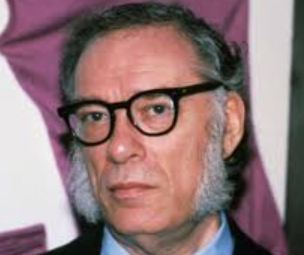
The division between human and robot is perhaps not as significant as that between intelligence and nonintelligence.
7 months 3 weeks ago
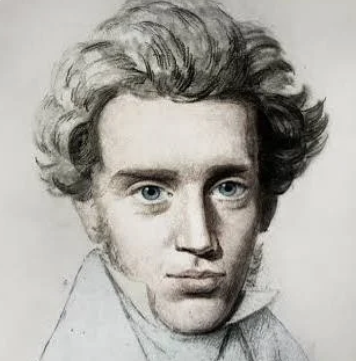
Lord Jesus Christ, our foolish minds are weak; they are more than willing to be drawn-and there is so much that wants to draw us to itself. There is pleasure with its seductive power, the multiplicity with its bewildering distractions, the moment with its infatuating importance and the conceited laboriousness of busyness and the careless time-wasting of light-mindedness and the gloomy brooding of heavy-mindedness-all this will draw us away from ourselves to itself in order to deceive us. But you, who are truth, only you, our Savior and Redeemer, can truly draw a person to yourself, which you have promised to do-that you will draw all to yourself. Then may God grant that by repenting we may come to ourselves, so that you, according to your Word, can draw us to yourself-from on high, but through lowliness and abasement.
5 months 2 weeks ago
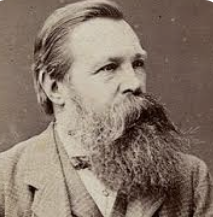
What do you say to the elections in the factory districts? Once again the proletariat has discredited itself terribly... [I]t cannot be denied that the increase of working-class voters has brought the Tories more than their mere additional percentage and has improved their relative position.
▼
Source
source
Letter to Karl Marx (18 November 1868), quoted in Karl Marx and Frederick Engels: Selected Correspondence, 1846-1895 (1942), pp. 253-254

7 months 1 week ago
For no fact is so simple we believe it at first sight, And there is nothing that exists so great or marvellous That over time mankind does not admire it less and less.
▼
Source
source
Book II, lines 1026-1029 (tr. Stallings)
5 months 2 weeks ago
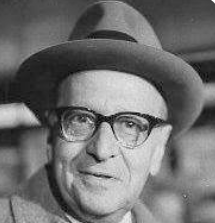
The French symbolists had a special term to express their love for things that had lost their objective significance, namely, 'spleen.' The conscious, challenging arbitrariness in the choice of objects, its 'absurdity' and 'perverseness,' as if by a silent gesture discloses the irrationality of utilitarian logic, which it then slaps in the face in order to demonstrate its inadequacy with regard to human experience. And while making it conscious, by this shock, of the fact that it forgets the subject, the gesture simultaneously expresses the subject's sorrow over his inability to achieve an objective order. Twentieth-century society is not troubled by such inconsistencies. For it, meaning can be achieved in only one way-service for a purpose.
▼
Source
source
p. 38.
6 months 1 week ago
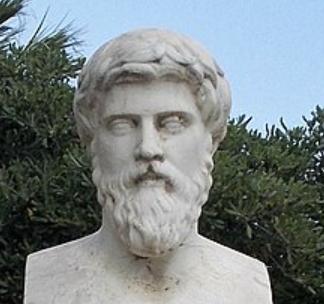
To one commending an orator for his skill in amplifying petty matters, Agesilaus said, "I do not think that shoemaker a good workman that makes a great shoe for a little foot."
▼
Source
source
Of Agesilaus the Great
7 months 3 weeks ago
Dogmatics must be designed in this way. Above all, every science must vigorously lay hold of its own beginning and not live in complicated relations with other sciences. If dogmatics begins by wanting to explain sinfulness or by wanting to prove its actuality, no dogmatics will come out of it, but the entire existence of dogmatics will become problematic and vague.
6 months 3 weeks ago
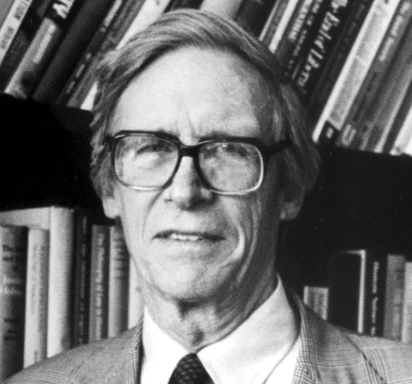
Many conservative writers have contended that the tendency to equality in modern social movements is the expression of envy. In this way they seek to discredit this trend, attributing it to collectively harmful impulses.
▼
Source
source
Chapter IX, Section 82, p. 538
5 months 2 weeks ago
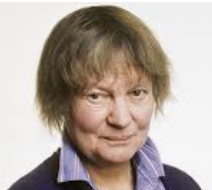
But fantasy kills imagination, pornography is death to art.
▼
Source
source
The Message to the Planet (1989) p. 43.
5 months 1 week ago
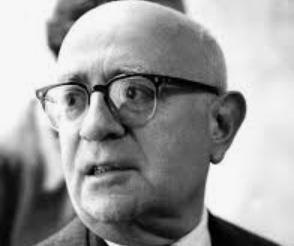
To be sure, exchange-value exerts its power in a special way in the realm of cultural goods. For in the world of commodities this realm appears to be exempted from the power of exchange, to be in an immediate relationship with the goods, and it is this appearance in turn which alone gives cultural goods their exchange-value. But they nevertheless simultaneously fall completely into the world of commodities, are produced for the market, and are aimed at the market.
▼
Source
source
p. 279
5 months 3 weeks ago
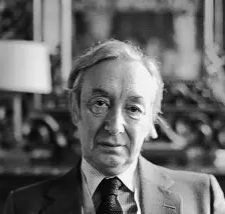
To say that authority, whether secular or religious, supplies no ground for morality is not to deny the obvious fact that it supplies a sanction.
▼
Source
source
"The Meaning of Life".
5 months 3 weeks ago
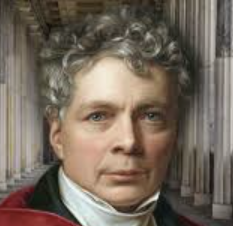
Countless attempts have been made to no avail to construct a continuity from the supreme principle of the intellectual world to the finite world. The oldest and most frequent of these attempts is well known: the principle of emanation, according to which the outflowings from the godhead, in gradual increments and detachment from the ordinary source, losing their divine perfection until, in the end, they pass into the opposite (matter, privation), just as light is finally confined by darkness.
▼
Source
source
P. 24

5 months 2 weeks ago
The office of the sovereign, be it a monarch or an assembly, consisteth in the end for which he was trusted with the sovereign power, namely the procuration of the safety of the people, to which he is obliged by the law of nature, and to render an account thereof to God, the Author of that law, and to none but Him. But by safety here is not meant a bare preservation, but also all other contentments of life, which every man by lawful industry, without danger or hurt to the Commonwealth, shall acquire to himself. And this is intended should be done, not by care applied to individuals, further than their protection from injuries when they shall complain; but by a general providence, contained in public instruction, both of doctrine and example; and in the making and executing of good laws to which individual persons may apply their own cases.
▼
Source
source
The Second Part, Chapter 30: Of the Office of the Sovereign Representative
2 months 3 weeks ago
All, too, will bear in mind this sacred principle, that though the will of the majority is in all cases to prevail, that will to be rightful must be reasonable; that the minority possess their equal rights, which equal law must protect, and to violate would be oppression. Let us, then, fellow-citizens, unite with one heart and one mind. Let us restore to social intercourse that harmony and affection without which liberty and even life itself are but dreary things.
6 months 3 weeks ago
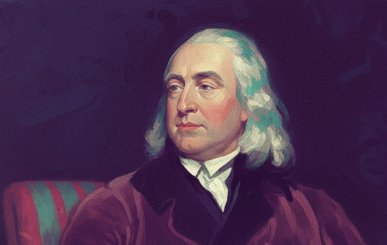
Pleasure is in itself a good; nay, even setting aside immunity from pain, the only good: pain is in itself an evil; and, indeed, without exception, the only evil; or else the words good and evil have no meaning. And this is alike true of every sort of pain, and of every sort of pleasure.
▼
Source
source
Ch. 10: Of Motives

6 months 3 weeks ago
If you are describing any occurrence... make two or more distinct reports at different times... We discriminate at first only a few features, and we need to reconsider our experience from many points of view and in various moods in order to perceive the whole.
▼
Source
source
March 24, 1857
2 months 3 weeks ago
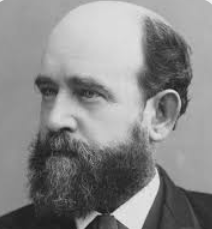
Men must have rights before they can have equal rights. Each man has a right to use the world because he is here and wants to use the world. The equality of this right is merely a limitation arising from the presence of others with like rights. Society, in other words, does not grant, and cannot equitably withhold from any individual, the right to the use of land. That right exists before society and independently of society, belonging at birth to each individual, and ceasing only with his death. Society itself has no original right to the use of land. What right it has with regard to the use of land is simply that which is derived from and is necessary to the determination of the rights of the individuals who compose it. That is to say, the function of society with regard to the use of land only begins where individual rights clash, and is to secure equality between these clashing rights of individuals.
▼
Source
source
Part I : Declaration, Ch. IV : Mr. Spencer's Confusion as to Rights
6 months 2 weeks ago
Coition is a slight attack of apoplexy. For man gushes forth from man, and is separated by being torn apart with a kind of blow.
▼
Source
source
Freeman (1948), p. 150
6 months 4 weeks ago
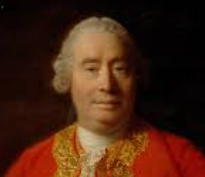
The great end of all human industry, is the attainment of happiness. For this were arts invented, sciences cultivated, laws ordained, and societies modelled, by the most profound wisdom of patriots and legislators.
▼
Source
source
Part I, Essay 16: The Stoic

6 months 3 weeks ago
No man is liberated from fear who dare not see his place in the world as it is; no man can achieve the greatness of which he is capable until he has allowed himself to see his own littleness.
▼
Source
source
Dreams and Facts, 1919

5 months 1 week ago
The ultimate metaphysical principle is the advance from disjunction to conjunction, creating a novel entity other than the entities given in disjunction.
▼
Source
source
Pt. I, ch. 2, sec. 2.

3 months 1 week ago
That most knowing of persons - gossip.
▼
Source
source
Line 1.
6 months 3 weeks ago
I cannot believe - and I say this with all the emphasis of which I am capable - that there can ever be any good excuse for refusing to face the evidence in favour of something unwelcome. It is not by delusion, however exalted, that mankind can prosper, but only by unswerving courage in the pursuit of truth.
▼
Source
source
"The Pursuit of Truth" in The Collected Papers of Bertrand Russell, 1993
6 months 2 weeks ago
"What is a thing?" is historical, because every report of the past, that is of the preliminaries to the question about the thing, is concerned with something static. This kind of historical reporting is an explicit shutting down of history, whereas it is, after all, a happening. We question historically if we ask what is still happening even if it seems to be past. We ask what is still happening and whether we remain equal to this happening so that it can really develop.
▼
Source
source
p. 43
5 months 4 weeks ago
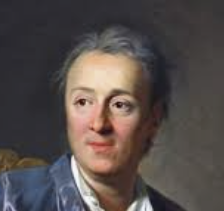
It is said that desire is a product of the will, but the converse is in fact true: will is a product of desire.
▼
Source
source
"Will, Freedom"
3 months 2 weeks ago
The poor are thought to be dangerous, either morally dangerous because they are unproductive social parasites - thieves, prostitutes, drug addicts, and the like - or potentially dangerous because they are disorganized, unpredictable, and tendentially reactionary. In fact the term lumpenproletariat (or rad proletariat) has functioned for times to demonize the poor as a whole. ... The industrial reserve army is a constant threat hanging over the heads of the existing working class because, first of all, its misery serves as a terrifying example to workers of what could happen to them, and, second, the excess supply of labor it represents lowers the costs of labor and undermines workers' power against employers (by serving potentially as strike breakers, for example).
▼
Source
source
130
5 months 3 days ago
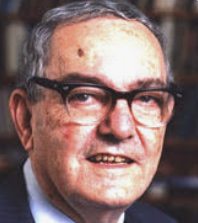
Definition of design = Everyone designs who devise courses of action aimed at changing existing situations into preferred ones. The intellectual activity that produces material artifacts is no different fundamentally from the one that prescribes remedies for a sick patient or the one that devises a new sales plan for a company or a social welfare policy for a state.
▼
Source
source
p. 130.
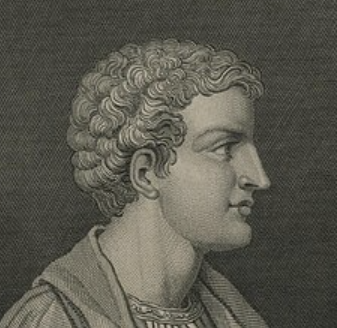
6 months 2 weeks ago
Do you count your birthdays with gratitude?
▼
Source
source
Book II, epistle ii, line 210
CivilSimian.com created by AxiomaticPanic, CivilSimian, Kalokagathia