


1 month 3 weeks ago
Perhaps, if prematurely we dismiss ourselves from this world, all may even have to be suffered through again - the premature birth may not contribute to the production of another being, which must be begun again from the beginning.

4 months 1 week ago
When you write a short story ... you had better know the ending first. The end of a story is only the end to the reader. To the writer, it's the beginning. If you don't know exactly where you're going every minute you're writing, you'll never get there or anywhere.

3 months 2 weeks ago
Neither of us cares a straw for popularity. A proof of this is for example, that, because of aversion to any personality cult, I have never permitted the numerous expressions of appreciation from various countries with which I was pestered during the existence of the International to reach the realm of publicity, and have never answered them, except occasionally by a rebuke. When Engels and I first joined the secret Communist Society we made it a condition that everything tending to encourage superstitious belief in authority was to be removed from the statutes.
▼
Source
source
Remarks against personality cults from a letter to W. Blos (10 November 1877).
1 month 3 weeks ago
A single observation that is inconsistent with some generalization points to the falsehood of the generalization, and thereby 'points to itself'.
▼
Source
source
Chapter 4, Evidence, p. 34.

2 months 2 weeks ago
As for me, I am deeply a democrat; this is why I am in no way a socialist. Democracy and socialism cannot go together. You can't have it both ways.
▼
Source
source
Notes for a Speech on Socialism (1848).
3 months 2 weeks ago
It is not to be supposed that she was, or that any one, at the age at which I first saw her, could be, all that she afterwards became. Least of all could this be true of her, with whom self-improvement, progress in the highest and in all senses, was a law of her nature; a necessity equally from the ardour with which she sought it, and from the spontaneous tendency of faculties which could not receive an impression or an experience without making it the source or the occasion of an accession of wisdom. Up to the time when I first saw her, her rich and powerful nature had chiefly unfolded itself according to the received type of feminine genius. To her outer circle she was a beauty and a wit, with an air of natural distinction, felt by all who approached her: to the inner, a woman of deep and strong feeling, of penetrating and intuitive intelligence, and of an eminently meditative and poetic nature.
▼
Source
source
(p. 185)

1 month 4 weeks ago
When contemporary feminist movement first began, feminist writings and scholarship by black women was groundbreaking. The writings of black women like Cellestine Ware, Toni Cade Bambara, Michele Wallace, Barbara Smith, and Angela Davis, to name a few, were all works that sought to articulate, define, speak to and against the glaring omissions in feminist work, the erasure of black female presence.
▼
Source
source
Teaching to Transgress: Education as the Practice of Freedom

3 months 2 weeks ago
The value which the workmen add to the materials, therefore, resolves itself in this case into two parts, of which the one pays their wages, the other the profits of the employer upon the whole stock of materials and wages which he advanced.
▼
Source
source
Chapter VI, p. 58.

1 month 1 week ago
We live invested in an electric information environment that is quite as imperceptible to us as water is to fish.
▼
Source
source
(p. 5)

3 months 2 weeks ago
In our reasonings concerning matter of fact, there are all imaginable degrees of assurance, from the highest certainty to the lowest species of moral evidence. A wise man, therefore, proportions his belief to the evidence.
▼
Source
source
Section X: Of Miracles; Part I. 87

4 months 2 weeks ago
If there is some end of the things we do, which we desire for its own sake, clearly this must be the good. Will not knowledge of it, then, have a great influence on life? Shall we not, like archers who have a mark to aim at, be more likely to hit upon what we should? If so, we must try, in outline at least, to determine what it is.

3 months 1 week ago
A utopia of judicial reticence: take away life, but prevent the patient from feeling it; deprive the prisoner of all rights, but do not inflict pain; impose penalties free of all pain. Recourse to psycho-pharmacology and to various physiological 'disconnectors', even if it is temporary, is a logical consequence of this 'non-corporal' penalty.
▼
Source
source
Chapter One, The Spectacle of the Scaffold

3 weeks 2 days ago
By far my greatest dread in life [...] is that (some variant of) the Everett interpretation of Quantum Mechanics is true. Dave's Diary, BLTC Research, May 1996
3 months 4 days ago
When he was asked what advantage had accrued to him from philosophy, his answer was, "The ability to hold converse with myself."
▼
Source
source
§ 4
1 month 3 weeks ago
Man's life cannot "be lived" by repeating the pattern of his species; he must live. Man is the only animal that can be bored, that can be discontented, that can feel evicted from paradise. Man is the only animal for whom his own existence is a problem which he has to solve and from which he cannot escape. He cannot go back to the prehuman state of harmony with nature; he must proceed to develop his reason until he becomes the master of nature, and of himself.
▼
Source
source
Ch. 3 "Human Nature and Character

1 month 4 weeks ago
The real issue is not whether two and two make four or whether two and two make five, but whether life advances by men who love words or men who love living.
▼
Source
source
Chapter Nine, Breaking the Circuit
2 months 1 week ago
I like to walk about amidst the beautiful things that adorn the world; but private wealth I should decline, or any sort of personal possessions, because they would take away my liberty.
▼
Source
source
"The Irony of Liberalism"

2 months ago
Men ... ask nothing better, it would seem, than to leave their destiny, their life, and all their thoughts in the hands of a few men with a gift for the exclusive manipulation of this or that technique.
▼
Source
source
"Wave Mechanics," p. 75

2 months 3 weeks ago
Knowledge that is not Infallible is not certain knowledge.
▼
Source
source
I. Introduction, p. 7.
1 month 3 days ago
Nothing is so galling to a people not broken in from the birth, as a paternal, or, in other words, a meddling government, a government which tells them what to read, and say, and eat, and drink, and wear.
▼
Source
source
p. 252

3 months 1 week ago
Catherine: Why commit Evil? Goetz: Because Good has already been done. Catherine: Who has done it? Goetz: God the Father. I, on the other hand, am improvising.
▼
Source
source
Act 3, sc. 4

3 months 1 week ago
Always remember that it is impossible to speak in such a way that you cannot be misunderstood: there will always be some who misunderstand you.

2 months 2 weeks ago
A dream! What is a dream? And is not our life a dream? I will say more. Suppose that this paradise will never come to pass (that I understand), yet I shall go on preaching it. And yet how simple it is: in one day, in one hour everything could be arranged at once! The chief thing is to love others like yourself, that's the chief thing, and that's everything; nothing else is wanted - you will find out at once how to arrange it all. And yet it's an old truth which has been told and retold a billion times - but it has not formed part of our lives! The consciousness of life is higher than life, the knowledge of the laws of happiness is higher than happiness - that is what one must contend against. And I shall. If only everyone wants it, it can be arranged at once.

4 weeks ago
The way out of this violent cycle is to deepen democracy-to bring decisions that directly affect people's lives as close as possible to where people are and to where they can take responsibility.

2 months 1 week ago
I cannot contribute anything to this world because I only have one method: agony.

4 months 2 weeks ago
...and woe betide fateful curiosity should it ever succeed in peering through a crack in the chamber of consciousness, out and down into the depths, and thus gain an intimation of the fact that humanity, in the indifference of its ignorance, rests on the pitiless, the greedy, the insatiable, the murderous clinging in dreams, as it were, to the back of a tiger.

3 months 2 weeks ago
The fact that all Mathematics is Symbolic Logic is one of the greatest discoveries of our age; and when this fact has been established, the remainder of the principles of mathematics consists in the analysis of Symbolic Logic itself.
▼
Source
source
Principles of Mathematics (1903), Ch. I: Definition of Pure Mathematics, p. 5
3 months 2 days ago
A physician, after he had felt the pulse of Pausanias, and considered his constitution, saying, "He ails nothing," "It is because, sir," he replied, "I use none of your physic."
▼
Source
source
Of Pausanias the Son of Phistoanax

3 months 2 weeks ago
Men go to a fire for entertainment. When I see how eagerly men will run to a fire, whether in warm or in cold weather, by day or by night, dragging an engine at their heels, I'm astonished to perceive how good a purpose the level of excitement is made to serve.
▼
Source
source
June, 1850
1 month 4 weeks ago
The process begins with the individual woman's acceptance that American women, without exception, are socialized to be racist, classist and sexist, in varying degrees, and that labeling ourselves feminists does not change the fact that we must consciously work to rid ourselves of the legacy of negative socialization.
3 months 2 weeks ago
But simultaneously with the development of capitalist production the credit system also develops. The money-capital which the capitalist cannot as yet employ in his own business is employed by others, who pay him interest for its use.
▼
Source
source
Vol. II, Ch. XVII, p. 325.
2 months 1 week ago
I react like everyone else, even like those I most despise; but I make up for it by deploring every action I commit, good or bad.
2 months 5 days ago
Reason as an organ for perceiving the true nature of reality and determining the guiding principles of our lives has come to be regarded as obsolete.
▼
Source
source
p. 18.
1 month 3 weeks ago
I believe that man is the product of natural evolution that is born from the conflict of being a prisoner and separated from nature, and from the need to find unity and harmony with it.
2 months 2 weeks ago
I have come across men of letters who have written history without taking part in public affairs, and politicians who have concerned themselves with producing events without thinking about them. I have observed that the first are always inclined to find general causes whereas the second, living in the midst of disconnected daily facts, are prone to imagine that everything is attributable to particular incidents, and that the wires they pull are the same as those that move the world. It is to be presumed that both are equally deceived.
▼
Source
source
Recollections of Alexis de Tocqueville, p. 80
2 months 1 week ago
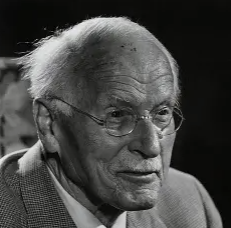
No psychic value can disappear without being replaced by another of equivalent intensity.
▼
Source
source
p. 209

3 months 3 weeks ago
The principles of pleasure are not firm and stable. They are different in all mankind, and variable in every particular with such a diversity that there is no man more different from another than from himself at different times.

2 months 1 week ago
What, could ye not watch with me one hour? Watch and pray, that ye enter not into temptation: the spirit indeed is willing, but the flesh is weak.
▼
Source
source
26:40-41 (KJV)

3 months 2 weeks ago
A difference which makes no difference is no difference at all.
▼
Source
source
As quoted in William James: The Essential Writings (1971), edited by Bruce W. Wilshire, p. xiii
3 months 2 weeks ago
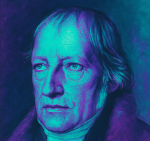
It may indeed be said that since Philosophy began to take a place in Germany, it has never looked so badly as at the present time - never have emptiness and shallowness overlaid it so completely, and never have they spoken and acted with such arrogance, as though all power were in their hands ! To combat the shallowness, to strive with German earnestness and honesty, to draw Philosophy out of the solitude into which it has wandered - to do such work as this we may hope that we are called by the higher spirit of our time.
▼
Source
source
p. xi Ibid
3 months 1 week ago
Her face seems ravaged by both lightning and hail. But on yours there is something like the promise of a storm: one day passion will burn it to the bone.
▼
Source
source
Act 1

1 month 3 weeks ago
Has not authority from time immemorial stamped every step of progress as treasonable?
2 months 1 week ago
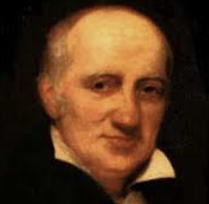
A common mortal periodically selected by his fellow-citizens to watch over their own interests, can never be supposed to possess this stupendous virtue.
▼
Source
source
Book III, Chapter 9
2 months 1 week ago
Every plant, which my heavenly Father hath not planted, shall be rooted up. Let them alone: they be blind leaders of the blind. And if the blind lead the blind, both shall fall into the ditch.
▼
Source
source
15:13-14 (KJV)

3 weeks ago
The most important feature of natural selection is that it is a process of drift. Evolution has no end-point or direction, so if the development of society is an evolutionary process it is one that is going nowhere.
▼
Source
source
An Old Chaos: Humanism and Flying Saucers (p. 78)
4 months 1 week ago
There is a kind of selective memory that afflicts men when they view the past. They see the good and overlook the evil.
2 months 1 week ago
Haven't people learned yet that the time of superficial intellectual games is over, that agony is infinitely more important than syllogism, that a cry of despair is more revealing than the most subtle thought, and that tears always have deeper roots than smiles?
3 months 2 weeks ago
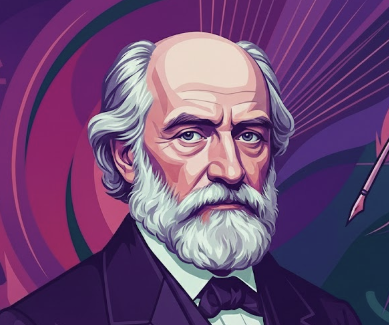
If a big diamond is cut up into pieces, it immediately loses its value as a whole; or if an army is scattered or divided into small bodies, it loses all its power; and in the same way a great intellect has no more power than an ordinary one as soon as it is interrupted, disturbed, distracted, or diverted; for its superiority entails that it concentrates all its strength on one point and object, just as a concave mirror concentrates all the rays of light thrown upon it. Noisy interruption prevents this concentration. This is why the most eminent intellects have always been strongly averse to any kind of disturbance, interruption and distraction, and above everything to that violent interruption which is caused by noise; other people do not take any particular notice of this sort of thing.
▼
Source
source
On Noise
3 months 2 days ago
Alcibiades had a very handsome dog, that cost him seven thousand drachmas; and he cut off his tail, "that," said he, "the Athenians may have this story to tell of me, and may concern themselves no further with me."
▼
Source
source
50 Alcibiades

4 months 1 week ago
Socrates: Dear Pan and all the other Gods of this place, grant that I may be beautiful inside. Let all my external possessions be in friendly harmony with what is within. May I consider the wise man rich. As for gold, let me have as much as a moderate man could bear and carry with him. Do we need anything more, Phaedrus? For me that prayer is enough. Phaedrus: Let me also share in this prayer; for friends have all things in common.
CivilSimian.com created by AxiomaticPanic, CivilSimian, Kalokagathia