

2 months 2 days ago
The basic word I-Thou can be spoken only with one's whole being. The concentration and fusion into a whole being can never be accomplished by me, can never be accomplished without me. I require a Thou to become; becoming I, I say Thou.
1 month 4 days ago
Anxiety destroys scale, and suffering makes us lose perspective.
▼
Source
source
The Sealed Treasure (1960), p. 62
3 months 6 days ago
The gesture that divides madness is the constitutive one, not the science that grows up in the calm that returns after the division has been made.
▼
Source
source
Preface to 1961 edition
3 months 1 day ago
Once, when he was applauded by rascals, he remarked, "I am horribly afraid I have done something wrong."
▼
Source
source
§ 5
3 months 1 week ago
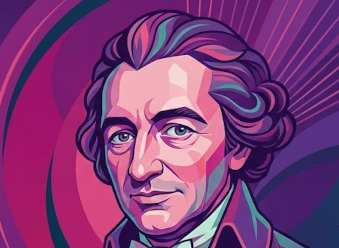
The Theophilanthropists do not call themselves the disciples of such or such a man. They avail themselves of the wise precepts that have been transmitted by writers of all countries and in all ages.
▼
Source
source
Introduction
3 months 2 days ago
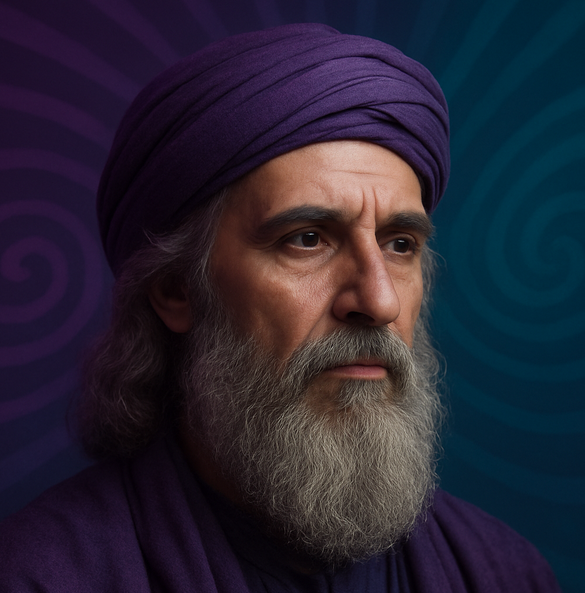
Commit no slander; so that infamy and wickedness may not happen unto thee.
▼
Source
source
(p. 59)
1 month 1 week ago
Physiologically, man in the normal use of technology (or his variously extended body) is perpetually modified by it and in turn finds ever new ways of modifying his technology. Man becomes, as it were, the sex organs of the machine world, as the bee of the plant world, enabling it to fecundate and to evolve ever new forms. The machine world reciprocates man's love by expediting his wishes and desires, namely, in providing him with wealth. One of the merits of motivation research has been the revelation of man's sex relation to the motorcar.
▼
Source
source
(p.46)

2 days ago
Yet with every allowance, one feels it difficult to see how any mortal ever could consider this Koran as a Book written in Heaven, too good for the Earth; as a well-written book, or indeed as a book at all; and not a bewildered rhapsody; written, so far as writing goes, as badly as almost any book ever was!
3 months 3 weeks ago
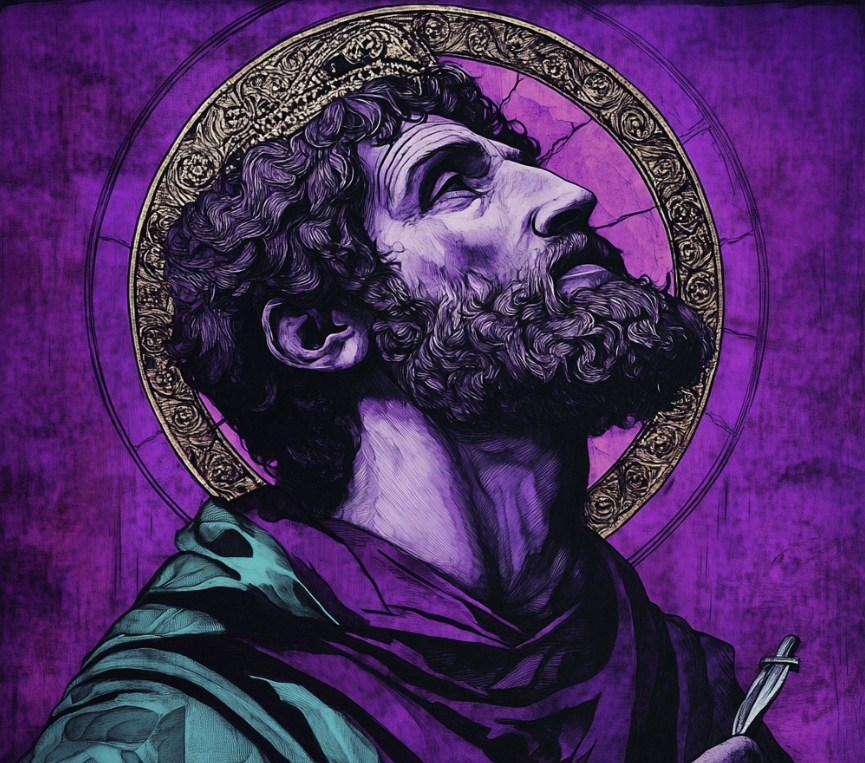
Since love grows within you, so beauty grows. For love is the beauty of the soul.
3 months 1 week ago
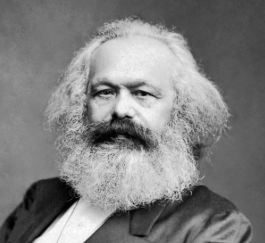
Capital is money, capital is commodities. ... By virtue of it being value, it has acquired the occult ability to add value to itself. It brings forth living offspring, or, at the least, lays golden eggs.
▼
Source
source
Vol. I, Ch. 4, pp. 171-172

2 months 1 week ago
Freedom can be manifested only in the void of beliefs, in the absence of axioms, and only where the laws have no more authority than a hypothesis.

3 months 1 week ago
No man can have society upon his own terms. If he seeks it, he must serve it too.
▼
Source
source
1833
3 months 1 week ago
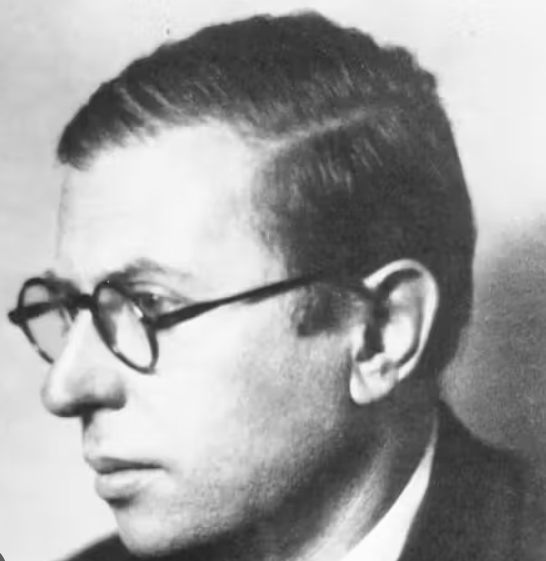
What do we mean by saying that existence precedes essence? We mean that man first of all exists, encounters himself, surges up in the world-and defines himself afterwards. If man as the existentialist see him is not definable, it is because to begin with he is nothing. He will not be anything until later, and then he will be what he makes of himself. Thus, there is no human nature, because there is no God to have a conception of it. Man simply is. Not that he is simply what he conceives himself to be, but he is what he wills, and as he conceives himself after already existing - as he wills to be after that leap towards existence. Man is nothing else but that which he makes of himself. That is the first principle of existentialism.
▼
Source
source
p. 28
3 months 6 days ago
Whatever the poverty of our knowledge in this respect, it is certain that the question of the sign is itself more or less, or in any event something other, than a sign of the times. To dream of reducing it to a sign of the times is to dream of violence.
▼
Source
source
Force and Signification

3 months 1 week ago
Prejudice is an opinion without judgement.
▼
Source
source
"Prejudices", 1764
1 month 3 weeks ago
We are now living in an age of literary exhaustion; we get used to the bleak landscape. Cyril Connolly said that the writer's business is to produce masterpieces; but what masterpieces have been produced in the past fifty years?
▼
Source
source
p. 11
3 months 2 weeks ago
Why may not a goose say thus: "All the parts of the universe I have an interest in: the earth serves me to walk upon, the sun to light me; the stars have their influence upon me; I have such an advantage by the winds and such by the waters; there is nothing that yon heavenly roof looks upon so favourably as me. I am the darling of Nature! Is it not man that keeps and serves me?"
▼
Source
source
Book II, Ch. 12. Apology for Raimond Sebond
1 month 3 weeks ago
We find here the final application of the doctrine of objective immortality. Throughout the perishing occasions in the life of each temporal Creature, the inward source of distaste or of refreshment, the judge arising out of the very nature of things, redeemer or goddess of mischief, is the transformation of Itself, everlasting in the Being of God. In this way, the insistent craving is justified - the insistent craving that zest for existence be refreshed by the ever-present, unfading importance of our immediate actions, which perish and yet live for evermore.

3 months 1 week ago
There is no need to worry about mere size. We do not necessarily respect a fat man more than a thin man. Sir Isaac Newton was very much smaller than a hippopotamus, but we do not on that account value him less.
▼
Source
source
"The Expanding Mental Universe", Saturday Evening Post, 7/1/1959
1 month 3 weeks ago
The basic paradox about sex is that it always seems to be offering more than it can deliver. A glimpse of a girl undressing through a lighted bedroom window induces a vision of ecstatic delight, but in the actual process of persuading the girl into bed, the vision somehow evaporates.
▼
Source
source
p. 16
1 month 1 week ago
It is a very helpful insight to say we are vehicles for our DNA, we are hosts for DNA parasites which are our genes. Those are insights which help us to understand an aspect of life. But it's emotive to say, that's all there is to it, we might as well give up going to Shakespeare plays and give up listening to music and things, because that's got nothing to do with it. That's an entirely different subject.
1 month 1 week ago
Amid a multitude of projects, no plan is devised.
▼
Source
source
Maxim 319
3 months 2 weeks ago
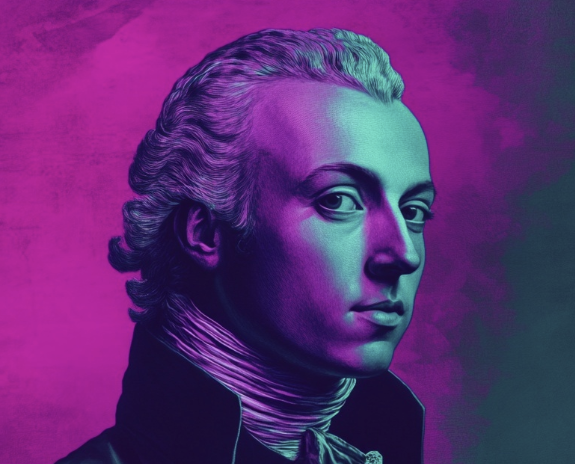
Good and strong will. Mechanism must precede science (learning). Also in morals and religion? Too much discipline makes one narrow and kills proficiency. Politeness belongs, not to discipline, but to polish, and thus comes last.
▼
Source
source
Part III : Selection on Education from Kant's other Writings, Ch. I Pedagogical Fragments, # 9

3 months 3 weeks ago
A little river seems to him, who has never seen a larger river, a mighty stream; and so with other things-a tree, a man-anything appears greatest to him that never knew a greater.
▼
Source
source
Book VI, lines 674-677 (quoted in The Essays of Michel de Montaigne, tr. W. C. Hazlitt)
3 months 1 week ago
Of all evils of war the greatest is the purely spiritual evil: the hatred, the injustice, the repudiation of truth, the artificial conflict.
▼
Source
source
Justice in War-Time (1916), p. 27

2 months 4 days ago
And Jesus answered and said unto her, Martha, Martha, thou art careful and troubled about many things, but one thing is needful: and Mary hath chosen that good part, which shall not be taken away from her.
▼
Source
source
10:41-42 (King James Version| KJV)
2 weeks 1 day ago
Some anarchists have claimed not merely that we would be better off without a state, but that any state necessarily violates people's moral rights and hence is intrinsically immoral. Our starting point then, though nonpolitical, is by intention far from nonmoral. Moral philosophy sets the background for, and boundaries of, political philosophy. What persons may and may not do to one another limits what they may do through the apparatus of a state, or do to establish such an apparatus.
▼
Source
source
Ch. 1 : Why State of Nature Theory?; Political Philosophy, p. 6
1 month 1 week ago
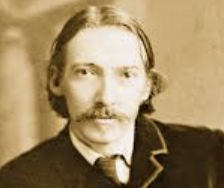
Sanity itself is a kind of convention.
▼
Source
source
The Hunter's Family
2 months 1 week ago
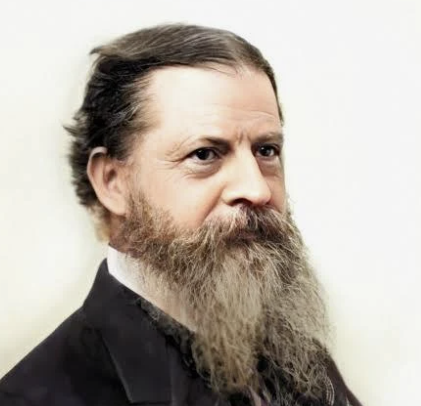
It has never been in my power to study anything, - mathematics, ethics, metaphysics, gravitation, thermodynamics, optics, chemistry, comparative anatomy, astronomy, psychology, phonetics, economics, the history of science, whist, men and women, wine, metrology, except as a study of semeiotic.
▼
Source
source
Letter to Victoria

6 days ago
Liberalism has been very severely threatened in recent years. It's been threatened from a number of sources. So internationally you have two great powers, Russia and China, that are definitely not liberal polities, that have expansive ambitions... As Vladimir Putin said... in an iterview with the FT in 2019 "Liberalism is an obsolete doctrine." But the threat... also comes from other places. ...You have the rise of a populist nationalist right in many countries. This is Viktor Orbán in Hungary. This is Narendra Modi in India, Donald Trump in the United States, ...Marine Le Pen in France. All of them criticizing liberalism precisely for the tolerance that it permits and tries to deal with, in diverse and increasingly ethnically and racially diverse countries.
▼
Source
source
5:36 Ref: Vladimir Putin says liberalism has 'become obsolete' (June 27, 2019) Financial Times.
1 month 1 week ago
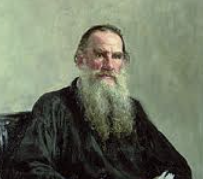
I have lived through much, and now I think I have found what is needed for happiness. A quiet secluded life in the country, with the possibility of being useful to people to whom it is easy to do good, and who are not accustomed to have it done to them; then work which one hopes may be of some use; then rest, nature, books, music, love for one's neighbor -- such is my idea of happiness. And then, on the top of all that, you for a mate, and children perhaps -- what more can the heart of man desire?
▼
Source
source
Part 1, Chapter V

3 months 1 week ago
I mean, a genuinely productive society. I mean you could produce plenty of goods without much freedom, but I think the whole sort of creative life of man is ultimately impossible without a considerable measure of individual freedom, of initiative, creation, all these things which we value, and I think value properly, are impossible without a large measure of freedom.
1 month 3 weeks ago
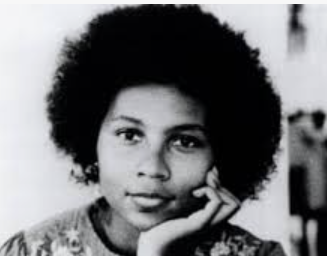
Marcus Garvey, Elijah Muhammad, Malcolm X, Martin Luther King, Stokely Carmichael, Amiri Baraka and other black male leaders have righteously supported patriarchy. They have all argued that it is absolutely necessary for black men to relegate black women to a subordinate position both in the political sphere and in home life.
2 months 2 days ago
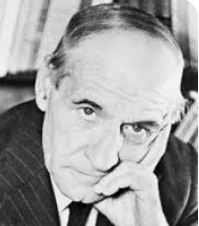
Without a strategic retreat into the self, without vigilant thought, human life is impossible. Call to mind all that mankind owes to certain great withdrawals into the self! It is no chance that all the great founders of religions preceded their apostolates by famous retreats. Buddha withdraws to the forest; Mahomet withdraws to his tent, and even there he withdraws from his tent by wrapping his head in his cloak; above all, Jesus goes apart into the desert for forty days.
▼
Source
source
p. 35
2 months 1 week ago
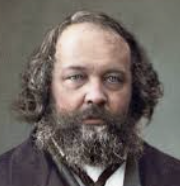
It is the peculiarity of privilege and of every privileged position to kill the intellect and heart of man. The privileged man, whether he be privileged politically or economically, is a man depraved in intellect and heart.
▼
Source
source
As quoted in "Socialism" article of Encyclopaedia Britannica, 9th edition (1887), edited by Thomas Spencer Baynes with assistance of William Robertson Smith, Vol. 22, p. 216, Charles Scribner's Sons
2 months 4 days ago
Eternal vigilance is the price of knowledge.
▼
Source
source
p. 58
3 months 2 weeks ago
Morality is thus the relation of actions to the autonomy of the will, that is, to a possible giving of universal law through its maxims. An action that can coexist with the autonomy of the will is permitted; one that does not accord with it is forbidden. A will whose maxims necessarily harmonize with the laws of autonomy is a holy, absolutely good will. The dependence upon the principle of autonomy of a will that is not absolutely good (moral necessitation) is obligation. This, accordingly, cannot be attributed to a holy being. The objective of an action from obligation is called duty.
3 months 2 weeks ago
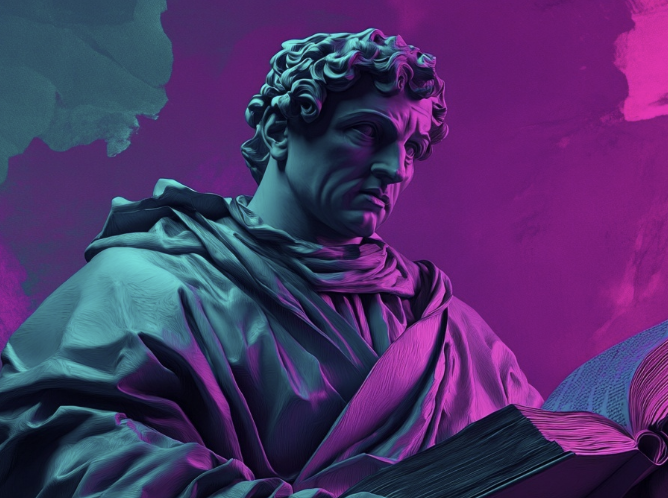
Dear rulers ... I maintain that the civil authorities are under obligation to compel the people to send their children to school. ... If the government can compel such citizens as are fit for military service to bear spear and rifle, to mount ramparts, and perform other martial duties in time of war, how much more has it a right to compel the people to send their children to school, because in this case we are warring with the devil, whose object it is secretly to exhaust our cities and principalities of their strong men.
▼
Source
source
letter to the German rulers (1524), as quoted in The History of Compulsory Education in New England, John William Perrin, 1896
3 months 1 week ago
I think all the great religions of the world - Buddhism, Hinduism, Christianity, Islam, and Communism - both untrue and harmful. It is evident as a matter of logic that, since they disagree, not more than one of them can be true. With very few exception, the religions which a man accepts is that of the community in which he lives, which makes it obvious that the influence of environment is what has led him to accept the religion in question.
▼
Source
source
Preface, 1957
3 months 1 week ago
"'Are the gods not just?' 'Oh no, child. What would become of us if they were?'"
▼
Source
source
Orual & The Fox
2 days ago
Few people who are not actually practitioners of a mature science realize how much mop-up work of this sort a paradigm leaves to be done or quite how fascinating such work can prove in the execution.
▼
Source
source
p. 24
3 months 2 weeks ago
All thought must, directly or indirectly, by way of certain characters, relate ultimately to intuitions, and therefore, with us, to sensibility, because in no other way can an object be given to us.
▼
Source
source
B 33
1 month 3 weeks ago
Sex also concentrates the mind wonderfully, and that is why civilised man is so obsessed by it. It enables him to "savour every fraction of an inch," not merely of the act of sexual intercourse, but of living itself. But that, of course, only underlines the basic problem: after coitus, "man becomes sad," because he quickly returns to his unconcentrated and defocused state. In sexual excitement, it is the spirit itself that becomes erect, and becomes capable of penetrating the meaning of life. Normal consciousness is limp and flaccid; its attitude towards reality is defensive. This is what Sartre called contingency, that feeling of being at the mercy of chance.
▼
Source
source
pp. 45-46
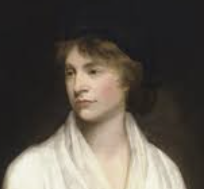
2 months 1 week ago
It is the preservation of the species, not of individuals, which appears to be the design of Deity throughout the whole of nature.
▼
Source
source
Letter 22
3 months 1 week ago
He who is in love is wise and is becoming wiser, sees newly every time he looks at the object beloved, drawing from it with his eyes and his mind those virtues which it possesses.
▼
Source
source
The Method of Nature, 1841
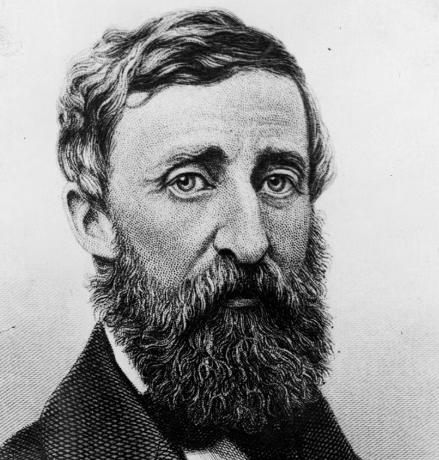
3 months 1 week ago
If one advances confidently in the direction of his dreams, and endeavors to live the life which he has imagined, he will meet with a success unexpected in common hours ... In proportion as he simplifies his life, the laws of the universe will appear less complex, and solitude will not be solitude, nor poverty poverty, nor weakness weakness.
▼
Source
source
p. 364
3 months 6 days ago
The man described for us, whom we are invited to free, is already in himself the effect of a subjection much more profound than himself. A 'soul' inhabits him and brings him to existence...the soul is the effect and instrument of political anatomy; the soul is the prison of the body.
1 month 3 weeks ago
The Fathers of the Church can well afford to preach the gospel of Christ. It contains nothing dangerous to the regime of authority and wealth; it stands for self-denial and self-abnegation, for penance and regret, and is absolutely inert in the face of every indignity, every outrage imposed upon mankind.
3 months 2 weeks ago
But the exceedingly foul deed of Onan, the basest of wretches, follows. Onan must have been a malicious and incorrigible scoundrel. This is a most disgraceful sin. It is far more atrocious than incest and adultery. We call it unchastity, yes a Sodomitic sin. For Onan goes in to her; that is, he lies with her and copulates, and when it comes to the point of insemination, spills the semen, lest the woman conceive. Surely at such a time the order of nature established by God in procreation should be followed. Accordingly, it was a most disgraceful crime to produce semen and excite the woman, and to frustrate her at that very moment.
▼
Source
source
Luther's works Vol. 7 (1965), Lectures on Genesis, Chapters 38-44
2 months 1 week ago
I would like to go mad on one condition, namely, that I would become a happy madman, lively and always in a good mood, without any troubles and obsessions, laughing senselessly from morning to night.
CivilSimian.com created by AxiomaticPanic, CivilSimian, Kalokagathia