

1 month 3 weeks ago
The uniting of Orthodoxy with state absolutism came about on the soil of a non-belief in the Divineness of the earth, in the earthly future of mankind; Orthodoxy gave away the earth into the hands of the state because of its own non-belief in man and mankind, because of its nihilistic attitude towards the world. Orthodoxy does not believe in the religious ordering of human life upon the earth, and it compensates for its own hopeless pessimism by a call for the forceful ordering of it by state authority.
▼
Source
source
Nihilism On A Religious Soil

1 month 2 weeks ago
Popular presentation today is all too often that which puts the mob in a position to talk about something without understanding it.
▼
Source
source
G 32
2 weeks 6 days ago
Some days will be sublime. Others will be merely wonderful. But critically, there will be one particular texture ("what it feels like") of consciousness that will be missing from our lives; and that will be the texture of nastiness.
▼
Source
source
"Feeling Groovy, Forever", Institute for Ethics and Emerging Technologies, 14 Mar. 2012
3 weeks 5 days ago
The foundation of morality is to have done, once and for all, with lying; to give up pretending to believe that for which there is no evidence, and repeating unintelligible propositions about things beyond the possibilities of knowledge.
▼
Source
source
Science and Morals

3 months 1 week ago
The universe is what it is, not what I choose that it should be.
▼
Source
source
The Value of Free Thought: How to Become a Truth-seeker and Break the Chains of Mental Slavery (1944), p. 24
3 months 1 week ago
Preference of vice to virtue, a manifest wrong judgment.
▼
Source
source
Book II, Ch. 21, sec. 70
3 months 1 week ago
The best life is the one in which the creative impulses play the largest part and the possessive impulses the smallest.

2 days ago
Cash Payment the sole nexus; and there are so many things which cash will not pay! Cash is a great miracle; yet it has not all power in Heaven, nor even on Earth. 'Supply and demand' we will honour also; and yet how many 'demands' are there, entirely indispensable, which have to go elsewhere than to the shops, and produce quite other than cash, before they can get their supply? On the whole, what astonishing payments does cash make in this world!
▼
Source
source
Ch. 7, Not Laissez-Faire.

3 months 2 weeks ago
The Union was a measure from which infinite Good has been derived to this country.
▼
Source
source
Letter to William Strahan (4 April 1760), quoted in Adam Smith, The Correspondence of Adam Smith, eds. E. C. Mossner and I. S. Ross (1987), p. 68

2 months 1 week ago
Self-conscious rejection of the absolute is the best way to resist God; thus illusion, the substance of life, is saved.

3 months 2 weeks ago
It should be noted that children at play are not playing about; their games should be seen as their most serious-minded activity. Variants: It should be noted that the games of children are not games, and must be considered as their most serious actions. For truly it is to be noted, that children's plays are not sports, and should be deemed as their most serious actions.
▼
Source
source
Book I, Ch. 23
2 months 6 days ago
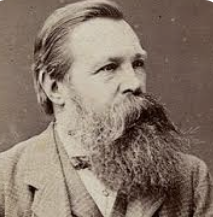
Since the management of industry by individuals necessarily implies private property, and since competition is in reality merely the manner and form in which the control of industry by private property owners expresses itself, it follows that private property cannot be separated from competition and the individual management of industry. Private property must, therefore, be abolished and in its place must come the common utilization of all instruments of production and the distribution of all products according to common agreement - in a word, what is called the communal ownership of goods.

3 months 1 week ago
Collectively, the more civilized men are, the more they are actors. They assume the appearance of attachment, of esteem for others, of modesty, and of disinterestedness, without ever deceiving anyone, because everyone understands that nothing sincere is meant. Persons are familiar with this, and it is even a good thing that this is so in this world, for when men play these roles, virtues are gradually established, whose appearance had up until now only been affected. These virtues ultimately will become part of the actor's disposition. To deceive the deceiver in ourselves, or the tendency to deceive, is a fresh return to obedience.
▼
Source
source
Kant, Immanuel (1996), page 37
3 months 2 weeks ago
If the importation of foreign cattle, for example, were made ever so free, so few could be imported, that the grazing trade of Great Britain could be little affected by it. Live cattle are, perhaps, the only commodity of which the transportation is more expensive by sea than by land.
▼
Source
source
Chapter II

3 months 1 week ago
Use, do not abuse; as the wise man commands. I flee Epictetus and Petronius alike. Neither abstinence nor excess ever renders man happy.
▼
Source
source
"Cinquième discours: sur la nature de plaisir," Sept Discours en Vers sur l'Homme, 1738

3 months 1 week ago
Every way of classifying a thing is but a way of handling it for some particular purpose.

4 months 1 week ago
For whoever has what he has from the God himself clearly has it at first hand; and he who does not have it from the God himself is not a disciple. Let us assume that it is otherwise, that the contemporary generation of disciples had received the condition from the God, and that the subsequent generations were to receive it from these contemporaries, what would follow?
3 months 1 week ago
We are faced with the paradoxical fact that education has become one of the chief obstacles to intelligence and freedom of thought.
▼
Source
source
Ch. 12: Free Thought and Official Propaganda

2 months 1 week ago
The best thing about the sciences is their philosophical ingredient, like life for an organic body. If one dephilosophizes the sciences, what remains left? Earth, air, and water.
▼
Source
source
Fragment No. 62

2 months 1 week ago
Second, in the presence of this continuity of feeling, nominalistic maxims appear futile. There is no doubt about one idea affecting another, when we can directly perceive the one generally modified and shaping itself into the other. Nor can there any longer be any difficulty about one idea resembling another, when we can pass along the continuous field of quality from one to the other and back again to the point which we had marked.
2 months 1 week ago
The pessimist has to invent new reasons to exist every day: he is a victim of the "meaning" of life.

1 month 1 week ago
Ivan Ilych's life had been most simple and most ordinary and therefore most terrible.
▼
Source
source
Ch. II
3 months 2 weeks ago
The sneaking arts of underling tradesmen are thus erected into political maxims for the conduct of a great empire; for it is the most underling tradesmen only who make it a rule to employ chiefly their own customers. A great trader purchases his good always where they are cheapest and best, without regard to any little interest of this kind.
▼
Source
source
Chapter III, Part II, p. 530.

4 months 1 week ago
People who want to do so can lose weight most safely and permanently if they realize that above all they must be patient. ... It is better to eat a little less at each meal than impulse would suggest and to do that constantly. Add to this a little more exercise or activity than impulse suggests and keep that up constantly too. A few less calories taken in each day and a few more used up will decrease weight, slowly, to be sure, but without undue misery. And with better long-range results too.

3 months 2 weeks ago
The world's a bubble, and the life of man Less than a span.
2 days ago
Friend!-Will the ballot-box raise the Noblest to the chief place; does any sane man deliberately believe such a thing?
3 days ago
Far from secularization inexorably leading to the death of religion, it has instead given birth to the search for new forms of religious life. The imminent victory of the Kingdom of Reason has never materialized. As a whole, mankind can never get rid of the need for religious self-identification: who am I, where did I come from, where do I fit in, why am I responsible, what does my life mean, how will I face death? Religion is a paramount aspect of human culture. Religious need cannot be excommunicated from culture by rationalist incantation. Man does not live by reason alone.
▼
Source
source
Interview with Nathan Gardels
2 days ago
It was a rude gross error, that of counting the Great Man a god. Yet let us say that it is at all times difficult to know what he is, or how to account of him and receive him!

4 months ago
Justice respects man as living in society, and is the common bond without which no society can subsist.
3 months 1 week ago
I remain convinced that obstinate addiction to ordinary language in our private thoughts is one of the main obstacles to progress in philosophy.
▼
Source
source
Quoted in Library of Living Philosophers: The Philosophy of Bertrand Russell, 1944

5 days ago
The invasion... exhibits in stark terms, the choice that is before us today between maintaining a liberal government that respects the rights of individuals, or moving over to a form of centralized illiberal dictatorship, even if that... illiberal government is somehow democratically legitimated. ...That's the central issue in global politics today. ...That's basically what the... Ukraine invasion is about, and that's why... all liberal societies that care about those individual freedoms... have a very powerful interest in the outcome of that war, because Putin and Russia are at the center of an international network of illiberal forces that are seeking to overturn liberal values in virtually every part of the world, and therefore... that's all part of a larger global struggle over our fundamental liberal values.
▼
Source
source
26:50 Question & Answer period follows

3 months 1 day ago
Repentance for one's evil deeds is the safeguard of life.

2 months 2 weeks ago
I believe in God, although I live very happily with atheists... It is very important not to mistake hemlock for parsley; but not at all so to believe or not in God.
▼
Source
source
As quoted in Against the Faith (1985) by Jim Herrick, p. 75
3 months 3 weeks ago
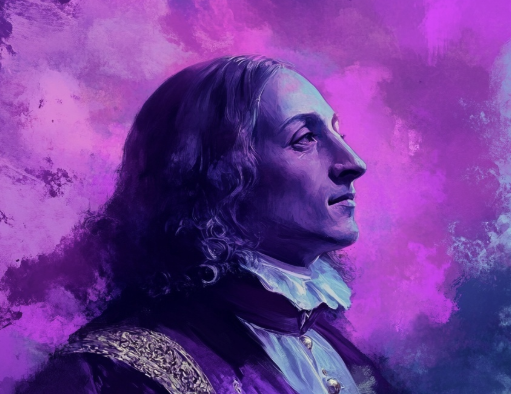
All the excesses, all the violence, and all the vanity of great men, come from the fact that they know not what they are: it being difficult for those who regard themselves at heart as equal with all men... For this it is necessary for one to forget himself, and to believe that he has some real excellence above them, in which consists this illusion that I am endeavoring to discover to you.
3 months 1 week ago
The mind intent upon resolving as well as compounding the concept of a composite demands and presumes boundaries in which it may acquiesce in the former as well as in the latter direction.
4 months 1 week ago
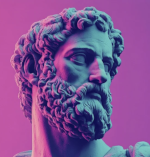
But voice is a certain sound of that which is animated; for nothing inanimate emits a voice; but they are said to emit a voice from similitude, as a pipe, and a lyre, and such other inanimate things, have extension, modulation, and dialect; for thus it appears, because voice, also, has these.
3 months 1 week ago
It is said that God is always on the side of the big battalions.
▼
Source
source
Letter to François-Louis-Henri Leriche (6 February 1770) Note: In his Notebooks (c.1735-c.1750)

1 month 3 weeks ago
I began to practice 'meditation', sitting cross-legged for hours, staring straight in front of me. The result was a sudden and total transformation of my inner-being. There was a sense of freedom from my personality -- from the being called Colin Wilson who was born in Leicester in 1931. I felt that 'he' was a series of responses and reactions, of ambitions and frustrations. But after half an hour of staring straight in front of me, of concentrating my attention 'at the root of my eyebrows', I felt in control of his responses and frustrations. This control brought such a sense of exhilaration and satisfaction that I often sneaked away from other people to spend just five minutes sitting cross-legged; when I was working as a labourer on a building site, I would find a quiet spot and, while the others were having a smoke, would sit in a position that could quickly be changed to an ordinary sitting posture if someone came by . . .
▼
Source
source
p. 87
1 month 1 week ago
I thought: "I am perishing of cold and hunger, and here is a man thinking only of how to clothe himself and his wife, and how to get bread for themselves. He cannot help me. When the man saw me he frowned and became still more terrible, and passed me by on the other side. I despaired, but suddenly I heard him coming back. I looked up, and did not recognize the same man: before, I had seen death in his face; but now he was alive, and I recognized in him the presence of God.

1 month 1 week ago
By doing nothing men learn to do ill.
▼
Source
source
Maxim 318 Compare Ecclesiasticus 33:27 (KJV): "idleness teacheth much evil".
2 months 1 day ago
In the ancient notion of love, on the other hand, there is an element of anxiety. The noble fears the descent to the less noble, is afraid of being infected and pulled down. The "sage" of antiquity does not have the same firmness, the same inner certainty of himself and his own value, as the genius and hero of Christian love.
▼
Source
source
L. Coser, trans. (1961), p. 92

2 months 1 week ago
Your worst sin is that you have destroyed and betrayed yourself for nothing.
3 weeks 5 days ago
M. Comte's philosophy, in practice, might be compendiously described as Catholicism minus Christianity.
▼
Source
source
On the Physical Basis of Life

2 months 2 weeks ago
The severe Schools shall never laugh me out of the Philosophy of Hermes, that this visible world is but a picture of the invisible.
▼
Source
source
Section 12

3 months 6 days ago
Courage, not cleverness; not even inspiration, is the grain of mustard that grows up to be a great tree.
▼
Source
source
p. 44e
2 months 2 days ago
The three qualities of space and time reciprocally affect and qualify one another in experience. Space is inane save as occupied with active volumes. Pauses are holes when they do not accentuate masses and define figures as individuals. Extension sprawls and finally benumbs if it does not interact with place so as to assume intelligible distribution. Mass is nothing fixed. It contracts and expands, asserts and yields, according to its relations to other spatial and enduring things.... these are then the common properties of the matter of arts because there are general conditions without which an experience is not possible. As we saw earlier, the basic condition is felt relationship between doing and undergoing as the organism and environment interact.
▼
Source
source
pp. 220-21

3 months 5 days ago
If we compare the third-person attitude of someone who simply says how things stand (this is the attitude of the scientist, for example) with the performative attitude of someone who tries to understand what is said to him (this is the attitude of the interpreter, for example), the implications ... become clear. ... First, interpreters relinquish superiority that observers have by virtue of their privileged position, in that they themselves are drawn, at least potentially, into negotiations about the meaning and validity of utterances. By taking part in communicative action, they accept in principle the same status as those whose utterances they are trying to understand. ... It is impossible to decide a priori who is to learn from whom.
▼
Source
source
p. 26
3 months 4 weeks ago
Medicine considers the human body as to the means by which it is cured and by which it is driven away from health.
1 month 3 weeks ago
A truly powerful holder of power does not simply elicit agreement, but enthusiasm and excitement.

3 months 1 week ago
The happiness which forms the utilitarian standard of what is right in conduct, is not the agent's own happiness, but that of all concerned. As between his own happiness and that of others, utilitarianism requires him to be as strictly impartial as a disinterested and benevolent spectator. In the golden rule of Jesus of Nazareth, we read the complete spirit of the ethics of utility. To do as one would be done by, and to love one's neighbour as oneself, constitute the ideal perfection of utilitarian morality.
▼
Source
source
Ch. 2
CivilSimian.com created by AxiomaticPanic, CivilSimian, Kalokagathia