


4 months 3 weeks ago
All things as subsist from nature appear to contain in themselves a principle of motion and permanency; some according to place, others according to increase and diminuation; and others according to change in quality.
▼
Source
source
Book II, Ch. I, p. 88.
3 months 2 weeks ago
And what he fears he cannot make attractive with his touch he abandons.
▼
Source
source
Line 149 (tr. H. R. Fairclough)
2 months 2 weeks ago
Democratic socialists are either proletarians who are not yet sufficiently clear about the conditions of the liberation of their class, or they are representatives of the petty bourgeoisie, a class which, prior to the achievement of democracy and the socialist measures to which it gives rise, has many interests in common with the proletariat. It follows that, in moments of action, the communists will have to come to an understanding with these democratic socialists, and in general to follow as far as possible a common policy with them - provided that these socialists do not enter into the service of the ruling bourgeoisie and attack the communists. It is clear that this form of co-operation in action does not exclude the discussion of differences.

3 months 3 weeks ago
I grasp at each second, trying to suck it dry: nothing happens which I do not seize, which I do not fix forever in myself, nothing, neither the fugitive tenderness of those lovely eyes, nor the noises of the street, nor the false dawn of early morning: and even so the minute passes and I do not hold it back, I like to see it pass.
3 months 2 weeks ago
Plato has preserved in the Theaetetus - the story is that Thales, while occupied in studying the heavens above and looking up, fell into a well. A good-looking and whimsical maid from Thrace laughed at him and told him that while he might passionately want to know all things in the universe, the things in front of his very nose and feet were unseen by him." Plato added: "This jest also fits all those who become involved in Philosophy." Therefore, the question, What is a thing?" must always be rated as one that causes housemaids to laugh.
▼
Source
source
p. 3

2 months 1 week ago
Today's mic-hogging, fast-talking, contentious young (and old) lefties continue to hawk little books and pamphlets on revolution, always with choice words or documents from Marx, Mao, even Malcolm. But I've never seen a broadside with "A Black Feminist Statement or even the writings of Angela Davis or June Jordan or Barbara Omolade or Flo Kennedy or Audre Lorde or bell hooks or Michelle Wallace, at least not from the groups who call themselves leftist. These women's collective wisdom has provided the richest insights into American radicalism's most fundamental questions: How can we build a multiracial movement? Who are the working class and what do they desire? How do we resolve the Negro Question and the Woman Question? What is freedom?
▼
Source
source
Robin Kelley Freedom Dreams

2 weeks 1 day ago
What I called the perplexed jungle of Paganism sprang, we may say, out of many roots: every admiration, adoration of a star or natural object, was a root or fibre of a root; but Hero-worship is the deepest root of all; the tap-root, from which in a great degree all the rest were nourished and grown.
4 months 1 day ago
A prince who is not wise himself will never take good advice.
▼
Source
source
The Prince (1513), Ch. 23; translated by W. K. Marriot

3 months 3 weeks ago
The imitator dooms himself to hopeless mediocrity. The inventor did it because it was natural to him, and so in him it has a charm. In the imitator something else is natural, and he bereaves himself of his own beauty, to come short of another man's.
▼
Source
source
p. 26

3 months 2 weeks ago
Reading the Socratic dialogues one has the feeling: what a frightful waste of time! What's the point of these arguments that prove nothing and clarify nothing?
▼
Source
source
p. 14e
2 months 2 weeks ago
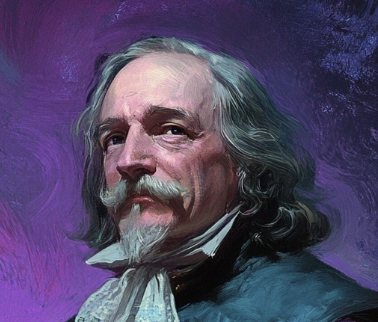
For the Lawes of Nature (as Justice, Equity, Modesty, Mercy, and (in summe)doing to others, as wee would be done to,) of themselves, without the terrour of some Power, to cause them to be observed, are contrary to our naturall Passions, that carry us to Partiality, Pride, Revenge, and the like. And Covenants, without the Sword, are but Words, and of no strength to secure a man at all.
▼
Source
source
The Second Part, Chapter 17, p. 85
3 months 3 weeks ago
Nature is the best posture-master.
▼
Source
source
p. 167

2 months 4 weeks ago
Every central government worships uniformity: uniformity relieves it from inquiry into an infinity of details.
▼
Source
source
Book Four, Chapter III.


1 month 1 week ago
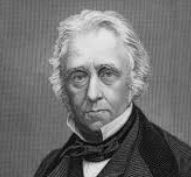
Those who compare the age in which their lot has fallen with a golden age which exists only in imagination, may talk of degeneracy and decay; but no man who is correctly informed as to the past, will be disposed to take a morose or desponding view of the present.
▼
Source
source
Vol. I, ch. 1
1 month 3 weeks ago
One day, we shall stand up and our backsides will remain attached to our seats.
2 weeks 1 day ago
No man who has once heartily and wholly laughed can be altogether irreclaimably bad.
▼
Source
source
Bk. I, ch. 4.
1 month 1 week ago
I believe most people are aware of periods in their lives when they seem to be "in grace" and other periods when they feel "out of grace," even though they may use different words to describe these states. In the first happy condition, one seems to carry all one's tasks before one lightly, as if borne along on a great tide; and in the opposite state one can hardly tie a shoe-string. It is true that a large part of life consists in learning a technique of tying the shoe-string, whether one is in grace or not. But there are techniques of living too; there are even techniques in the search for grace.
1 week 6 days ago
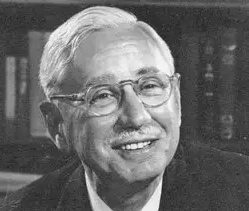
...Lucretius talked epicureanism stoically (like Heine's Englishman taking his pleasures sadly), and concluded on his stren gospel of pleasure by committing suicide. His noble epic "on the Nature of Things", follows Epicurus in damning pleasure with faint praise. Almost contemporary with Caesar and Pompey, he lived in the midst of turmoil and alarms; his nervous pen is forever inditing prayers to tranquility and peace. One pictures him as a timid soul whose youth had been darkened with religious fears; for he never tires of telling his readers that there's no hell, except here, and there are no gods except gentlemanly ones who live in a garden of Epicurus in the clouds, and never intrude in the affairs of men.

3 months 3 weeks ago
There are two distinct classes of men in the nation, those who pay taxes, and those who receive and live upon the taxes.

2 months 2 weeks ago
Perhaps when distant people on other planets pick up some wave-length of ours all they hear is a continuous scream.
▼
Source
source
The Message to the Planet (1989) p. 509.
4 days ago
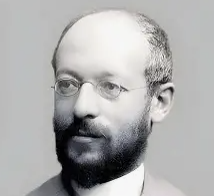
Objectivity does not simply involve passivity and detachment; it is a particular structure composed of distance and nearness, indifference and involvement.
▼
Source
source
p. 403
2 months 3 days ago
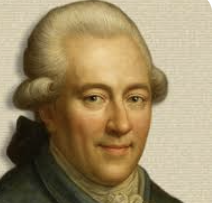
Cultivate that kind of knowledge which enables us to discover for ourselves in case of need that which others have to read or be told of.
▼
Source
source
D 89

3 months 3 weeks ago
Looking for God-or Heaven-by exploring space is like reading or seeing all Shakespeare's plays in the hope that you will find Shakespeare as one of the characters or Stratford as one of the places. Shakespeare is in one sense present at every moment in every play.
▼
Source
source
"The Seeing Eye", in Christian Reflections (1967), p. 167

2 months 2 weeks ago
It is not by genius, it is by suffering, and suffering alone, that one ceases to be a marionette.
2 days ago
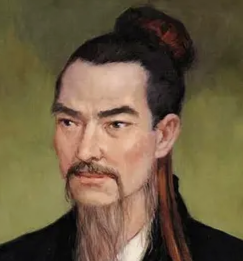
The murder of one person is called unrighteous and incurs one death penalty. Following this argument, the murder of ten persons will be ten times as unrighteous and there should be ten death penalties; the murder of a hundred persons will be a hundred times as unrighteous and there should be a hundred death penalties. All the gentlemen of the world know that they should condemn these things, calling them unrighteous. But when it comes to the great unrighteousness of attacking states, they do not know that they should condemn it. On the contrary, they applaud it, calling it righteous.
▼
Source
source
Book 5: Condemnation of Offensive War I
2 weeks 1 day ago
What the Universities have mainly done-what I have found the University did for me, was that it taught me to read in various languages and various sciences, so that I could go into the books that treated of these things, and try anything I wanted to make myself master of gradually, as I found it suit me. Whatever you may think of all that, the clearest and most imperative duty lies on every one of you to be assiduous in your reading; and learn to be good readers, which is, perhaps, a more difficult thing than you imagine. Learn to be discriminative in your reading-to read all kinds of things that you have an interest in, and that you find to be really fit for what you are engaged in.

4 months 3 weeks ago
My doubt goes like this: How could the Loving One have the heart to let human beings become so guilty that they got his murder on their consciences?

4 months 2 days ago
There are some defeats more triumphant than victories.

4 months 1 week ago
Little is needed to ruin and upset everything, only a slight aberration from reason.
▼
Source
source
Book IV, ch. 3, 4.

2 months 1 week ago
The history of other cultures is non-existent until it erupts in confrontation with the United States.
▼
Source
source
Chap 4, Sect 2

1 month 3 weeks ago
All media work us over completely. They are so pervasive in their personal, political, economic, aesthetic, psychological, moral, ethical, and social consequences that they leave no part of us untouched, unaffected, unaltered. The medium is the massage. Any understanding of social and cultural change is impossible without a knowledge of the way media work as environments. All media are extensions of some human faculty - psychic or physical.
▼
Source
source
(p. 26)
2 days ago
A political, economic, and social order created merely for the sake of temporal life is exclusively characteristic of the modern world, that is, of the antitraditional world.
1 month 3 weeks ago
World War I a railway war of centralization and encirclement. World War II a radio war of decentralization concluded by the Bomb. World War III a TV guerrilla war with no divisions between civil and military fronts.
▼
Source
source
(p. 152)
2 months 2 weeks ago
The mind that puts everything in question, reaches, after a thousand interrogations, an almost total inertia, a situation which the inert, in fact, knows from the start, by instinct. For what is inertia but a congenital perplexity?
3 months 2 weeks ago
Nor word for word too faithfully translate.
▼
Source
source
Line 133 (tr. John Dryden)
3 months 3 weeks ago
His heart was as great as the world, but there was no room in it to hold the memory of a wrong.
▼
Source
source
Greatness
3 months 2 weeks ago
"To stamp becoming with the character of being-that is the supreme will to power." (WM 617) This suggests that becoming only is if it is grounded in being as being: "That everything recurs is the closest approximation of a world of becoming to one of being."
▼
Source
source
p. 19
3 months 3 weeks ago
Absurd, irreducible; nothing - not even a profound and secret delirium of nature - could explain it. Obviously I did not know everything, I had not seen the seeds sprout, or the tree grow. But faced with this great wrinkled paw, neither ignorance nor knowledge was important: the world of explanations and reasons is not the world of existence. A circle is not absurd, it is clearly explained by the rotation of a straight segment around one of its extremities. But neither does a circle exist. This root, on the other hand, existed in such a way that I could not explain it. Reflections on a chestnut tree root.
3 months 2 weeks ago
Struggling to be brief I become obscure.
▼
Source
source
Line 25

3 months 3 weeks ago
The only purpose for which power can be rightfully exercised over any member of a civilized community, against his will, is to prevent harm to others. His own good, either physical or moral, is not a sufficient warrant.
▼
Source
source
Ch. 1: Introductory

3 months 3 weeks ago
When people begin to philosophize they seem to think it necessary to make themselves artificially stupid.
▼
Source
source
Theory of Knowledge, 1913
3 months 3 weeks ago
What we call Man's power over Nature turns out to be a power exercised by some men over other men with Nature as its instrument.
2 weeks 1 day ago
Our true Deity is Mechanism. It has subdued external Nature for us, and we think it will do all other things. We are Giants in physical power: in a deeper than metaphorical sense, we are Titans, that strive, by heaping mountain on mountain, to conquer Heaven also.
3 months 3 weeks ago
In justice as fairness society is interpreted as a cooperative venture for mutual advantage.
▼
Source
source
Chapter II, Section 14, pg. 84

2 months 3 weeks ago
I cannot conceive how any man can have brought himself to that pitch of presumption, to consider his country as nothing but carte blanche, upon which he may scribble whatever he pleases.
▼
Source
source
Volume iii, p. 231
2 weeks 4 days ago
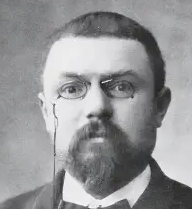
There is no science apart from the general. It may even be said that the very object of the exact sciences is to spare us these direct verifications.
▼
Source
source
Ch. I. (1905) Tr. George Bruce Halstead

3 months 2 weeks ago
He who is subjected to a field of visibility, and who knows it, assumes responsibility for the constraints of power; he makes them play spontaneously upon himself; he inscribes in himself the power relation in which he simultaneously plays both roles; he becomes the principle of his own subjection.
▼
Source
source
Part Three, Panopticism
CivilSimian.com created by AxiomaticPanic, CivilSimian, Kalokagathia