


3 months 2 weeks ago
One age misunderstands another; and a petty age misunderstands all the others in its own ugly way.
▼
Source
source
p. 98e

1 month 2 weeks ago
There is absolutely no inevitability, so long as there is a willingness to contemplate what is happening.
▼
Source
source
[A chapter sub-heading attributed by McLuhan to Alfred North Whitehead]

2 months 1 day ago
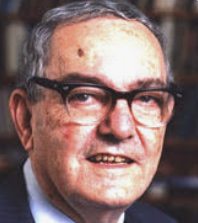
Whereas economic man maximizes - selects the best alternative from among all those available to him, his cousin, administrative man, satisfices - looks for a course of action that is satisfactory or "good enough."
▼
Source
source
p. xxix.
4 months 5 days ago
Five [of the above] rules are of absolute necessity, and cannot be dispensed with without essential defect and often without error.

4 months 1 week ago
So the Church too, like Mary, enjoys perpetual virginity and uncorrupted fecundity.
▼
Source
source
195:2

3 months 3 weeks ago
The man who comes back through the Door in the Wall will never be quite the same as the man who went out. He will be wiser but less sure, happier but less self-satisfied, humbler in acknowledging his ignorance yet better equipped to understand the relationship of words to things, of systematic reasoning to the unfathomable mystery which it tries, forever vainly, to comprehend.

2 months 5 days ago
In the end, I am moved by causes and ideas that I can actually choose to support because they conform to values and principles that I believe in.
▼
Source
source
p. 88

3 months 3 weeks ago
Classics which at home are drowsily read have a strange charm in a country inn, or in the transom of a merchant brig.
▼
Source
source
Voyage to England

1 week 6 days ago
"Normal science" means research firmly based upon one or more past scientific achievements, achievements that some particular scientific community acknowledges for a time as supplying the foundation for its further practice.
▼
Source
source
p. 10

1 month 3 weeks ago
Guilt has to be understood not only as a way of checking one's own destructiveness, but as a mechanism for safeguarding the life of the other, one that emerges from our own need and dependency, from a sense that this life is not a life without another life. Indeed, when it turns into a safeguarding action, I am not sure it should still be called "guilt." If we do still use that term, we could conclude that "guilt" is strangely generative or that its productive form is reparation.
▼
Source
source
p. 93

2 months 1 week ago
But if Germany, thanks to Hitler and his successors, were to enslave the European nations and destroy most of the treasures of their past, future historians would certainly pronounce that she had civilized Europe.
▼
Source
source
p. 124
3 months 1 week ago
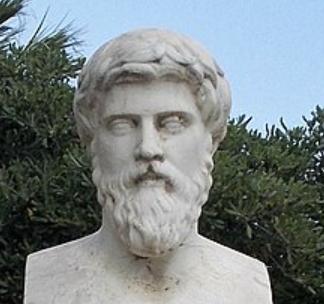
To one that promised to give him hardy cocks that would die fighting, "Prithee," said Cleomenes, "give me cocks that will kill fighting."
▼
Source
source
61 Cleomenes

4 months 1 week ago
For creation is not a change, but that dependence of the created existence on the principle from which it is instituted, and thus is of the genus of relation; whence nothing prohibits it being in the created as in the subject. Creation is thus said to be a kind of change, according to the way of understanding, insofar as our intellect accepts one and the same thing as not existing before and afterwards existing.
▼
Source
source
II, 18, 2 (see also Summa Theologica I, q. 45, art. 3 ad 2)

2 months 3 weeks ago
...no legislator, at any period of the world, has willingly placed the seat of active power in the hands of the multitude: Because there it admits of no control, no regulation; no steady direction whatsoever. The people are the natural control on authority; but to exercise and to control together is contradictory and impossible.
▼
Source
source
p. 441
4 months ago
Cunning and deceit will every time serve a man better than force to rise from a base condition to great fortune.
▼
Source
source
Book 2, Ch. 13

4 months 1 week ago
Continence is a branch of temperance, which prevents the diseases, infamy, remorse, and punishment, to which those are exposed, who indulge themselves in unlawful amours.
1 month 2 weeks ago
The criminal, like the artist, is a social explorer.
▼
Source
source
quoted in "Marshall McLuhan, Author, Dies; Declared 'Medium Is the Message'" by Alden Whitman, The New York Times, January 1, 1981

1 month 3 weeks ago
No feats of heroism are needed to achieve the greatest and most important changes in the existence of humanity; neither the armament of millions of soldiers, nor the construction of new roads and machines, nor the arrangement of exhibitions, nor the organization of workmen's unions, nor revolutions, nor barricades, nor explosions, nor the perfection of aerial navigation; but a change in public opinion. And to accomplish this change no exertions of the mind are needed, nor the refutation of anything in existence, nor the invention of any extraordinary novelty; it is only needful that we should not succumb to the erroneous, already defunct, public opinion of the past, which governments have induced artificially; it is only needful that each individual should say what he really feels or thinks, or at least that he should not say what he does not think.
▼
Source
source
Ch. 17
3 days ago
I have no reason to suppose that Lenin gained his ideas from my books; but if that were true, I should be not a little proud of having contribute to the intellectual development of a man who seems to me to be at once the greatest theoretician of socialism since Marx and a statesman whose genius recalls that of Peter the Great.
▼
Source
source
For Lenin, Soviet Russia, Official Organ of The Russian Soviet Government Bureau, Vol. II, New York: NY, January-June 1920 (April 10, 1920), p. 356
4 months 1 week ago
I have always been of the opinion that infamy earned by doing what is right is not infamy at all, but glory.
▼
Source
source
Speech I

2 months 3 weeks ago
To be acutely conscious is a disease, a real, honest-to-goodness disease.
▼
Source
source
Part 1, Chapter 2 (tr. David Magarshack, 1950) To think too much is a disease, a real, actual disease.
3 months 3 weeks ago
Good is a good doctor, but Bad is sometimes a better.
▼
Source
source
Considerations by the Way

1 month 1 week ago
For every man the world is as fresh as it was at the first day, and as full of untold novelties for him who has the eyes to see them.

2 months 4 weeks ago
Thus is man that great and true Amphibium, whose nature is disposed to live not only like other creatures in diverse elements, but in divided and distinguished worlds.
▼
Source
source
Section 34
2 months 1 day ago
At the time of its initial publication, Public Administration helped to define this field of study and practice by introducing two major new emphases: an orientation toward human behavior and human relations in organizations, and an emphasis on the interaction between administration, politics, and policy. Without neglecting more traditional concerns with organization structure, Simon, Thompson, and Smithburg viewed administration in its behavioral and political contexts. The viewpoints they express still are at the center of public administration's concerns.
▼
Source
source
Book abstract, 1991

4 months 3 weeks ago
Take a book, the poorest one written, but read it with the passion that it is the only book you will read-ultimately you will read everything out of it, that is, as much as there was in yourself, and you could never get more out of reading, even if you read the best of books.

2 months 5 days ago
It is true that parents today are learning to enhance the physical qualities of their children. But their minds and characters they cannot mould. The antiquated system of education and our perverse social influences unfortunately do that. In view of the numerous misfit and marred children these institutions have created, I am quite content not to have contributed any of my own.

2 months 2 weeks ago
Saint-Simon, like Hegel, begins with the assertion that the social order engendered by the French Revolution proved that mankind has reached the adult state. In contrast to Hegel, however, he described this stage primarily in terms of its economy; the industrial process was the sole integrating factor in the new social order.
▼
Source
source
P. 330

1 week ago
Let us now enquire whether anger be in accordance with nature, and whether it be useful and worth entertaining in some measure.
1 month 1 week ago
Life cannot exist without a certain conformity to the surrounding universe - that conformity involves a certain amount of happiness in excess of pain. In short, as we live we are paid for living.
2 months 2 weeks ago
A philosopher worthy of the name has never said more than a single thing: and even then it is something he has tried to say, rather than actually said. And he has said only one thing because he has seen only one point: and at that it was not so much a vision as a contact...
▼
Source
source
"L'intuition philosophique (Philosophical Intuition)" (10 April 1911); translated by Mabelle L. Andison in: Henri Bergson, The Creative Mind: An Introduction to Metaphysics, Courier Dover Publications, 2012, p. 91
4 months 1 week ago
A wise man, who puts himself under the government of reason, will be able to receive an injury with calmness, and to treat the person who committed it with lenity; for he will rank injuries among the casual events of life, and will prudently reflect that he can no more stop the natural current of human passions, than he can curb the stormy winds.
4 months 1 week ago
Woman, compared to other creatures, is the image of God, for she bears dominion over them. But compared unto man, she may not be called the image of God, for she bears not rule and lordship over man, but ought to obey him. The woman shall be subject to man as unto Christ. For woman, has not her example from the body and from the flesh, that so she shall be subject to man, as the flesh is unto the Spirit, because that the flesh in the weakness and mortality of this life lusts and strives against the Spirit, and therefore would not the Holy Ghost give example of subjection to the woman of any such thing.
▼
Source
source
As quoted by John Knox The First Blast to Awaken Women Degenerate (1558)

4 months 1 week ago
The way of the superior man may be compared to what takes place in traveling, when to go to a distance we must first traverse the space that is near, and in ascending a height, when we must begin from the lower ground.

2 months 2 days ago
The greatest events occur without intention playing any part in them; chance makes good mistakes and undoes the most carefully planned undertaking. The world's greatest events are not produced, they happen.
▼
Source
source
K 68
2 months 1 week ago
In order to be able to go on living it is possible that the bankrupt peoples will have to enter on a new path of self-denial, by curbing their covetousness and putting a check on the indefinite expansion of their wants, and by having smaller families.
▼
Source
source
p. 94
2 months 2 weeks ago
Thought is led, by the situation of its objects, to measure their truth in terms of another logic, another universe of discourse. And this logic projects another mode of existence: the realization of the truth in the words and deeds of man. And inasmuch as this project involves man as societal animal," the polis, the movement of thought has a political content. Thus, the Socratic discourse is political discourse inasmuch as it contradicts the established political institutions. The search for the correct definition, for the "concept" of virtue, justice, piety, and knowledge becomes a subversive undertaking, for the concept intends a new polis.
▼
Source
source
pp. 133-134

3 months 3 weeks ago
Money is always to be found when men are to be sent to the frontiers to be destroyed: when the object is to preserve them, it is no longer so.
▼
Source
source
"Charity", 1770

2 months 2 weeks ago
Heaven and earth shall pass away, but my words shall not pass away.
▼
Source
source
Mark 13:31, KJV

2 months 3 weeks ago
Originally, ethics has no existence apart from religion, which holds it in solution.
▼
Source
source
Ch. 1, The Confusion of Ethical Thought

4 weeks 1 day ago
The belief that torture is always wrong is a prejudice inherited from an obsolete philosophy. We need to shed the belief that human rights are violated when a terrorist is tortured. As Rawls and others have shown, basic freedoms must form a coherent whole. Self-evidently, there can be no right to attack basic human rights. Therefore, once the proper legal procedures are in place, torturing terrorists cannot violate their rights. In fact, in a truly liberal society, terrorists have an inalienable right to be tortured.This is what demonstrates the moral superiority of liberal societies over others, past and present. Other societies have degraded terrorists by subjecting them to lawless and unaccountable power. In the new world that is taking shape, terrorists, although they themselves degrade human rights by practising terrorism, will be afforded the full dignity of due legal process, even while being tortured.
3 months 3 weeks ago
His imperial muse tosses the creation like a bauble from hand to hand to embody any capricious thought that is uppermost in her mind. The remotest spaces of nature are visited, and the farthest sundered things are brought together by a subtle spiritual connection.
▼
Source
source
p. 237

3 months 2 weeks ago
Not only must people know, they must see with their own eyes. Because they must be made to be afraid; but also because they must be the witnesses, the guarantors, of the punishment, and because they must to a certain extent take part in it.
▼
Source
source
Chapter One, pp.58
2 months 3 weeks ago
To kill someone for committing murder is a punishment incomparably worse than the crime itself. Murder by legal sentence is immeasurably more terrible than murder by brigands.
▼
Source
source
Part 1, Chapter 2

3 months 3 weeks ago
Before we as individuals are even conscious of our existence we have been profoundly influenced for a considerable time (since before birth) by our relationship to other individuals who have complicated histories, and are members of a society which has an infinitely more complicated and longer history than they do (and are members of it at a particular time and place in that history); and by the time we are able to make conscious choices we are already making use of categories in a language which has reached a particular degree of development through the lives of countless generations of human beings before us. . . . We are social creatures to the inmost centre of our being. The notion that one can begin anything at all from scratch, free from the past, or unindebted to others, could not conceivably be more wrong.
▼
Source
source
As quoted in Popper (1973) by Bryan Magee
2 months 3 weeks ago
Man grows used to everything, the scoundrel.
1 month 3 weeks ago
How good is it to remember one's insignificance: that of a man among billions of men, of an animal amid billions of animals; and one's abode, the earth, a little grain of sand in comparison with Sirius and others, and one's life span in comparison with billions on billions of ages. There is only one significance, you are a worker. The assignment is inscribed in your reason and heart and expressed clearly and comprehensibly by the best among the beings similar to you. The reward for doing the assignment is immediately within you. But what the significance of the assignment is or of its completion, that you are not given to know, nor do you need to know it. It is good enough as it is. What else could you desire?
▼
Source
source
Last Diaries (1979) edited by Leon Stilman, p. 77

3 months 3 weeks ago
Of all the ways whereby children are to be instructed, and their manners formed, the plainest, easiest, and most efficacious, is, to set before their eyes the examples of those things you would have them do, or avoid; which, when they are pointed out to them, in the practice of persons within their knowledge, with some reflections on their beauty and unbecomingness, are of more force to draw or deter their imitation, than any discourses which can be made to them.
▼
Source
source
Sec. 82
CivilSimian.com created by AxiomaticPanic, CivilSimian, Kalokagathia