


1 month 2 weeks ago
Love hinders death. Love is life. All, everything that I understand, I understand only because I love. Everything is, everything exists, only because I love. Everything is united by it alone. Love is God, and to die means that I, a particle of love, shall return to the general and eternal source.
▼
Source
source
Thoughts of Prince Andrew Bk XII, Ch. 16
1 month 3 weeks ago
A series of accidents creates a positively lighthearted state.
▼
Source
source
Chapter 4
2 months 1 week ago
If the subjectivist view hold true, thinking cannot be of any help in determining the desirability of any goal in itself. The acceptability of ideals, the criteria for our actions and beliefs, the leading principles of ethics and politics, all our ultimate decisions are made to depend upon factors other than reason. They are supposed to be matters of choice and predilection, and it has become meaningless to speak of truth in making practical, moral or esthetic decisions.
▼
Source
source
pp. 7-8.
1 month 1 week ago
I discovered that rejections are not altogether a bad thing. They teach a writer to rely on his own judgment and to say in his heart of hearts, "To hell with you."
▼
Source
source
Quoted in "Feeling Rejected? Join Updike, Mailer, Oates..." by Barbara Bauer and Robert F. Moss, New York Times (21 July 1985), section 7, page 1, column 1

2 months 3 weeks ago
Strange incongruities must ever perplex those, who confound the unhappiness of civil dissensions with the crime of treason.
2 months 5 days ago
The chief danger to philosophy is narrowness in the selection of evidence.
▼
Source
source
Pt. V, ch. 1, sec. 1.
2 months 2 weeks ago
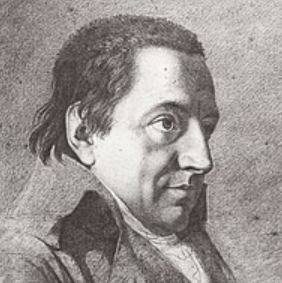
The will is the living principle of the rational soul, is indeed itself reason, when purely and simply apprehended. That reason is itself active, means, that the pure will, as such, rules and is effectual. The infinite reason alone lies immediately and entirely in the purely spiritual order. The finite being lives necessarily at the same time in a sensuous order; that is to say, in one which presents to him other objects than those of pure reason; a material object, to be advanced by instruments and powers, standing indeed under the immediate command of the will, but whose efficacy is conditional also on its own natural laws.
▼
Source
source
Jane Sinnett, trans 1846 p.104
2 weeks ago
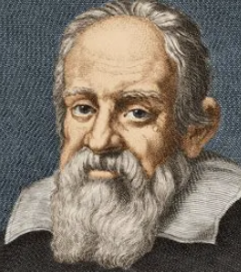
Well, since paradoxes are at hand, let us see how it might be demonstrated that in a finite continuous extension it is not impossible for infinitely many voids to be found.
▼
Source
source
Salviati, First Day, Stillman Drake translation
2 months 1 week ago
We are sorely deficient in talking with each other and listening to each other. We lack mobility, criticism and self-criticism. We incline to doctrinism. What makes it worse is that so many people do not really want to think. They want only slogans and obedience. They ask no questions and they give no answers, except by repeating drilled-in phrases. They can only assert and obey, neither probe nor apprehend. Thus they cannot be convinced, either. How shall we talk with people who will not go where others probe and think, where men seek independence in insight and conviction?
2 months 2 weeks ago
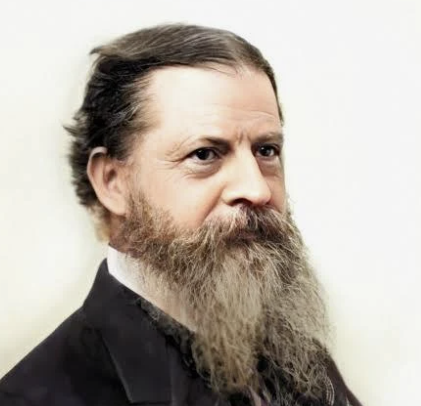
Our whole past experience is continually in our consciousness, though most of it sunk to a great depth of dimness. I think of consciousness as a bottomless lake, whose waters seem transparent, yet into which we can clearly see but a little way.
▼
Source
source
Vol. VII, par. 547
6 days ago
The characteristic feature of militarism is not the fact that a nation has a powerful army or navy. It is the paramount role assigned to the army within the political structure. Even in peacetime the army is supreme; it is the predominant factor in political life. The subjects must obey the government as soldiers must obey their superiors. Within a militarist community there is no freedom; there are only obedience and discipline.
▼
Source
source
Omnipotent Government: The Rise of the Total State and Total War

2 months 2 weeks ago
Even in childhood I watched the hours flow, independent of any reference, any action, any event, the disjunction of time from what was not itself, its autonomous existence, its special status, its empire, its tyranny. I remember quite clearly that afternoon when, for the first time, confronting the empty universe, I was no more than a passage of moments reluctant to go on playing their proper parts. Time was coming unstuck from being - at my expense.
3 months 2 weeks ago
Transcendence constitutes selfhood.
▼
Source
source
Essence of Ground
2 months 3 weeks ago
There is hardly a member of Congress who can make up his mind to go home without having despatched at least one speech to his constituents; nor who will endure any interruption until he has introduced into his harangue whatever useful suggestions may be made touching the four-and-twenty States of which the Union is composed, and especially the district which he represents.
▼
Source
source
Book One, Chapter XXI.
3 months 3 weeks ago
On the other hand, the cheapest form of pride is national pride; for the man affected therewith betrays a want of individual qualities of which he might be proud, since he would not otherwise resort to that which he shares with so many millions. The man who possesses outstanding personal qualities will rather see most clearly the faults of his own nation, for he has them constantly before his eyes. But every miserable fool, who has nothing in the world whereof he could be proud, resorts finally to being proud of the very nation to which he belongs. In this he finds compensation and is now ready and thankful to defend, ... all the faults and follies peculiar to it.
▼
Source
source
From 'Parerga and Paralipomena', Vol. 1, Aphorisms on the Wisdom of Life, 'What A Man Represents', pp. 360
2 months 2 weeks ago
What is the use of all knowledge, if one does not act in accordance with it? This remark implies that knowledge is regarded as a means to action, and the latter as the real end. One could put the question the other way round and ask: How can we possibly act well without knowing what the Good is? This way of expressing it would regard knowledge as conditioning action. But both expressions are one-sided, and the truth is that both, knowledge as well as action, are in the same way inseparable elements of rational life.
▼
Source
source
Consequences of the Difference p. 75

2 months 2 weeks ago
Man needed one moral constitution to fit him for his original state; he needs another to fit him for his present state; and he has been, is, and will long continue to be, in process of adaptation. And the belief in human perfectibility merely amounts to the belief that, in virtue of this process, man will eventually become completely suited to his mode of life. Progress, therefore, is not an accident, but a necessity. Instead of civilization being artificial, it is part of nature; all of a piece with the development of the embryo or the unfolding of a flower. The modifications mankind have undergone, and are still undergoing, result from a law underlying the whole organic creation; and provided the human race continues, and the constitution of things remains the same, those modifications must end in completeness.
▼
Source
source
Pt. I, Ch. 2 : The Evanescence of Evil, concluding paragraph
3 months 1 week ago
Beginning to reason is like stepping onto an escalator that leads upward and out of sight. Once we take the first step, the distance to be traveled is independent of our will and we cannot know in advance where we shall end.
▼
Source
source
Chapter 4, Reason, p. 88

3 months 2 weeks ago
As a rule, begin my lectures on Scientific Method by telling my students that scientific method does not exist. ...having been ...the one and only professor of this non-existent subject within the British Commonwealth.
1 month 2 weeks ago
The positivist philosophy of Comte and the I doctrine deduced from it that humanity is an organism, and Darwin's doctrine of a law of the struggle for existence that is supposed to govern life, with the differentiation of various breeds of people which follows from it, and the anthropology, biology, and sociology of which people are now so fond-all have the same aim. These have all become favourite sciences because they serve to justify the way in which people free themselves from the human obligation to labour, while consuming the fruits of other people's labour.

3 months 3 weeks ago
Necessity may be defined in two ways, conformably to the two definitions of cause, of which it makes an essential part. It consists either in the constant conjunction of like objects, or in the inference of the understating from one object to another.
▼
Source
source
§ 8.27

2 months 1 week ago
I am he that liveth, and was dead; and, behold, I am alive for evermore, Amen; and have the keys of hell and of death. Write the things which thou hast seen, and the things which are, and the things which shall be hereafter.
▼
Source
source
Revelation 1:18-19
2 months 5 days ago
The salvation of reality is its obstinate, irreducible, matter-of-fact entities, which are limited to be no other than themselves. Neither science, nor art, nor creative action can tear itself away from obstinate, irreducible, limited facts.
▼
Source
source
Ch. 5: "The Romantic Reaction", p. 132

5 days ago
So near at hand is freedom, and is anyone still a slave?
4 months 1 week ago
Only after Winter comes do we know that the pine and the cypress are the last to fade.
2 months 1 week ago
Eternal vigilance is the price of knowledge.
▼
Source
source
p. 58
1 month 4 weeks ago
Definition of design = Everyone designs who devise courses of action aimed at changing existing situations into preferred ones. The intellectual activity that produces material artifacts is no different fundamentally from the one that prescribes remedies for a sick patient or the one that devises a new sales plan for a company or a social welfare policy for a state.
▼
Source
source
p. 130.
2 months 5 days ago
The term many presupposes the term one, and the term one presupposes the term many.
▼
Source
source
Pt. I, ch. 2, sec. 2.

2 months 3 weeks ago
If there is no immortality, there is no virtue. ... Without God and immortal life? All things are lawful then, they can do what they like?
▼
Source
source
Quoted in M. M. Bakhtin, Problems of Dostoevsky's Poetics, trans. R. W. Rotsel (Ann Arbor, MI: Ardis, 1973) p. 70
2 months 1 week ago
O world, thou choosest not the better part! It is not wisdom to be only wise, And on the inward vision close the eyes, But it is wisdom to believe the heart. Columbus found a world, and had no chart, Save one that faith deciphered in the skies; To trust the soul's invincible surmise Was all his science and his only art.
▼
Source
source
O World, Thou Choosest Not
3 months 3 weeks ago
How very paltry and limited the normal human intellect is, and how little lucidity there is in the human consciousness, may be judged from the fact that, despite the ephemeral brevity of human life, the uncertainty of our existence and the countless enigmas which press upon us from all sides, everyone does not continually and ceaselessly philosophize, but that only the rarest of exceptions do.
▼
Source
source
Vol. 2, Ch. 3, § 39
2 months 2 weeks ago
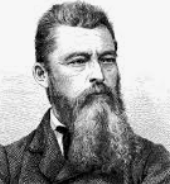
To theology, ... only what it holds sacred is true, whereas to philosophy, only what holds true is sacred.
▼
Source
source
Lecture II, R. Manheim, trans. (1967), p. 11

3 months 2 weeks ago
The sweetest thing in all my life has been the longing - to reach the Mountain, to find the place where all the beauty came from - my country, the place where I ought to have been born. Do you think it all meant nothing, all the longing? The longing for home? For indeed it now feels not like going, but like going back.
▼
Source
source
Psyche
1 day ago
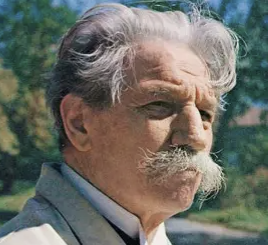
Example is not the main thing. It is the only thing. That is, if the one giving the example is not saying to himself, 'Behold I am giving an example.' That spoils it. Anyone thinking of the example he will give to others has lost his simplicity. Only as a man has simplicity can his example influence others. Sometimes presented in paraphrased form, such as "Example is not the main thing in influencing others, it is the only thing".

3 months 4 weeks ago
Not because Socrates said so, but because it is in truth my own disposition - and perchance to some excess - I look upon all men as my compatriots, and embrace a Pole as a Frenchman, making less account of the national than of the universal and common bond.
▼
Source
source
Ch. 9
3 months 1 week ago
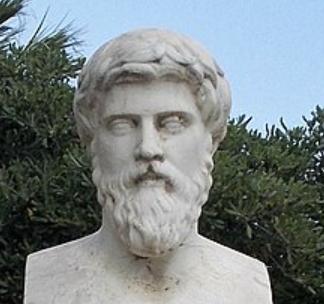
Scilurus on his death-bed, being about to leave four-score sons surviving, offered a bundle of darts to each of them, and bade them break them. When all refused, drawing out one by one, he easily broke them,-thus teaching them that if they held together, they would continue strong; but if they fell out and were divided, they would become weak.
▼
Source
source
31 Scilurus
2 months 2 weeks ago
Isn't history ultimately the result of our fear of boredom?
4 months 3 weeks ago
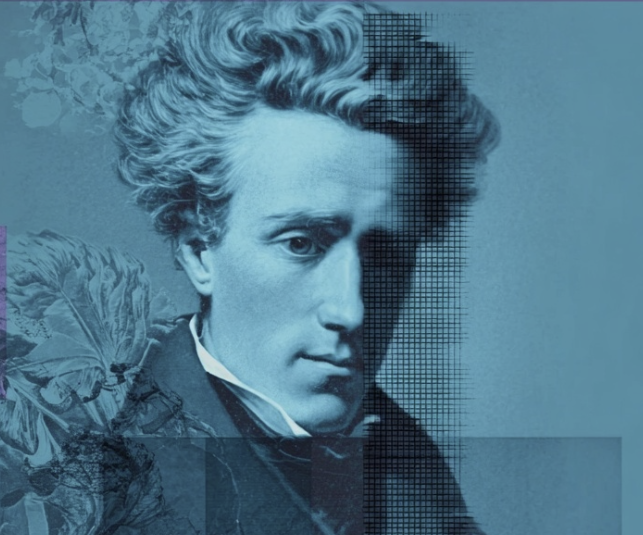
My doubt goes like this: How could the Loving One have the heart to let human beings become so guilty that they got his murder on their consciences?
3 months 2 weeks ago
Of course a war is entertaining. The immediate fear and suffering of the humans is a legitimate and pleasing refreshment for our myriads of toiling workers. But what permanent good does it do us unless we make use of it for bringing souls to Our Father Below? When I see the temporal suffering of humans who finally escape us, I feel as if I had been allowed to taste the first course of a rich banquet and then denied all the rest. It is worse than not to have tasted it at all. The Enemy, true to His barbarous methods of warfare, allows us to see the short misery of His favourites only to tantalize and torment us - to mock the incessant hunger, which, during this present phase of great conflict, His blockade is admittedly imposing.
▼
Source
source
Letter V
4 months 3 weeks ago
Editor Preface In this book, originating in the year 1848, the requirement for being a Christian is forced up by the pseudonymous author to the supreme ideality. Yet the requirement should indeed be stated, presented, and heard. From the Christian point of view, there ought to be no scaling down of the requirement, nor suppression of it-instead of a personal admission and confession. The requirement should be heard-and I understand what is said as spoken to me alone-so that I might learn not only to resort to grace but to resort to it in relation to the use of grace.
1 month 3 weeks ago
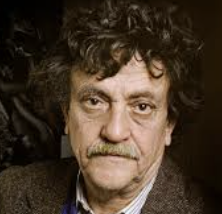
During the Vietnam War, which lasted longer than any war we've ever been in -- and which we lost -- every respectable artist in this country was against the war. It was like a laser beam. We were all aimed in the same direction. The power of this weapon turns out to be that of a custard pie dropped from a stepladder six feet high.
▼
Source
source
Vonnegut at 80 Interview with David Hoppe Alternet
2 months 1 week ago
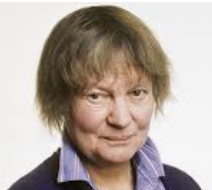
We know that the real lesson to be taught is that the human person is precious and unique; but we seem unable to set it forth except in terms of ideology and abstraction.
▼
Source
source
Ch. 10, p. 148
1 month 3 days ago
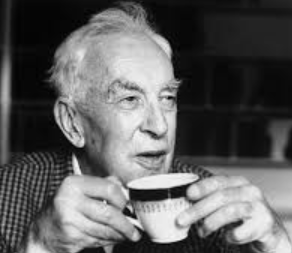
Societies, not states, are 'the social atoms' with which students of history have to deal.
▼
Source
source
Vol. 1
3 months 2 weeks ago
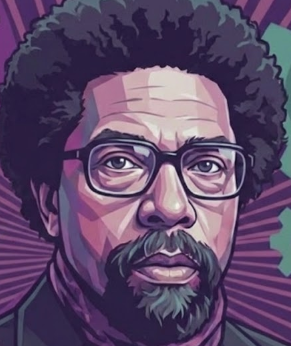
It's time for me to go back to the great Union Theological Seminary. That's my institutional home, my brother. I can stretch out and try to be a truth teller and bear witness, still learn and listen, but also be in the middle of the Big Apple. Nothing like it... Union Theological Seminary means so much to me, because in that context I can be the full, free Black man, the Jesus-loving, free Black man, fundamentally committed to focusing on the oppressed around the world. Speaking in Too Radical for Harvard?
▼
Source
source
Cornl West on Failed Fight for Tenure, Biden's First 50 Days & More, Democracy Now!,

2 months 3 days ago
The basic paradox about sex is that it always seems to be offering more than it can deliver. A glimpse of a girl undressing through a lighted bedroom window induces a vision of ecstatic delight, but in the actual process of persuading the girl into bed, the vision somehow evaporates.
▼
Source
source
p. 16
2 months 1 week ago
The highest and ultimate personality values are declared to be independent of contrasts like rich and poor, healthy and sick, etc. The world had become accustomed to considering the social hierarchy, based on status, wealth, vital strength, and power, as an exact image of the ultimate values of morality and personality. The only way to disclose the discovery of anew and higher sphere of being and life, of the "kingdom of God" whose order is independent of that worldly and vital hierarchy, was to stress the vanity of the old values in this higher order.
▼
Source
source
L. Coser, trans. (1961), p. 98

3 months 3 weeks ago
Every man is rich or poor according to the degree in which he can afford to enjoy the necessaries, conveniences, and amusements of human life. But after the division of labour has once thoroughly taken place, it is but a very small part of these with which a man's own labour can supply him. The far greater part of them he must derive from the labour of other people, and he must be rich or poor according to the quantity of that labour which he can command, or which he can afford to purchase. The value of any commodity, therefore, to the person who possesses it, and who means not to use or consume it himself, but to exchange it for other commodities, is equal to the quantity of labour which it enables him to purchase or command. Labour, therefore, is the real measure of the exchangeable value of all commodities.
▼
Source
source
Chapter V.
4 months 5 days ago
Two principles we should always have ready that there is nothing good or evil save in the will; and that we are not to lead events, but to follow them.
▼
Source
source
Book III, ch. 10, 18.
2 months 2 weeks ago
If there is anyone who owes everything to Bach, it is certainly God.
CivilSimian.com created by AxiomaticPanic, CivilSimian, Kalokagathia