


3 months 3 weeks ago
There is one very serious defect to my mind in Christ's moral character, and that is that He believed in hell. I do not myself feel that any person who is really profoundly humane can believe in everlasting punishment.
▼
Source
source
"The Moral Problem"

1 week 4 days ago
Under all speech that is good for anything there lies a silence that is better.
▼
Source
source
Silence is deep as Eternity; speech is shallow as Time.
2 months 2 weeks ago
I am myself deeply convinced that imagination is the basis of a sound reason. It is by dint of feeling, and of putting ourselves in fancy into the place of other men, that we can learn how we ought to treat them, and be moved to treat them as we ought. Man, to express the thing in familiar language, is a complex being, made up of a head and a heart. So far as we are employed in heaping up facts and in reasoning upon them merely, we are a species of machine; it is our impulses and our sentiments, that are the glory of our nature.
▼
Source
source
Of Religion (1818), quoted in Political and Philosophical Writings of William Godwin, Volume 7: Religious Writings, ed. Mark Philp
3 months 3 weeks ago
Opinion is like a pendulum and obeys the same law. If it goes past the centre of gravity on one side, it must go a like distance on the other; and it is only after a certain time that it finds the true point at which it can remain at rest.
▼
Source
source
Vol. 2 "Further Psychological Observations" as translated in Essays and Aphorisms (1970), as translated by R. J. Hollingdale

2 months 3 weeks ago
Good order is the foundation of all good things.

1 month 2 weeks ago
Until now a culture has been a mechanical fate for societies, the automatic interiorization of their own technologies.
▼
Source
source
(p. 86)
5 days ago
A great deal of talent is lost to the world for the want of a little courage. Every day sends to their graves a number of obscure men who have only remained obscure because their timidity has prevented them from making a first effort.
▼
Source
source
Lecture IX : On the Conduct of the Understanding
6 days ago
Everything over which I have might that cannot be torn from me remains my property; well, then let might decide about property, and I will expect everything from my might! Alien might, might that I leave to another, makes me an owned slave: then let my own might make me an owner. Let me then withdraw the might that I have conceded to others out of ignorance regarding the strength of my own might! Let me say to myself, what my might reaches to is my property; and let me claim as property everything that I feel myself strong enough to attain, and let me extend my actual property as far as I entitle, that is, empower, myself to take.
▼
Source
source
Cambridge 1995, p. 227, 228
2 months 2 weeks ago
There is but one way to bring about the triumph of liberty, of justice, and of peace in Europe's international relations, to make civil war impossible between the different peoples who make up the European family; and that is the formation of the United States of Europe.

2 months 2 weeks ago
The feeling of being ten thousand years behind, or ahead, of the others, of belonging to the beginnings or to the end of humanity...

2 months 3 weeks ago
The severe Schools shall never laugh me out of the Philosophy of Hermes, that this visible world is but a picture of the invisible.
▼
Source
source
Section 12

3 months 3 weeks ago
All the interests of my reason, speculative as well as practical, combine in the three following questions: 1. What can I know? 2. What ought I to do? 3. What may I hope?
▼
Source
source
B 832-833

4 months 1 week ago
Continence is a branch of temperance, which prevents the diseases, infamy, remorse, and punishment, to which those are exposed, who indulge themselves in unlawful amours.
3 months 1 week ago
Then take, good sir, your pleasure while you may; With life so short 'twere wrong to lose a day.
▼
Source
source
Book II, satire viii, line 96 (trans. Conington)

3 months 3 weeks ago
Thank you for your letter and for the enclosure which I return herewith. I have been wondering whether there is any means of preventing the confusion between you and me, and I half-thought that we might write a joint letter to The Times in the following terms: Sir, To prevent the continuation of confusions which frequently occur, we beg to state that neither of us is the other. Do you think this would be a good plan?
▼
Source
source
Letter to Lord Russell of Liverpool, February 18, 1959
2 months 1 week ago
Spontaneous social action will be broken up over and over again by State intervention; no new seed will be able to fructify. Society will have to live for the State, man for the governmental machine. And as, after all, it is only a machine whose existence and maintenance depend on the vital supports around it, the State, after sucking out the very marrow of society, will be left bloodless, a skeleton, dead with that rusty death of machinery, more gruesome than the death of a living organism. Such was the lamentable fate of ancient civilisation. ... Already in the times of the Antonines (IInd Century), the State overbears society with its anti-vital supremacy. Society begins to be enslaved, to be unable to live except in the service of the State. The whole of life is bureaucratised. What results? The bureaucratisation of life brings about its absolute decay in all orders.
▼
Source
source
Chapter XIII: The Greatest Danger, The State
2 months 3 weeks ago
Are we not madder than those first inhabitants of the plain of Sennar? We know that the distance separating the earth from the sky is infinite, and yet we do not stop building our tower.
▼
Source
source
No. 4

4 months 3 weeks ago
Thoughts in a poem. The poet presents his thoughts festively, on the carriage of rhythm: usually because they could not walk.

3 months 1 week ago
Throw moderation to the winds, and the greatest pleasures bring the greatest pains.
2 months 3 weeks ago
Well is it known that ambition can creep as well as soar.
▼
Source
source
No. 3

2 months 2 weeks ago
I have never taken myself for a being. A non-citizen, a marginal type, a nothing who exists only by the excess, by the superabundance of his nothingness.

4 months 2 weeks ago
Well, it was healthy to miss once in a while. It kept self-confidence balanced at a point safely short of arrogance.
4 months 1 week ago
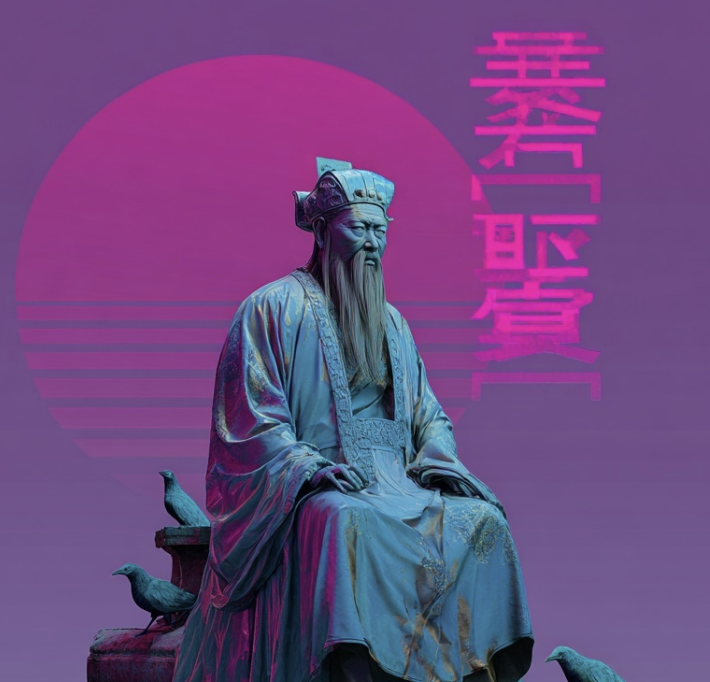
The way of the superior man may be found, in its simple elements, in the intercourse of common men and women; but in its utmost reaches, it shines brightly through Heaven and Earth.
1 month 3 weeks ago
We are in a logic of simulation, which no longer has anything to do with a logic of facts and an order of reason. Simulation is characterized by a precession of the model, of all the models based on the merest fact-the models come first, their circulation, orbital like that of the bomb, constitutes the genuine magnetic field of the event. The facts no longer have a specific trajectory, they are born at the intersection of models, a single fact can be engendered by all the models at once.
▼
Source
source
"The Precession of Simulacra," pp. 16-17
4 months 3 days ago
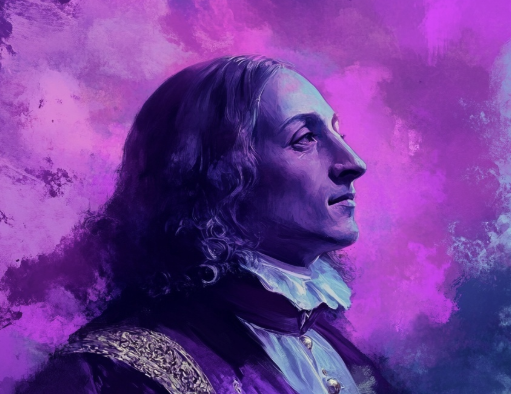
All the excesses, all the violence, and all the vanity of great men, come from the fact that they know not what they are: it being difficult for those who regard themselves at heart as equal with all men... For this it is necessary for one to forget himself, and to believe that he has some real excellence above them, in which consists this illusion that I am endeavoring to discover to you.

3 months 2 weeks ago
Never have so many been manipulated so much by so few.
▼
Source
source
Chapter 3 (pp. 19-20)
1 month 3 days ago
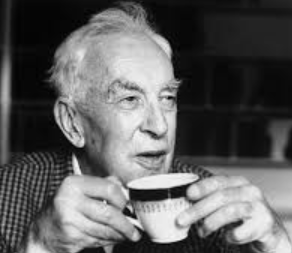
I do not believe that civilizations have to die...Civilization is not an organism. It is a product of wills.
▼
Source
source
In "Prophet of Hope & Fear" [Review of A Study of History, Vols. 7-10] TIME (18 October 1954) p. 108
3 months 1 week ago
Mediocrity in poets has never been tolerated by either men, or gods, or booksellers.
▼
Source
source
Lines 372-373

3 months 2 weeks ago
Without some redistribution of wealth and power, downward mobility and debilitating poverty will continue to drive people into desperate channels. And without principled opposition to xenophobias from above and below, these desperate channels will produce a cold-hearted and mean-spirited America no longer worth fighting for or living in.
▼
Source
source
(p79)

3 months 2 weeks ago
Friendship arises out of mere companionship when two or more of the companions discover that they have in common some insight or interest or even taste which the others do not share and which, till that moment, each believed to be his own unique treasure (or burden). The typical expression of opening Friendship would be something like, "What? You too? I thought I was the only one."
3 months 3 weeks ago
Because people have no thoughts to deal in, they deal cards, and try and win one another's money. Idiots!
2 weeks ago
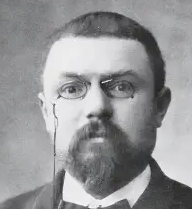
If we study the history of science we see happen two inverse phenomena... Sometimes simplicity hides under complex appearances; sometimes it is the simplicity which is apparent, and which disguises extremely complicated realities....No doubt, if our means of investigation should become more and more penetrating, we should discover the simple under the complex, then the complex under the simple, then again the simple under the complex, and so on, without our being able to foresee what will be the last term. We must stop somewhere, and that science may be possible, we must stop when we have found simplicity. This is the only ground on which we can rear the edifice of our generalizations.
2 months 6 days ago
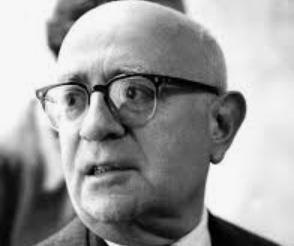
When I speak of 'negative dialectics' not the least important reason for doing so is my desire to dissociate myself from this fetishization of the positive.
▼
Source
source
p. 18

3 months 3 weeks ago
I am here to plead his cause with you. I plead not for his life, but for his character - his immortal life; and so it becomes your cause wholly, and is not his in the least. Some eighteen hundred years ago Christ was crucified; this morning, perchance, Captain Brown was hung. These are the two ends of a chain which is not without its links. He is not Old Brown any longer; he is an angel of light.

4 months 3 weeks ago
Knowledge can in part be set aside, and one can then go further in order to collect new; the natural scientist can set aside insects and flowers and then go further, but if the existing person sets aside the decision in existence, it is eo ipso lost, and he is changed.
1 week 4 days ago
It is all work and forgotten work, this peopled, clothed, articulate-speaking, high-towered, wide-acred World. The hands of forgotten brave men have made it a World for us; they,- honour to them; they, in spite of the idle and the dastard. This English Land, here and now, is the summary of what was found of wise, and noble, and accordant with God's Truth, in all the generations of English Men. Our English Speech is speakable because there were Hero-Poets of our blood and lineage; speakable in proportion to the number of these. This Land of England has its conquerors, possessors, which change from epoch to epoch, from day to day; but its real conquerors, creators, and eternal proprietors are these following, and their representatives if you can find them: All the Heroic Souls that ever were in England, each in their degree; all the men that ever cut a thistle, drained a puddle out of England, contrived a wise scheme in England, did or said a true and valiant thing in England.
2 months ago
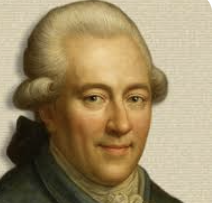
Many things about our bodies would not seem to us so filthy and obscene if we did not have the idea of nobility in our heads.
▼
Source
source
D 6

4 weeks 1 day ago
To be sure, risks abound; but no one is proposing compassionate stewardship of ecosystems by philosophers. Humans are capable of choosing our own future pain-sensitivity too; but any species-wide genomic shift in human pain tolerance will depend on the willingness of prospective parents to use preimplantation genetic screening.
▼
Source
source
Compassionate Biology: How CRISPR-based gene drives" could cheaply, rapidly and sustainably reduce suffering throughout the living world", BLTC Research, 2016

3 months 2 weeks ago
If life becomes hard to bear we think of a change in our circumstances. But the most important and effective change, a change in our own attitude, hardly even occurs to us, and the resolution to take such a step is very difficult for us.
▼
Source
source
p. 53e

3 months 2 weeks ago
And striving to be man, the worm Mounts through all the spires of form.
▼
Source
source
May-Day
2 months ago
When an acquaintance goes by I often step back from my window, not so much to spare him the effort of acknowledging me as to spare myself the embarrassment of seeing that he has not done so.
▼
Source
source
F 155
1 day ago
Bacon, Locke, Descartes, Hume, and all the others knew they were giving rights to vulgarity. But in so doing-in addition to caring for man's well-being-they were providing rights for themselves.
▼
Source
source
"Commerce and Culture," p. 289.
3 months 2 weeks ago
The human body is essentially something other than an animal organism.
▼
Source
source
Letter on Humanism
2 months 1 week ago
The revolution in scientific ideas just mentioned is primarily logical. It is due to recognition that the very method of physical science, with its primary standard units of mass, space, and time, is concerned with measurements of relations of change, not with individuals as such.

3 months 4 weeks ago
This misplacing hath caused a deficience, or at least a great improficience in the sciences themselves. For the handling of final causes, mixed with the rest in physical inquiries, hath intercepted the severe and diligent inquiry of all real and physical causes, and given men the occasion to stay upon these satisfactory and specious causes, to the great arrest and prejudice of further discovery. For this I find done not only by Plato, who ever anchoreth upon that shore, but by Aristotle, Galen, and others which do usually likewise fall upon these flats of discoursing causes.
▼
Source
source
Book VII, 7

4 months 4 days ago
A little river seems to him, who has never seen a larger river, a mighty stream; and so with other things-a tree, a man-anything appears greatest to him that never knew a greater.
▼
Source
source
Book VI, lines 674-677 (quoted in The Essays of Michel de Montaigne, tr. W. C. Hazlitt)

3 months 2 weeks ago
Water and navigation had that role to play. Locked in the ship from which he could not escape, the madman was handed over to the thousand-armed river, to the sea where all paths cross, and the great uncertainty that surrounds all things. A prisoner in the midst of the ultimate freedom, on the most open road of all, chained solidly to the infinite crossroads. He is the Passenger par excellence, the prisoner of the passage. It is not known where he will land, and when he lands, he knows not whence he came. His truth and his home are the barren wasteland between two lands that can never be his own. [...] One thing is certain: the link between water and madness is deeply rooted in the dream of the Western man.
▼
Source
source
Part One: 1. Stultifera Navis
1 month 6 days ago
Sound knowledge respecting the habits and mode of life of the man-like Apes has been even more difficult of attainment than correct information regarding their structure.
▼
Source
source
Ch.1, p. 36
CivilSimian.com created by AxiomaticPanic, CivilSimian, Kalokagathia