

Just now
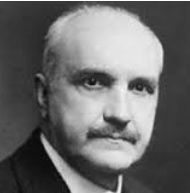
I have no reason to suppose that Lenin gained his ideas from my books; but if that were true, I should be not a little proud of having contribute to the intellectual development of a man who seems to me to be at once the greatest theoretician of socialism since Marx and a statesman whose genius recalls that of Peter the Great.
▼
Source
source
For Lenin, Soviet Russia, Official Organ of The Russian Soviet Government Bureau, Vol. II, New York: NY, January-June 1920 (April 10, 1920), p. 356

3 months 2 weeks ago
In modern eyes, precious though wars may be they must not be waged solely for the sake of the ideal harvest. Only when forced upon one, is a war now thought permissible. It was not thus in ancient times. The earlier men were hunting men, and to hunt a neighboring tribe, kill the males, loot the village and possess the females, was the most profitable, as well as the most exciting, way of living. Thus were the more martial tribes selected, and in chiefs and peoples a pure pugnacity and love of glory came to mingle with the more fundamental appetite for plunder. Modern war is so expensive that we feel trade to be a better avenue to plunder; but modern man inherits all the innate pugnacity and all the love of glory of his ancestors. Showing war's irrationality and horror is of no effect on him. The horrors make the fascination. War is the strong life; it is life in extremis; war taxes are the only ones men never hesitate to pay, as the budgets of all nations show us.

1 week 4 days ago
Yet with every allowance, one feels it difficult to see how any mortal ever could consider this Koran as a Book written in Heaven, too good for the Earth; as a well-written book, or indeed as a book at all; and not a bewildered rhapsody; written, so far as writing goes, as badly as almost any book ever was!

3 months 4 weeks ago
Only charity admitteth no excess. For so we see, aspiring to be like God in power, the angels transgressed and fell.
▼
Source
source
Book II, xxii

3 months 2 weeks ago
I deny that anyone knows, or can know, the nature of the two sexes, as long as they have only been seen in their present relation to one another. If men had ever been found in society without women, or women without men, or if there had been a society of men and women in which the women were not under the control of the men, something might have been positively known about the mental and moral differences which may be inherent in the nature of each. What is now called the nature of women is an eminently artificial thing - the result of forced repression in some directions, unnatural stimulation in others.
▼
Source
source
Ch. 1

4 months 2 weeks ago
I may live for thirty years, or perhaps forty, or maybe just one day: therefore I have resolved to use this day, or whatever I have to say in these thirty years or whatever I have to say this one day I may have to live - I have resolved to use it in such a way that if not one day in my whole past life has been used well, this one by the help of God will be.

2 months 2 weeks ago
My faculty for disappointment surpasses understanding. It is what lets me comprehend Buddha, but also what keeps me from following him.

3 months 1 day ago
Sobriety is the strength of the soul, for it preserves its reason unclouded by passion.
▼
Source
source
As quoted in The History of Philosophy: From the Earliest Times to the Beginning of the Present Century (1819) by William Enfield Sobriety is the strength of the mind

3 months 2 weeks ago
Science does not know its debt to imagination.
▼
Source
source
Poetry and Imagination

2 months 3 days ago
No art can be judged by purely aesthetic standards, although a painting or a piece of music may appear to give a purely aesthetic pleasure. Aesthetic enjoyment is an intensification of the vital response, and this response forms the basis of all value judgements. The existentialist contends that all values are connected with the problems of human existence, the stature of man, the purpose of life. These values are inherent in all works of art, in addition to their aesthetic values, and are closely connected with them.
▼
Source
source
The Chicago Review, Volume 13, no. 2, 1959, p. 152-181

4 months 1 week ago
An ignorant doctor is the aide-de-camp of death.

3 months 3 weeks ago
Much more naturally than you do: because flight is a much more natural consequence of fear than of hate. He doesn't flee men because he hates them, but because he is afraid of them. He doesn't flee them in order to harm them, but to try o escape the harm they wish to do to him. They, on the contrary, don't seek him through friendship, but through hate. They seek him and he flees from them just as in the wilderness of Africa, where there are few men and many tigers, the men flee the tigers, the men flee the tigers, and the tigers seek the men.
▼
Source
source
Second Dialogue; translated by Judith R. Bush, Christopher Kelly, Roger D. Masters

2 months 4 days ago
We do not require elaborate training merely in order to refrain from embarking upon intricate trains of inference. Such abstinence is only too easy.
▼
Source
source
Symbolism: Its Meaning and Effect (1927).
2 months 2 weeks ago
I have always taken as the standard of the mode of teaching and writing, not the abstract, particular, professional philosopher, but universal man, that I have regarded man as the criterion of truth, and not this or that founder of a system, and have from the first placed the highest excellence of the philosopher in this, that he abstains, both as a man and as an author, from the ostentation of philosophy, i.e., that he is a philosopher only in reality, not formally, that he is a quiet philosopher, not a loud and still less a brawling one.
▼
Source
source
Preface to Second Edition
2 weeks ago
In physical reality one cause does not produce a given effect, but a multitude of distinct causes contribute to produce it, without our having any means of discriminating the part of each of them. ...Causes which have produced a certain effect will never be reproduced except approximately.

1 month 2 weeks ago
Never find your delight in another's misfortune.
▼
Source
source
Maxim 467
2 months 2 weeks ago
It is a universal revolution and will, accordingly, have a universal range.

3 months 3 weeks ago
If you press me to say why I loved him, I can say no more than it was because he was he, and I was I. Variants: If a man urge me to tell wherefore I loved him, I feel it cannot be expressed but by answering: Because it was he, because it was myself. If a man should importune me to give a reason why I loved him, I find it could no otherwise be expressed, than by making answer: because it was he, because it was I.
▼
Source
source
Ch. 28

2 months 2 weeks ago
The writers against religion, whilst they oppose every system, are wisely careful never to set up any of their own.
▼
Source
source
Preface

3 months 2 weeks ago
An organised system of machines, to which motion is communicated by the transmitting mechanism from a central automation, is the most developed form of production by machinery.
▼
Source
source
Vol. I, Ch. 15, Section 1, pg. 416.
2 months 1 week ago
Happiness is the only sanction of life; where happiness fails, existence remains a mad and lamentable experiment.

1 month 4 weeks ago
Erudition can produce foliage without bearing fruit.
▼
Source
source
C 26

2 months 6 days ago
The real sin - perhaps it is a sin against the Holy Ghost for which there is no remission - is the sin of heresy, the sin of thinking for oneself. The saying has been heard before now, here in Spain, that to be a liberal - that is, a heretic - is worse than being an assassin, a thief, or an adulterer. The gravest sin is not to obey the Church, whose infallibility protects us from reason.
3 months 2 weeks ago
Consciousness, then, does not appear to itself chopped up in bits ... A 'river' or a 'stream' are the metaphors by which it is most naturally described. In talking of it hereafter, let us call it the stream of thought, of consciousness, or of subjective life.
▼
Source
source
Ch. 9
2 months 2 weeks ago
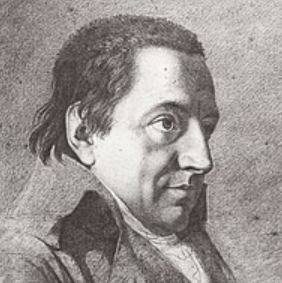
Of what I am, I know no more than that I am, but here no tie is necessary between subject and object. My own being is this tie, I am at once the subject knowing, and the object known of; and this reflection or return of the knowledge on itself is what I designate by the term I, if I have any determinate meaning.
▼
Source
source
Jane Sinnett, trans 1846 p. 50
3 months 2 weeks ago
Earth proudly wears the Parthenon As the best gem upon her zone.
▼
Source
source
The Problem, st. 3
3 months 2 weeks ago
The reasons for legal intervention in favour of children, apply not less strongly to the case of those unfortunate slaves and victims of the most brutal part of mankind, the lower animals.
▼
Source
source
Book V, Chapter 11, Section 9
4 months 2 weeks ago
For well-being and health, again, the homestead should be airy in summer, and sunny in winter. A homestead possessing these qualities would be longer than it is deep; and its main front would face the south.
1 week 4 days ago
Unless some Hero-worship, in its new appropriate form, can return, this world does not promise to be very habitable long.

3 months 3 weeks ago
It was the excess to which imaginary systems of religion had been carried, and the intolerance, persecutions, burnings, and massacres, they occasioned, that first induced certain persons to propagate infidelity; thinking, that upon the whole, that it was better not to believe at all, than to believe a multitude of things and complicated creeds, that occasioned so much mischief in the world. But those days are past, persecution has ceased, and the antidote then set up against it has no longer even the shadow of apology. We profess, and we proclaim in peace, the pure, unmixed, comfortable, and rational belief of a God, as manifested to us in the universe. We do this without any apprehension of that belief being made a cause of persecution as other beliefs have been, or of suffering persecution ourselves. To God, and not to man, are all men to account for their belief.
▼
Source
source
A Discourse, &c. &c.
3 months 3 weeks ago
A prudent man should always follow in the path trodden by great men and imitate those who are most excellent.
▼
Source
source
The Prince (1513), Ch. 6; translated by Luigi Ricci

1 month 2 weeks ago
In Catch-22, the figure of the black market and the ground of war merge into a monster presided over by the syndicate. When war and market merge, all money transactions begin to drip blood.
▼
Source
source
(p. 211)

1 month 1 week ago
I am an American, Chicago born - Chicago, that somber city - and go at things as I have taught myself, free-style, and will make the record in my own way: first to knock, first admitted; sometimes an innocent knock, sometimes a not so innocent.
▼
Source
source
Ch. 1 (opening line)

2 months 1 week ago
I have said these things to you so that by means of me you may have peace. In the world you will have tribulation, but take courage! I have conquered the world.
▼
Source
source
16:33, NWT
2 months 3 weeks ago
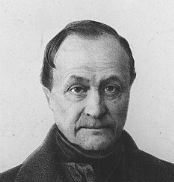
The dead govern the living.
▼
Source
source
Le Catéchisme positiviste
2 months 6 days ago
Perhaps there is nobody who would sacrifice his life for the sake of maintaining that the three angles of a triangle are together equal to two right angles, for such a truth does not demand the sacrifice of our life; but, on the other hand, there are many who have lost their lives for the sake of maintaining their religious faith. Indeed, it is truer to say that martyrs make faith than that faith makes martyrs. For faith is not the mere adherence of the intellect to an abstract principle; it is not the recognition of a theoretical truth, the process in which the will merely sets in motion our faculty of comprehension; faith is an act of the will - it is a movement of the soul towards a practical truth, towards a person, towards something that makes us not merely comprehend life, but that makes us live.

3 months 3 weeks ago
Nature made women mature early and had them demand gentle and polite treatment from men, so that they would find themselves imperceptibly fettered by a child due to their own magnanimity; and they would find themselves brought, if not quite to morality itself, then at least to that which cloaks it, moral behavior, which is the preparation and introduction to morality.
▼
Source
source
Kant, Immanuel (1996), pages 219-220

4 months 2 weeks ago
How then to enforce peace? Not by reason, certainly, nor by education. If a man could not look at the fact of peace and the fact of war and choose the former in preference to the latter, what additional argument could persuade him? What could be more eloquent as a condemnation of war than war itself? What tremendous feat of dialectic could carry with it a tenth the power of a single gutted ship with its ghastly cargo?

2 months 1 week ago
This fighting-shy of every obligation partly explains the phenomenon, half ridiculous, half disgraceful, Of the setting-up in our days of the platform of "youth" as youth. ... In comic fashion people call themselves "young," because they have heard that youth has more rights than obligations, since it can put off the fulfilment of these latter to the Greek Kalends of maturity. ...[T]he astounding thing at present is that these take it as an effective right precisely in order to claim for themselves all those other rights which only belong to the man who has already done something.
▼
Source
source
Chapter XV: We Arrive At The Real Question

4 weeks 1 day ago
Treat your kid like a darling for the first five years. For the next five years, scold them. By the time they turn sixteen, treat them like a friend. Your grown up children are your best friends.
2 months 2 weeks ago
You had that action and counteraction which, in the natural and in the political world, from the reciprocal struggle of discordant powers draws out the harmony of the universe.
▼
Source
source
Volume iii, p. 277

3 months 1 week ago
A reflective, contented mind is the best possession.
▼
Source
source
Ushtavaiti Gatha; Yasna 43, 15.
1 month 2 weeks ago
Computers can do better than ever what needn't be done at all. Making sense is still a human monopoly.
▼
Source
source
(p. 109)
2 months 1 week ago
And seeing every man is presumed to do all things in order to his own benefit, no man is a fit Arbitrator in his own cause.
▼
Source
source
The First Part, Chapter 15, p. 78
3 months 4 weeks ago
Time, which is the author of authors.
▼
Source
source
Book I, iv, 12

4 months 2 weeks ago
God is not needed to create guilt or to punish. Our fellow men suffice, aided by ourselves.
2 months 6 days ago
God is denied either because the world is so bad or because the world is so good.
▼
Source
source
Original: Бога отрицают или потому, что мир так плох, или потому, что мир так хорош.

3 months 3 weeks ago
A religious creed differs from a scientific theory in claiming to embody eternal and absolutely certain truth, whereas science is always tentative, expecting that modification in its present theories will sooner or later be found necessary, and aware that its method is one which is logically incapable of arriving at a complete and final demonstration.
▼
Source
source
Religion and Science (1935), Ch. I: Ground of Conflict

3 months 2 weeks ago
They are in bad faith - they are afraid - and fear, bad faith have an aroma that the gods find delicious. Yes, the gods like that, the pitiful souls.
▼
Source
source
Act 1
5 days ago
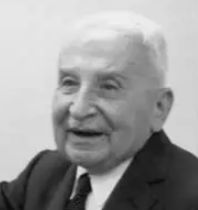
No social co-operation under the division of labour is possible when some people or unions of people are granted the right to prevent by violence and the threat of violence other people from working. When enforced by violence, a strike in vital branches of production or a general strike are tantamount to a revolutionary destruction of society.
CivilSimian.com created by AxiomaticPanic, CivilSimian, Kalokagathia