


3 months 3 weeks ago
In England, success in the profession of the law leads to some very great objects of ambition; and yet how few men, born to easy fortunes, have ever in this country been eminent in that profession?
▼
Source
source
Chapter I, Part III, p. 824.

2 days ago
Anger, as we have said, is eager to punish; and that such a desire should exist in man's peaceful breast is least of all according to his nature; for human life is founded on benefits and harmony and is bound together into an alliance for the common help of all, not by terror, but by love towards one another.

3 months 3 weeks ago
It is the part of cowardice, not of courage, to go and crouch in a hole under a massive tomb, to avoid the blows of fortune.
▼
Source
source
Ch. 3. A Usage of the Island of Cea, tr. George B. Ives, 1925

2 months 1 week ago
Man starts over again everyday, in spite of all he knows, against all he knows.
1 month 2 weeks ago
Nonviolence is an ideal that cannot always be fully honored in the practice. To the degree that those who practice nonviolent resistance put their body in the way of an external power, they make physical contact, presenting a force against force in the process. Nonviolence does not imply the absence of force or of aggression. It is, as it were, an ethical stylization of embodiment, replete with gestures and modes of non-action, ways of becoming an obstacle, of using the solidity of the body and its proprioceptive object field to block or derail a further exercise of violence.
▼
Source
source
p. 22
3 months 2 weeks ago
I have no knowledge of myself as I am, but merely as I appear to myself.
▼
Source
source
B 158

1 month 2 weeks ago
All media of communications are cliches serving to enlarge man's scope of action, his patterns of associations and awareness. These media create environments that numb our powers of attention by sheer pervasiveness.
1 month 2 weeks ago
Nothing is wholly obvious without becoming enigmatic. Reality itself is too obvious to be true.

2 months 2 weeks ago
How often misused words generate misleading thoughts!
▼
Source
source
Ch. 8, Humanity

3 months 3 weeks ago
For Christ is Joy and Sweetness to a broken heart. Christ is a Lover of poor sinners, and such a Lover that He gave Himself for us. Now if this is true, and it is true, then are we never justified by our own righteousness.
▼
Source
source
Chapter 3, verse 20
2 months 1 week ago
Why do you lack the strength to escape the obligation to breathe?

3 months 2 weeks ago
The hidden significance of these fables which is sometimes thought to have been detected, the ethics running parallel to the poetry and history, are not so remarkable as the readiness with which they may be made to express a variety of truths. As if they were the skeletons of still older and more universal truths than any whose flesh and blood they are for the time made to wear. It is like striving to make the sun, or the wind, or the sea symbols to signify exclusively the particular thoughts of our day. But what signifies it? In the mythus a superhuman intelligence uses the unconscious thoughts and dreams of men as its hieroglyphics to address men unborn. In the history of the human mind, these glowing and ruddy fables precede the noonday thoughts of men, as Aurora the sun's rays. The matutine intellect of the poet, keeping in advance of the glare of philosophy, always dwells in this auroral atmosphere.
3 months 3 weeks ago
Consumption is the sole end and purpose of all production; and the interest of the producer ought to be attended to, only so far as it may be necessary for promoting that of the consumer.
▼
Source
source
Chapter VIII, p. 719.

3 months 2 weeks ago
Freedom is what you do with what's been done to you.
2 months 3 weeks ago
If your little savage were left to himself and be allowed to retain all his ignorance, he would in time join the infant's reasoning to the grown man's passion, he would strangle his father and sleep with his mother.
1 month 2 weeks ago
Media are means of extending and enlarging our organic sense lives into our environment.
▼
Source
source
"The Care and Feeding of Communication Innovation", Dinner Address to Conference on 8 mm Sound Film and Education, Teachers College, Columbia University, 8 November 1961

3 months 2 weeks ago
Frantic administration of panaceas to the world is certainly discouraged by the reflection that "this present" might be "the world's last night"; sober work for the future, within the limits of ordinary morality and prudence, is not.

3 months 3 weeks ago
Nothing appears more surprising to those, who consider human affairs with a philosophical eye, than the easiness with which the many are governed by the few; and the implicit submission, with which men resign their own sentiments and passions to those of their rulers. When we enquire by what means this wonder is effected, we shall find, that, as Force is always on the side of the governed, the governors have nothing to support them but opinion. It is therefore, on opinion only that government is founded; and this maxim extends to the most despotic and most military governments, as well as to the most free and most popular.
▼
Source
source
Part I, Essay 4: Of The First Principles of Government
2 months 3 days ago
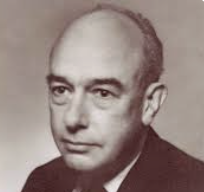
Logic chases truth up the tree of grammar.
▼
Source
source
Philosophy of Logic
2 weeks 3 days ago
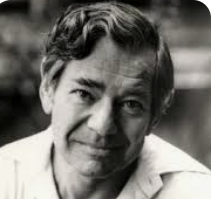
The most obvious failure of organized religions is surely that almost all of them have made a mockery of what their founders taught.
▼
Source
source
p. 267
4 months ago
God is surrounded with people full of love who demand of him the benefits of love which are in his power: thus he is properly the king of love.

2 months 3 weeks ago
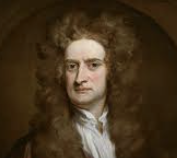
They all attributed the peaceful dominion of religion in their country mainly to the separation of church and state. I do not hesitate to affirm that during my stay in America I did not meet a single individual, of the clergy or the laity, who was not of the same opinion on this point.
▼
Source
source
Chapter XVII.
1 month 3 weeks ago
Every body continues in its state of rest, or of uniform motion in a right line, unless it is compelled to change that state by forces impressed upon it.
▼
Source
source
Laws of Motion, I
2 months 2 days ago
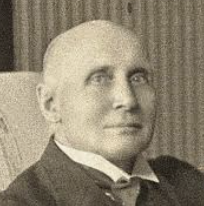
With the sense of sight, the idea communicates the emotion, whereas, with sound, the emotion communicates the idea, which is more direct and therefore more powerful.
▼
Source
source
Ch. 29, June 10, 1943.
4 months 2 weeks ago
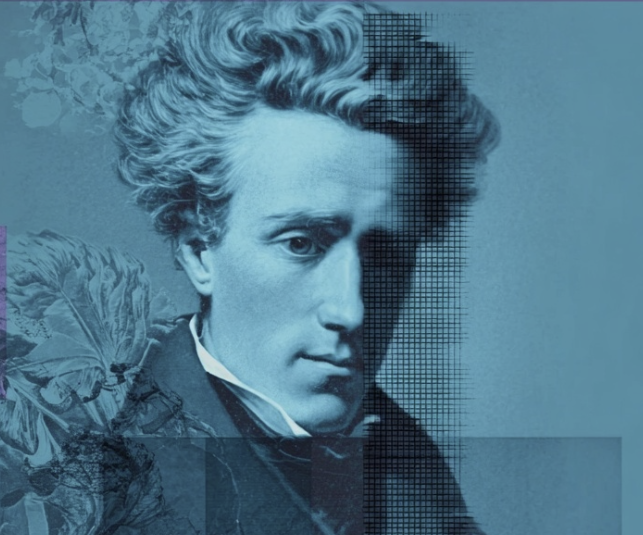
If it were so, as conceited sagacity, proud of not being deceived, thinks, that we should believe nothing that we cannot see with our physical eyes, then we first and foremost ought to give up believing in love. ... We can be deceived by believing what is untrue, but we certainly are also deceived by not believing what is true. ... Which deception is more dangerous?
1 month 3 days ago
Perhaps the most valuable result of all education is the ability to make yourself do the thing you have to do, when it ought to be done, whether you like it or not; it is the first lesson that ought to be learned; and, however early a man's training begins, it is probably the last lesson that he learns thoroughly.
▼
Source
source
Technical Education

2 months 1 week ago
For he must rule as king until God has put all enemies under his feet. And the last enemy, death, is to be brought to nothing.
▼
Source
source
Paul of Tarsus, 1 Corinthians 15: 25-26, NWT

2 months 3 days ago
The notion of rights is linked with the notion of sharing out, of exchange, of measured quantity. It has a commercial flavor, essentially evocative of legal claims and arguments. Rights are always asserted in a tone of contention; and when this tone is adopted, it must rely upon force in the background, or else it will be laughed at.
▼
Source
source
p. 61
3 months 2 weeks ago
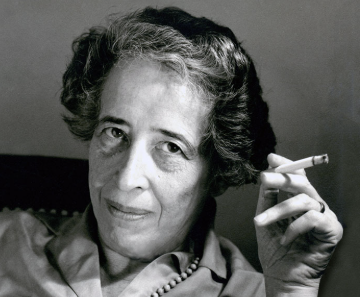
The moment we no longer have a free press, anything can happen. What makes it possible for a totalitarian or any other dictatorship to rule is that people are not informed; how can you have an opinion if you are not informed? If everybody always lies to you, the consequence is not that you believe the lies, but rather that nobody believes anything any longer. This is because lies, by their very nature, have to be changed, and a lying government has constantly to rewrite its own history. On the receiving end you get not only one lie - a lie which you could go on for the rest of your days - but you get a great number of lies, depending on how the political wind blows. And a people that no longer can believe anything cannot make up its mind. It is deprived not only of its capacity to act but also of its capacity to think and to judge. And with such a people you can then do what you please.
▼
Source
source
p. 70
3 months 2 weeks ago
Disobedience is the true foundation of liberty. The obedient must be slaves.
▼
Source
source
1847
1 month 3 days ago
The question of questions for mankind-the problem which underlies all others, and is more deeply interesting than any other-is the ascertainment of the place which Man occupies in nature and of his relations to the universe of things.
▼
Source
source
Ch.2, p. 71
1 month 2 weeks ago
The telegraph press mosaic is acoustic space as much as an electric circus.
2 months 1 week ago
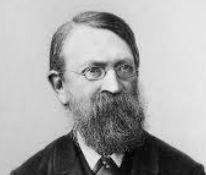
Some Machians were sufficiently impressed by Einstein's interpretations of Brownian movement to accept atomism. Mach himself brushed such objections aside, and also emphatically rejected Einstein's relativity theory.
▼
Source
source
W. W. Bartley III, "Philosophy of biology versus philosphy of physics" (2004) p. 412, Karl Popper: Critical Assessments of Leading Philosophers, Vol. III: Philosophy of Science 2.
3 months 5 days ago
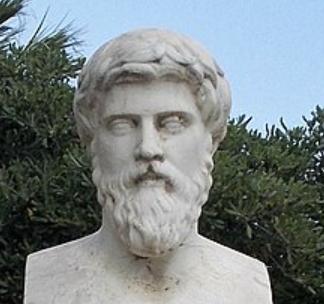
Cato instigated the magistrates to punish all offenders, saying that they that did not prevent crimes when they might, encouraged them. Of young men, he liked them that blushed better than those who looked pale.
▼
Source
source
Cato the Elder
3 months 2 weeks ago
If you would convince a man that he does wrong, do right. But do not care to convince him. Men will believe what they see.
▼
Source
source
Let them see. Pearls of Thought (1881) p. 222

2 months 2 weeks ago
All government - indeed, every human benefit and enjoyment, every virtue and every prudent act - is founded on compromise and barter.


2 months 1 week ago
When the whole is at stake, there is no crime except that of rejecting the whole, or not defending it. ... Those who identify themselves with the whole, who are installed as the leaders and defenders of the whole can make mistakes, but they cannot do wrong-they are not guilty. They may become guilty again when this identification no longer holds, when they are gone.
▼
Source
source
pp. 82-83
3 months 2 weeks ago
To be aware of limitations is already to be beyond them.
▼
Source
source
As quoted in Inwardness and Existence (1989) by Walter A. Davis, p. 18

4 months 2 weeks ago
Such was the vast power which the god settled in the lost island of Atlantis; and this he afterwards directed against our land for the following reasons, as tradition tells: For many generations, as long as the divine nature lasted in them, they were obedient to the laws, and well-affectioned towards the god, whose seed they were; for they possessed true and in every way great spirits, uniting gentleness with wisdom in the various chances of life, and in their intercourse with one another.
2 months 1 week ago
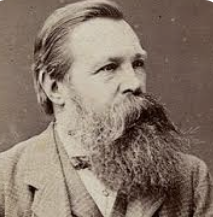
In all probability, the proletarian revolution will transform existing society gradually and will be able to abolish private property only when the means of production are available in sufficient quantity. What will be the course of this revolution? Above all, it will establish a democratic constitution, and through this, the direct or indirect dominance of the proletariat.
1 month 1 week ago
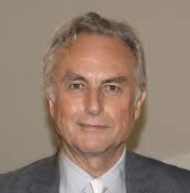
Bush and bin Laden are really on the same side: the side of faith and violence against the side of reason and discussion. Both have implacable faith that they are right and the other is evil. Each believes that when he dies he is going to heaven. Each believes that if he could kill the other, his path to paradise in the next world would be even swifter. The delusional "next world" is welcome to both of them. This world would be a much better place without either of them.
▼
Source
source
Gordy Slack, "The Atheist" Salon.com
1 month 3 weeks ago
It is the perfection of God's works that they are all done with the greatest simplicity. He is the God of order and not of confusion. And therefore as they would understand the frame of the world must endeavor to reduce their knowledge to all possible simplicity, so must it be in seeking to understand these visions.
▼
Source
source
Cited in Rules for methodizing the Apocalypse, Rule 9, from a manuscript published in The Religion of Isaac Newton (1974) by Frank E. Manuel
2 months 1 week ago
Time, and Industry, produce everyday new knowledge.
▼
Source
source
The Second Part, Chapter 30, p. 176
4 months 2 weeks ago
God creates out of nothing. Wonderful you say. Yes, to be sure, but He does what is still more wonderful: He makes saints out of sinners.
2 months 2 weeks ago
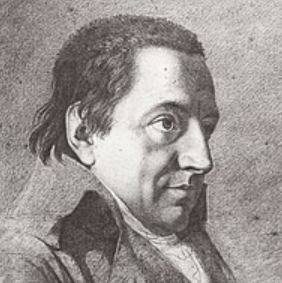
The subject must distinguish itself through opposition from the rational being, which it has assumed outside of itself. The subject has posited itself as one, which contains in itself the last ground of something that is in it, (for this is the condition of Egohood, or of Rationality generally;) but it has also posited a being outside of itself, as the last ground of this something in it. It is to have the power of distinguishing itself from this other being; and this is, under our presupposition, possible only, if the subject can distinguish in that given something how far the ground of this something lies in itself and how far it lies outside of itself.
▼
Source
source
P. 63
1 week 4 days ago
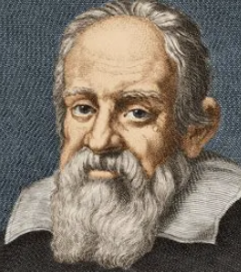
Well, since paradoxes are at hand, let us see how it might be demonstrated that in a finite continuous extension it is not impossible for infinitely many voids to be found.
▼
Source
source
Salviati, First Day, Stillman Drake translation
1 month 2 weeks ago
One of the many effects of television on radio has been to shift radio from an entertainment medium into a kind of nervous information system.
▼
Source
source
(p. 298)

3 months 3 weeks ago
Human knowledge and human power meet in one; for where the cause is not known the effect cannot be produced. Nature to be commanded must be obeyed; and that which in contemplation is as the cause is in operation as the rule.
▼
Source
source
Aphorism 3
3 months 2 weeks ago
Human freedom is realised in the adoption of humanity as an end in itself, for the one thing that no-one can be compelled to do by another is to adopt a particular end.
▼
Source
source
Part Two : Metaphysical Principles of Virtue
CivilSimian.com created by AxiomaticPanic, CivilSimian, Kalokagathia